

5 Best Henry Fonda Western Movies, Ranked
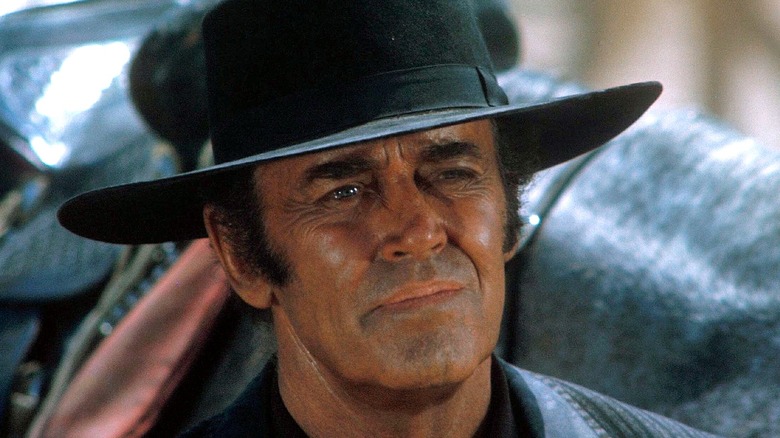
For decades, Henry Fonda was considered to be the ultimate American screen icon, an everyman who had as much warmth as he did a stealthy authority. But nowhere in his filmography was he best defined or subverted than in his Western roles, the strongest of which tested the limits of his persona. Fonda was seen by many as one of cinema's manifestations of America's idealized national character, and over the decades, he was often utilized in line with this; he took easily to playing strong heroes with a wealth of integrity.
To choose Fonda's five best Westerns, we went to Letterboxd and sorted his filmography by average rating on the site, removing any titles from other genres to whittle his oeuvre down to this definitive list. Once we narrowed down the selection, we threw cinephile consensus out of the window and ranked based on our own personal preferences.
It goes without saying that there are no bad movies on this list, but we may have ranked some films lower than you might expect, given their reputation. This is largely because we're assessing each movie in the wider context of Fonda's career, and in the process of revisiting these movies, found ourselves with a greater appreciation towards the titles, some of which offered new depth rather than playing into what was expected from his movie star persona.
Here are his five best regarded Westerns, ranked from our least-to-most favorite — it was a challenge to rank as they're all bangers, so please forgive us for starting out the gate hot with a controversial placement.
5. My Darling Clementine
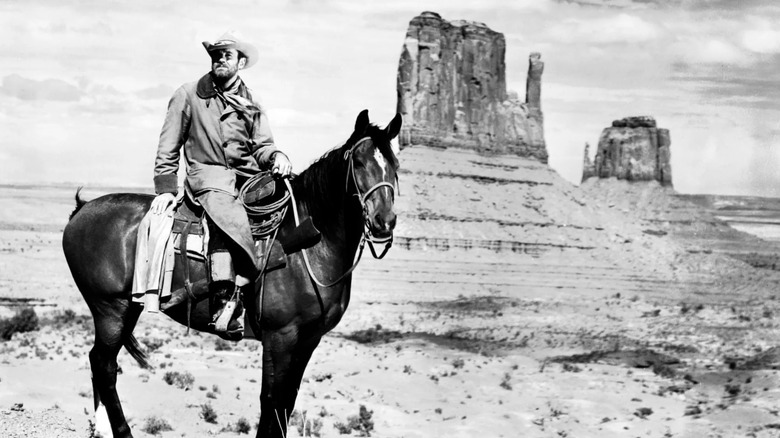
We're probably not going to endear ourselves to Western purists by placing two John Ford directed efforts at the bottom of this best-of, especially when kicking off with one considered amongst the genre's greatest. It's an all-time favorite of everybody, from Hayao Miyazaki to President Harry Truman. But as enjoyable as "My Darling Clementine" remains, it doesn't offer the same level of food-for-thought as the titles to come, with the portrayal of Wyatt Earp prior to the gunfight at O.K Corral one of the most conventionally and unquestionably heroic roles Henry Fonda ever played.
He may have been typecast as characters who reflect America's imagined moral center, but casting him as this most famous of real-life Western legends seeking righteous revenge for the death of his brother ensured there wasn't anything that could complicate his persona. Complication a common trait in his very best starring vehicles, and that's absent here.
As with many Ford movies, the best moments aren't found in battle, but in quiet character moments that hide beneath the sweeping vistas and tense shootouts. This was something Roger Ebert pointed out when he added the film to his Great Movies collection in 1997, stressing that the choice of movie title — which avoids any direct reference to the O.K. Corral or its coming shootout — is a sign that Ford saw Cathy Downs' titular subject of romantic affection as the heart of the story, her arrival a more pivotal turning point in Wyatt Earp's life than the showdown.
Their quiet connection is why the final scene is one of the best of all Westerns, showing a more earnest interest in these characters beyond their reputations in the history books.
4. Fort Apache
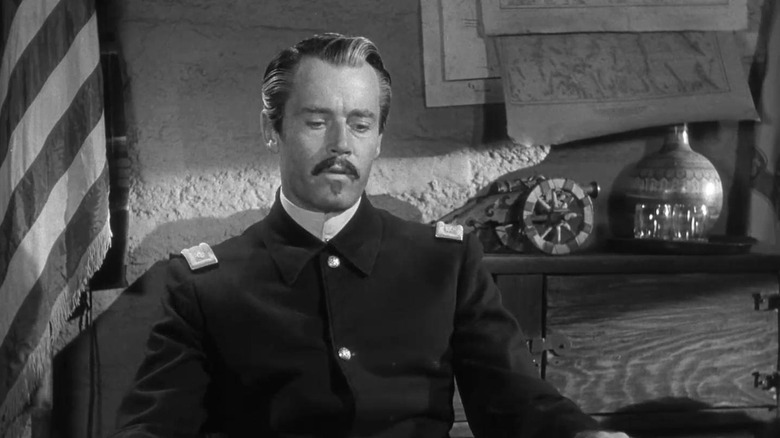
John Ford's movies were more socially conscious than the Western genre is credited for, and "Fort Apache" is one of the most overt in its attempt to update certain narrative stereotypes, offering a more empathetic portrayal of Native American characters than audiences were accustomed to in 1948.
This is in no small part due to their role opposite Henry Fonda's openly racist Colonel Owen Thursday, a stickler for rules and military tradition who is at immediate odds with the new underlings at the titular Arizona outpost he's been assigned to. He ignores every warning from his second-in-command (John Wayne) to treat the tribes with respect, as the Indian agent assigned by the US government to watch over their reservation (Grant Withers) has engineered a famine, sensing an opportunity for a conflict. One which could lead to a military victory that cements his legend.
The Native distrust of government is depicted as righteous, with Fonda's role positioned as antagonist, his motivations clouded by his own ignorance. It was one of the first major Westerns to correct the historical portrayal of Indigenous communities as villains. It's enlightened and sympathetic towards the dire conditions the tribes had to face during this period, and builds towards a thunderous final showdown that aims to get the audience rooting against the colonel and his ignorant strategy.
The denouement is also especially downbeat, thematically tied to the ending of Ford's later masterpiece "The Man Who Shot Liberty Valance" in how it outlines who gets to have their reputation rehabilitated by the history books. It's towards the bottom of this list, as there's a lot of relationship drama that reduces its punchiness, but it's still a crucial turning point for the genre, with a great against-type performance from Fonda.
3. The Ox-Bow Incident
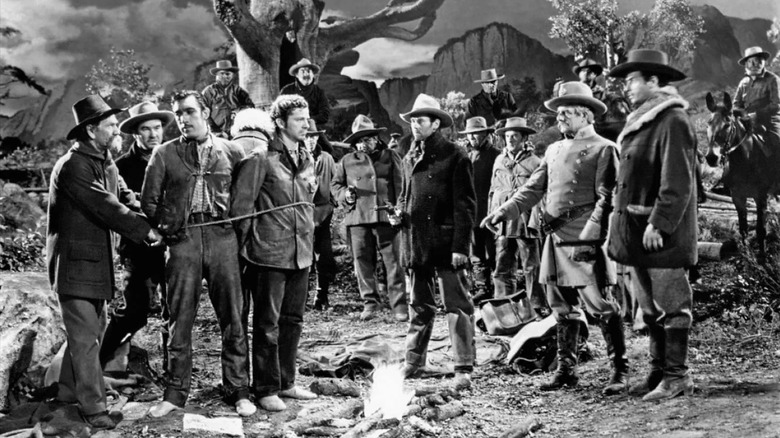
Thought that "12 Angry Men" was the only movie in which Henry Fonda and a group of men had to think about the moral consequences of sending someone accused of a crime to their death? Then you haven't seen "The Ox-Bow Incident," one of the ultimate Westerns you need to see before you die, and which also holds the title of the last movie to be nominated for best picture and no other Oscar. Fonda stars as Gil Carter, who arrives in a Nevada town as news spreads that a local rancher has been murdered, with the townsfolk quickly mobilizing to find the culprits. The mob is too hungry for blood to even consider handing the accused over to the authorities for trial.
"The Ox-Bow Incident" is prescient today, when the same mob rule mentality can be found everywhere from our divided political sphere to various partisan spaces on social media. A few years after playing Abraham Lincoln in John Ford's "Young Mr. Lincoln," this bleak tale from director William A. Wellman continued to cement Fonda's status as one of cinema's leading voices of reason, routinely cast as characters who are the moral center of their stories.
Gil is quieter in his cynicism initially, but does voice his concerns about a fair trial, which culminates in an impassioned argument about the rule of law, and how our inherent humanity should stop us from being clouded by a violent need for retribution. It's only 75 minutes long, but this despairing tale lingers long after the credits. It's the closest an American movie has got to replicating the raw power of one of the all-time greatest movies, "M," a terrifying warning about mob rule made just as the Nazis rose to power.
2. The Tin Star
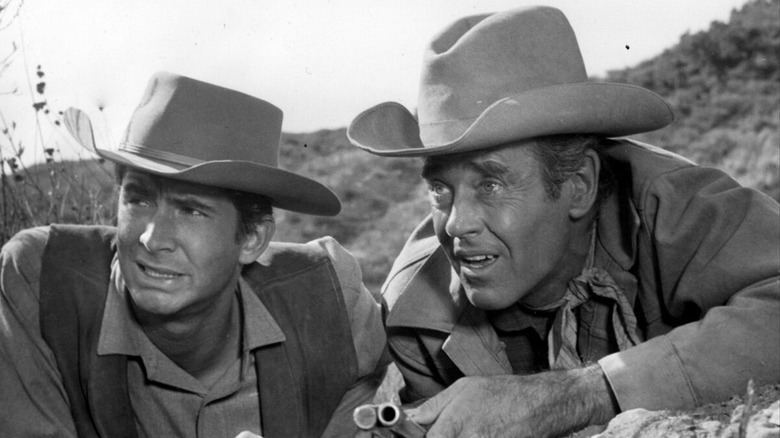
A few years before his performance as Norman Bates in "Psycho" transformed him into a household name, Anthony Perkins appeared in one of his first leading roles opposite Henry Fonda in this under-appreciated Western from director Anthony Mann. In "The Tin Star," Perkins plays Sheriff Ben Owens, a boy scout who is well-liked in his town, but is lacking the confidence that would seal his authority.
This changes when a new mentor arrives in the form of bounty hunter and former lawman Morgan "Morg" Hickman (Fonda), an amiable but world-weary man who agrees to help Ben while he waits in the town for a bounty payment. When a local doctor is murdered on the eve of his 75th birthday, the town is hungry for blood; Ben seeks Morg's help to reassert control of the town and avoid a descent into mob rule.
Fonda and Perkins make for a deeply likable double-act, with Dudley Nichols' screenplay managing to avoid the outdated tropes you might expect. The story never becomes about a demure sheriff learning to "be a man," but to learn how to have the courage of his convictions in defending the law. As a former sheriff who left the job due to a personal tragedy, Morg preaches the opposite of trial by shootout, which makes the gripping climax against a self-appointed mob leader (Neville Brand) all the more subversive — how many showdowns occur in the name of pacifism?
The director wasn't enamored with the final movie, but in the context of Fonda's career, it feels like a thrilling extension of the themes first explored in "The Ox-Bow Incident," with a higher crowd-pleasing appeal.
1. Once Upon a Time in the West
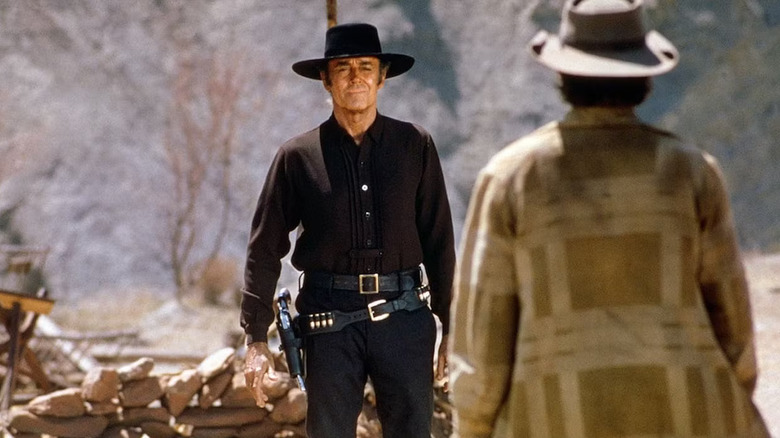
Henry Fonda was director Sergio Leone's favorite actor, which is one of the many reasons why his introduction as Frank in "Once Upon a Time in the West" is so shocking. He'd played against type before, but seeing this classic Hollywood hero — the voice of reason in countless masterpieces — gunning down children only emphasized the sheer evil of the contract killer he played. Less surprising was that Fonda was excellent at playing someone whose cold-blooded instincts were at odds with his most beloved roles. He's perfect casting here because, to millions, he represented the American everyman so consistently.
This avatar for a nation's soul was pointedly made a villain; one aiming to remove people from their land for a railroad tycoon. Here was the hero of the American West reflecting the darkest aspects of how the modern US was built; the mythic soul of a nation recharacterized as the face of its dark capitalist underbelly.
Leone's film is one of the best Westerns of all time for the various ways in which it recontextualizes Western tropes for a new era. It's an important precursor to the New Hollywood movement, which took more cynical, darker approaches to classic genre storytelling. The Western had been growing out of fashion throughout the 1960s, even if Leone's spaghetti Westerns helped them regain some fervor, and this masterpiece felt like a swan song that marked the official end of a golden era. A nihilistic subversion that hid a sincere celebration of the genre's past. Hard to top that.