

5 Best Medieval Movies Nobody Talks About Anymore
We're rolling back the clock to the Middle Ages with five movies which deserve a much bigger cult following. These are all darker than your usual fantasy or historical drama set during the medieval period, which might be why they've had such a tough time finding an audience, with stories that reflect the brutal violence and horrifying folktales that illustrate the senseless barbarism of living during this time. You'll be glad you don't have access to a time machine after seeing these, but you will be glad you experienced them.
To determine what constitutes a movie nobody talks about anymore, we chose films on Letterboxd with under 50,000 logged views. The site has over 30 million registered users at the time of writing, so anything flying under that threshold could be considered. We browsed several master lists of movies set during the medieval period and sorted by average rating to narrow these down to five, with all selected titles having an average mark of 3.1 out of 5 or higher, to ensure a broad seal of approval from the dedicated few who have seen them.
There are plenty more excellent medieval movies we could have chosen from, but the five below are the ones we think are most deserving of a second look.
Black Death
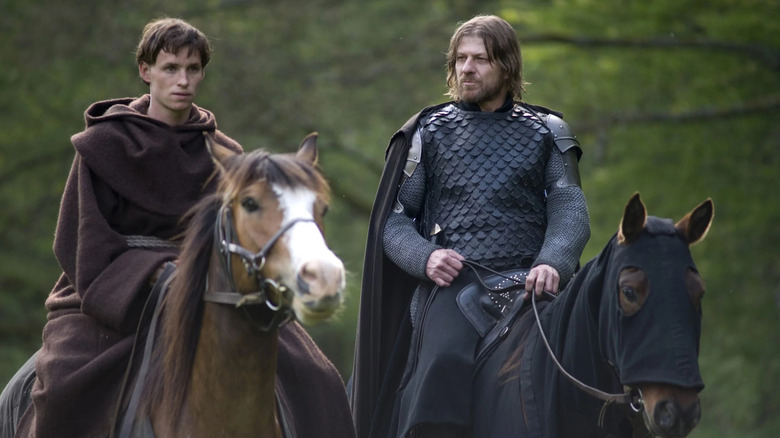
Christopher Smith is a great genre director who hasn't received the appreciation he's deserved. Following his underrated time travel slasher "Triangle," he went back further to one of the deadliest pandemics in history. "Black Death" follows Osmund (Eddie Redmayne), a monk whose secret relationship with Averill (Kimberly Nixon), a woman seeking refuge in his monastery, is threatened by the plague. He tells her to hide in the woods for a week, awaiting a sign from God to join her. This unexpectedly arrives in the form of Ulric (Sean Bean), who needs a guide to a village untouched by the pandemic, which he believes is being led by a necromancer.
Not long after they set off to capture them, things take a turn for the worse; members of their party unexpectedly die, Osmund finds Averill's discarded bloody clothes, and the villagers become suspicious of these outsiders. Soon after, they're drugged and tortured, and the movie becomes as vivid a depiction of hell on Earth as you'll find in this genre.
Smith performed extensive uncredited rewrites of Dario Poloni's screenplay to make it an even darker exploration of faith, using the dueling beliefs in Medieval society that the pandemic was either caused by God or the Devil as a form of divine punishment as a jumping off point to explore religious fundamentalism. While set in the 14th century, there's no comfort in that historical distance –- the divides caused by this pandemic continue to resonate today.
Flesh + Blood
Before director Paul Verhoeven made "Robocop" and started a run of incredible and downright scandalous Hollywood genre movies, he made his English language debut with an outright box office flop. He has since spoken critically about his experience making "Flesh + Blood," and how it transformed his filmmaking approach, but this medieval saga is still a crucial moment in the director's career, possessing all the thematic hallmarks of his best work; characters warping religion to suit their own goals and the weaponization of sex to assert power.
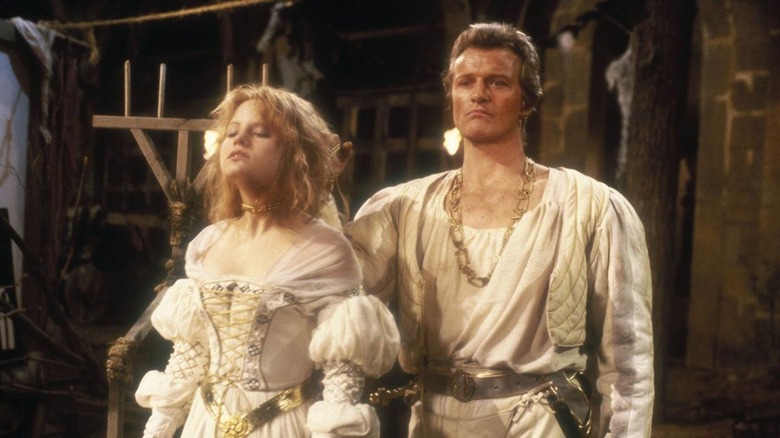
Verhoeven aimed to make a more realistic medieval movie than others of this period, wanting to emphasize the "stinking" nature of civilization during the Middle Ages. Rutger Hauer leads as Martin, who becomes the unexpected leader of a mercenary group after the siege of an Italian city, later kidnapping the bride-to-be (Jennifer Jason-Leigh) of the leader's son (Tom Burlinson), with the drama becoming something of a warped love triangle.
This was a less enlightened age, where moral compasses were far more skewed compared to ours, and this was something the director wanted to reflect. It resulted in him alienating a wider audience and led him to recalibrate his storytelling approach on this scale, but that's just a sign that -– even with studio interference –- he succeeded in depicting life during this period as the morally corrupt hell on Earth it was.
Hard to Be a God
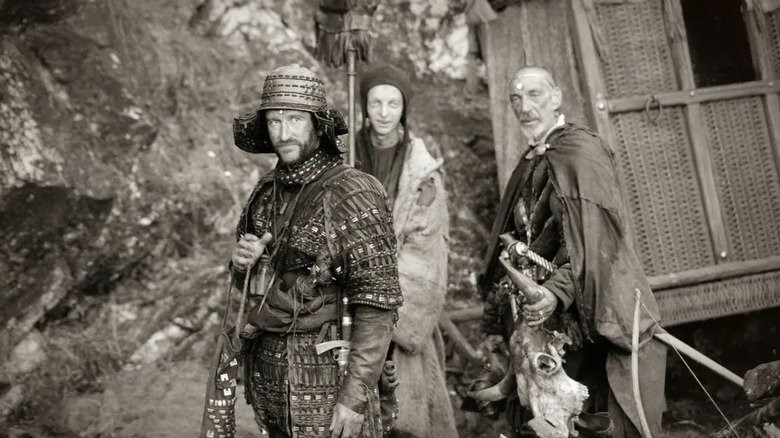
"Hard to Be a God" quickly discards the high-concept sci-fi premise of the 1964 Soviet novel it's based on, instead examining how modern, enlightened people would fare in a brutal era in which they couldn't intervene. A group of scientists are sent to investigate an alien planet that directly resembles Earth and its inhabitants, but upon arriving in the kingdom of Araknar, discover that this society hasn't had its renaissance.
Intellectuals are executed by the state leader's militia, slavery is still rife, and scientist Anton (Leonid Yarmolnik) is tasked with helping this society progress, barred from direct involvement by his superiors. He assumes the identity of a nobleman, moves to a castle in a poverty-stricken town, and becomes a divisive figure; an enlightened God to some, and an intellectual impostor to others.
Filmed between 2000 and 2006, director Aleksei German passed away in 2013 before completing his final cut, with his family taking on the finishing touches so it could premiere that year. It's hard to think of a more damning final work; an epic statement on the relationship between authoritarianism and religion, and how despots thrive on the ignorance of their subjects. What elevates German's swansong above simple political allegory is his striking depiction of the Middle Ages, with grotesque violence and stinking villages so visceral you can smell them, and no guiding hand to help you through the barbarism.
The Masque of the Red Death (1964)
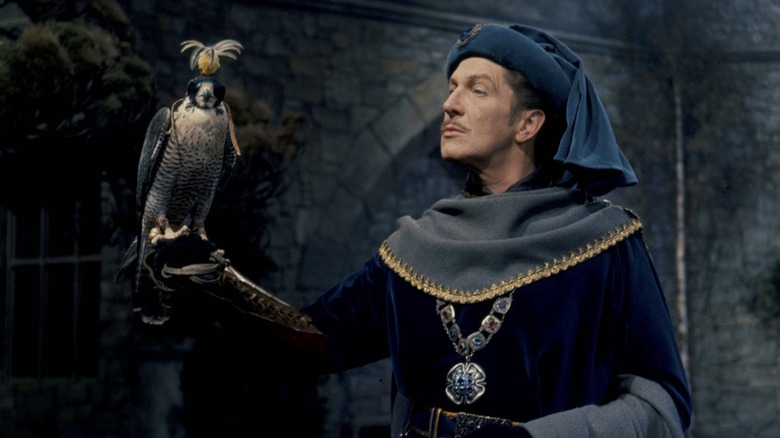
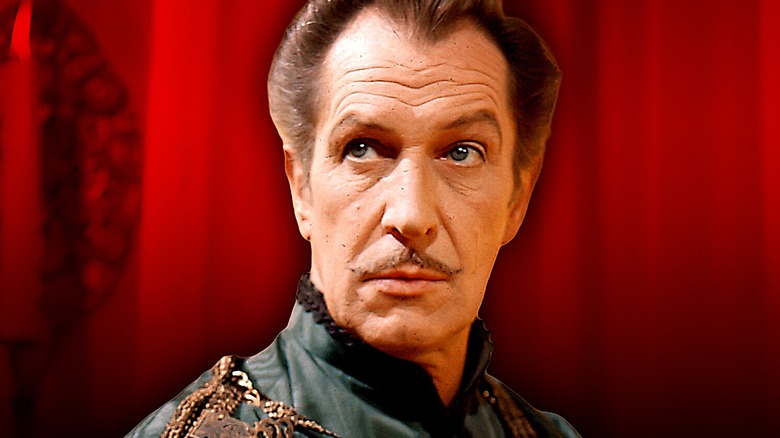
Edgar Allan Poe's short story has been adapted for the screen several times, but this 1964 take by Roger Corman -– who directed eight adaptations of the influential gothic writer's work -– is by far the definitive, challenging any preconceptions of Corman as a lowbrow B-movie sensationalist. It certainly looked like an average B-movie, with horror icon Vincent Price cast as the satanist Prince Prospero, a despot of an Italian village consumed by the plague, which he orders destroyed. Taking two starving men as prisoners, he confines himself to the castle as villagers fail to get through his doors, inviting only the local nobility to bare witness to a devilish turn of events.
With all manner of satanic excess happening behind closed doors, Corman's orgiastic take on Poe's story is equal parts gothic horror and riotous eat-the-rich black comedy, held together by Price's finest performance in a filmography packed with legendary appearances. With its expressionistic, colorful cinematography (courtesy of future "Don't Look Now" director Nicholas Roeg) and elaborate sets, it looks a world removed from any Poe adaptation or any other film set during this despairing era, and has aged beautifully because of it.
Critics responded to it more warmly than usual for Corman, although it was less commercially successful because it wasn't the straightforward horror many expected. This was a stranger beast, even if it didn't stray away from his fondness for the macabre.
Viy (1967)
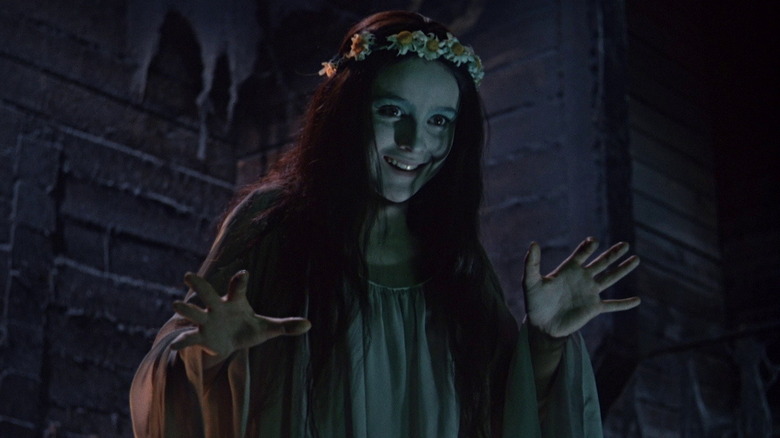
Adapted several times over the years and featured in the cinephile handbook "1001 Movies to See Before You Die," this pioneering Soviet folk horror is still largely under discussed. Billed as the Soviet Union's first ever horror movie, "Viy" is also one of the best produced in this era. It follows Khoma (Leonid Kuravlyov), a student at a Ukrainian seminary whose faith is tested following an encounter with an elderly witch. When he and some friends get lost in the countryside, they ask to stay at her farm, and when Khoma rebuffs her sexual advances, she hypnotizes and rides him like a horse through the village.
Waking from the trance, he tries to kill her, but she transforms into a younger woman -– and soon, he's forced into staying to watch over her body for three nights to pray for her soul. As you probably guessed, spending time in a morgue with only a witch's body for company is not the safest place to be for a training man of the cloth. "Viy" is a simple ghost story, packing more hallucinatory horrors into 77 minutes than most in the genre can with a more sustained running time.
Like many Hollywood horror movies during this period, it depicts the ultimate religious test of faith while also riffing on folktales drawn from several Soviet regions; the witch who rides a would-be husband was a recurring theme in Ukrainian folklore, for example. It's an overlooked, unsettling work that's influence can be felt in countless great ghost stories.