

Coyote Vs. Acme Review: 2026's Big Underdog Has Sparks Of Super Genius
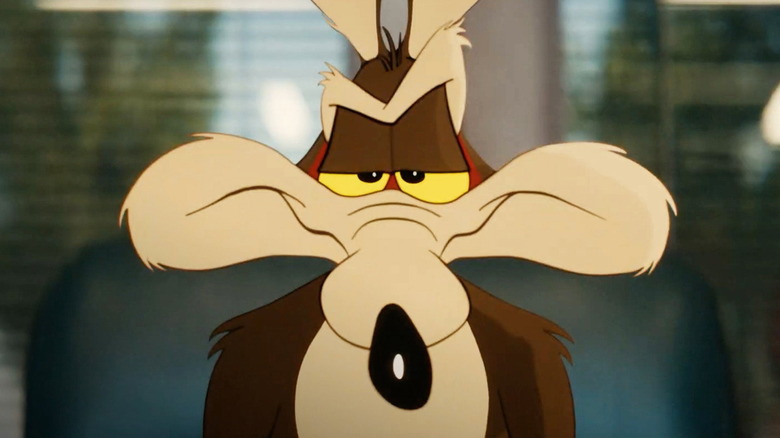
- Extremely funny and cleverly written
- Knows its Looney Tunes well
- Buying a ticket makes the Acme Corporation cry
- The animation itself could have been better
- Semi-arbitrary stakes
I am predisposed to rooting for "Coyote vs. Acme" on account of everything this movie went through to see the light of day. Warner Bros. canceled the finished film's release for the sake of a $30 million tax write-off. That the WB execs thought they couldn't make at least $30 million off a Looney Tunes movie starring John Cena, produced by James Gunn, and written by an Oscar nominee (Samy Burch for "May December") with great scores from test audiences is not exactly a vote of confidence in those execs' competency with family films and animation.
After over a year of complaints and protests, somehow the rights got rescued by Ketchup Entertainment, an indie distributor that previously handled U.S. distribution for the nearly-canceled "The Day the Earth Blew Up: A Looney Tunes Movie." Now, with WB on the verge of a Hollywood-wrecking merger with Paramount, "Coyote vs. Acme" is finally arriving in theaters, and should be the surprise blockbuster hit of the summer out of pure spite alone.
Thankfully, the actual movie is worth the hype. Measuring by sheer laughs per minute, "Coyote vs. Acme" is the funniest film of 2026 so far — "The Invite" comes close and might be the year's best comedy movie overall, but that still has to pause the laughs for some of its serious moments. In classic Looney Tunes fashion — think Elmer finally killing the wabbit in "What's Opera, Doc?" — even the most earnest "we're taking this completely seriously" dramatic moments in "Coyote vs. Acme" are still inherently funny at the same time. And the film's underdog real-life circumstances only lend further resonance to its theme of persistence and its satire of all-powerful corporations. It's not a perfect movie, but what it does well, it does so well that it feels like a work of super genius.
The comedy is pure classic Looney Tunes
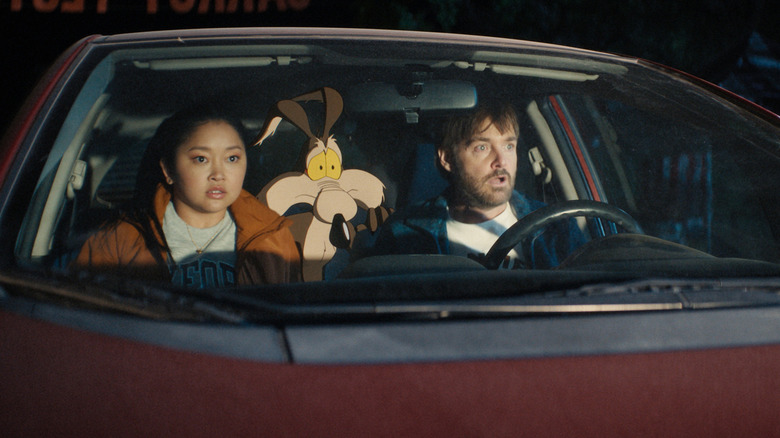
Serious Looney Tunes heads will know that "Coyote vs. Acme" is in good hands when one of the first characters on screen is Dr. Lorre (voiced, like almost every other animated character in the film, by Eric Bauza). Yeah, we're doing deep cut references to characters parodying 1930s movie stars no child today has heard of! In the first of many sequences making brilliant use of malfunctioning cartoon products in real-world settings, the doctor makes his escape from an Acme factory to expose the company's dark secrets, only to be imprisoned in a portable hole. If you're not already cracking up by the end of this opening sequence, you should be by the next title card, which reads, "Based on a true story."
Adapting formulas built for seven-minute shorts into feature-length plots has always been a challenge for Looney Tunes movies, but "Coyote vs. Acme" manages to both respect tradition and build something bigger around it. You get all the classic gags of Wile E. Coyote trying and failing to catch the Road Runner, as funny as ever — and on top of that, the Coyote is suing the purveyors of his misery in a case that uncovers a massive cartoon conspiracy. Chuck Jones' rules for Wile E. Coyote and Road Runner cartoons are generally obeyed; the film's climax necessitates some rules bent and at least one directly broken, but those breaks are both clever and temporary, and Jones broke his own rules when it suited him anyway.
Jones, his writer Mike Maltese, and fellow Looney Tunes director Tex Avery are paid homage to via the "Avery, Jones, & Maltese" cartoon law firm Wile E. drags into the suit. Lawyer Fred Avery (Will Forte) is used to settling every suit and unhappily dragged by his client into a major case, but his niece Paige (Lana Condor) thinks there's something to investigate with Acme — a company that, in this universe, makes high-end products for humans alongside its more questionable cartoon technology. All the human actors know exactly what they're doing alongside their animated co-stars, with Forte carrying the film's story arc and message. But it's John Cena who completely steals the show as Acme's defense lawyer Buddy Crane. He pretty much is a cartoon (and Buddy does shares a name with the crappiest Looney Tunes character ...), charming the pants off the court with absurd displays of patriotism and putting his full menace into threatening Tweety Bird over whether he actually taw what he tawt he taw. Somebody cast this giant man as the human lead in a Muppet movie!
It's no Who Framed Roger Rabbit — but comes closer than most
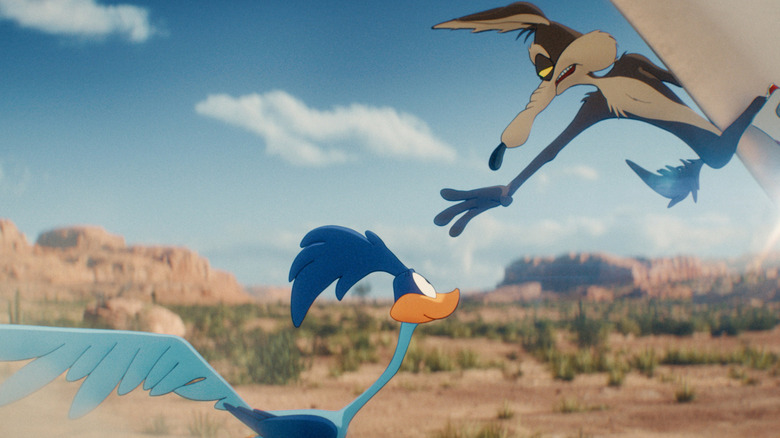
To say that "Coyote vs. Acme" is the best cartoon-characters-in-the-real-world movie since "Who Framed Roger Rabbit" is both 100% correct and also not that huge a compliment, considering "Who Framed Roger Rabbit" is a perfect movie and everything else in the genre ranges from mixed bag to trash. It's impressive how close "Coyote vs. Acme" gets to "Roger Rabbit," though. Director Dave Green understands that the success of "Roger Rabbit" is that it works as both a cartoon comedy and a film noir, trying to do the same by balancing Looney Tunes with legal drama (press notes cite "The Insider" as inspiration; the Albuquerque setting and disreputable characters call to mind "Better Call Saul").
Two issues hold "Coyote vs. Acme" back from "Roger Rabbit" greatness, however. The first is the animation. "Roger Rabbit" spent a record-breaking budget on blending hand-drawn animation directed by notorious perfectionist Richard Williams into live-action. "Coyote vs. Acme" uses a mix of more limited 2D animation with CGI imitating hand-drawn aesthetics, and while the interaction with the live-action backgrounds is spectacular, the animation itself's a mixed bag. The Coyote is the best-realized of the 3D characters, but lesser characters have a bit more of a stiffness to them. If you combined the exceptional gag writing of "Coyote vs. Acme" with the expressive animation of "The Day The Earth Blew Up," then you'd have an unbeatable Looney Tunes movie.
The other issue is the stakes. Where "Roger Rabbit" created serious danger for cartoons who recover easily from slapstick accidents, "Coyote vs. Acme" is less successful in making such slapstick itself the danger. When Foghorn Leghorn defends Acme's brutality in congress, his defense makes more sense than a villain's probably should. The central conspiracy's very funny, but not completely coherent dramatically, especially when certain characters' psychologies have us questioning whether to even care about the case. But those same psychologies do give us something else to care about, and without getting into spoilers, what the movie does with those concerns is genius.
"Coyote vs. Acme" opens in theaters on August 28.