

5 Family Guy Episodes That Are Unwatchable Today
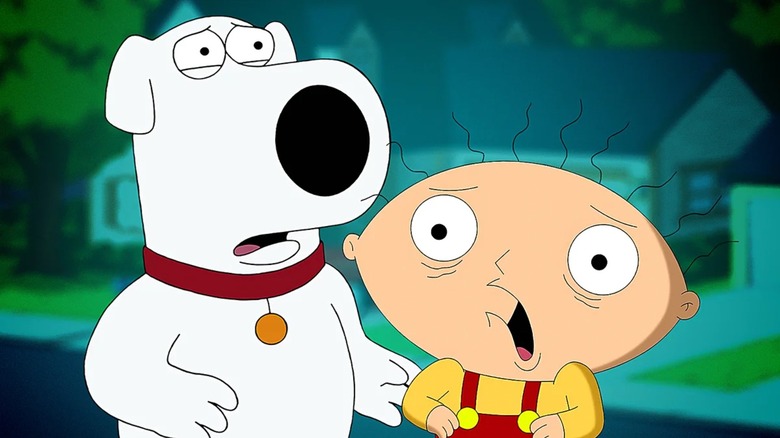
"Family Guy" burst onto the scene to give "The Simpsons" a run for its money. While some episodes seemingly borrowed jokes and plots from its Fox predecessor, "Family Guy" quickly forged an identity all its own; it was a bit cruder than "The Simpsons" and relied heavily on cutaway gags featuring jokes unrelated to the episode's plot. "Family Guy" was canceled twice and returned from the dead, but it's still on all these years later. And it'll probably go on for eternity — again, just like "The Simpsons."
However, a problem emerges when a show relies heavily on shock humor and random gags. Not everything is going to age particularly well. Heck, some episodes and jokes were in incredibly poor taste at the time they aired. But as you go back to rewatch the show and relive plenty of great jokes, you're bound to come across some that leave a poor taste in your mouth.
These are five "Family Guy" episodes that are the most unwatchable today. You're best off skipping them on rewatches and wiping them from your memory, because there's little to salvage here.
Screams of Silence: The Story of Brenda Q
The following slide includes reference to domestic abuse.
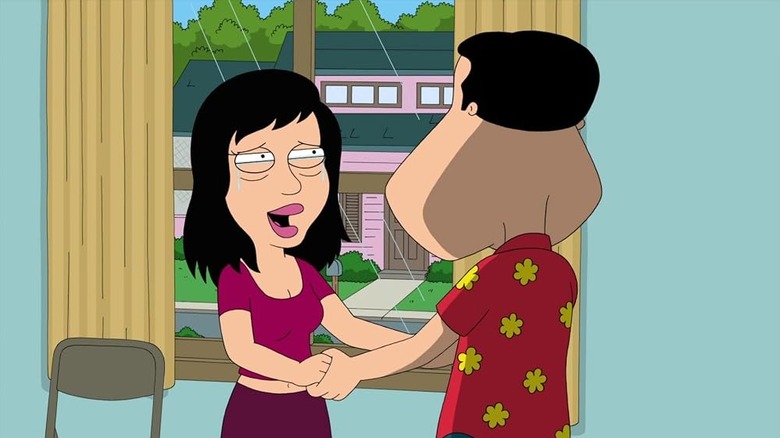
Many sitcoms will incorporate "special" episodes into a season where the comedy falls to the wayside in order to offer some kind of more serious message. "Family Guy" has never really been about that. Sure, plenty of episodes end with some kind of moral about family or friendship, but it never gets too saccharine for its own good. That is until "Screams of Silence: The Story of Brenda Q" made it to airwaves.
The episode follows Quagmire's (Seth MacFarlane) sister, Brenda (Kaitlin Olson), as she's reeling from being the victim of domestic abuse from her partner. It's a deeply unpleasant plotline, but something that's absolutely worth discussing so that real-life victims out there don't have to feel so alone. The problem is that "Family Guy" is probably the worst vehicle to relay this story.
There are still plenty of "Family Guy"-esque jokes scattered throughout the episode, which clash horrifically with the serious subject matter at play. The characters tend to talk down to Brenda, making it seem like she's partially to blame for staying in an abusive relationship. The conclusion also sees the main cast kill Brenda's abuser. Years after the episode came out in 2011, viewers are still reeling from how tone-deaf it is. Maybe "Family Guy" should just stick with the giant chicken fights.
If you or someone you know is dealing with domestic abuse, you can call the National Domestic Violence Hotline at 1−800−799−7233. You can also find more information, resources, and support at their website.
Herpe, the Love Sore
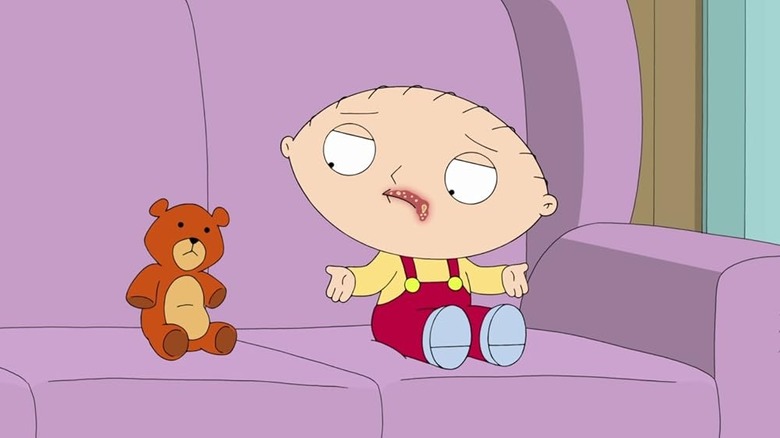
When "Family Guy" began, Stewie was a precocious talking baby with ideations of killing his mother. It was dark, but it played well into the show's sensibilities. In the years since, Stewie has moved away from assassination plots and, instead, he just gets into wilder (and far more adult) situations. In "Herpe, the Love Sore," Brian (Seth MacFarlane) gives Stewie (also MacFarlane) herpes after the two become "blood brothers" (they slice open their palms and form a blood pact).
Stewie later learns that Brian has herpes and gave it to him via the handshake. Then, for the rest of the episode, Stewie is walking around with a cold sore on his face. He operates like a fully realized adult, but at the end of the day, he's still just a baby. It's deeply unsettling and just downright gross to see him in this state.
It's also easily one of worst things Brian has ever done on "Family Guy," namely giving a baby an incurable medical condition. And he faces no consequences for his actions. Plus, we learn he did the same thing to Chris, so Brian should really be more forthcoming about his condition to the people he interacts with. Is this all thinking too much about a silly "Family Guy" episode where we never see Stewie with a cold sore ever again? Perhaps; but as a whole, the episode leans more heavily into gross-out imagery than solid joke-writing. And it's worth skipping for that reason alone.
Quagmire's Dad
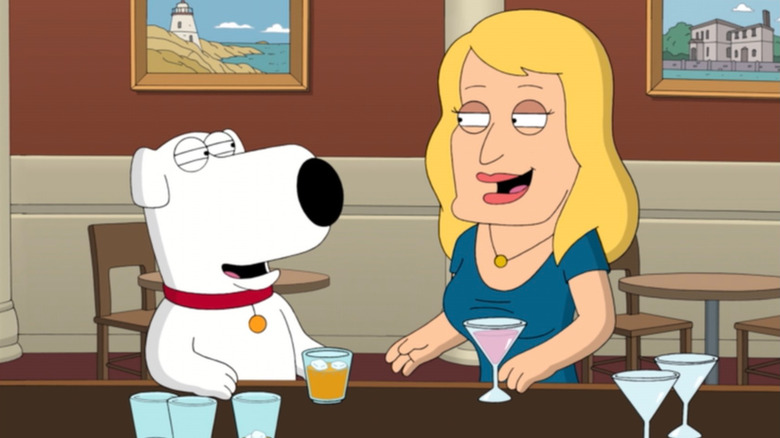
"Family Guy" made an entire episode revolving around a transgender woman in 2010, and it went about as well as one would expect. Quagmire's parent transitions into a woman, much to his dismay, as he once admired her for being a war hero. But Ida (Seth MacFarlane) insists that transitioning doesn't change her past; it just changes her future. Having the emotional crux be Quagmire learning to respect his mother's decision and finally living as her true self could've been a valid episode. It's just a shame that the lesson is couched among rampant transphobia.
Many characters treat Ida poorly. When Ida hands Lois (Alex Borstein) a casserole, she wants to throw it away. But probably the story's most egregious offense comes when Brian sleeps with Ida after he's been out of town for most of the episode and doesn't know what's been happening. Upon learning that Ida is transgender, he vomits for 30 seconds straight. It's a clear-cut case of trans panic and gives into the stereotype that trans people will try to "trick" others into sleeping with them.
Ida's own characterization and the way others treat her improved greatly in later episodes (but still not without some flaws). It's clear the "Family Guy" staff has tried to be more cognizant about how they try to present trans characters, but Ida's first episode is rough.
Turban Cowboy
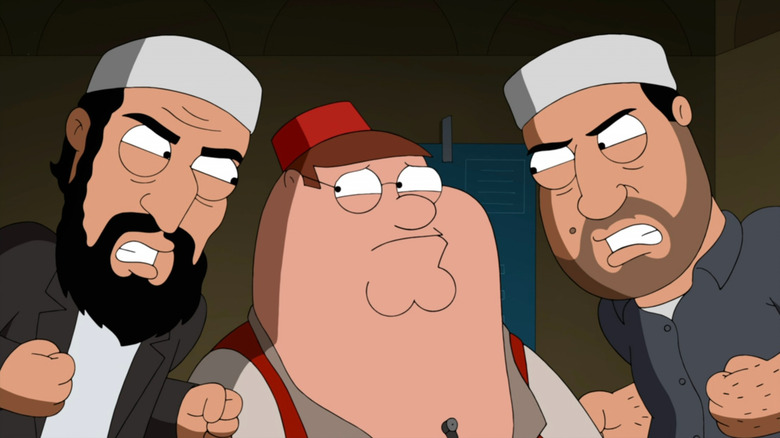
Cutaway gags on "Family Guy" are usually an opportunity to throw in some wacky joke that has nothing to do with the actual plot and give the audience a quick laugh. However, one cutaway gag on the episode "Turban Cowboy" soon became far too real to laugh at. In the episode, Peter (Seth MacFarlane) goes parachuting and mentions not feeling a rush like that since he won a marathon. The scene then cuts to Peter driving his car through scores of people running a marathon. The episode aired on March 17, 2013; and one month later, on April 15, the Boston marathon bombings occurred.
The joke was already dark, but the real-world connection made the episode impossible to watch. It made sense when the scene got deleted, never to be shown on TV again. It's probably for the best as the rest of the plot doesn't fare much better these days. Peter befriends a Muslim man who introduces him to Islamic culture. While he seems nice at first, it's later revealed that he's a terrorist who wants to use dim-witted Peter in one of his attacks.
There already aren't many Muslim characters on "Family Guy," so the fact the one of the few winds up being a terrorist becomes a harmful stereotype. It's a far cry from "The Simpsons" episode "MyPods and Boomsticks," where Bart (Nancy Cartwright) befriends a Muslim boy whose family is normal, but Homer (Dan Castellaneta) becomes suspicious anyway. In that case, the joke is at Homer's expense, whose Islamophobia gets ridiculed. Here, "Family Guy" is perpetuating stereotypes rather than calling them out.
Seahorse Seashell Party
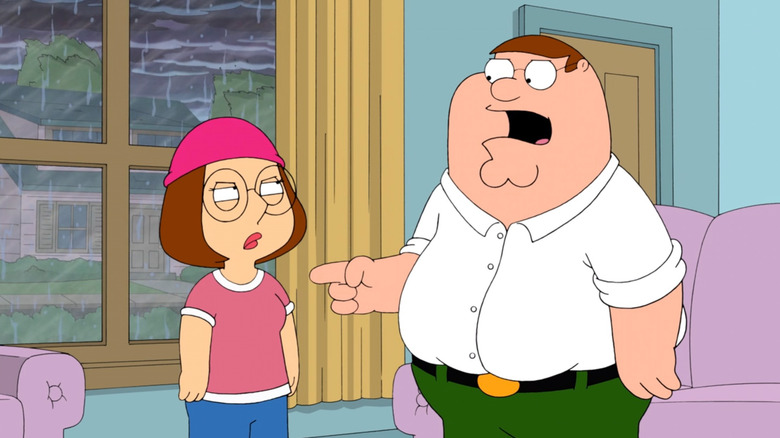
Meg (Mila Kunis) was a well-rounded character in the first few seasons of "Family Guy." She was a teenage girl who felt insecure about her looks and school status; but after a while, she just became the family punching bag. Even fans thought the Meg jokes went too far in one particular episode that tried to rationalize the abuse she suffers from her family.
In "Seahorse Seashell Party," the Griffins are trapped indoors due to a storm, and Meg finally confronts Peter, Lois, and Chris (Seth Green) about why they're all so nasty to her. None of them have a good reason, so they start being mean to one another. Meg realizes that she functions as the family's "lightning rod" where she absorbs all of their anger and abuse so that they don't direct it toward one another. The episode ends with a reset to the status quo of Meg accepting her place within the family.
"Family Guy" often subverts typical sitcom messaging, but this was a step too far. The fact is that Meg shouldn't have to endure all of that pain and suffering. Everyone else should get better and probably go to therapy. In more recent seasons, everyone's chilled out on Meg a bit. Now, most of her jokes center on her saying and doing the most random things rather than getting shot or punched in the face. It's a step up from where she was before, but the ending of "Seahorse Seashell Party" is too sad to enjoy the rest of the episode.