

All 5 The Purge Movies, Ranked From Worst To Best
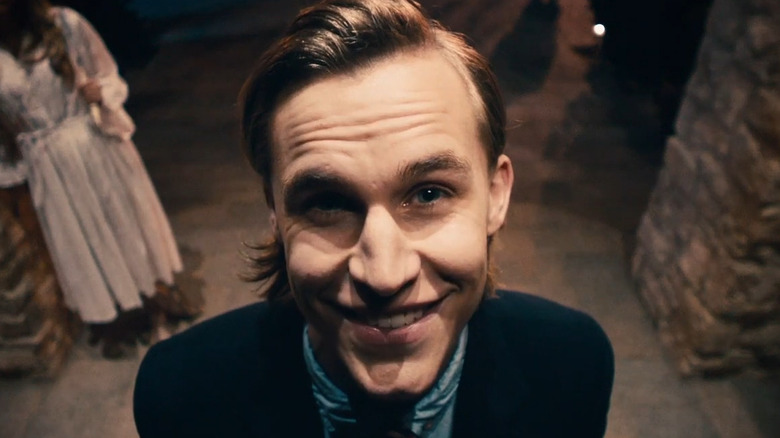
Engaging in stories about dystopian futures gives us the opportunity to safely experience the thrills and horrors of a broken world without having to actually live in it. We know that what we're witnessing probably won't come to pass, though it feels like dystopian movies are becoming more and more believable with each passing year. One franchise that doesn't seem quite as wild as it did when it debuted back in 2013 is "The Purge." The general premise of this Blumhouse-produced horror-action series revolves around a twisted annual American holiday put forth by the New Founding Fathers of America (NFFA) where all crime is totally legal for 12 hours straight, meaning you can literally get away with murder.
In the years since the first film, the concept of "purging" has entered pop culture. It's become something that everyone, in some capacity, understands the mechanics of. It originated after a road rage incident led the wife of series creator James DeMonaco to half-heartedly float the idea of every citizen being allowed one free crime a year. "It stayed with me," DeMonaco said in a behind-the-scenes featurette. "I turned that into this holiday where once a year all crime, including murder, was legal." There are currently five "Purge" films, all of which offer a different perspective of the carnage. With a sixth entry currently in development, it's clear that DeMonaco still has more to say. As we await the next installment, let's take a look at the existing ones and see how they stack up.
5. The Forever Purge
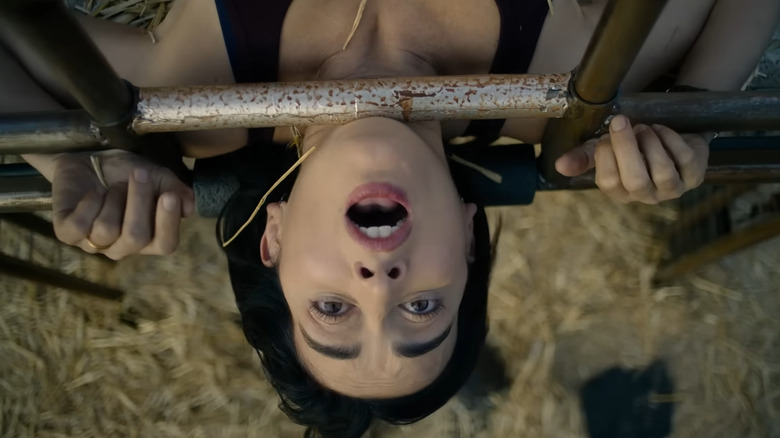
On paper, 2021's "The Forever Purge" is the franchise's boldest reflection yet, with the NFFA being voted back into power eight years after the events of "Election Year" and reinstating the twisted holiday back into the country's routine. The difference this time around is that the killing doesn't stop after the 12 hour mark. A band of white nationalists from around the country have formed an insurrectionist movement intent on slaughtering immigrants, detractors, and anyone else they deem to be non-American. There's a definite irony in that solace for non-Purgers comes via Canada and Mexico opening their borders for a brief amount of time.
It's a great idea for a sequel, but, as Looper's review of "The Forever Purge" makes clear, the film bites off more than it can chew. What's most frustrating about this lackluster fifth entry is that it sets itself up to tackle a lot of hot button issues, yet it can't really get into their nuance on account of its adherence to genre mandates. The scattered ensemble sadly doesn't make much of an impression, either, with the sledgehammer approach of James DeMonaco's screenplay ensuring they come off as hollow embodiments of social movements instead of actual people.
Everardo Gout taking over directing duties also proves to be a misfire as the grime of previous entries is lost in favor of an exploitation movie that looks distractingly clean. Not to mention that the action sequences themselves are very underwhelming. "The Forever Purge" sits at the bottom of our ranking in part because it implodes the series' gimmick by backing it into a corner and it lacks that fatalist edge the franchise is known for.
4. The First Purge
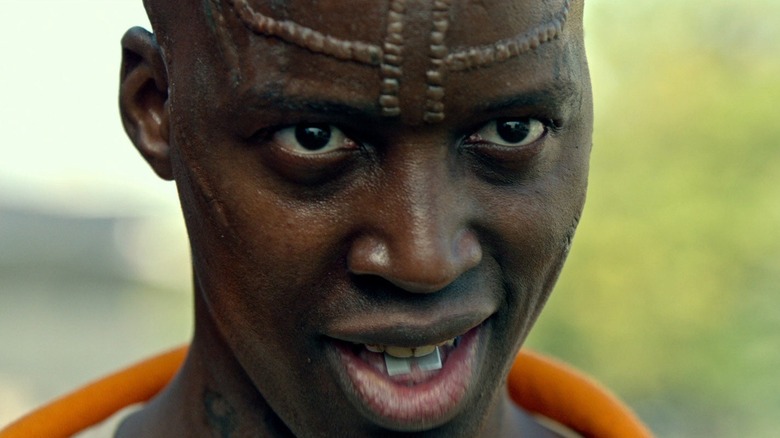
When "The Purge" became a hit in 2013, viewers started theorizing about how this demented holiday came to be. 2018's "The First Purge" answered those questions by taking us back to the start of the Purge timeline. NFFA sociologist Dr. May Updale (Marisa Tomei) decides her 12 hour experiment will be limited to Staten Island, with residents being offered monetary incentives to participate. It's just petty crimes to begin with, until a psychopath named Skeletor (Rotimi Paul) draws first blood. As bodies start to pile up, residents Dmitri (Y'lan Noel), Nya (Lex Scott Davis), and Isaiah (Joivan Wade), come to learn that the NFFA has been sending in white supremacist mercenaries to skewer the results.
"The First Purge" will blow you away by being the angriest film in the franchise, as it explicitly shows how the fascistic NFFA knew from the start that people wouldn't immediately resort to murder, so they created their own disturbing narrative. Blood-soaked cops, Klan members, and people in blackface masks walk hand in hand in their terror campaigns through predominantly Black neighborhoods, creating some of the most shocking imagery of the franchise to date. The second half of the movie illuminates how the Purge's decades-spanning legacy of masked killers was etched in stone from the get-go.
Sadly, despite possessing the potential to be the best film in the series, "The First Purge" falls short of greatness for a few reasons. The main one is that director Gerard McMurray just didn't have enough resources to capture the full scale of the inaugural nightmare, and it shows (there's a compositing shot of Tomei being interviewed against a crowd that's laughably awful). The poor special effects and obvious green screen moments take you out of the film as a viewer, ruining the overall experience.
3. The Purge: Election Year
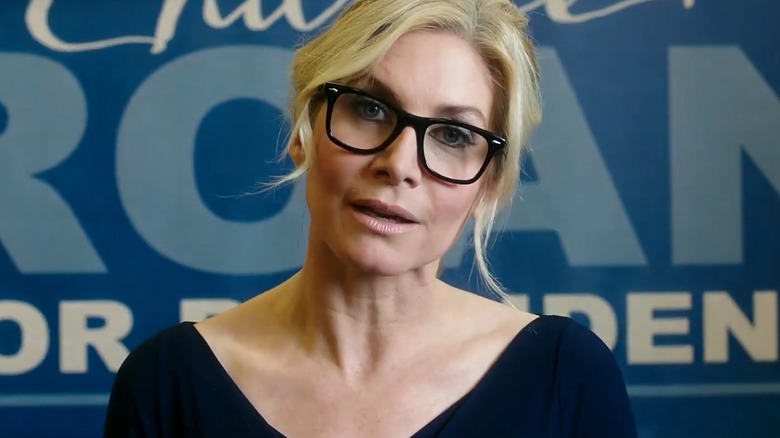
Released five months before Donald Trump was elected president for the first time, 2016's "The Purge: Election Year" quickly earned a reputation as a prescient film, with reports of hate crimes and incidents of political violence spiking in the U.S. following Trump's victory over Hillary Clinton. After watching "Election Year," critics noted that the character of presidential hopeful Senator Charlie Roan ("Lost" star Elizabeth Mitchell), who is targeted by followers of the NFFA because she wants to bring an end to the Purge, felt like a clear stand-in for Clinton.
The NFFA decides that Charlie could pose a threat to their very existence, so they remove Purge restrictions on government officials. It isn't long before Charlie finds herself forced out of her secure abode and onto the streets with Security Chief Leo Barnes (Frank Grillo) by her side during the Purge. "Election Year" plays almost like a twisted campaign tour — there's a lot of characters and adjacent stories that Charlie finds herself involved in while out and about, some of which are better than others. Grillo's Barnes having to navigate a better path following his Purge experience works well, and Edwin Hodge's Dante Bishop is a welcome addition after his appearances in the previous two films.
It's actually pretty subversive on James DeMonaco's part to portray a presidential hopeful who relies on the polls to make her anti-Purge position known, only to learn the hard way her opponents have no intention of playing fair. It's an engaging watch, and both Mitchell and Grillo are great in their roles, but "Election Year" ultimately suffers from drawing out the central conflict for too long. It keeps finding new ways to hurl its characters into harm's way that don't feel particularly organic, even once they've found safety among the resistance group.
2. The Purge
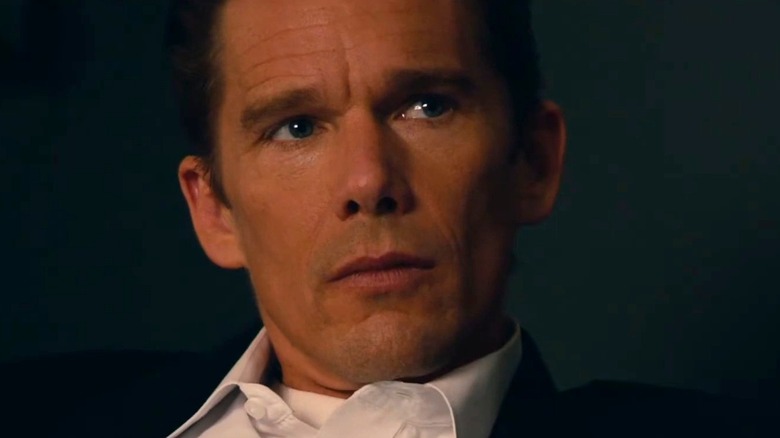
The inaugural entry in the long-running Purge series keeps things relatively contained by staying within the vicinity of a wealthy gated community. Our residence for Purge night is the home belonging to the well-off Sandins: Father James (Ethan Hawke), mother Mary (Lena Headey), teenage daughter Zoey (Adelaide Kane), and younger brother Charlie (Max Burkholder). A quiet night holed up suddenly takes a turn when Charlie disarms the security system to let a bloody stranger (Edwin Hodge) — later revealed to be Dante Bishop — into the house after he begs for help.
Now that the series' sequels have explored more of the outside world, the home-invasion thrills of "The Purge" play much better. It's retroactively a great introduction to the franchise's world as knowing what's out there raises the stakes for the Sandins, who pounced on the fear generated by the Purge to make a killing selling security systems. Writer-director James DeMonaco essentially shoves this sheltered white family out of their echo chamber and forces them to face off with the dirty source of the fortune.
The menacing Purger (Rhys Wakefield) who threatens to launch an assault on the house if they don't give Dante up is a highlight. Wakefield makes a meal out of playing the intruders' gleefully psychopathic leader just itching to get his. There are a few questionable moments (such as the dim-witted Zoey sneaking her obviously homicidal boyfriend into the house prior to lockdown), but, of all five films, "The Purge" features the best ending. It not only kills off the most famous person in the cast, but it also leaves the family in a haunting state of emptiness, all while broadcasts talk about how successful this year's Purge was. It's the most naturally fatalistic conclusion of the bunch.
1. The Purge: Anarchy
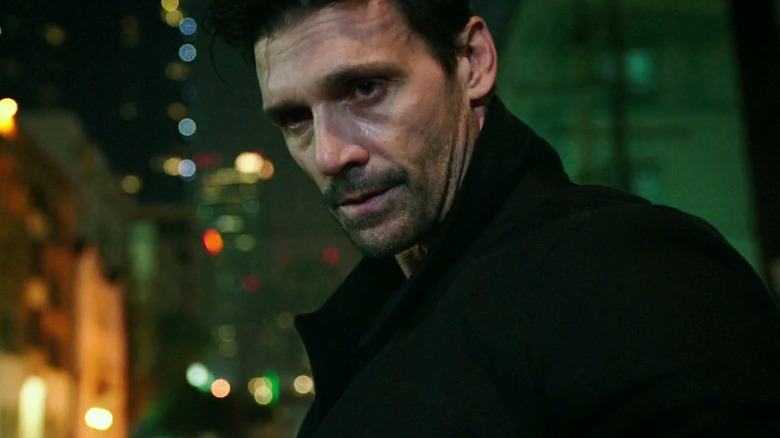
It's no mistake that the best "Purge" movie is the one that takes to the streets and allows us to witness how this holiday affects the working class people who can't afford expensive security systems. 2014's "The Purge: Anarchy" follows three groups of people just trying to survive the night after circumstances leave them open for the kill.
First, there's waitress Eva Sanchez (Carmen Ejogo) and her teenage daughter Cali (Zoë Soul), who get kidnapped by a paramilitary group that breaks into their apartment building. Then there's Shane (Zach Gilford) and Liz (Kiele Sanchez), a married couple who have to navigate their deteriorating relationship as well as their tampered-with vehicle. At the center of their stories is the grizzled Leo Barnes (Frank Grillo), an off-duty LAPD Sergeant whose main goal is revenge on the man who killed his son in a drunk driving accident. Upon seeing the four innocents in peril, he becomes their reluctant protector, partly in the hope that it will get him closer to achieving his goal — after all, finding some buddies is a must-do if you want to survive the Purge.
Writer-director James DeMonaco was clearly influenced by both John Carpenter's "Escape from New York" and Walter Hill's movie "The Warriors," taking his characters on a violent odyssey through a city brimming with dangerous weirdos that can pop out of any crevice. Jack Conley's Big Daddy, adorned in slaughterhouse attire and firing a truck-rigged gatling gun, is the film's most memorable antagonist, but Grillo is the scene-stealer here, playing Leo as a slightly softer Frank Castle-type who gets swept up in the madness. The finale takes this movie into overdrive, delivering the best example of catharsis you could hope for after the night everyone's been through.