

5 Best Prison Movies Nobody Talks About Anymore
Many of the most beloved movies of all time are set behind bars. It seems unlikely that anything will ever replace "The Shawshank Redemption" at the top of IMDb's top 250 (unknowingly aided by Batman fans), although that's an outlier in the genre for being a tear-jerker –- the prison movie is typically as brutal as cinema can get. Time spent cut off from the outside world can cause existential despair and frustration, the cold, unfeeling walls are never easy to settle into, and the wardens won't care whether you make it out alive or not. While often more dramatic than most real accounts of prison life, movies like these will terrify you into obeying the law so you never find out.
For this list, we're exclusively looking at the great ones which deserve to be talked about more, not the definitive best prison movies of all time. Instead, we're shining a light on films that were either critically acclaimed or initially popular at the box office that have gradually faded from the cultural conversation. We measured several underrated prison movies by the number of Letterboxd "logs" they received, especially in comparison to the 4.2 million who have watched "The Shawshank Redemption."
Of the five titles below, the two most popular have roughly 39,000 views each. They deserve a lot more love than that, so if you've never seen these prison movies, get watching and talking about them.
Chopper
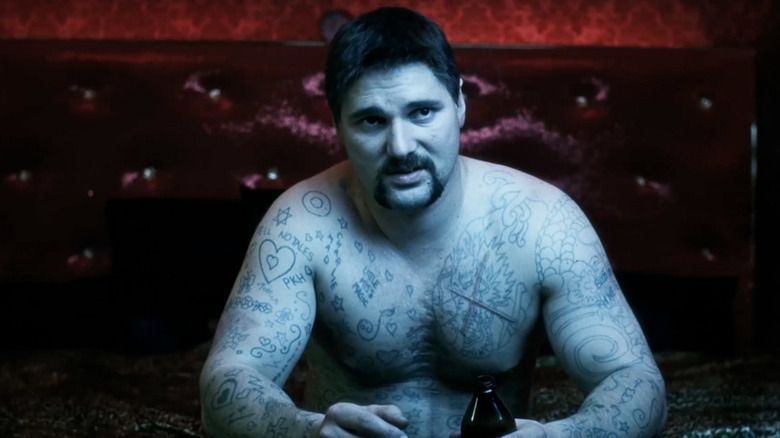
Before playing the Hulk, Eric Bana was and is still best known as a sketch comedian in his native Australia, bursting to fame in the 1990s as a key cast member of the country's "SNL" equivalent, "Full Frontal." His breakout dramatic role subverts those instincts, with his transformative performance as notorious criminal Mark "Chopper" Read finding the dark, dry humor in his general nonchalance towards brutal violence. Read himself had penned several best sellers about his time behind bars after being released, but writer/director Andrew Dominik doesn't draw from any particular one for inspiration, blurring the lines between fact and legend to create a more uncomfortable portrayal of a true Aussie eccentric. He won't flinch when stabbed and will probably drive you to the hospital after beating you within an inch of your life.
Bana finds the humor in the character without making him perversely endearing, understanding that pathologizing his actions will only make him less interesting. The actor instead approaches him as the cultural Australian stereotype of the Larrikin –- a rowdy hooligan who is nice beneath their aggressive persona -– pushed to its furthest extreme, even more uninhibited behind bars than he was in the criminal underworld. It's an explicitly violent movie but never a punishing one due to the disarmingly mischievous humor; which is important after showing the main character getting his ears cut off, after all.
Kiss of the Spider Woman (1985)
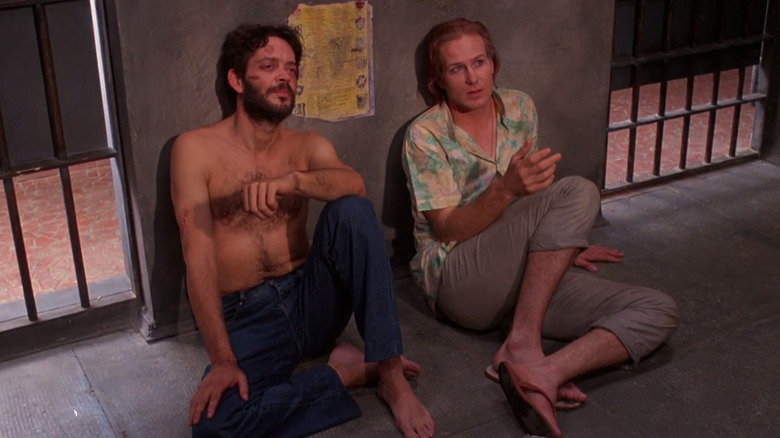
Later adapted into a stage musical -– which had its own underrated 2025 screen version starring Diego Luna and Jennifer Lopez –- this original take on the 1976 Argentine novel by Manuel Puig transferred the action to a Brazilian prison in the dying days of the country's military dictatorship. Initially following the relationship between reluctant cellmates Valentin (Raul Julia), a leftist revolutionary, and Luis (William Hurt), an openly gay man, their dynamic transforms as Valentin grows invested in Luis' recounting of an imported Nazi propaganda thriller, only for it to be revealed that both cellmates have been secretly encouraged to report on the other by the military forces which run the prison.
Although confined to a single, claustrophobic setting, "Kiss of the Spider Woman" is easily the most expansive film of this selection, using its hyper-stylized recreations of vintage wartime propaganda to dig deeper into the psychology of its two leads. The movie transforms into equal parts paranoid thriller and queer romantic drama, feeling as bold today as it was at the time of release; for all its acclaim and Oscar nominations (including a win for Hurt in best actor), it's telling that the 2025 musical adaptation similarly had to be produced independently. There's still much progress to be made for challenging LGBTQ stories to get heard, 40 years after this broke ground as an indie success.
Riki-Oh: The Story of Riki
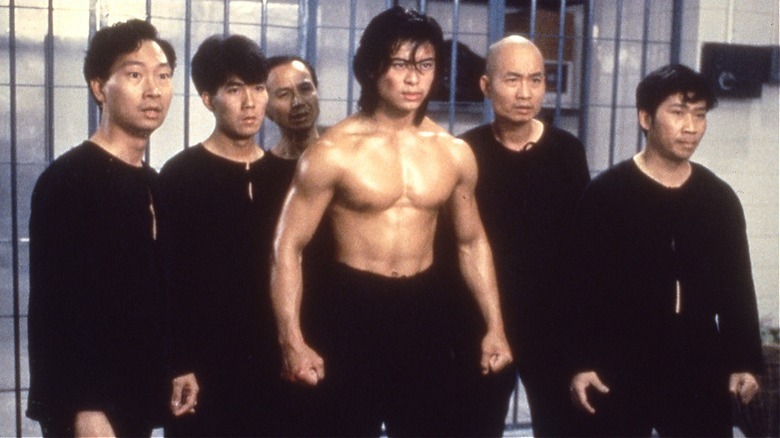
A movie so gleefully over-the-top in its violence that it became Hong Kong's first to receive an adults-only "Category III" rating typically reserved for pornography, this adaptation of the dystopian Japanese manga has rarely been equaled in its gleeful martial arts splatter.
Set in a then-futuristic 2001, when prisons have been privatized and allowed to run into unregulated violent chaos, Ricky Ho (Fan Siu-wong) arrives behind bars after killing the crime boss responsible for his girlfriend's death. Almost immediately, he sees an old man being tortured and kills his attackers. Word of this begins to spread, and the assistant warden takes multiple steps to ensure he doesn't inspire the inmates to revolt.
The charm of "Riki-Oh: The Story of Riki" is that it not only maintains the cartoonishness of its source material but heightens it. The prison is run by a child's idea of a movie villain, a big round man with a fake eye and multiple inventions to stop criminals who could have stepped out of the silliest Roger Moore-era Bond movie. Then there are the nature-defying fights themselves, including a character ripping out his own intestine to try strangling Ricky, and our hero proving so resilient he can be buried alive for a week unscatched. This isn't a movie you come to for hard-hitting realism, but it's irresistibly campy mayhem totally unencumbered by the laws of science; not every prison movie needs to be a grueling thriller.
Scum
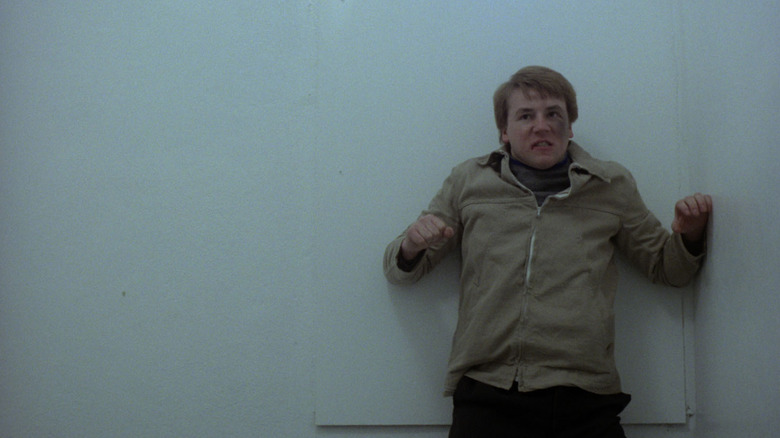
Originally produced as a television play by the BBC in 1977, which the network pulled from broadcast due to excessive violence and didn't air until 1991, director Alan Clarke and scriptwriter Roy Minton worked around the ban by remaking "Scum" as a feature. Set in a now-defunct form of British youth detention center known as a Borstal, the movie follows Carlin (Ray Winstone), a young man wrongfully imprisoned after taking the blame for a minor crime his brother committed. Initially attempting to see his sentence through, he's forced into action after witnessing the bullies who control the wing beat up weaker inmates to maintain their dominant status. He becomes the new top dog, successfully keeping the peace for a while; unfortunately, the staff don't care about the safety of the young men under their watch, and things quickly take a turn for the worse.
Far more brutal than the TV film -– with subplots such as Carlin's homosexual relationship with another inmate excised to make for a tougher take on the same material — "Scum" is unsparing in its graphic violence and depictions of suicide, sexual assault, and racism. But it's the cold attitudes of the adults in this world to these horrific acts which might be the most punishing, unshakable aspect of what was already one of the most despairing British movies ever produced. Few prison dramas equal this when it comes to dramatizing the unfeeling, oppressive nature of a life behind bars.
Starred Up
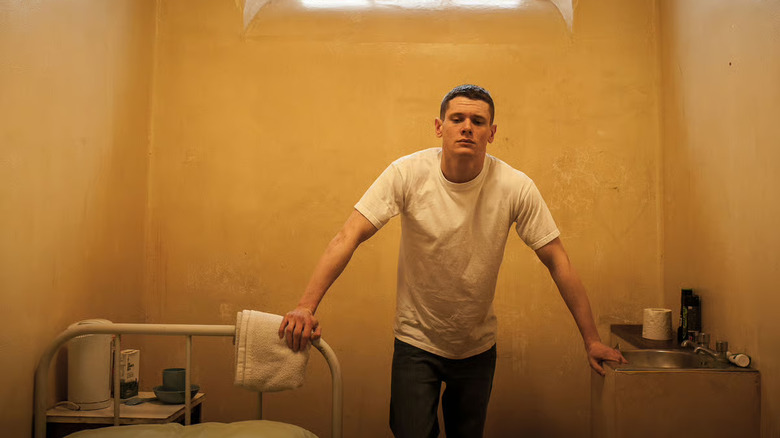
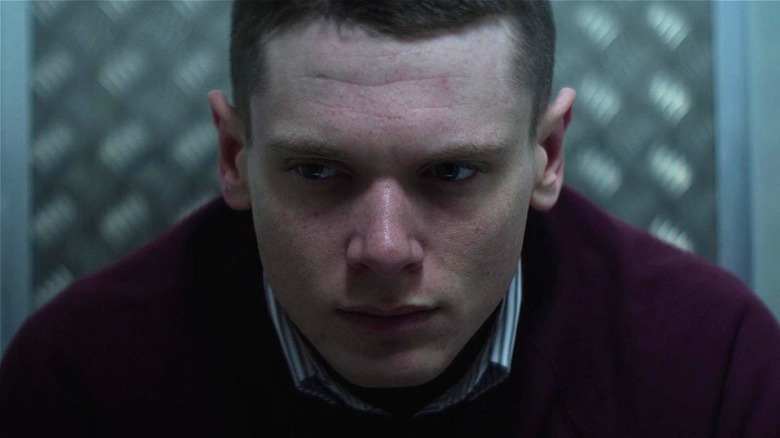
Inspired by screenwriter Jonathan Asser's time as a therapist at London's Wandsworth Prison, "Starred Up" follows 19-year-old old rage-filled whirlwind offender Eric (Jack O'Connell) as he's moved from a young offenders' institute to a high security adult facility, fighting every warden and inmate who crosses his path. Asser and director David MacKenzie don't try to pathologize whether Eric's behavior is a response to his own incarcerated father (Ben Mendelsohn), exploring their unpredictable, ever-shifting dynamic in a way that frequently subverts expectations.
You couldn't describe their relationship as ever becoming tender, but MacKenzie's film is a lot more introspective than what is typical for the genre, punctuating moments of brutality with thoughtful group therapy scenes that break down the tough character archetypes. The true genius of "Starred Up" is that it manages to balance this with the hard-edged, bluntly violent thrills people want from a prison movie, balancing the expected cliches with a more authentic, well-researched perspective that elevates it above most genre fare.
If that isn't enough to convince you, it also features one of O'Connell's most startling, attention-grabbing performances, long before "Sinners" came around; in his hands, Eric is every bit as vulnerable as he is terrifying.