

5 Best Road Trip Movies Nobody Talks About Anymore
The promise of the open road can mean a lot of things in the movies: a life-defining coming-of-age experience, tense kidnappings or prison breaks, an emotional search for a lost loved one, and so much more. Nobody ends their journey in the same place they started it, with their experiences either behind the wheel or in the passenger seat going on to be character-defining, for better or for worse. For each idealistic teenager who found themselves after flying the nest, there are countless more who have grown hardened by the loneliness and alienation from drifting between anonymous motels and diners on long, desolate stretches of highway.
There are dozens of masterpieces in this broad genre, many of which — like "Easy Rider" or "Thelma & Louise" — we've already given their flowers in our list of the best road trip movies of all time. But there are even more worthy titles which, although not entirely ignored, are overlooked in comparison to the most famous road trip movies, and here, we're going to shine a light on five films as boldly different as they are underseen. To determine a film's status as underrated, we logged onto Letterboxd and sorted this master list of road movies by their popularity, choosing five of our personal favorites from the lower tiers. Of these films, the most-watched has approximately 83,000 logs, and the fewest have 32,000; for comparison, the site's most-logged road trip movie, "Little Miss Sunshine," has been marked as watched by 3.3 million users.
Here are five of our favorite underrated road trip movies that we wish more people would talk about, ordered by their release dates.
Something Wild
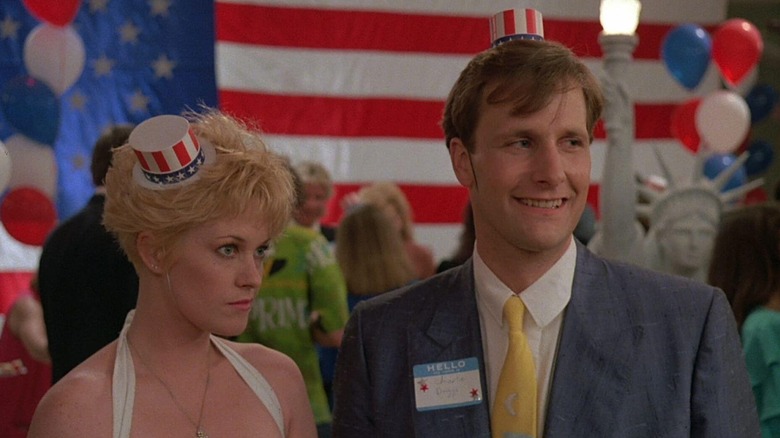
These days, the term "yuppie" has become synonymous with the very worst men in the boardroom; characters ranging from "Wall Street" antihero Gordon Gekko to the Huey Lewis-loving mass murderer Patrick Bateman in "American Psycho" all represent the dark excesses of this distinctly 1980s archetype. Before it became a heightened stereotype, the word was coined as a neutral term representing young, urban professionals, and just before they became widely villainized, filmmakers were keen to pull them out of the boardroom and into dangerous, character-defining adventures that had gotten lost in the buttoned-up Reagan era. This is exactly why Jonathan Demme's anarchic culture clash comedy "Something Wild" still feels like such a breath of fresh air today, even as all signs suggest something that should feel horribly dated on paper.
It begins like an offbeat meet-cute between two opposites; an investment banker (Charles Driggs, played by Jeff Daniels) is confronted by a stylish, carefree woman (Melanie Griffith's Audrey "Lulu" Hankel) after he leaves a diner without paying. She offers him a ride, and shortly after accepting, throws his beeper from the car and forces him into a whirlwind road trip, giving him the dangerous life experience he didn't even realize he was missing. And then, Demme begins shifting gears, arriving at the destination of Lulu's high school reunion, with the film suddenly becoming a violent, almost "Cape Fear" style thriller as her estranged husband, Ray (played by Ray Liotta), returns to the picture. Like all the best road movies, it's a tale of someone finding themselves after being forced out of their comfort zone; the journey there is just a lot less predictable in Demme's hands. It's equal parts funny, intense, and sincerely romantic.
Down By Law
Director Jim Jarmusch has specialized in offbeat takes on so many different genres, from the Western ("Dead Man") to vampire and zombie movies ("Only Lovers Left Alive" and "The Dead Don't Die"), but it's his various takes on the road trip formula that offer the richest examples of his distinct brand of Americana.
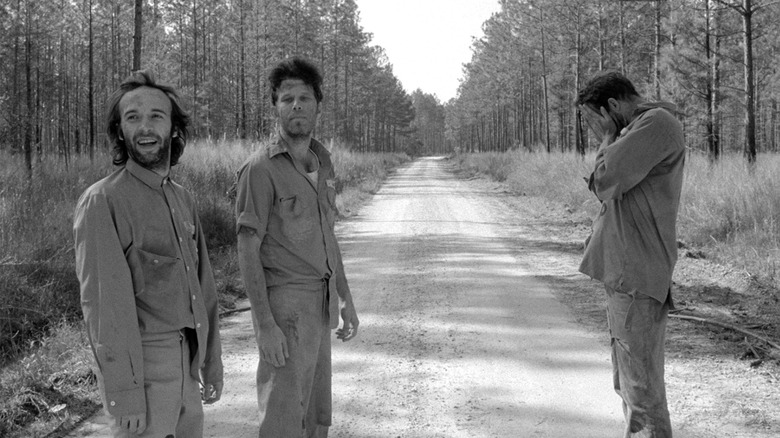
One of the most recurring subgenres of the road trip movie is that of the prison break thriller, although "Down by Law" doesn't play by any of the expected narrative rules, following the surprising friendship between two wrongfully incarcerated men (Tom Waits and John Lurie), and their whimsical Italian cellmate (Roberto Benigni), who did apparently murder a man in self-defense. Jarmusch's approach to the road trip movie is established almost immediately on the roads of New Orleans' French Quarter, as the characters wander through dirty, desolate streets shot in the glamorous black and white of a vintage noir movie — even if his hipster protagonists are nowhere near as cool as they initially appear. Beneath their striking style and cultivated cool, they are bumbling wanderers, and the wider world always gets one up on them.
Benigni's character, also named Roberto, doesn't appear until the midway point, and the tone transforms alongside him as he leads an escape plan that the other two leads are incapable of. In trademark Jarmusch fashion, it's not the cool characters who appear at home within the genre who can pull off the rescue, but the live wire comic relief; the film may look like a noir, but it operates at the opposite end of hard-boiled plot logic. It's these subversions and the laid-back approach to what is typically such a plot-driven road movie that make it a ride worth taking. It's also a great entry point for anybody wanting to get into this delightfully idiosyncratic director.
A Perfect World
Clint Eastwood has retired several times over on our screens, but it was "Unforgiven" that felt like the most fitting screen farewell, revising the Western hero persona that made him a household name. One of the only explanations we have as to why "A Perfect World," one of his very best directorial efforts, felt like it was taken for granted upon release is because it arrived so soon after what was widely considered his farewell to the Western, with solid-but-not-stellar reviews, and an underwhelming domestic box office run despite being a significant hit overseas.
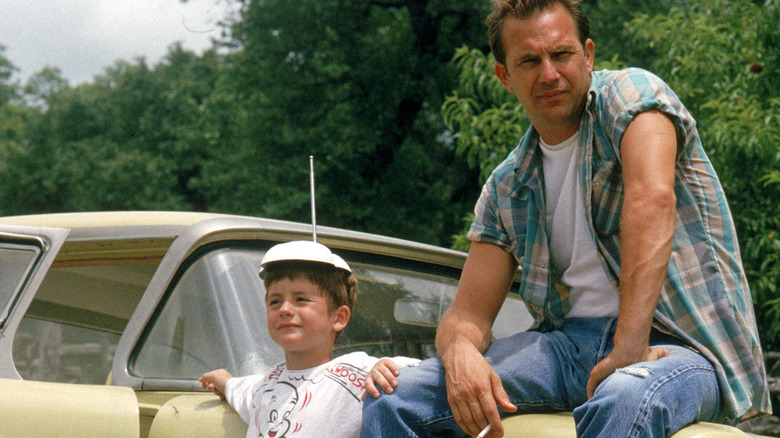
The underperformance at home likely hurt star Kevin Costner, too, as this was the movie that bridged the gap between his string of early 1990s megahits (from "Dances With Wolves" to "The Bodyguard") and a series of even more infamous flops. This is a shame, as Eastwood wisely cast him against type as escaped convict Robert Haynes, an antihero with a flawed moral compass; he'll kidnap a young child because he needs a hostage to aid with his escape plans, but he won't hesitate to kill anybody who thinks about harming him.
Their relationship gradually becomes that of a surrogate father and son, with young Phillip (T.J Lowther) experiencing more freedom when being used as a pawn to negotiate with than he ever had in his strict religious home. This bittersweetness makes for a distinctly uneasy movie in the vein of a crowd pleaser, although the criminal chase — with Eastwood's Texas Ranger chief Red and Laura Dern's criminologist Sally on their tail as they race to the Texas state border — helps satisfy those looking for a classic cat-and-mouse thriller on the open road. It's a richer, more complex movie than it appears from the outside, and deserves more recognition for being one of Eastwood's most morally challenging efforts.
Wendy and Lucy
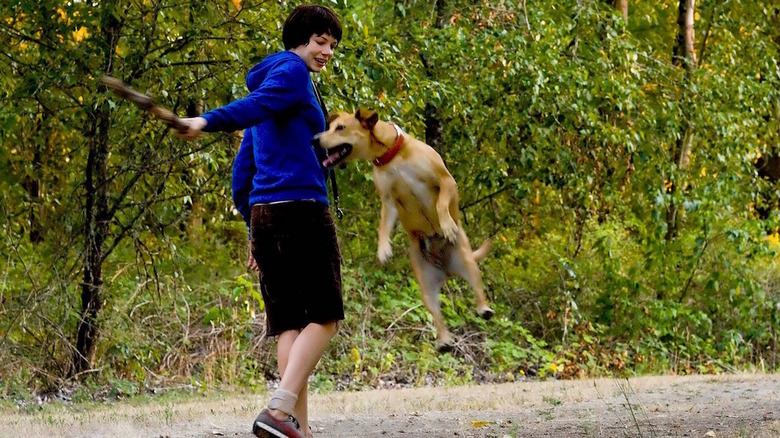
If you're the kind of dog owner who needs to know whether a four-legged friend will die in a movie before you commit to watching it, then you can rest easy: Lucy, played by director Kelly Reichardt's own mixed-breed pet she adopted from a rescue home, ends the story alive and with a roof over her head. However, you'd be foolish to rest easily because of that, as "Wendy and Lucy" is an understated heartbreaker, following Michelle Williams' broke drifter as she becomes separated from her dog while on a road trip to Alaska, where she believes she'll find work.
With very little money to her name, she becomes stranded in Oregon, with the authorities taking Lucy after she's arrested for trying to steal dog food from a grocery store. Her attempts to find Lucy after being let out are increasingly futile, with the film transforming into a devastating study of loneliness that should ring true for millions; even if you've never been in dire straits quite like Wendy, you'll recognize the sadness that would emerge from a sudden loss of a canine companionship many take for granted.
Like most of Reichardt's films, "Wendy and Lucy" doubles up as a scenic journey around her adopted home state of Oregon, although this trip shows the constrictions of life on the road when you're struggling to get by: It's as de-romanticized as the genre can get. Although a critical darling, it was largely underseen on release, which is a shame, as in retrospect it looks like one of the timeliest 2008 releases, with a character study that would widely resonate beyond state lines and international borders because of the financial crash. The power of "Wendy and Lucy" is that it doesn't need to connect this story to that bigger picture to hit home.
Away We Go
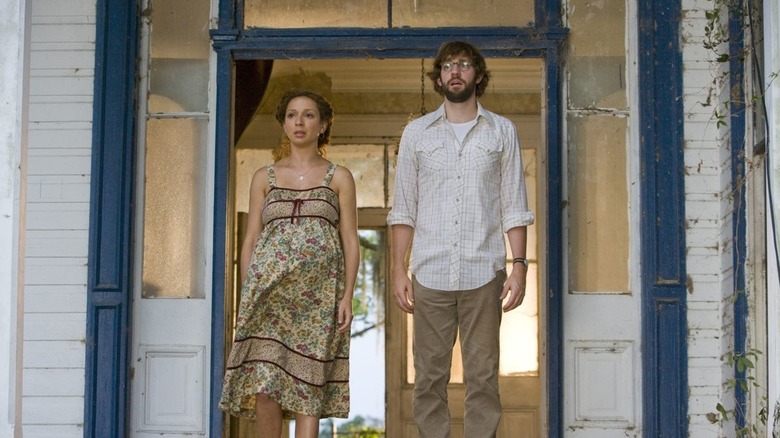
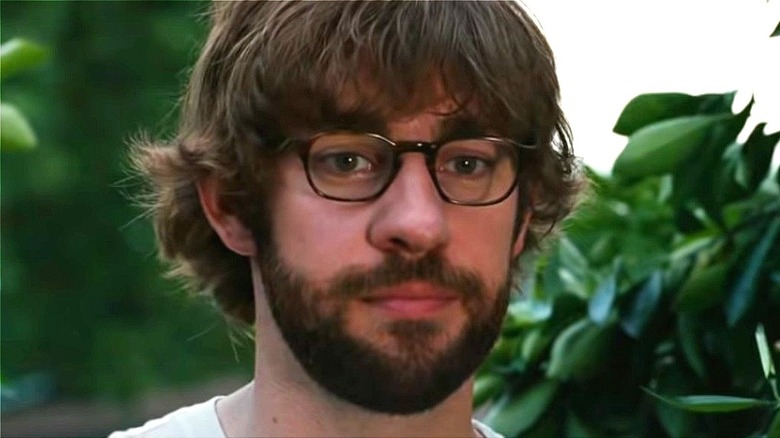
This indie comedy from director Sam Mendes also places a looming, ticking clock over the central characters' road trip, with stakes that many other films would paint as a desperate race against time. John Krasinski and Maya Rudolph star as Burt and Verona, a couple in their early 30s who wait until six months into Verona's pregnancy to begin tackling that age-old existential question: Where is best for them to raise a child, now that almost everybody from their lives is living in different states, if not different continents?
Their road trip across North America sees them revisit old friends and distant family members with children, take in various radically different approaches to starting a family, and assess what kind of town would be the right place to settle down in, judging the disastrous state of most relationships they're seeing up close.
Although it appears as quirky as many American indie movies of the late-noughties, "Away We Go" offsets those offbeat charms with a healthy dose of cynicism, realistically depicting the central couple as smug and condescending, largely out of sheer frustration at their general lack of direction. They're not easily likable, and that will probably hit closer to home than you might expect if you've ever been in their position of juggling professional obligations with the need to build a family home, leaving the most stressful, life-altering decisions until the last minute. There are many small pleasures to be had on their road trip, but it's all a distraction from the looming anxiety of parental responsibilities.