

5 Cyberpunk Movies That Were Way Ahead Of Their Time

The cyberpunk film world is a fascinating one to unpack. It's also one that, on the surface, sounds like it could produce a bunch of films that work better as time capsules than entertaining motion pictures. After all, the word "cyber" in this subgenre's name reflects how important technology is to these projects. Considering today's fancy iPod can become tomorrow's dusty relic, one can easily imagine cyberpunk movies coming off as impenetrable or just goofy decades removed from their respective release dates. However, the greatest cyberpunk movies never go out of style. Even if their plots involve Betamax tapes or floppy discs, strong storytelling, evocative images, and memorable performances (among other achievements) can resonate in any era.
For proof of how the cyberpunk movie can take on fascinating new layers long after it first premiered, just look at these five cyberpunk movies that were way ahead of their time. These films may have already been acclaimed or relevant when they first came out, but since then, they've taken on exciting new layers of pertinency. Sometimes, that's because events or technologies depicted in these films actually came to pass. Other times, it's because real-world horrors that these cyberpunk movies were commenting on have only festered and intensified over time.
Whatever the reason, these movies have stuck around as extraordinarily relevant classics. These five cyberpunk movies, ahead of their time, show that this subgenre doesn't automatically have a short artistic shelf life. They can keep on impacting and resonating with moviegoers decades into the future.
Minority Report
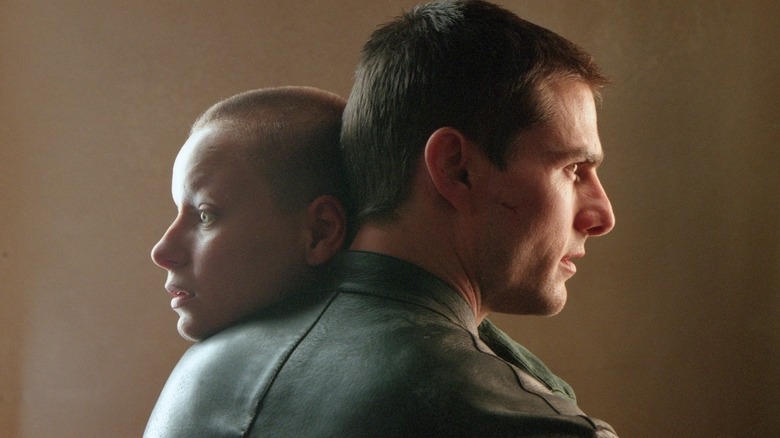
Like several Steven Spielberg directorial efforts, it took a while for people to catch up with the ingenious elements of "Minority Report." Some initial detractors focused on various perceived shortcomings of the production, but part of the untold truth of "Minority Report" is that initially, the film's product placement was heavily lambasted. Lead character John Anderton (Tom Cruise) exists in a world where people can't walk down the street without being bombarded with hologram ads for Gap or Burger King. When "Minority Report" first dropped, this element was seen as just a cynical way to hawk products to audiences during the runtime.
In this respect, though, "Minority Report" became one of those movies that only get better with age. In the decades since 2002, this element, reinforcing "Minority Report" existing in a future where nightmare parts of existence are treated as commonplace, has become part of the real world. Advertisements now dominate the internet. The 2026 Golden Globes inundated viewers with Polymarket product placement. Streaming devices and paid tiers of streaming subscriptions bombard people with ads. Meanwhile, new objects like "smart glasses" that violate countless privacy concerns mirror the invasiveness and pervasiveness of the ads Anderton wades through in "Minority Report."
Understandably, some critics viewed the cyberpunk feature "Minority Report" as making time for advertising as "Mac & Me"-style product placement. Tragically, this title was instead offering a bleak window into a future where ads weasel their way into every corner of existence.
Videodrome
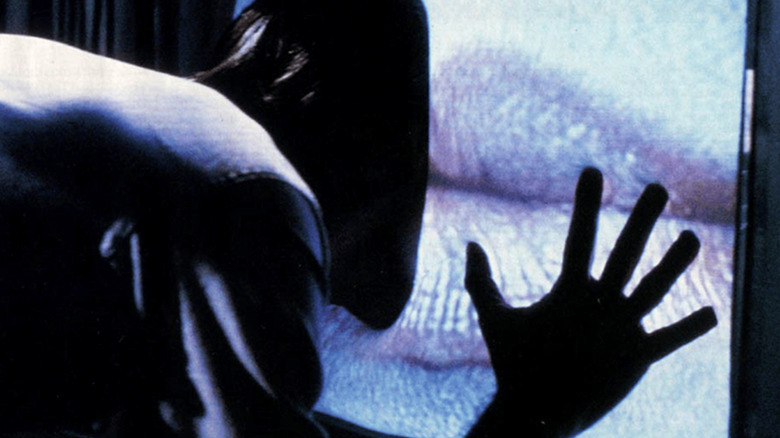
David Cronenberg's "Videodrome" focuses on Max Renn (James Woods), the president of CIVIC-TV, a channel specializing in obscene entertainment. When Renn discovers "Videodrome," a videotape depicting extreme violence and death, he decides to embrace it as the network's new centerpiece. In the process, he gets ensnared in a larger conspiracy involving hallucinations, plots to mold the psyches of North American TV viewers, and (per usual for Cronenberg) lots of psychosexual material. Just the starting point of "Videodrome" alone is now disturbingly relevant to 2020s existence.
Local TV channels aren't getting gobs of viewership these days, but Renn using human suffering for personal gain already echoes countless media moguls and Silicon Valley rulers, all too happy to see people languish in misery so that they can gain more cash. Equally relevant, though, is the fluid nature of reality in "Videodrome." The human race exists in an age where generative AI falsehoods or erroneous information about vital topics like climate change are treated as "facts." Advanced technology has only led to greater proliferation of inaccuracies. Scrolling through a cursed social media feed today will expose people to as many bizarre sights as the most unhinged "Videodrome" sequences (albeit without any of the entertainment or craftsmanship appearing in this Cronenberg film).
Meant as a specific commentary on cable television and emerging home video formats in the early '80s, "Videodrome" endures in the modern world as something ripped from the headlines. Tools to alienate people and divorce them from reality disguised as "entertainment" are, unfortunately, even more pervasive today.
The Matrix
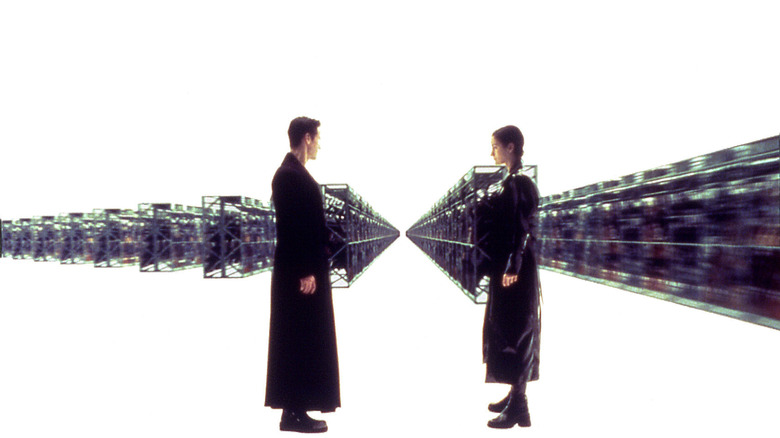
1999's "The Matrix" is considered the best of the original "Matrix" trilogy, and it's not hard to see why. Lilly and Lana Wachowski's subsequent forays into the "Matrix" universe had their own creative achievements (especially with "The Matrix Resurrections" and its subversive take on legacy sequels), but this original film was just firing on all cylinders. That achievement means that, like so many great movies, it can have new meaning to each generation that discovers it. In the modern world, "The Matrix" currently resonates as a prophetic yarn about being trapped in a world dominated by cold, unfeeling machines.
We're all existing in landscapes molded by algorithms and Silicon Valley tech bros creepily in love with generative AI. Isolation from both each other and reality has become frighteningly commonplace as institutional forces strip away human elements and communal spaces. It's a world evoking the machine-dominated landscape of "The Matrix," where humans are deprived of choices and forced from birth to be subservient to clankers. Meanwhile, in a decade where trans people largely existed just to inspire cis-male leads to engage in extreme vomiting, the heavy and inescapable trans undercurrents of "The Matrix" were decades ahead of their time.
Like "Some of My Best Friends Are..." and "Dressed in Blue," "The Matrix" used cinema to reflect trans experiences in a fashion that modern films often still eschew. This rebellious and groundbreaking cyberpunk title knew where the future was going, including which LGBTQIA+ voices would be especially harmed by a machine-oriented future.
RoboCop

It's become a basically trite punchline to declare that some outlandish occurrence in 2026 indicates that "RoboCop predicted the future." After all, with "RoboCop," director Paul Verhoeven and screenwriters Edward Neumeier and Michael Miner were making a cyberpunk feature directly confronting the horrors of Ronald Reagan's America. The substantial increase in police brutality in the 1980s, every institution being driven by profits, American forces resorting to extreme violence for any situation (as exemplified by the creation of the ED-209s, which are so focused on bloodshed they'll slaughter even boardroom executives) ... these were all pressing issues back when the film first dropped.
"RoboCop" remaining relevant tragically speaks to how these issues haven't been solved in the decades since its debut. Still, even if it's become a commonplace observation, it's still worth noting that one of the best things in "RoboCop" is how its story is even more potently relevant today. As automation and AI become more and more present in modern American policing, the intersection of policing and technology in "RoboCop" looks more and more like something plucked from current news footage. The extreme and dehumanizing reality shows seen through "RoboCop," meanwhile, are now indistinguishable from "Love Is Blind" and "Prank Encounters."
There's a reason Verhoeven is responsible for multiple titles among the 107 best sci-fi movies of all time. He's always had a deft touch for blending heightened sci-fi mayhem with discernibly real social commentary. That gift was put to especially potent use in the cyberpunk classic "RoboCop."
A.I. Artificial Intelligence
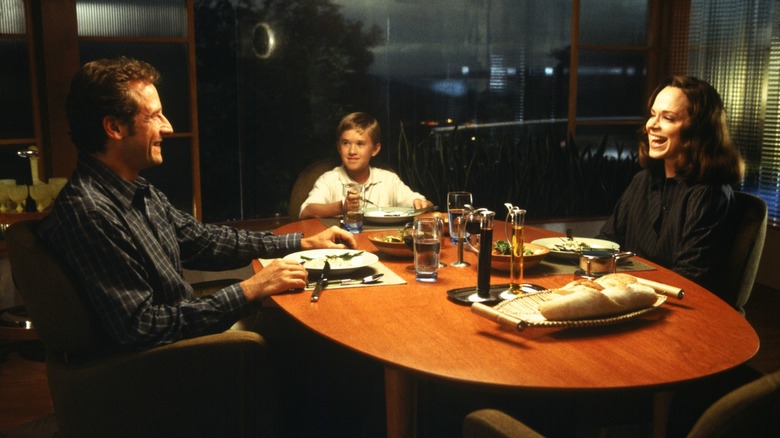
"A.I. Artificial Intelligence," one of the five most underrated Steven Spielberg movies, is not a cyberpunk movie that was ahead of its time for realizing "Wow, AI" will become a thing!" Instead, this masterpiece's achievements on this front come from its cognizance of how loneliness will persist even in the age of technological advances. Chiefly, there's Monica Swinton (Frances O'Connor), who still grieves over her comatose son even after his robot "replacement," David (Haley Joel Osment), arrives in her household. Then there's the abused woman that Gigolo Joe (Jude Law), a mecha built for companionship, comforts in a hotel room, desperate to feel any sort of warmth (even from a mechanical being).
Even David's encounter with the closest thing he has to "God," his creator professor Allen Hobby (William Hurt), reveals that this man is aching from the loss of his son. From kings to paupers, robots to humans, all the inhabitants in "A.I. Artificial Intelligence" languish in aching loneliness. This is a world with futuristic cars, astonishing technological marvels, and holograms projecting any images one could imagine. Yet none of them can fix the grueling internal worries that have plagued human beings since the dawn of time. Even automaton David seeks love and acceptance from a woman (his adopted mother Monica) who will never reciprocate his affections.
Spielberg's unflinching depiction of unwavering loneliness and emotional turmoil festering alongside technological revolutions has only grown more relevant with time. "A.I. Artificial Intelligence" is so emotionally stirring because it taps into this vulnerable material with such mastery.