

5 Most Underrated Steven Spielberg Movies
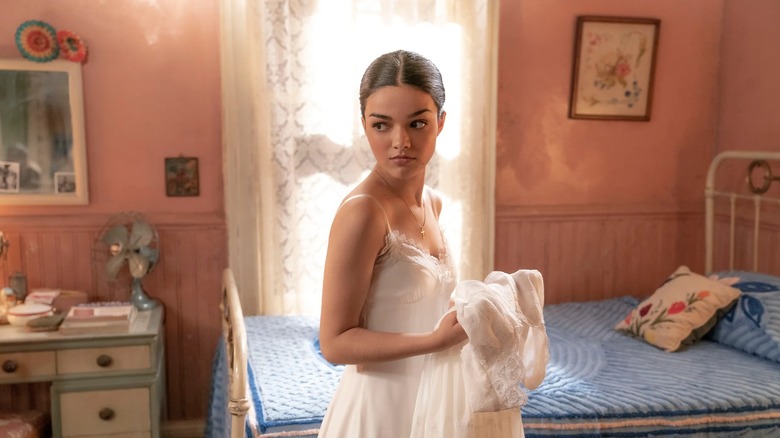
At this point, the name Steven Spielberg is synonymous with the very medium of cinema itself. The man behind works like "Jaws" and "Disclosure Day" has spent decades delivering tremendous productions that dazzle people all over the globe. Just looking at the five best Steven Spielberg movies according to Letterboxd gives one an indication of what seminal features he's brought into the world. From towering blockbusters like "Jurassic Park" to more intimate works like "Lincoln," Spielberg's artistry never wavers. It's no wonder he's considered the face of American cinema.
However, even a director like Spielberg doesn't deliver a masterpiece every time he's up at bat. To boot, he's also had films that, for one reason or another, just didn't click with the public when they first hit theaters. Just because these Spielberg directorial efforts didn't shatter box office records, though, doesn't mean they're devoid of artistic merit. On the contrary, some of his greatest works are also his most underappreciated. The five most underrated Steven Spielberg movies ever all reflect different corners of his creative impulses. They also crystallize the impressive work of the various crew members with whom Spielberg regularly collaborates.
It's staggering to consider a filmmaker as momentous as Spielberg having projects that went under the radar. That's just what happened with these five gems, though. Each of these motion pictures deserves their time in the sun and recognition for how they reinforce Spielberg's legendary status.
Munich
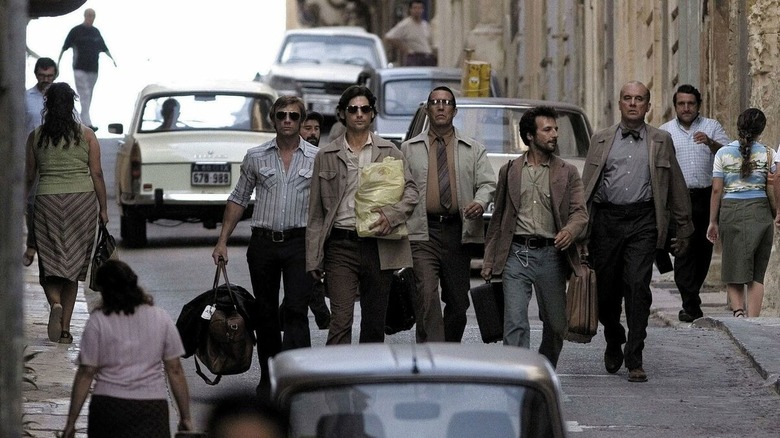
One of the greatest director/screenwriter collaborations in cinema began in 2005 with "Munich." This was when filmmaker Steven Spielberg first worked with playwright and author Tony Kushner. Together, they created movies like "Lincoln," "West Side Story," and "The Fabelmans," proving how Kushner and Spielberg always brought out the best in each other. For "Munich," this pair excelled making a bleak story about Mossad agents setting out to assassinate various targets allegedly connected to the 1972 Summer Olympics terrorist attack in Munich. This group, which includes Avner Kaufman (Eric Bana), is sent to carry out vengeance, but they quickly find out that things are far more complicated than they seem.
Kushner's "Munich" script (which he penned with Eric Roth) is extraordinary, but this film is also a showcase for the talents of Spielberg's go-to editor, Michael Kahn. In the suspenseful sequences where assassinations are being pulled off, Kahn masterfully times every cut for maximum tension. The editing radiates incredible wall-to-wall precision, yet that artistry never distracts from the story and characters. Those elements, meanwhile, are realized with exceptionally devastating effect as Spielberg chronicles people who find no catharsis in vengeance. The haunting visuals and narrative make it clear that these assassinations only lead to moral decay.
Thanks to its grim subject matter (which didn't make it an easy watch for some viewers) and its initial middling box office returns, "Munich" is now considered an underseen corner of Spielberg's filmography. Its artistry means it should be far more than just that.
War Horse
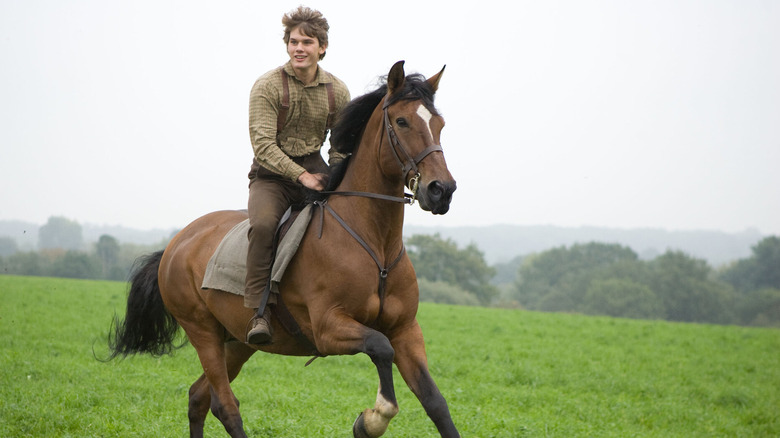
Upon its initial release, the 2011 feature "War Horse" was dismissed in some corners for being too schmaltzy for its own good. Frankly, though, 15+ years of excessively cynical and self-aware American movies have undoubtedly made the "War Horse" aesthetic a lot more palatable. How refreshing to see a movie wearing its heart on its sleeve and unafraid to embrace vulnerability. Sure, "War Horse" doesn't have the depth or standout performances of Spielberg's greatest works. However, it's still a sumptuously realized production that especially excels in dialogue-free storytelling following the titular horse, Joey, just trying to get home to his owner during World War I.
In these sequences, Spielberg's sweeping camera and sincere investment in this equine prove absolutely infectious. A memorable set piece involving German and English soldiers working together to save Joey from barbed wire, meanwhile, is genuinely sweet and even features a hysterical visual gag involving off-screen characters flinging wire-cutters into the air. John Williams flourishes in these old-school confines with a barrage of transportive compositions. Tracks like "Seeding, and Horse vs. Car" practically sound like classic ballet pieces. Evoking memories of Igor Stravinsky more than Hans Zimmer is a magnificent way of accentuating the throwback cinema vibes of "War Horse."
Realized with tremendous craftsmanship, "War Horse" deserves more credit for its earnest pathos and stirring score. If nothing else, it's one of both the greatest horse movies of all time and best World War I movies ever.
The Fabelmans
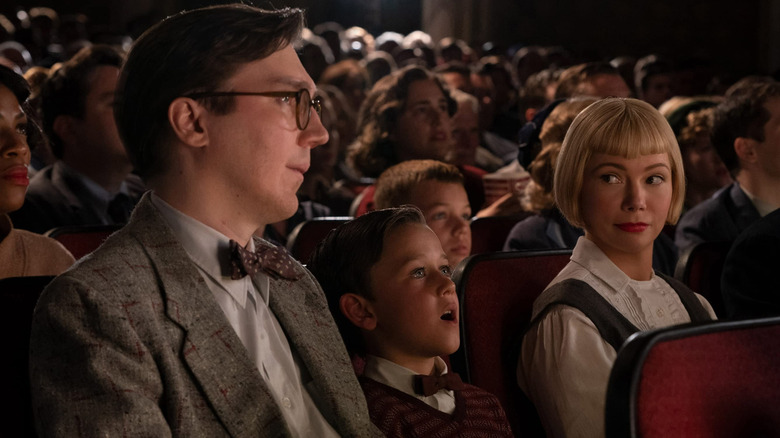
Only Steven Spielberg could reaffirm his incredible visual chops in a scene as simple as a father trying to put up a tent. In an unbroken single take in "The Fabelmans," Burt Fabelman (Paul Dano) attempts to pitch a tent while explaining the intricacies of camping to his kids, including lead character Sammy (Gabriel LaBelle). However, in the background, mother Mitzi (Michelle Williams) is getting into shenanigans that the kids find way more absorbing. The youngsters all gravitate towards Mom, leaving Burt in the foreground frustrated and alone. In this single unblinking image, the central dynamics and individual personalities of the titular leads of "The Fabelmans" are apparent. Spielberg and cinematographer Janusz Kamiński haven't lost an ounce of their visual creativity after decades of working together.
"The Fabelmans" is an autobiographical work drawing from Spielberg's childhood, particularly the complicated relationship he had with his parents. However, that camping scene is one of countless instances where "The Fabelmans" excels on its own terms rather than functioning as an insulated trip down memory lane. Sequences like a hysterical scene where the Jewish Sammy Fabelman absorbs the deeply Christian decor in his crush's bedroom or the most emotionally devastating corners of Michelle Williams' performances are absolutely extraordinary, no matter your knowledge about Spielberg's personal life.
The poor box office run of "The Fabelmans" ultimately overshadowed these and other terrific virtues of the feature. The film that got lost in the holiday season 2022 shuffle, though, is absolute magic, constantly reaffirming Spielberg's filmmaking chops.
West Side Story
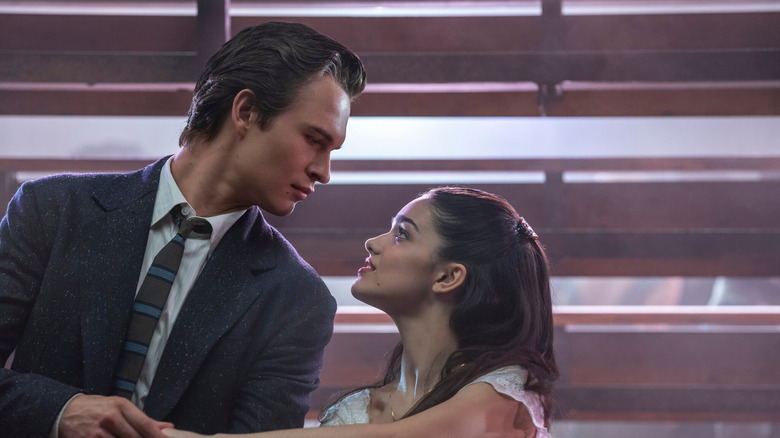
One of the biggest box office bombs of 2021 was, unfortunately, Steven Spielberg's "West Side Story" remake. Trying to get older people into theaters less than two years after COVID-19 shut multiplexes down, combined with competition from titles like "Spider-Man: No Way Home" doomed this feature to financial despair. That means "West Side Story" has slipped past many people's radars, despite its impressive status as one of the best musical movies ever made. Spielberg's first foray (after paying tribute to the realm throughout his career) into musical cinema was an impressively confident creation.
The rare remake to improve upon its predecessor, "West Side Story" uses imaginative blocking and creative backdrops to make familiar songs like "America" feel brand new again. Meanwhile, resplendent costume design and cinematography ensure that this lives up to the notion that musical movies should be visually arresting extravaganzas. Best of all, "West Side Story" is a showcase for so many amazing young performers, including David Alvarez, Ariana DeBose, and Mike Faist. Best among these actors is Rachel Zegler as Maria, who lights up the screen with her magnetic work. Her captivating facial expressions alone make her performance legendary. Throwing in Zegler's awe-inspiring vocals is just a mesmerizing cherry on top.
Best of all, "West Side Story" made no bones about being a musical. While other musicals tried embracing gritty reality, grandiose showmanship is palpable in every single "West Side Story" song-and-dance routine. Clearly, Spielberg's remarkable adaptation deserved a far better box office and cultural fate.
A.I. Artificial Intelligence
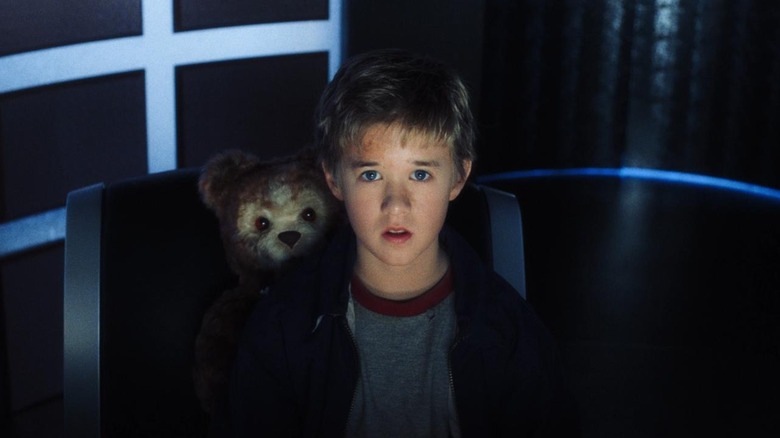
The only A.I. that should be allowed to play on movie theater screens are screenings of Steven Spielberg's 2001 feature "A.I. Artificial Intelligence." Part of the untold truth of "A.I. Artificial Intelligence" is that it was initially greeted with a shrug by audiences and critics alike. Many of these gripes were related to the perception that Spielberg had "watered down" a more complicated feature that director Stanley Kubrick had once intended to helm. Decades after its release, though, the tide is finally turning in favor of "A.I. Artificial Intelligence." The film's bleaker elements and Spielberg's artistry, among other "A.I." virtues, are getting their due at last.
Among the countless impressive elements making "A.I. Artificial Intelligence" so extraordinary is its commitment to realizing automaton child David's (Haley Joel Osment) quest for love as a sad one. He yearns for an emotion that even humans don't often receive in this tormented world. This is an aching exercise where yearning-based catharsis only exists in simulations. Spielberg executes that tone with devastating panache. Meanwhile, the production and costume design lend endless specificity and dynamic imagery to this futuristic world. Jude Law is also tremendous in one of his best supporting turns as Gigolo Joe, an unexpected ally in David's journey.
Initially, "A.I. Artificial Intelligence" was defined solely by people's perceptions of what Kubrick could've made with this story. This superbly crafted masterpiece deserves to be taken on its own merits, especially for its unflinching gaze on humanity's most melancholy experiences.