

All 5 Daniel Craig James Bond Movies, Ranked From Worst To Best
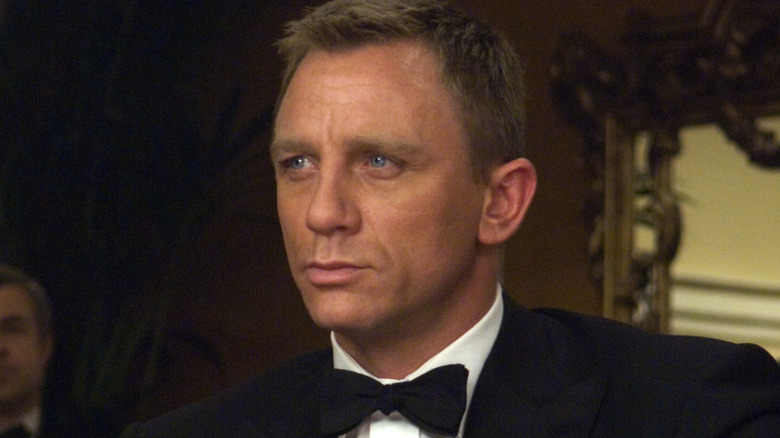
There have been multiple James Bonds in the character's nearly seven-decade history on the screen, but for many people born after 1990, Daniel Craig is the only 007 they're truly familiar with. This "Knives Out" veteran portrayed Bond in five different movies over the course of 15 years. His lengthy duration in the role didn't just guarantee that a generation of audience members would forever associate the character with Craig, but also guaranteed that this era of the Bond saga would have some serious highs and lows. When a film series lasts for 15 years, there can't help but be bumps in the road, both in the films themselves and the business of making them.
Craig's five outings as 007 range wildly in quality, just as they vary in aesthetics and even filmmakers (four different directors helmed these five films). Ranking all five of Craig's James Bond movies from worst to best cohesively recaps the artistic peaks and valleys of this era of cinema history, making it unavoidably clear that, like any actor's tenure as Bond, Craig's era was far from flawless.
Serious problems often plagued these five movies, but thankfully, this ranking also reinforces the finest aspects of Craig's run in the franchise. There are many reasons why so many viewers forever associate this character with this actor, and they are only more apparent now.
5. Spectre
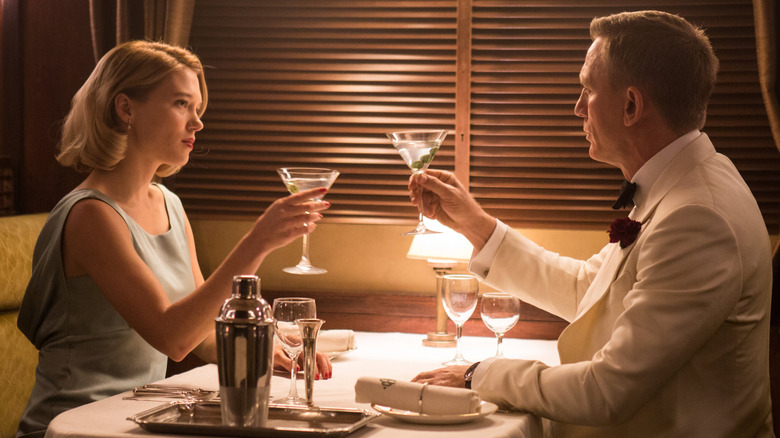
After director Sam Mendes crushed an 007 adventure with "Skyfall," there was no reason to assume he'd bungle things on his second go-around in the franchise — even if it's been a relative rarity in the saga's history for two quality Bond movies to debut back to back. Alas, Mendes succumbed to this phenomenon with "Spectre," a dismal outing that failed to deliver on any level, including the mostly generic action sequences. An opening skirmish set in Mexico featured decent choreography and camerawork, but the finale especially was a bunch of dimly lit and visually incoherent chaos.
With even the punching not very exciting in this installment, it's no surprise that "Spectre" also struggled on other key fronts. That included a weird narrative structure, which put too much stock in providing a "secret villain" that simply turned out to be Christoph Waltz doing a tedious iteration of Blofeld. For those seeking out entertainingly haywire blockbuster cinema, "Spectre" even disappoints on that front. Mostly, it's a dull exercise going through the motions to provide what it thinks audiences want rather than courageously pursuing bold new ideas, thrills, or visuals.
Not even Dave Bautista as an almost entirely mute henchman could jostle these drowsy proceedings to life. "Spectre" tried doing too much with Bond's past, including reintroducing the titular evil organization and providing perplexingly dumb retcons involving the baddies that Daniel Craig's Bond previously fought. In the process, it delivered an anemic ride in the here and now.
4. Quantum of Solace
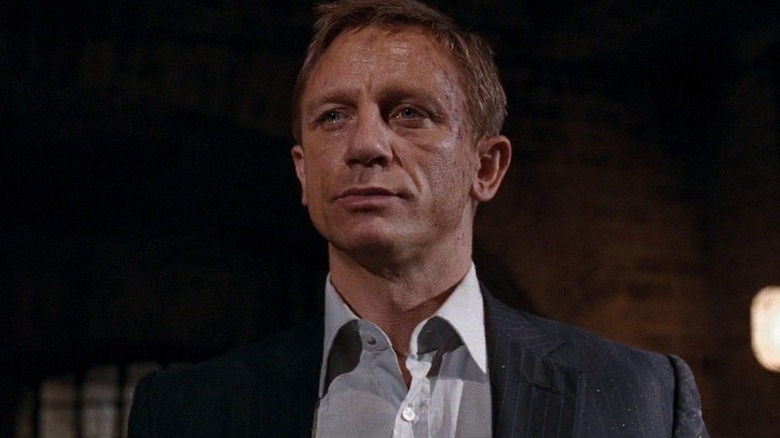
Bringing "Quantum of Solace" to the screen was a tortured affair. Not only did the 2007-2008 writer's strike capsize the film's screenplay, but Daniel Craig's injuries during the film's shoot became a quintessential example of bloopers that actually cost the filmmakers a ton of money. Unsurprisingly, all that chaos resulted in a disjointed film that just doesn't work. "Quantum of Solace" often registers as incoherent more than anything else, a problem exacerbated by the film's shaky camerawork and especially its dizzying editing. "Solace" keeps hurling viewers around as if to distract them from the lack of a compelling narrative.
One other problem is that "Quantum of Solace" maintains the grim tone of "Casino Royale" but doesn't give it a transfixing story worthy of that aesthetic. Instead, "Solace" devolves into a lot of glaring and tortured mumbling devoid of much fun or compellingly grim drama. All of that said, some positive elements do shine through, including the intriguing choice to make "Solace" a direct continuation of "Casino Royale." Mathieu Amalric also has some flashes of solid work as the villain, while the fact that Amalric even played an 007 villain is amusing enough to justify the casting.
Still, while keeping "Quantum of Solace" firmly above "Spectre," some competent qualities (including Craig remaining a fine Bond) can't save this feature from its worst impulses. Shocking nobody, jamming a tentpole release out through a major strike was a colossal mistake.
3. No Time to Die
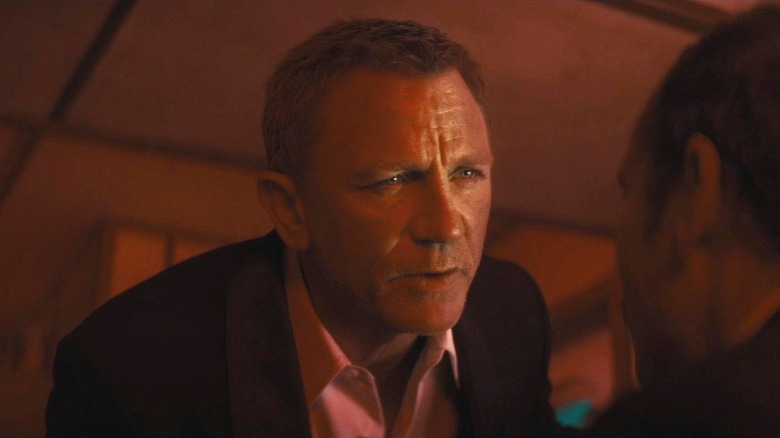
While every 007 performer has to eventually pass the role to another actor, "No Time to Die" gave a definitive conclusion to Daniel Craig's iteration of the character. "No Time to Die" was Mr. Bond's fond farewell, a reality underscoring every inch of writer-director Cary Joji Fukunaga's (who also penned the script with Neal Purvis, Robert Wade, and Phoebe Waller-Bridge) aesthetic for this installment. That aesthetic had some room for subversive elements (like a prologue focused on leading lady Lea Seydoux's childhood rather than Bond on an adventure), as well as classic Bond details like a world-dominating villain and an elaborate hidden evil lair.
"No Time to Die" sometimes struggles to juggle both the old and new in its script. Certain thematic elements, namely an emphasis on Bond aging, also lack some impact because similar ground was already tread in prior Craig 007 adventures like "Skyfall." Still, by and large, "No Time to Die" functions well as a spirited spy adventure. The various action sequences are great, for one thing. Meanwhile, a pair of new spy ladies, played by Lashana Lynch and Ana de Armas, are incredibly engrossing, particularly the boisterous latter character.
Cinematographer Linus Sandgren provides his usual masterful work (as seen in titles ranging from "Saltburn" to "Babylon") in making "No Time to Die" look exquisite. Narratively jagged, "No Time to Die" still excels in action, dazzling imagery, and as a final bow for Mr. Bond.
2. Casino Royale
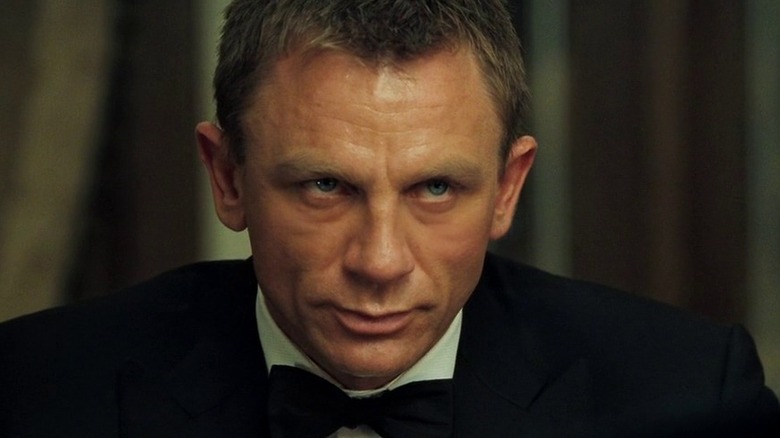
"Die Another Day" was Pierce Brosnan's final James Bond film, and it unfortunately didn't give the actor the greatest send-off. A perfect example of a movie ruined by one scene, "Die Another Day" was far more concerned with product placement than delivering exciting thrills or engaging character beats. After this misfire, it was abundantly clear that it was time for a refresh, with Daniel Craig's era as 007 beginning in November 2006 with "Casino Royale." Wisely, this production brought back reliable tentpole helmer Martin Campbell (who previously helmed "GoldenEye," Brosnan's first 007 film) to lend an assured hand to a movie aiming to revamp audience's conceptions of the character.
The result was a film that still works shockingly well. A "grittier" origin take on Bond, clearly indebted to "Batman Begins," proved a surprisingly smart take as this approach streamlined 007 and made the character accessible to audiences once more. Plus, the increasingly bloated scope of Brosnan's Bond adventures was traded out for more intimate but infinitely more compelling set pieces involving poker games and grim hand-to-hand skirmishes. Daniel Craig's brutal (and eventually tragically aching) lead performance was also instantly striking. Right from the start, he left a powerful impression as Bond and solidified that more could be done with this familiar character.
Mads Mikkelsen playing a Bond baddie was another inspired choice that heavily benefited "Casino Royale." This 2006 installment, which, decades later, still excites and dazzles, made all the right calls just when this franchise needed them most.
1. Skyfall
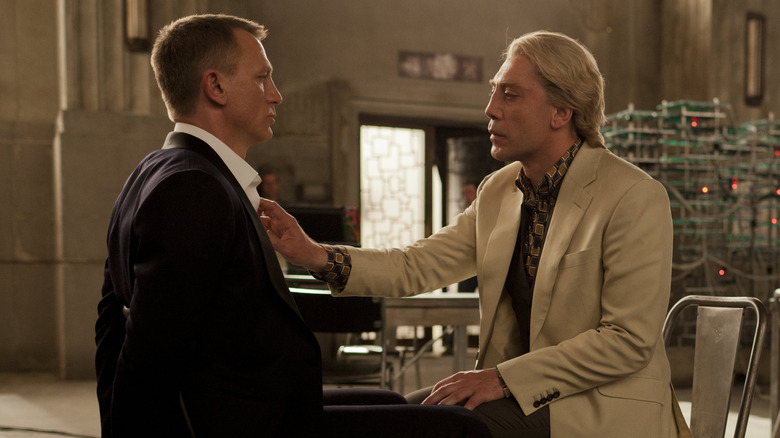
In an expansive career spanning indies and major studio films, one of Javier Bardem's seven best movies is easily his turn as the nefarious Raoul Silva in "Skyfall." He's an absolute riot and also a genuinely imposing menace in every inch of his screentime. This distinctive and fun Bond villain exemplifies how "Skyfall" is the perfect synthesis between different 007 eras. The grounded continuity of the first two Daniel Craig movies is maintained, but "Skyfall" delivers a lighter touch than its predecessors and isn't afraid to embrace franchise cornerstones that "Casino Royale" and "Quantum of Solace" eschewed, namely the introduction of Q (Ben Whishaw) and Moneypenny (Naomie Harris).
Director Sam Mendes is incredibly skilled at uniting these disparate phases of Bond cinema in a cohesive fashion. He also proves adept at delivering terrifically absorbing set pieces, including a great finale that keeps the scale confined to just a house, a frozen pond, and a church. There are tons of "Skyfall" sequences that are as exciting as any action beats from Sean Connery's best James Bond movie. Cinematographer Roger Deakins is also in God-mode creating the visuals here. Spectacular framing and staging abound throughout "Skyfall," particularly during Bond's detour to Shanghai.
Even Adele's original "Skyfall" theme song is an all-time banger, a sign of just how right everything went for this 007 outing. Daniel Craig's James Bond tenure had many high points, but "Skyfall" was unquestionably the pinnacle of his time in this franchise.