

The Biggest Odyssey Storyline Christopher Nolan Left Out Of The Movie, Explained
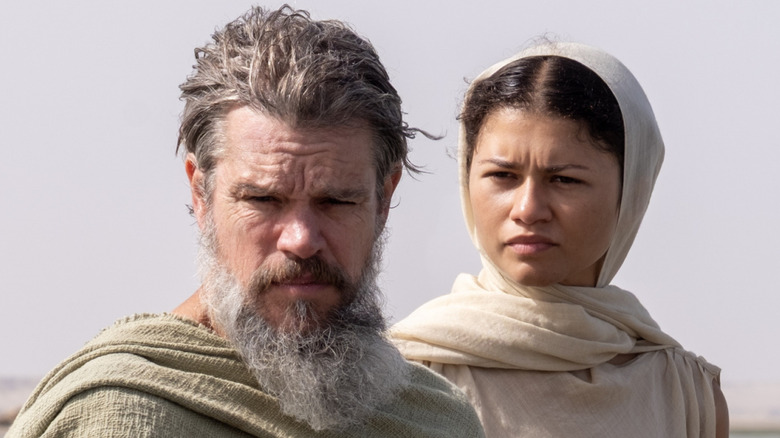
No matter how you look at it, Christopher Nolan's "The Odyssey" is a masterpiece. From the cinematography to the acting, from the special effects to the music, the grounded yet fantastical experience ticks all of the boxes. It's no surprise that "The Odyssey" blew everyone away at the box office, but just because it's an expertly executed adaptation doesn't mean it gets everything right. While Nolan manages to squeeze a lot from the original poem into his version, there are several moments from the source material that were altered or simply didn't make it into the final story.
One of the biggest missing pieces is the Phaeacian princess Nausicaä. A significant portion of "The Odyssey" is taken up by the hero washing up, shipwrecked, in Phaeacia, a utopian land with perpetually nice weather. There he meets Nausicaä and begs for her help, leading to a lengthy sequence in which the princess shows mercy on the traveler and takes him to her parents, King Alcinous and Queen Arete. She advises him on how to curry their favor before Odysseus is welcomed into their court. After he gets cleaned up and eats some food, this becomes the setting from which the bulk of the story is narrated as Odysseus tells the king and his court about all his adventures.
Nolan's Odyssey skips right over the Phaeacians
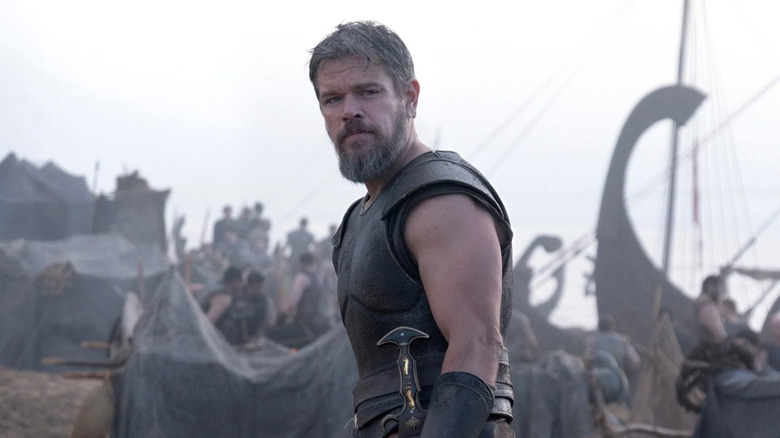
After Odysseus tells his story, King Alcinous is moved by the harrowing tale. He gives rich gifts to his guest and orders some of his people to embark on their marvelous ships and bring Odysseus back home. These ships are not just well-made by master craftsmen: They're magical. They run themselves and don't need steering.
In the book, Odysseus falls asleep, and the Phaeacians deposit his slumbering body and his new gifts on the shores of Ithaca, where he wakes up confused and doesn't know where he is. (That part, at least, does happen in the movie.) In the meantime, the god Poseidon is enraged by the Phaeacian support for his mortal enemy Odysseus, and he turns the sailors and their otherworldly vessels into rocks on the way home as a permanent reminder not to go against his will.
The absence of Nausicaä and the Phaeacians in Christopher Nolan's film makes sense. While they help frame the story in the epic poem, the director shifts that emphasis to Odysseus' (Matt Damon) conversations with the immortal Calypso (Charlize Theron) before she sends him home via raft. This neatly cuts the Phaeacians out, which helps keep the nearly three-hour movie from ballooning even further in length. "The Odyssey" gets plenty of things right, but cutting Nausicaä and Alcinous is unfortunate. They are a fun part of the original story, and it's a shame we couldn't see them — and their fantastic ships — in Nolan's adaptation.