

5 Most Historically Accurate Sports Movies, Ranked
We don't always come to sports movies for accuracy; sometimes, we love seeing the cliches of a good underdog story, an intense training montage, and a final match that sees our heroes triumph against the odds. But in some cases, that classic Hollywood heightening of a real sport can alienate die-hard fans. Who could forget how racing enthusiasts were left cold by its portrayal in "F1," or how true stories like those which inspired "The Blind Side" and "Chariots of Fire" were bent over backwards to fit an inspirational movie narrative which didn't remotely follow the facts?
The five films below are the antidote to that brand of sports movie, with a range of biopics and fictitious tales which all offer accurate depictions of the games at their center. Some are ripped from the headlines about larger-than-life figures with a painstaking attention to detail. Others are semi-autobiographical tales inspired by their creators' time slumming it in the minor leagues of sporting stardom, where the fantasy of a Hollywood sports movie is undercut by lived-in realism.
All are united in offering an accurate depiction of their chosen sport which has been long cited as perfectly reflecting the realities of their period settings. There may be some storytelling cliches to sugar coat the facts -– it wouldn't be a sports movie without them -– but these five movies are the most effective when it comes to authentically capturing the unglamorous lives of athletes.
5. Brian's Song
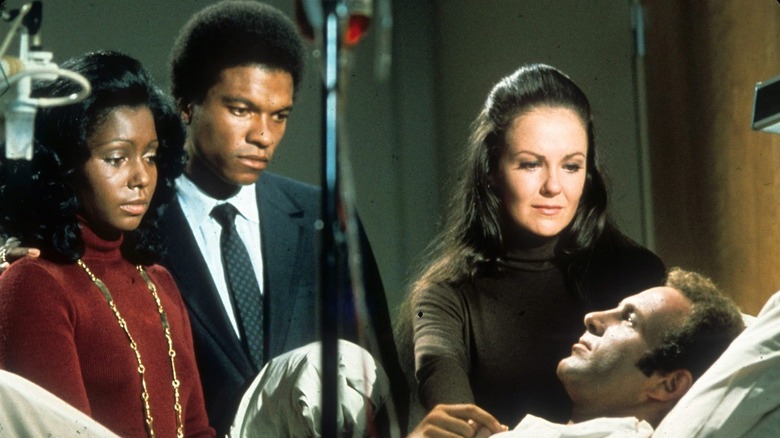
Not just ranked high amongst the greatest sports movies ever made, "Brian's Song" is also widely considered one of the greatest TV movies ever broadcast, as well as one of the best weepies for men. Charting the friendship between the motormouthed Chicago Bears halfback Brian Piccolo (James Caan) and his more monosyllabic teammate Gale Sayers (Billy Dee Williams), this unashamedly sentimental adaptation of Sayers' memoir "I Am Third" offered a groundbreaking depiction of race relations and cancer treatment for network television. Some historians pointed out that the depiction of Brian's battle with an aggressive spread of testicular cancer is sanitized, but even this was instructive at the time for a nation largely unfamiliar with the condition.
With winning performances from Caan and Williams, whose easy, natural onscreen chemistry sells the more Hollywoodized aspects of this biopic from the moment they meet, this is the kind of emotional sports drama that never feels as cliched as it should. This is aided by the frequent utilization of NFL archive footage in place of game re-enactments, helping us believe we're seeing the real relationships of the players off the pitch -– as well as ensuring the two leads could focus more on developing their lived-in relationship. That friendship is why a throwaway TV movie went onto have a second life nobody could have predicted; even if it tones things down, it's grounded within the realistic dynamics of a relationship that make it devastating nonetheless.
4. Slap Shot
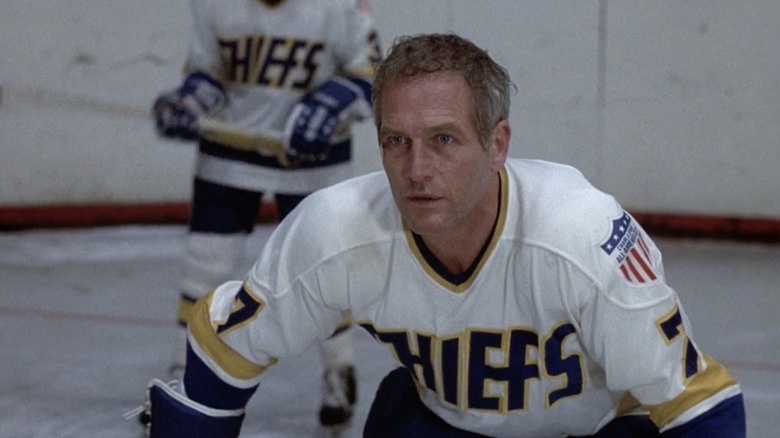
In the early 1970s, screenwriter Nancy Dowd would frequently get calls from her brother Ned with news of injuries sustained during hockey games; he was a player for the minor league Pennsylvania team Johnstown Jets during a notoriously violent period for the sport. Upon learning that the team was getting sold, she grew increasingly fascinated by the sport and joined them on the road for a month, where she pieced together "Slap Shot."
Following a low-level team which resorts to violence in order to attract more crowds and stop being sold, this film by director George Roy Hill reunited him with star Paul Newman, who had led his '60s Western classic "Butch Cassidy and the Sundance Kid" and 1973 best picture-winning "The Sting." But although Newman said it was one of his favorite films to make, this wasn't a glamorized, watered-down portrayal of the sport, with Nancy drawing from her experience to flesh out an ensemble of blood thirsty eccentrics.
Additionally, Ned Dowd and several of his teammates from the Jets briefly appear to ensure the gameplay onscreen was accurate, with many of the supporting characters faithfully adapted from the personas of the real team. The movie divided critics at the time, with many clutching pearls at what they saw as a glamorization of reckless violence, but it's aged well among sports fans. Considered one of the funniest sports comedies ever made, it's a testament to just how well Dowd observed the hockey players in their natural habitat.
3. Bull Durham
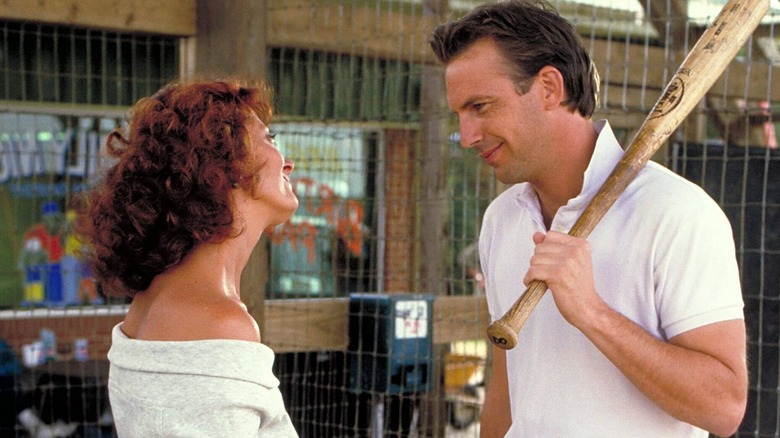
Writer/director Ron Shelton based his beloved baseball romcom on his own experiences in the minor leagues, which he toiled away in for five years before quitting and returning to college. From there, the movie transformed into a character comedy about minor league veteran Crash (Kevin Costner) tasked with training a rookie talent eyed by the major leagues (Tim Robbins). However, it remained important to ground the fictional story in a believable portrayal of the sport and small-town fan culture.
For the former, the production hired former semi-pro player Pete Bock as a consultant, letting him recruit minor league players to practice with stars Robbins and Costner. Baseball players have long celebrated the movie for getting the logistical specifics of the game correct, although this did need a lot of work; Robbins required extensive training to get to the level of a pitcher that would attract major league attention.
When it came to depicting micro-scale success, Shelton drew on his own experiences to flesh out the less than glamorous lifestyle of an athlete at such a modest level. The escapist highs of Crash's blossoming romance with Annie (Susan Sarandon) sit next to the lows of tour bus life and end of season boardroom politics. The romantic fantasy is so winning by the end largely because of how grounded the depiction of a professional baseball career is around it.
2. Rush
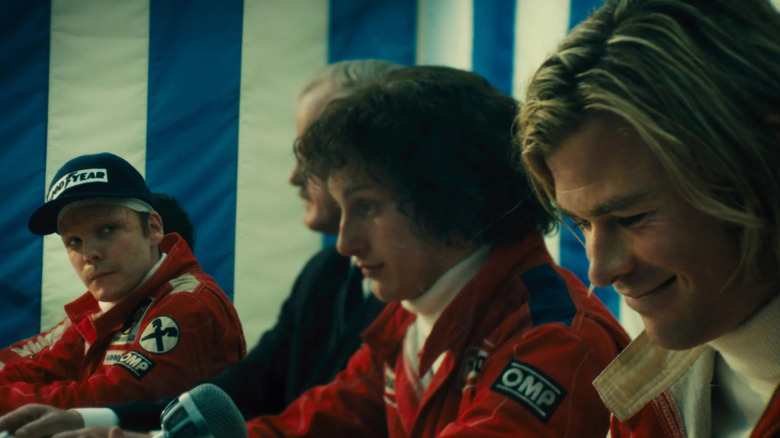
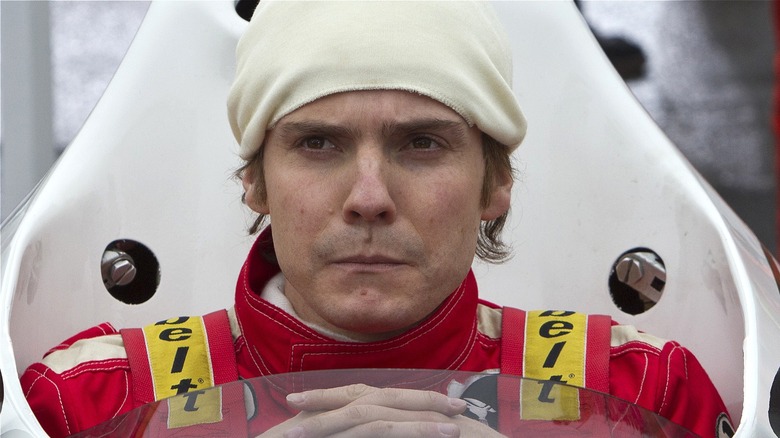
British Formula 1 driver James Hunt and his Austrian counterpart Niki Lauda had one of the most intense rivalries in the history of the sport, which is the subject of Ron Howard's 2013 biopic "Rush." What screenwriter Peter Morgan left out of the tale was that the pair began life as fond friends, at one point even living together, which is why it's surprising that racing and sports biopic fans have long championed the movie for its accuracy.
This is likely because Lauda himself, played here by the great Daniel Brühl, had boarded the project as a technical advisor, meaning the actor got to spend extensive time studying him for his performance. As one of several advisors on the film, Lauda ensured that the vehicles were accurate replicas of the period –- one of his own Ferraris from the 1976 season makes an appearance -– and even had extensive discussions with screenwriter Morgan himself to ensure the correct technical details were present.
It's a lived-in perspective that grounds some of the more overtly dramatized moments, culminating in a truly nail-biting recreation of the disastrous 1976 German Grand Prix at Nürburgring. The detailed accuracy of the sport's portrayal and authentic performances more than make up for not faithfully following the ups and downs of the racers' relationship.
1. Raging Bull
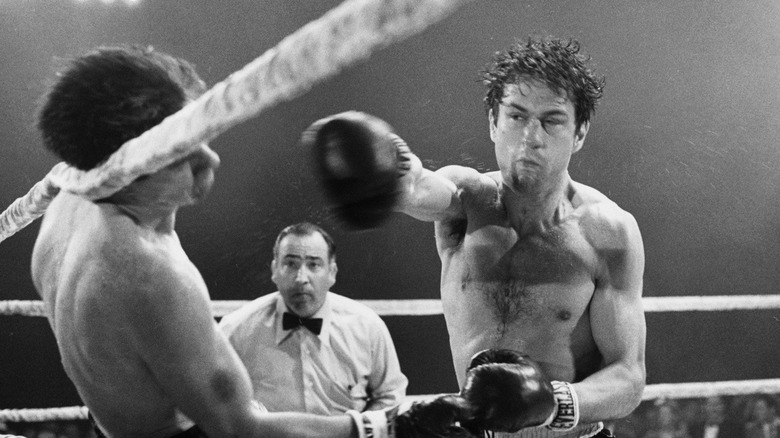
It's no coincidence that the best sports biopic ever made is the one which does the least amount of sanitizing. Martin Scorsese's adaptation of Jake LaMotta's 1970 autobiography of the same name may have felt heavily stylized in the ring, where the stark black-and-white cinematography contrasted with each bout of blood, but outside of it, the rise-and-fall of the middleweight champion is depicted unsparingly.
In his memoir, LaMotta admitted to brutally beating his first wife Ida to the point he thought she was dead, as well as multiple sexual assaults. Scorsese, reuniting with screenwriter Paul Schrader, foregrounds his violent paranoia, bluntly contrasting his domestic life with his time in the ring from the opening moments. Robert De Niro worked with LaMotta extensively to learn his fighting style, but LaMotta's involvement didn't ensure he would be portrayed in a flattering, hagiographic light. The fights are restaged with an attention to historical detail, the unflinchingly realistic grimness outside the ring land with a greater impact.
Perhaps the most famous aspect of De Niro's Oscar-winning performance is his commitment to piling on the pounds to portray LaMotta after retirement, going on an eating tour of Europe instead of donning a fat suit. This later became a gimmick for awards-hungry actors, but here feels genuinely transformative, capturing the pathos of a tragic figure years after his violent, destructive temperament burnt most bridges around him. We doubt any boxing movie will ever equal its raw power.