

5 Worst Starfleet Admirals In Star Trek, Ranked
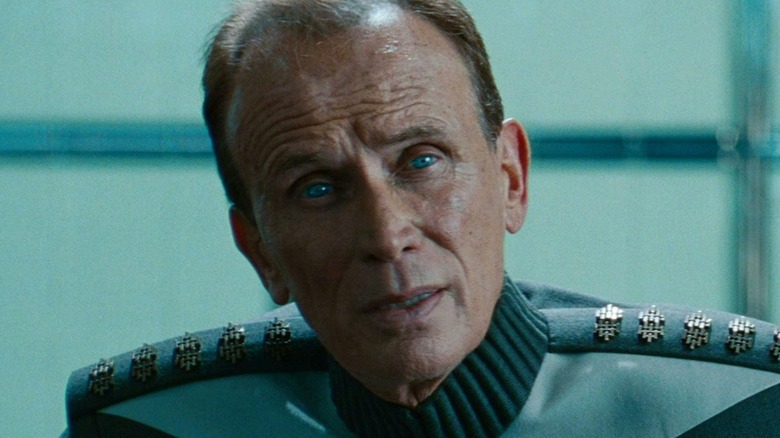
One of the more unusual common tropes in Star Trek is the penchant for any high-ranking officer to turn rogue. It happens more than casual viewers might think, but if you go back and look at the movies and television series, it seems that the rank of admiral in particular makes a majority of Starfleet personnel turn into so-called "Badmirals." These characters typically don't start out with nefarious intent, as all of them initially walk the perilous road that's paved with good intentions aimed at preserving the Federation.
Unfortunately, because of their power and capabilities, the best intentions often result in the worst outcomes, transforming a once-proud Starfleet officer into a villain. Of course, villainy is dependent on a person's point of view, so not every rogue admiral is necessarily a bad person. Instead, they make decisions and take actions, causing others to see them as such. In most cases, it takes a good Starfleet officer to either show them the error of their ways or stand up to them.
Although bad Starfleet admirals date back to the original series, they're more common in later shows and films, where much of the plot revolves around whatever scheme furthers their cause. Each of these five admirals — including our surprising first choice — did something that upended the rest of Starfleet, regardless of their intentions, ensuring they were all truly terrible at their jobs.
5. Rear Admiral James T. Kirk
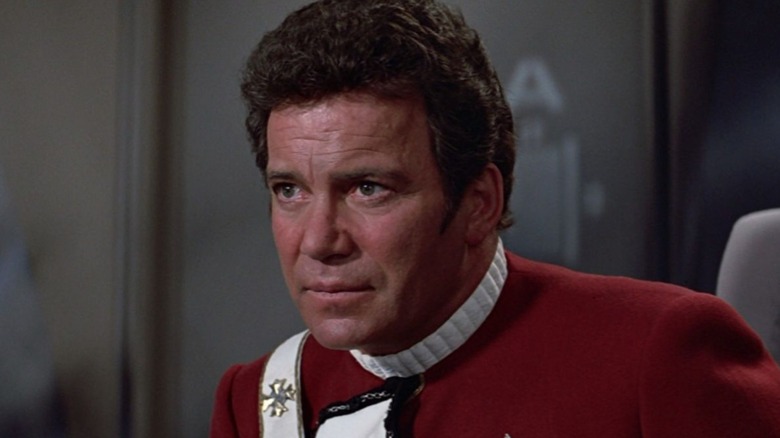
While Captain James T. Kirk (William Shatner) may be one of the most beloved characters in the Star Trek franchise, Admiral Kirk is another story. Kirk receives his promotion to Rear Admiral after completing the USS Enterprise's five-year mission, taking a posting as Chief of Starfleet Operations in San Francisco and holding the rank until his first retirement. After returning to Starfleet in 2284, Kirk takes a position at the Academy and is inspecting the Enterprise when news of an attack on the space station Regula I arrives.
This sets up the events of "Star Trek II: The Wrath of Khan," which directly leads into "Star Trek III: The Search for Spock." It's in the latter film that Admiral Kirk proves he's not great at his job. In an effort to retrieve Spock's body, Kirk and his fellow officers steal the soon-to-be-decommissioned Enterprise and defy Starfleet orders regarding the quarantine of the Genesis planet.
Kirk's actions ultimately result in the destruction of the Enterprise and his temporary exile on Vulcan. When he returns to Earth to face charges, Starfleet doesn't chuck Kirk and company into the brig. Instead, Kirk takes full responsibility for everyone's actions and is demoted to the rank of Captain — which is where he'd always best served Starfleet anyway. Losing the Enterprise was one of the worst things that Kirk ever did, but it all worked out in the end.
4. Vice Admiral James Leyton
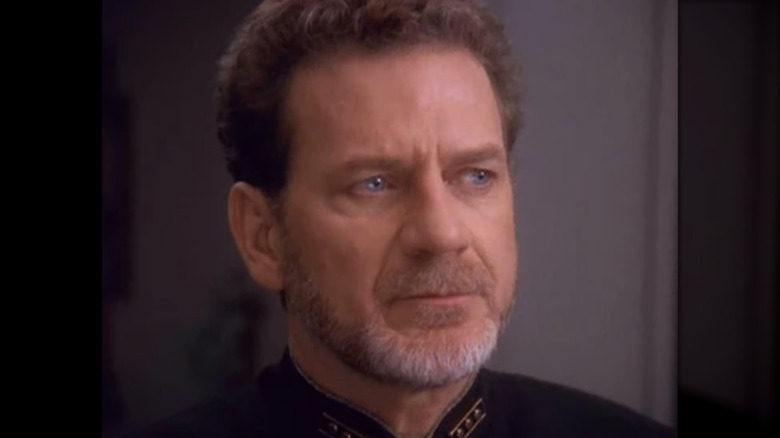
One of Star Trek's most underrated villains is Vice Admiral James Leyton (Robert Foxworth), who appears in multiple episodes of "Star Trek: Deep Space Nine." Before taking his posting at DS9, Ben Sisko (Avery Brooks) works as then-Captain Leyton's first officer aboard the USS Okinawa, fostering a strong working relationship. It's Leyton who recommends Sisko for the command chair on DS9, which he wouldn't have done had he not believed in his former first officer.
But Leyton breaks bad with the threat of the Dominion looming, as the Changelings infiltrate Starfleet Command and even duplicate him. This creates a strong sense of fear of the unknown in Leyton, who approaches Federation President Jaresh-Inyo (Herschel Sparber) with a proposal to strengthen security measure that the president feels is too extreme. As a result, with Dominion attacks increasing into the following year, Leyton organizes a coup d'état to unseat the president, believing him to be unfit to maintain the Federation's safety and security.
At first, he attempts to work with Sisko, but ultimately accuses him of being a Changeling spy, as Leyton begins suspecting everyone of being a Changeling. Ultimately, Sisko manages to stop an attack on the USS Defiant, upending the coup while exposing Leyton's duplicity. As a result, Leyton offers his resignation, though it's unclear whether or not he spends any time behind bars for his plot to take over and militarize the Federation. His intentions weren't nefarious, but his actions proved otherwise.
3. Admiral Mark Jameson
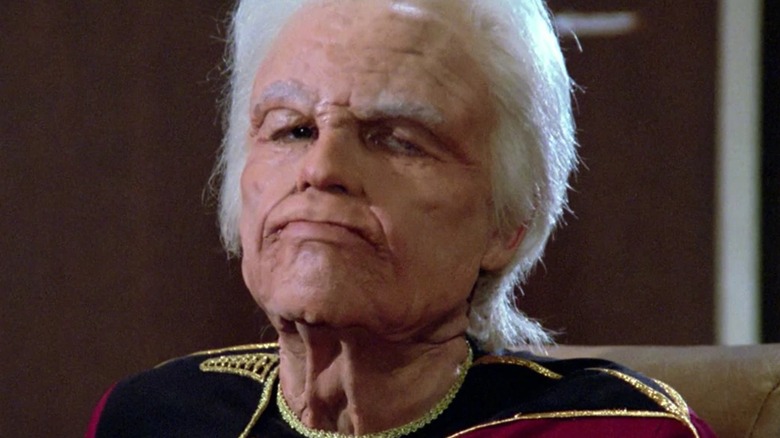
When he first appears in "Star Trek: The Next Generation," Admiral Mark Jameson (Clayton Rohner) is an elderly man with a lot of baggage. He's highly respected among Starfleet personnel and joins the crew on a mission to Mordan IV in 2360, as he previously negotiated a hostage release on the planet in 2319. Jameson is bound to a wheelchair, but unbeknownst to those around him, he has acquired a dangerous age-reversing treatment, which he takes before embarking on the USS Enterprise-D.
Jameson's participation in the latest round of hostage negotiations on Mordan IV is no accident, as he's personally requested for the mission. After he begins to age in reverse, but with plenty of side effects, he reveals the truth of what happened in 2319 to Captain Picard (Patrick Stewart). To secure the hostages, he offered weapons to the hostage takers, which violated the Prime Directive. To even things out, he also provided weapons to the other side in the conflict, extending the planet's civil war for another 40 years.
This is why Jameson is called back to Mordan IV, as the people whose civilization he upended want revenge. Despite his past actions, Jameson attempts to make up for his earlier failings by supplying weapons to terrorists shortly before dying from the age-reversing drug's instability. The result of his demise is an end to the conflict, and Jameson is buried on Mordan IV with the blessing of the man he provided weapons to decades earlier.
2. Fleet Admiral Alexander Marcus
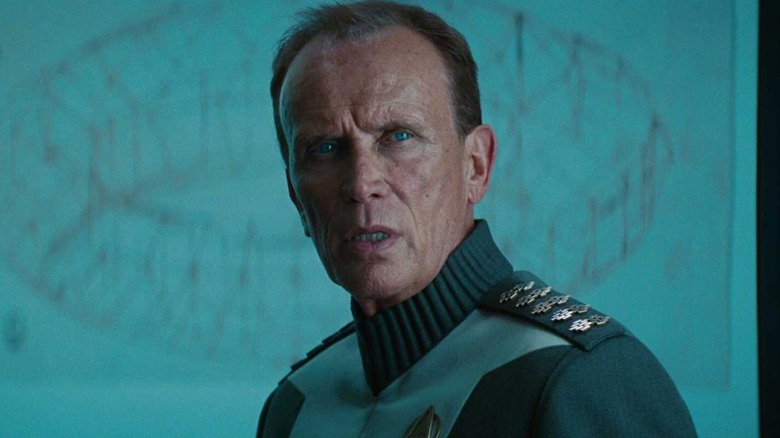
Beginning with 2009's "Star Trek," the rebooted film franchise continued in 2013 with "Star Trek: Into Darkness," which used "Star Trek II: The Wrath of Khan" as its template. In the newly established Kelvin Timeline, Khan (Benedict Cumberbatch) isn't discovered by Kirk (Chris Pine), and is instead found by Fleet Admiral Alexander Marcus (Peter Weller). After taking Khan's people hostage while they're still frozen in stasis, Marcus forces Khan to use his knowledge and expertise to do two things: begin a war with the Klingon Empire and develop an unstoppable starship.
The result is the USS Vengeance, a massive dreadnaught-class starship built for war that is crewed by a small complement, unlike Starfleet's other vessels. Marcus constructs the ship in secret, and it easily outclasses every other starship in the known galaxy, eschewing Starfleet's desire for peaceful exploration in favor of starting and winning wars. When Kirk and his crew discover Marcus' plot, the USS Enterprise stands against him.
Unfortunately, the vessel isn't a match for the superior Vengeance, nearly resulting in the destruction of the Enterprise. Ultimately, Kirk faces off against Marcus, accusing him of turning against everything the Federation stands for. Marcus sees things differently, insisting his actions are justified and needed for the inevitable war with the Klingons. In the end, Khan gets hold of Marcus and vengefully crushes his skull with his bare hands, telling the admiral that he should have left him in stasis and killed him.
1. Fleet Admiral Lance Cartwright
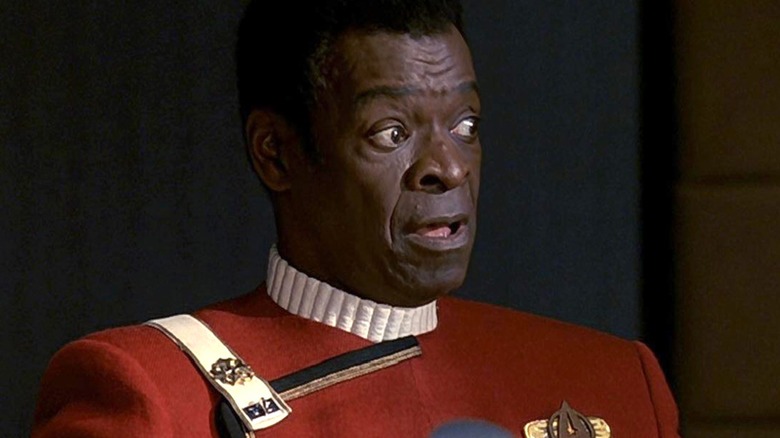
Of all Starfleet's "Badmirals," the one who breaks bad in the worst possible way is Fleet Admiral Lance Cartwright (Brock Peters). In the franchise's best film, "Star Trek VI: The Undiscovered Country," the Klingon Empire and the Federation begin the process of establishing peace talks that would end their long conflict across the galaxy. But many Starfleet officers oppose forging peace with the Klingons, including Captain Kirk, who blames them for the death of his son, Dr. David Marcus (Merritt Butrick), in "Star Trek III: The Search for Spock."
Another opponent is Cartwright, who declares that "to offer Klingons safe haven within Federation space is suicide. Klingons would become the alien trash of the galaxy." Needless to say, he doesn't pull any punches, and in accordance with his views, Cartwright becomes central to a conspiracy intent on sabotaging the talks. The plan unfolds with the assassination of Klingon Chancellor Gorkon (David Warner), which Cartwright pins on Kirk because of his longstanding feud with the Klingons.
Kirk and Dr. Leonard "Bones" McCoy (DeForest Kelley) wind up in a Klingon penal colony for life, but escape with the help of Captain Hikaru Sulu (George Takei) and others. Once the conspiracy is exposed, Cartwright is arrested (and likely court-martialed) for his attempted sabotage of the peace talks. In the end, the talks proceed, and the Federation and Klingon Empire sign the Khitomer Accords in 2293, forging a lasting peace that ultimately sees talented Klingons like Mr. Worf (Michael Dorn) serve in Starfleet.