

5 Most Historically Accurate World War II Movies, Ranked
Hollywood's been making World War II films since before the United States even joined the conflict. As one of the defining periods of the 20th century, it's prime fare for big screen dramatization. But as engrossing and emotionally devastating as the war itself naturally was, filmmakers have still stretched the truth of what really happened on several occasions.
The accuracy of World War II movies varies dramatically from production to production. But, while there are plenty of Second World War films that sacrifice realism for the sake of thrills and drama, there are a few that really nail the historical details, putting special effort into creating as vivid a picture of the conflict as possible.
Of course, some World War II movies are revisionist by nature, like Quentin Tarantino's "Inglourious Basterds." You won't find any of those listed here. The movies on this list have received acclaim for how devotedly they adhere to the events of the war as they actually happened. The fact that they end up making for genuinely good cinema is just the icing on the cake.
5. Saving Private Ryan
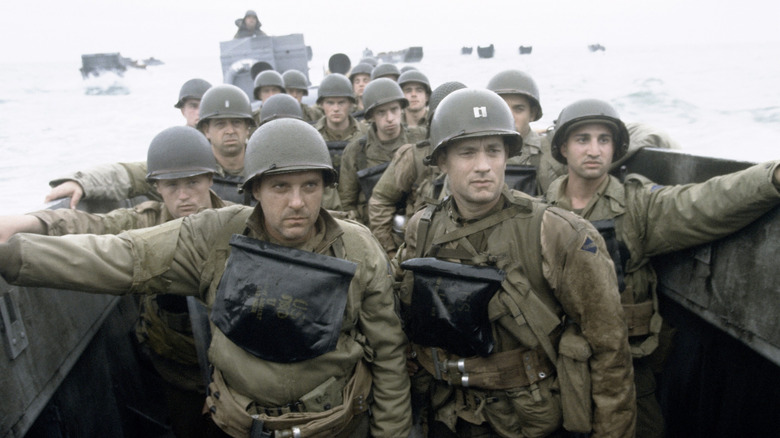
Neither Steven Spielberg nor Tom Hanks were strangers to World War II-era movies prior to teaming up for "Saving Private Ryan," with Spielberg directing the best picture winner "Schindler's List" and Hanks starring in the critically acclaimed "A League of Their Own." So it makes sense that they would have the collective power to produce one of the best World War II movies of all time. From the very first moments of "Saving Private Ryan," audiences knew that they were in for something special. In the midst of the Allied invasion of occupied France, Captain John Miller (Tom Hanks) is tasked with leading a team across the Western front to find Private James Francis Ryan (Matt Damon). After the deaths of his four brothers in the war, he's been granted a reprieve from the fighting, but tracking him down to share this news is easier said than done.
In its first 20 minutes, "Saving Private Ryan" gives us a brutal, uninterrupted view of the Allied landings at Normandy on D-Day. This extended sequence is considered to be among the best battle scenes ever put to film, with many veterans who survived the bloodbath on the beaches commenting on its historical accuracy. "Everybody was stunned by it," D-Day survivor John Raaen told Time. "It just brought back so many memories that your mind was racing through all the things that happened to you." The film's impact was so profound that the Department of Veterans Affairs set up a special phone line in anticipation of a major trauma response. "It felt like I was right there again," Frank L. Davis, who was a 21-year-old sergeant when he landed on Omaha beach, told The Philadelphia Inquirer. "It was so damned real."
4. Downfall
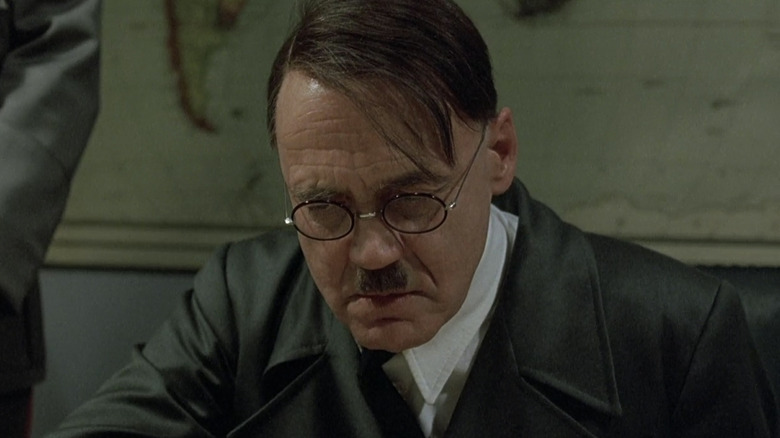
The end of World War II came hard and fast for the Germans, and no one lived in more denial about their inevitable defeat than Adolf Hitler himself, who spent the last few days of the war — and indeed, his life — holed up in an underground bunker. The German film "Downfall" captures the bitter end for the Nazi dictator, as well as the devoted staff who surrounded him and the soldiers fighting in the streets of Berlin above. "Downfall" courted controversy for its efforts to give audiences a glimpse at a human Hitler, but human doesn't necessarily mean sympathetic — it certainly doesn't attempt to soften his character, it simply shows him how he actually was.
"Downfall" is incredibly accurate when it comes to detailing both the personal characteristics of Hitler and the events of his final days. Screenwriter Bernd Eichinger did extensive research from primary sources in his efforts to be as true to life as possible, consulting first-person accounts from some of the surviving members of Hitler's bunker. According to Hitler's personal bodyguard, Rochus Misch, "Downfall" was generally accurate with only minor deviations (such as raised voices during certain scenes) for dramatic effect, an assertion that was supported by Erna Flegel, who was a nurse in the bunker.
3. Tora! Tora! Tora!
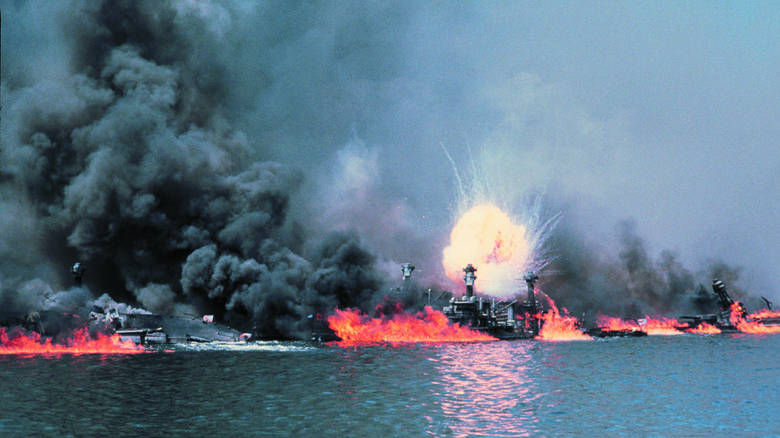
Franklin D. Roosevelt didn't call it "a date which will live in infamy" for nothing. The December 7, 1941 attack on Pearl Harbor that drew the United States into World War II is seared in the brains of every American who was alive at the time. It's become a subject of fascination for many filmmakers, with Michael Bay famously tackling the event with his movie "Pearl Harbor." But the film that comes the closest to capturing the chaos of the surprise attack is 1970's "Tora! Tora! Tora!," directed by Richard Fleischer, Toshio Masuda, and Kinji Fukasaku.
"Tora! Tora! Tora!" is one of several '70s war movies that still hit hard today. It shows the events of the Pearl Harbor attack from both the Japanese and American perspectives, with separate film crews devoted to each side of the story. While its narrative merits can be questioned, the accuracy of its depiction of the Pearl Harbor attack is undeniable. Filmed on location in Oahu, Hawaii, the combat scenes look so real because they are — all the flying and explosions are legit. "If you worked on this movie, you thought you were in World War II," stuntman Charlie Piecerni told HistoryNet. "This was real. There was no faking, no bulls**t."
The film even features a real-time, totally unintentional plane crash — the people you see scrambling to safety are actually stunt performers running for their lives. The scene was supposed to depict an American fighter plane bursting into flames soon after taking off as if it had been hit, but the radio-controlled Curtiss P-40E Warhawk, which was packed with gasoline and explosives, spun out of control and burst into flames on the runway. It's a minor miracle that this didn't join the list of movie scenes that actually killed stunt performers.
2. Come and See
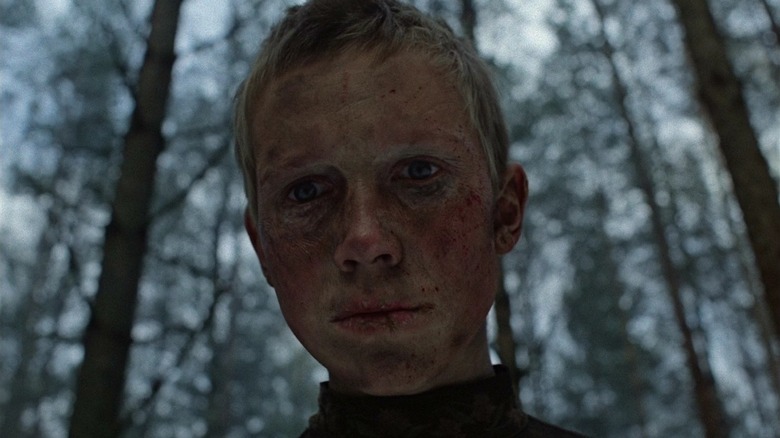
File this one under World War II movies that are accurate but are too emotionally devastating to watch more than once. The 1985 Soviet film "Come and See" tells the tale of the Eastern Front and the brutality that unfolds around Flyora (Aleksei Kravchenko), a Belarusian boy who unintentionally brings tragedy upon his village. Hoping to join the partisans in the area, he digs up a rifle that had been buried to avoid Nazi reprisals. He later returns home to discover that his entire community has been massacred as a result of his actions.
Perhaps the most horrifying thing about "Come and See" is how true to life its atrocities are. The script was co-written by Ales Adamovich, who had himself served as a Belorussian partisan fighter in his youth, joining up at age 15. The film actually faced an eight-year delay due to the State Committee for Cinematography refusing to allow it to be made because the violence it contained was too realistic.
At once a lyrical anti-war abstraction and a vivid look at the Second World War in Belarus, "Come and See" forces audiences to confront the reality of what war actually looks like. According to director Elem Klimov, a former Wehrmacht officer once vouched for the film's authenticity, saying, "I marched through Poland, Belarus, and even reached Ukraine. I testify: everything told in this film is true. And the most terrible and shameful thing for me is that my children and grandchildren will see this film."
1. Das Boot
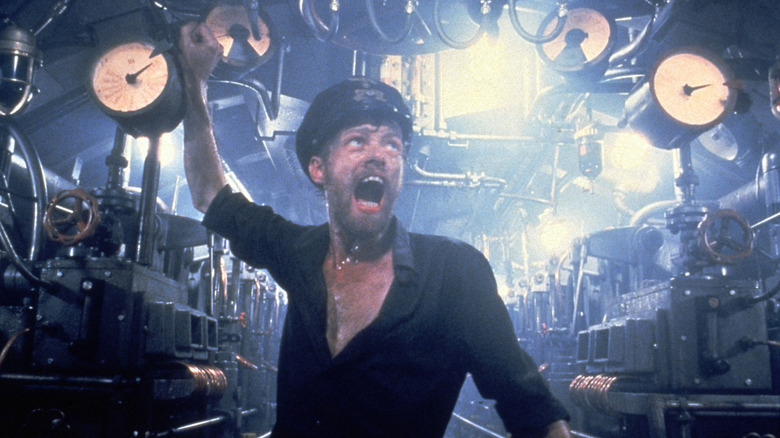
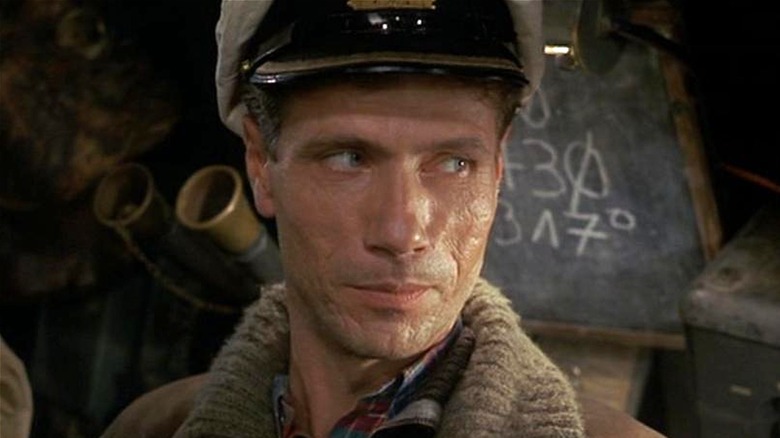
One of the most emblematic components of the German navy during World War II was the fearsome U-boat, submarines capable of carrying out sneak attacks before enemies knew they were around. But as we see in 1981's "Das Boot," life in a wartime submarine is not exactly a walk in the park. In its depiction of a sub in the midst of the Battle of the Atlantic, "Das Boot" — which is based on wartime journalist Lothar-Günther Buchheim's 1973 semi-autobiographical novel of the same name — devotes itself to realism from start to finish.
For the shoot, director Wolfgang Peterson had five reconstructions of a U-96 commissioned, some for exterior shots (one of which was rented by Lucasfilm for "Raiders of the Lost Ark," which came out the same year) and others for the inside of the sub. Peterson was particularly pleased with the replica of the interior. "It was a perfectly reconstructed submarine," he said in a 1982 interview. "They worked about one and a half year on that to recreate and reconstruct it. It was a tube. It was a real submarine insert." Of course, this wasn't cheap — Peterson spent a staggering amount of money bringing "Das Boot" to life.
The decision to film sequentially over the course of one year meant that the men playing the submariners took on an increasingly pale and unhealthy appearance from having spent so much time inside the dark, cramped submarine model. The actors spent time training to more accurately mimic actual submariners and were even forbidden from staying outdoors for too long so they didn't catch a tan. It's no wonder War History Online called Peterson's classic "the most realistic submarine movie ever released."