

5 Reasons Why Spartacus: House Of Ashur Flopped

In December 2025, "Spartacus: House of Ashur" entered the prestige television ring in hopes of becoming the next entry in the list of the best TV spin-offs ever made. This extension of the "Spartacus" universe put the pre-existing character Ashur (Nick E. Tarabay) front and center, while new characters like Neferet/Achillia (Tenika Davis) were introduced. Though set in an alternate timeline from the one "Spartacus" existed in (which explains why Ashur returned from his "Spartacus" demise), "House of Ashur" was still set to continue its predecessor's tradition of grisly violence and beefy bodies clashing in gladiator armor.
While plans were in place for Season 2 of "House of Ashur," Starz axed the show after only 10 episodes. Being attached to one of the most famous brand names in the Starz library couldn't guarantee survival for this spin-off, which seems to have put an end to the "Spartacus" franchise for the moment. But now that the dust has settled, it's worth asking why "Spartacus: House of Ashur" failed to draw blood as a successful show. What led to this program only running for a solitary season? After all, Starz previously exploited the "Spartacus" IP for all it was worth.
The demise of "Spartacus: House of Ashur" speaks to the difficulties of launching new hit shows (even ones rooted in familiar brand names) in the mid-2020s TV landscape. Its inability to catch on also speaks to certain "House of Ashur" qualities that doomed this program from the word go.
Starz isn't very popular as a network
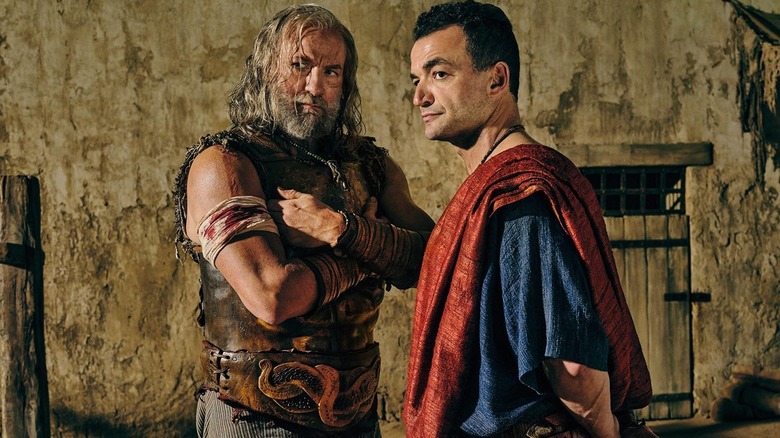
Starz always played second fiddle to HBO and Showtime in the days of premium cable networks. However, as the 15 best Starz original shows to binge immediately can attest, Starz did deliver its fair share of successes over the years. Unfortunately, in the modern streaming landscape, Starz has struggled mightily to find its footing. Forbes even dubbed Starz "streaming's biggest loser" in July 2024 in reference to how many subscribers it was losing. Bad news is constantly befalling this platform on Wall Street, while the network's shows that aren't "Outlander" or one of the "Power" spin-offs rarely gain any traction.
In recent years, Starz has struggled mightily to keep any original shows going beyond one season. The 2022 program "Dangerous Liaisons," for instance, even had its second season renewal plucked away. This all spelled doom for "Spartacus: House of Ashur" right from the get-go. The original "Spartacus" at least debuted in a pre-Netflix original programming world where it was easier for shows on outlets like Starz to gain traction. "House of Ashur," meanwhile, premiered in an incredibly packed television landscape on a network that's labored to launch new hits in recent years.
No matter the audience or critical reception to "House of Ashur," trying to become a must-see watch on Starz in the 2020s was always a tall order. This network's current form just isn't conducive to programming beyond its "Power" and "Outlander" franchises. Thus, "Spartacus: House of Ashur" was another television warrior that fell on the blade of Starz's failures.
There was lots of competition for gnarly period piece television

If you would like to watch some gory period piece storytelling on the small screen these days, there's no shortage of options. "Peaky Blinders," for instance, offers mobster mayhem in post-World War I England. "Spider-Noir" features tons of body horror and punching in Great Depression-era New York City. Then there's "House of the Dragon," the latest extension of the "Game of Thrones" universe, which once again combines medieval backdrops with all kinds of brutal slayings. While the amount of new TV shows and seasons debuting each year has slowed down recently, there's still hundreds of shows dropping annually, many of them promising period setting gnarliness for curious viewers.
This ensured that "Spartacus: House of Ashur" couldn't register as innately special just by existing. In another timeline, the barbaric slaughter in "House of Ashur" could have grabbed some eyeballs and gained recognition. But in the 2020s TV landscape, there's just no end to shows featuring vicious killings in vintage settings.
Just a little over a year before "House of Ashur" premiered, another gladiator show, "Those About to Die," made its way to Peacock. "Those About to Die" was considered a far cry from the best sword-and-scandal epics, but the existence of such a show reflected the jam-packed landscape "House of Ashur" debuted in. The elements defining the "Spartacus" brand just aren't special anymore.
The program hinged on an alternate timeline concept
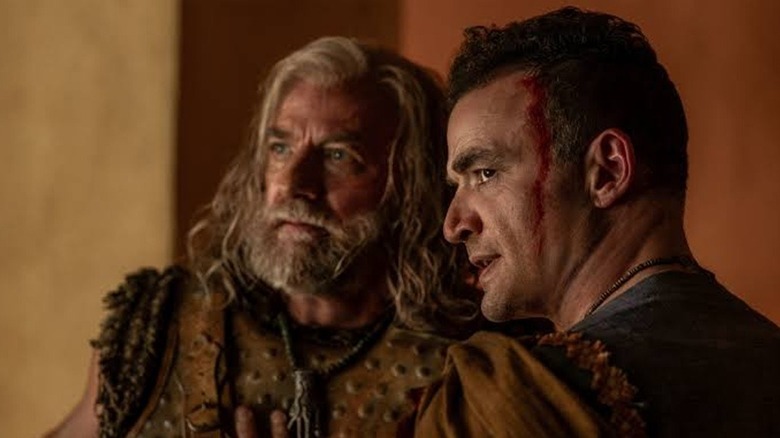
Nick E. Tarabay's "Spartacus" character Ashur made quite an impression on audiences, which made his death in "Spartacus: Vengeance" all the more impactful. However, as we know from the pop culture properties that have featured the dumbest ways characters have been brought back to life, a decapitation doesn't have to be the end of somebody's saga. "Spartacus: House of Ashur" sees Ashur coming back from the dead but emerging in a new timeline. He's still Ashur, but now existing in a parallel realm apparently separate from the original "Spartacus" continuity.
As anyone well-versed in the complicated "Terminator" franchise timeline knows, engaging in alternate realities and other similar tomfoolery to bring back dead characters is a surefire way to inspire audience confusion. "Spartacus: House of Ashur" hinged its entire existence on audiences getting onboard with the idea that a character who was decidedly dead is suddenly alive and well again. That's a perplexing starting point that gave "House of Ashur" the worst of both worlds. That concept made it seem like a strained spin-off to "Spartacus" devotees, while the concepts of resurrections and alternate timelines (not to mention anchoring the show around a character from the original "Spartacus" program) couldn't have made "House of Ashur" appealing to newcomers.
The "Spartacus: House of Ashur" creative team certainly didn't play it safe in terms of conjuring a spin-off. However, the narrative gymnastics required to bring back Taraby as Ashur doomed this program to be impenetrable for many audience members.
The Spartacus brand had been dormant for too long

After "Spartacus: War of the Damned" aired on Starz in 2013, the "Spartacus" IP went into hibernation. It took 12 years before "Spartacus: House of Ashur" brought the saga back to life. To illustrate how long that was, Beyoncé put out four albums in between "Spartacus" vanishing and returning. An entire trilogy of "Star Wars" movies debuted between 2015 and 2019. "Young Sheldon" started its seven-season run in 2017 before concluding in 2024. Even "Spartacus" creator Steven S. DeKnight was showrunner on the first season of "Daredevil" and directed "Pacific Rim: Uprising" during the break.
Entire worlds of pop culture began, flourished, and ended while "Spartacus" was completely inactive. But sometimes absence makes the heart grow fonder, as seen by lucrative animated Disney sequels like "Toy Story 5" and "Zootopia 2" arriving years after their respective predecessors. "Spartacus," though, was not quite the same thing as the most popular family movies in history. After nearly 13 years off the air, the world had kept on spinning without "Spartacus." Bringing it back didn't fill a void in pop culture — if anything, it just felt random.
Taking too much time away ensured that any initial buzz surrounding those earliest "Spartacus" seasons was well and truly gone by the time "Spartacus: House of Ashur" finally hit the airwaves. Excessive dormancy ended up dooming this brand name.
House of Ashur was given a poorly chosen December 2025 release date
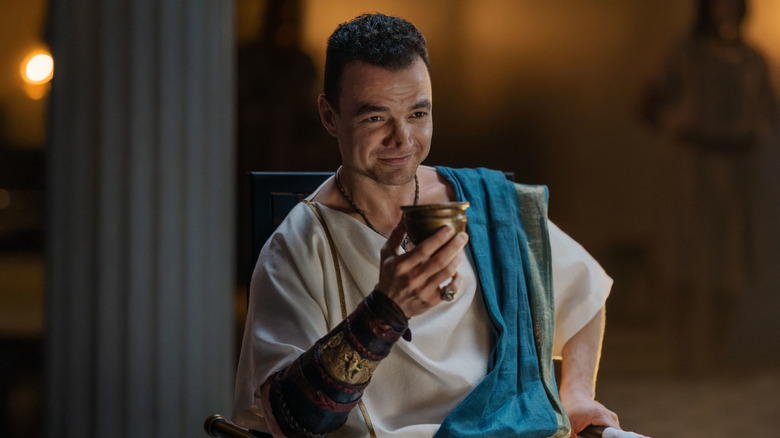
"Spartacus: House of Ashur" dropped its first episode on December 5, 2025. This launchpad was clearly chosen by Starz in the hopes that the program could get extra eyeballs over the holiday season. Once people were off work and needed something to watch after all the holiday celebrations had died down, "House of Ashur" could be there as must-see TV. Unfortunately for everyone involved in "House of Ashur," December 2025 was jam-packed with major genre TV shows aimed at grown-ups. For starters, "Fallout" began airing its second season just 11 days after "House of Ashur" premiered. The former's immediately massive viewership numbers indicated that "Fallout" was steamrolling "Ashur."
Meanwhile, "Stranger Things" began airing its fifth season over Thanksgiving 2025. This show was still generating conversation by early December, especially since another batch of "Stranger Things" installments was set to drop on December 25. Against these new seasons of series that were more familiar and "modern" to TV viewers, "Spartacus: House of Ashur" couldn't hope to stand out. "Fallout" and "Stranger Things" were so all-consuming in their respective pop culture presences that the December 2025 launchpad proved fatal rather than beneficial for "Ashur."
As fan theories about how "Stranger Things" would end piled up, "House of Ashur" faded deeper and deeper into the background. Sometimes multiple pop culture properties can thrive during the holiday season, but December 2025 clearly didn't have room for "Ashur." A theoretically strong premiere date instead sealed this spin-off's fate.