

5 Most Underrated Sci-Fi Movies Of The 1990s, Ranked
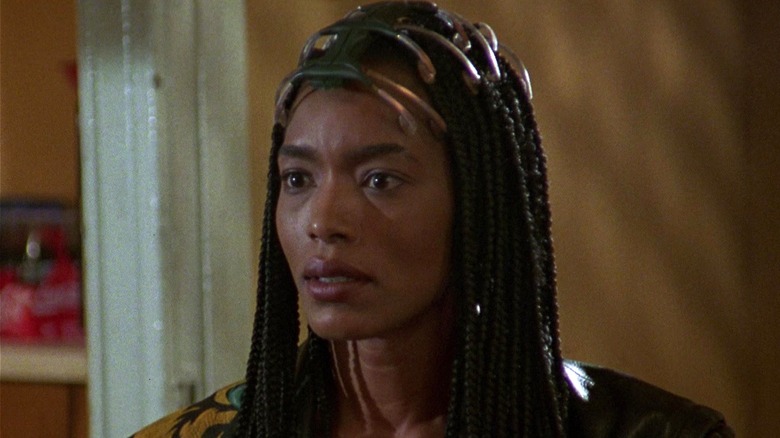
Science fiction history is often written by the films that were under-appreciated at the time of release. For every "Star Wars" that transformed the culture overnight, there are dozens of movies like "Blade Runner" or John Carpenter's "The Thing" which took longer to find their audience but would gradually reshape big screen sci-fi world building and storytelling in their image.
The 1990s was a totemic decade for the genre (head here for our roundup of the decade's most definitive), culminating in the groundbreaking, culture-shifting release of "The Matrix" in 1999, a daring hybrid of martial arts, cyberpunk and anime influences which chimed with audiences because it spoke to Gen X anxieties at the turn of the millennium. Yet beneath the box office hits, there are countless more titles throughout the decade which should have either met their moment or wowed critics with their bold new takes on the genre, but quickly became footnotes.
The five films in this ranking either received rocky responses from critics and/or audiences or have fallen out of the cultural conversation as the years have passed, but are all worthy of being discussed among the decade's best and boldest science fiction movies. From unholy genre hybrids to unconventional adaptations and singular low-budget visions, these films should be able to claim that they've shaped the modern sci-fi movie as much as the titles which were barnstorming successes straight out of the gate. They might not have got the reaction they originally wanted, but their audaciousness has helped them age like a fine wine; they would all strike a chord if released today.
5. Mary Shelley's Frankenstein
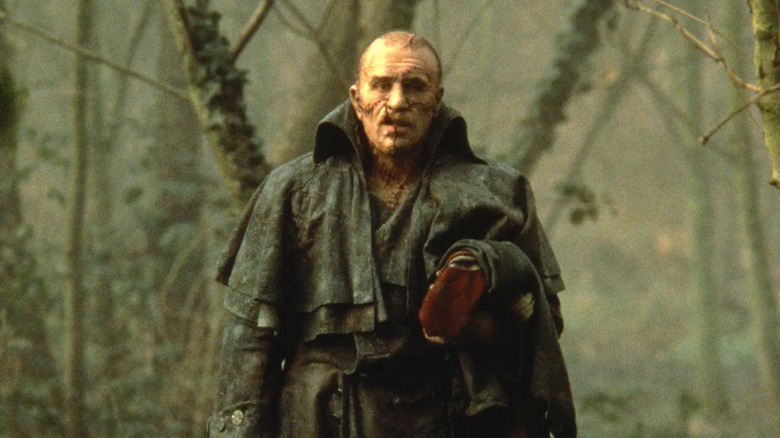
Although it's now seen as the definitive Gothic horror text, the untold truth of "Frankenstein" is that Mary Shelley's groundbreaking novel with its twisted take on the creation myth is also one of the most formative influences for many a sci-fi storyteller. Previously adapted to the screen in campier Universal monster movies, audiences were primed for a more gruesome horror update when director Kenneth Branagh — still best known for Shakespeare adaptations "Henry V" and "Much Ado About Nothing" — was selected to make the most faithful take on the source material yet.
The result was the handsomely mounted Gothic tragedy you'd expect, but one which left audiences cold, and judging from many reviews from the time of release, it's easy to see why. They were expecting a mix of scares and high camp like Francis Ford Coppola's then-recent take on "Bram Stoker's Dracula," but what they got was a violent costume drama more interested in exploring the novel's headier themes than finding new ways to make it shocking.
Branagh's 1994 film wasn't a slavish, beat-by-beat retread of the book, but time and distance from the divisive initial release has helped it age into its reputation as one of the more faithful adaptations. Its reputation was also helped by Robert De Niro's performance as the Creature, which, while empathetic, did not hold back from showing him killing out of pure alienation. Place this next to Guillermo Del Toro's recent Netflix adaptation, which bent over backwards to make sure its central monster never felt like a monstrous killing machine, and its approach to this story feels all the bolder.
4. Body Snatchers
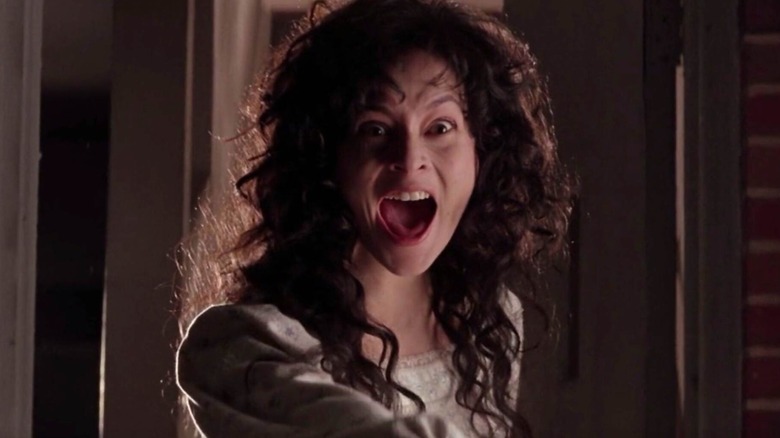
After two previous adaptations in 1956 and 1978, Jack Finney's novel "The Body Snatchers" got a new screen take in 1993 courtesy of director Abel Ferrara — and despite it being his first-ever studio production, he still managed to maintain all the sleaze and grime of his indie exploitation efforts. "Body Snatchers" is one of the loosest adaptations of the alien invasion story we've had yet, switching the action to a military base in Alabama, where the strict regimen of the camp makes it hard to tell who has been taken over by the contagious virus of conformity that has emerged from alien pods.
Co-written by "Re-Animator" director Stuart Gordon and his regular collaborator Dennis Paoli — with later rewrites by regular Ferrara collaborator Nicholas St. John — this take embraces the unsettling undercurrent of body horror more than any prior adaptation, with unsettling, visceral transformation scenes that'll get your skin crawling. However, despite glowing reviews from the likes of Roger Ebert, it was dumped by Warner Bros. and not widely seen on its very limited original release, still little more than a cult curio to this day.
It's a shame, as "Body Snatchers" subverts the paranoia of prior adaptations, moving the action to a place where intensive conformity is already the operative goal, making it all the harder to see who has been taken over and who is merely following orders. The last attempt at an adaptation was 2007's ill-conceived "The Invasion," and when a new take inevitably comes, we'd be lucky if it's from a director who can find as many unique things to explore within it as Ferrara did.
3. Pi
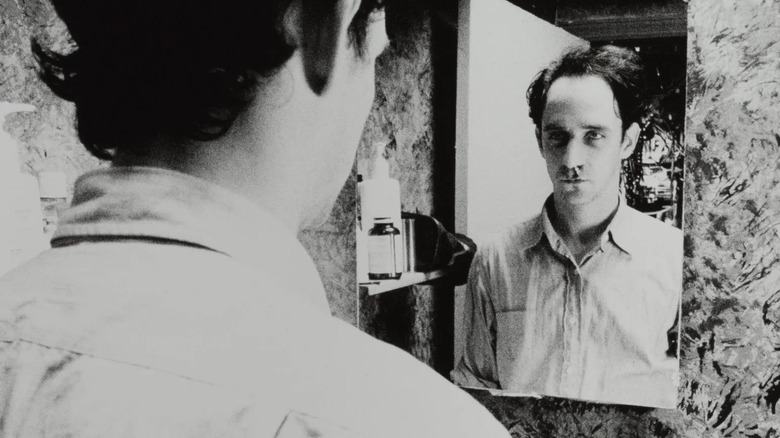
Darren Aronofsky's low-budget debut, famously financed by asking his friends and family for $100 each, is less sci-fi and more math-fi, a conspiracy thriller about a malfunctioning computer that reveals more than the stock market predictions it was programmed to guess.
Aronofsky's 1998 film doesn't stay rooted in sci-fi, however, exploring headier themes such as the relationship between various religious denominations and the numerical order of the universe, with the 216-digit code that Max (Sean Gullette) keeps getting on his self-programed computer proving to hold the answers to weighty concepts ranging from the Torah to the stock market. For a mathematician who suffers from hallucinations, disassociations and a personality disorder, numbers are the only way Max can keep a grip on the universe, which unravels as different theories about how this corresponds to the order of existence build to the film's bizarre ending.
"Pi" was a surprise breakout success following its 1998 Sundance premiere, going on to make nearly $5 million at the box office on a $134,815 budget (which, adjusted for inflation, is still just under $500,000 less than "Obsession" cost earlier this year). However, despite Aronofsky getting more recognition as a director to watch with his grim anti-substance abuse melodrama "Requiem for a Dream" a couple of years later, his first film hasn't stayed in the cultural consciousness, even with a staggering 8K IMAX remaster for its 25th anniversary in 2023.
His other films are punishing, forcing the audience to sit with characters pushed to their furthest emotional extremes, whereas "Pi" is a surreal nightmare of a different breed. It would be every bit the stylish, unshakable achievement if made on a higher budget — that it feels this uncompromised on a shoestring makes it nothing short of miraculous.
2. Naked Lunch
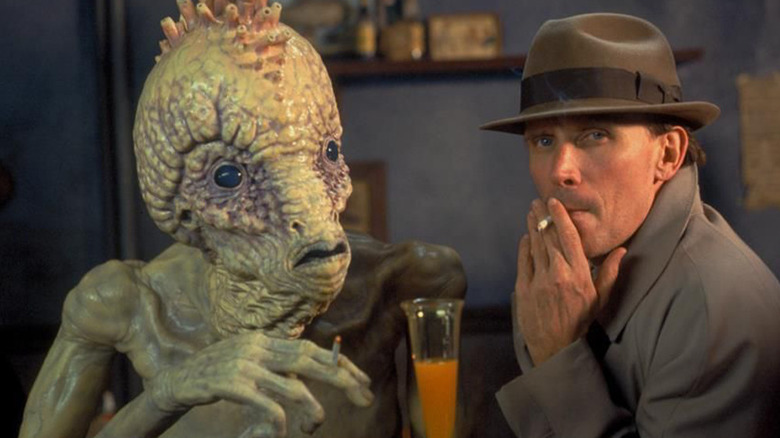
Few authors have proven as reliably difficult to adapt to the screen as William S. Burroughs, whose post-modernist, semi-autobiographical tomes are exactly what the word "unfilmable" was coined for. The gateway to making a great Burroughs adaptation is to closely follow David Cronenberg's approach to tackling "Naked Lunch," gaining a deeper understanding of the author's frazzled frame of mind by tying in more of the directly autobiographical segments from his wider body of work.
Here, this included opening with a recreation of his most personal short story, a lightly fictitious account of how he drunkenly murdered his wife. Cronenberg threw out the novel but kept the spirit of the author very much alive in his episodic take on "Naked Lunch," although it still proved to be one of his most confounding works upon release despite a clearer through-line than its source.
It bombed at the box office despite incorporating more palatable body horror for those unfamiliar with Burroughs' work — it's biggest cultural impact might be inspiring one of the best throwaway one-liners on a vintage episode of "The Simpsons" ("I can think of at two things wrong with that title"). It's easier now to appreciate it as one of the most challenging, rewarding works in Cronenberg's 50-year-plus filmography, showing how he was effortlessly able to put his own distinct stamp on another writer's pet obsessions. It feels like a Cronenberg original, and not a project that had been passed around several directors in the decades beforehand.
1. Strange Days
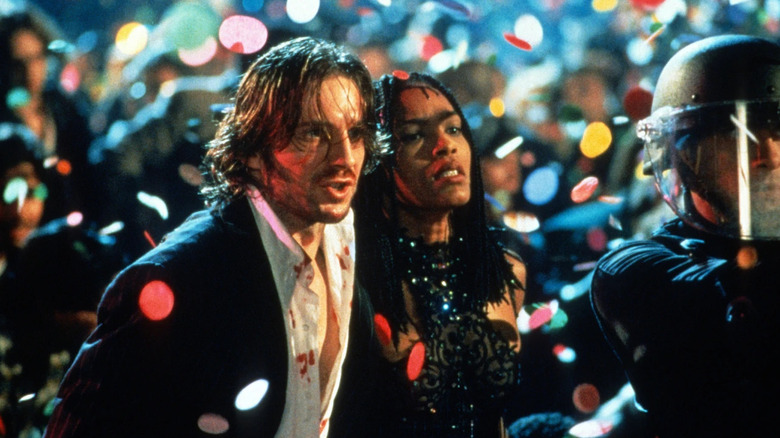
You should never bet against James Cameron — but this is the exception that proves the rule. "Strange Days" was one of the costliest sci-fi bombs of the 1990s, despite a timely screenplay that chimed with cultural anxieties in the wake of the 1992 L.A riots, an A-list cast comprised almost entirely of Oscar nominees, and the fact this is Cameron's only on-the-record collaboration with ex-wife Kathryn Bigelow, who directed his noir-inflected screenplay (co-written with Jay Cocks).
Set on the eve of the millennium in a Los Angeles that has grown closer to a dystopia in just a few short years, the movie follows the fabulously named Lenny Nero (Ralph Fiennes), a former cop who now sells illegal recordings on the black market of discs which can make you experience the memories and physical sensations of other people if plugged into your cerebral cortex. However, he finds himself plunged back into the city's criminal underworld after receiving a disc containing evidence of a sex worker's brutal murder, pulling him into a conspiracy that plays out against the backdrop of New Year's Eve.
"Strange Days" is a perfect marriage of Bigelow and Cameron's sensibilities, blending the intense, fact-driven political commentary of her later work with Cameron's distinct mix of sci-fi world-building and romantic melodrama. It had some critical defenders upon release (Roger Ebert gave it a perfect rating) but was otherwise greeted with a shrug; the Rotten Tomatoes consensus of reviews suggests that its recurring problem was that it didn't make the most of its dystopia. But that's missing the point, as Bigelow couldn't be clearer in her intent that she was holding a mirror up to the current moment; more than 30 years later, it sadly remains every bit as prescient.