

5 Award-Winning TV Shows That Are Unwatchable Today
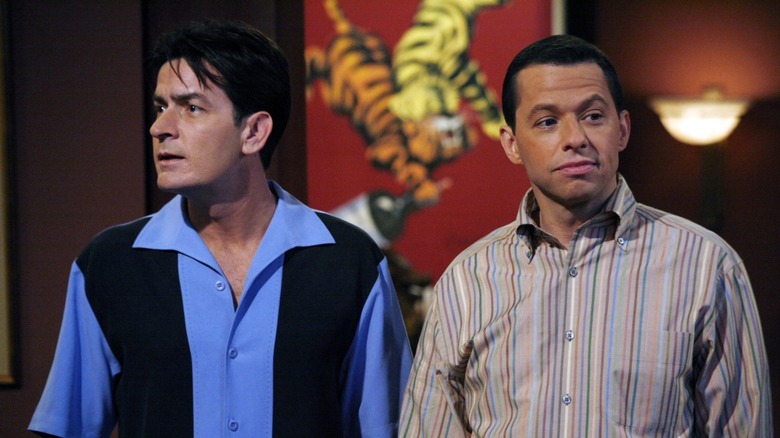
As the saying goes, it's an honor just to be nominated. Yet anyone who has competed for an Emmy, a Golden Globe, or any other major award that's annually presented to television creatives will tell you, winning is even better. Although nobody necessarily makes a TV show with the hopes of winning a prize, there's always the hope of recognition in the back of anyone's mind. After all, racking up trophies is one of the ways in which a show's legacy can be cemented, as it now has the imprimatur of a distinguished voting body upon it. Yet winning an award isn't the ultimate measure of a TV show's quality, and sometimes, it does very little to keep a series from aging poorly.
It's safe to say that sometimes, voters get it wrong when filling out their ballots. Determinations about what makes one show or performance the year's "best" are entirely subjective and based upon factors that have nothing to do with quality. Personal relationships, biases, and matters of taste all play a hand in what gets someone's vote. The one thing that doesn't factor into this decision is how a show will hold up over time, as that's perhaps the least quantifiable thing to assess.
Here are five award-winning TV shows that are unwatchable today. These are shows that were acclaimed enough to win major prizes, yet for one reason or another have curdled like cheese. No matter what the reason, one thing's for certain: If given the chance, voters might want a do-over when it comes to some of these choices.
The Cosby Show
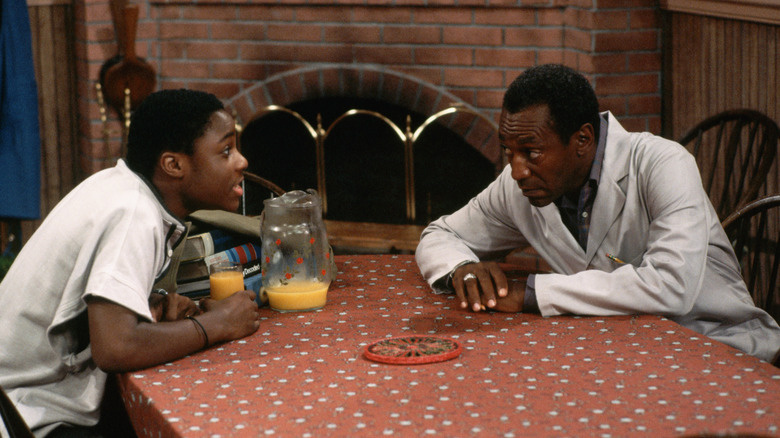
Perhaps no other TV show's legacy has been more permanently marred than "The Cosby Show." Airing on NBC from 1984 to 1992, the show was the best of the '80s family sitcoms, offering an aspirational vision of Black excellence that contrasted with depictions of African American life at the time. Cliff Huxtable (Bill Cosby) was dubbed "America's Dad," a doctor who wore colorful sweaters, did funny voices, and pushed his five children to reach for the stars. His professional success was matched by his wife, Clair (Phylicia Rashad), who worked as a lawyer rather than staying at home.
Throughout its eight-season run, "The Cosby Show" won six Emmys, including best comedy series for its debut year. Cosby won two Golden Globes for his performance as Cliff Huxtable, whose cuddly yet stern approach to parenting mirrored the comedian's public persona. Yet there was a dark side to this '80s sitcom, one that stemmed from Cosby's own secret double life.
In 2018, Cosby was sent to prison for sexual assault, the culmination of years of rumors and allegations from multiple women about misconduct that led to reruns of "The Cosby Show" being pulled from air. It's now difficult to find the show on cable or streaming today, which had previously been unthinkable. While Cosby is far from the only problematic figure to produce groundbreaking art, it's difficult to watch the show, which centers on an obstetrician who presents himself as a model husband and father, without thinking about what its star was convicted of.
If you or anyone you know has been a victim of sexual assault, help is available. Visit the Rape, Abuse & Incest National Network website or contact RAINN's National Helpline at 1-800-656-HOPE (4673).
Homeland

"Homeland" took off like a rocket when it premiered on Showtime in 2011. Claire Danes starred as Carrie Mathison, a brilliant CIA officer suffering from bipolar disorder who becomes convinced that decorated Marine and POW Nicholas Brody (Damian Lewis) was turned into a sleeper al-Qaeda agent. Convinced he is planning a terror attack now that he's back on U.S. soil, Carrie ignores the orders of CIA division chief, Saul Berenson (Mandy Patinkin), and keeps a close eye on Brody.
In its first season, "Homeland" won six Emmys, including best drama series and best actress and actor in a drama series for Danes and Lewis. The Emmy love continued in season two, with Danes winning a second consecutive acting prize. Yet the bloom was already starting to fade as the show tried to stretch Carrie and Brody's story into an ill-fated romance. By season three, the writers had nowhere else to go with Brody, and killed him off in a shocking finale.
With Brody gone, "Homeland" settled into a series about Carrie trying to stop terrorism across the globe, and at times it functioned as an effective paranoia thriller about the cost of safety. Yet it's impossible not to see a bit of jingoism in its justification of torture as a necessary tool in the fight against terror, and cringe at its depiction of several Muslim characters as violent extremists. For better or worse, every season of "Homeland" was a mixed bag, which is why it fell out of favor with Emmy voters.
House of Cards
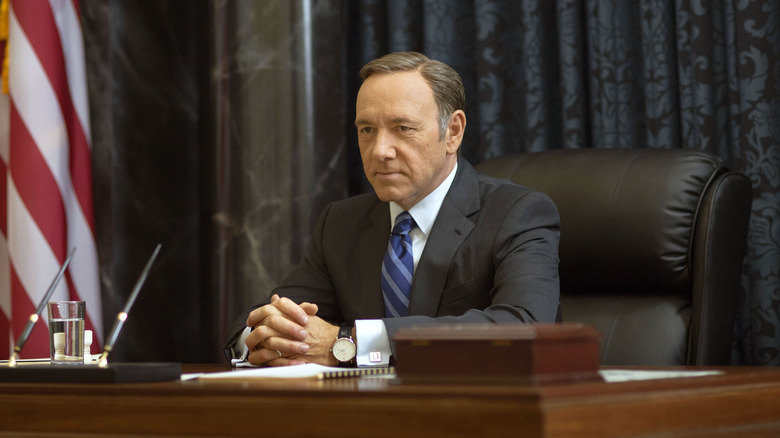
"House of Cards" was a TV game changer, kicking the streaming revolution into hyperdrive and all but inventing binge-watching. Netflix pulled out all the stops for this political drama about conniving congressman Frank Underwood (Kevin Spacey), who claws his way to the presidency with the help of his wife, Claire (Robin Wright). Oscar-nominee David Fincher directed the pilot and served as an executive producer, bringing a cinematic quality to the small-screen drama.
With its high production value and A-list cast, "House of Cards" played like catnip for the TV Academy, and "House of Cards" became the first streaming exclusive series to score major Emmy nominations. The show won seven Emmys throughout its run, including best director for Fincher. It was a frequent nominee in its first five seasons, consistently scoring nods for best drama series, best actor in a drama series for Spacey, and best actress in a drama series for Wright. And then the bottom dropped out when Spacey was fired over allegations of sexual misconduct shortly after production began on the sixth and final season.
Even before the Spacey allegations surfaced, the show's quality was beginning to slip as it desperately tried to keep up with current politics in the Trump era. "House of Cards" is still regarded as one of the 31 best Netflix original series, albeit lower down the list. One wonders how its legacy might've fared had it ended before its downfall, yet it's difficult to enjoy in the same way for the Spacey of it all.
Three's Company
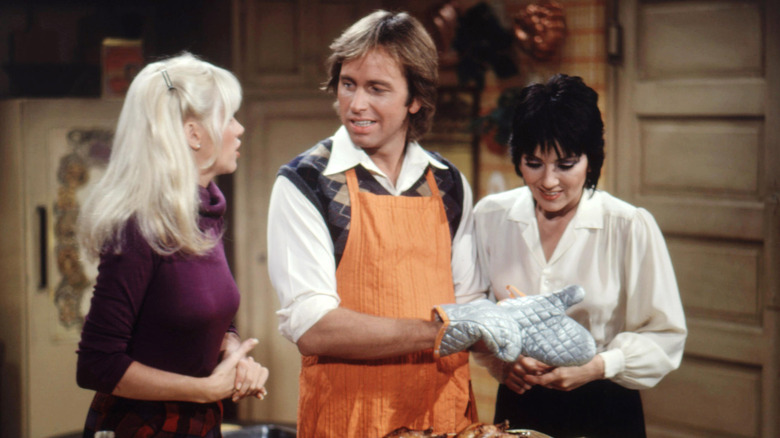
The 1970s were a glorious time for television, and some of the best '70s shows laid the groundwork for prestige TV. Among the biggest TV hits of the decade was "Three's Company," a primetime farce built around a premise that seemed like a perfect sitcom set-up. In need of a new roommate, Janet Wood (Joyce DeWitt) and Chrissy Snow (Suzanne Somers) agree to rent the room to Jack Tripper (John Ritter). But their landlord, Mr. Roper (Norman Fell), doesn't like unmarried men and women living together, so Jack pretends to be gay, despite having the hots for every woman he meets.
John Ritter won an Emmy and a Golden Globe for his performance as Jack, which showcased his skills as a physical comedian. Norman Fell also won a Globe for playing Mr. Roper, who got his own spinoff with his wife, Helen (Audra Lindley). At its height, the show was competing for best comedy series against "All in the Family" and "M*A*S*H," both of which are considered among the funniest sitcoms in TV history. Yet while their legacies have strengthened over time, "Three's Company's" hasn't.
Obviously, every show is a product of its era, and certain jokes aren't going to play as funny for contemporary audiences. Yet the entire premise of "Three's Company" relies upon outdated views of men and women, and Ritter's performance can come across as homophobic despite his best efforts to create empathy. There's also a leering quality to the way Chrissy is portrayed as a buxom blonde clad in skin-tight attire.
Two and a Half Men
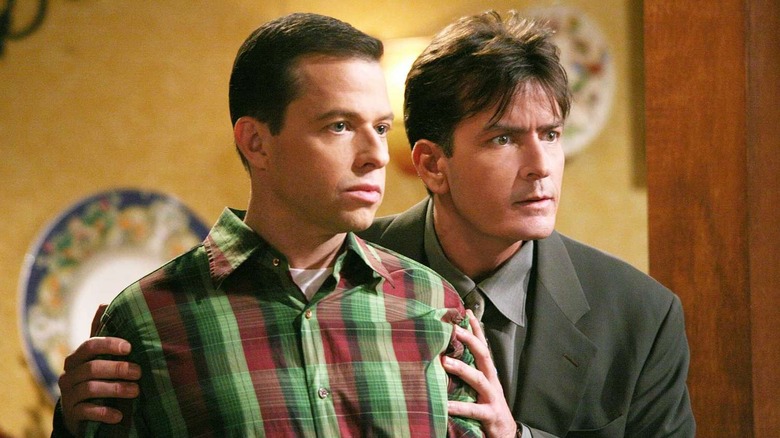
The best Chuck Lorre TV shows have kept the multi-cam format alive as single-camera comedy has all but taken over. Among his most successful sitcoms is "Two and a Half Men," which ran for 12 seasons on CBS between 2003 and 2015. Charlie Sheen starred as Charlie Harper, whose decadent lifestyle is disrupted by the arrival of his recently divorced brother, Alan (Jon Cryer), and his son, Jake (Angus T. Jones). Even after Sheen's very public exit, the show continued for another four seasons with Ashton Kutcher as Walden Schmidt, a tech entrepreneur who buys Charlie's home after he's pushed in front of a train by his stalker, Rose (Melanie Lynskey), and presumed dead.
It's understandable why CBS would want to keep the "Two and a Half Men" train chugging along, considering it brought in $155 million in ad revenue in the 2009–10 season alone. It was also a hit with Emmy voters, winning nine prizes throughout its run. Two of those went to Cryer, who won both best lead and supporting actor trophies for his performance as the nerdy counterpart to Sheen's womanizing cad. Yet as the series dragged on past the point of relevance, its Emmy fingerprint began to dwindle, as did its critical reception.
Watching "Two and a Half Men" today, a lot of its humor comes across as glorifying the Sheen character's chauvinism, with most of the women depicted as nags, dimwits, or psychopaths. There's also a noticeable decline after Sheen's departure, as the oddball pairing between him and Cryer was the show's main saving grace.