

This Is The Most Realistic Viking Movie Of All Time
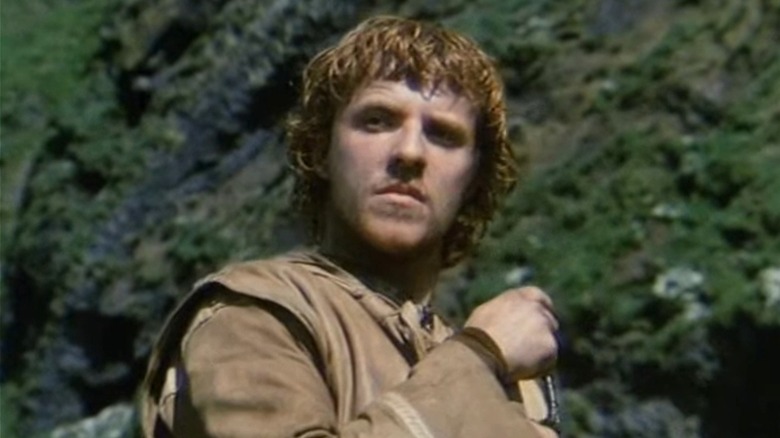
Vikings are awesome, but it's not always easy to get them right. In fact, even the most prominent Viking-themed projects aren't guaranteed to be totally accurate, as evidenced by History's "Vikings" getting certain historical details completely wrong.
Fortunately, one of the best Viking movies of all time has done its homework, and is easy to declare the most historically accurate fictional film ever made on the subject. Hrafn Gunnlaugsson's Icelandic 1984 adventure drama "When the Raven Flies" ("Hrafninn Flýgur") makes all those Viking tales with horned helmets and giant axes look like Marvel Cinematic Universe movies in comparison.
It tells a gritty tale of 9th century vengeance that's notable for downplaying overt Viking tropes in favor of realism. The movie is the first installment in the so-called Viking Trilogy, with "In the Shadow of the Raven" ("Í Skugga Hrafnsins") following in 1988 and "The White Viking" ("Hvíti víkingurinn") completing the series in 1991.
When The Raven Flies was a deliberate attempt to bring realism to Viking movies
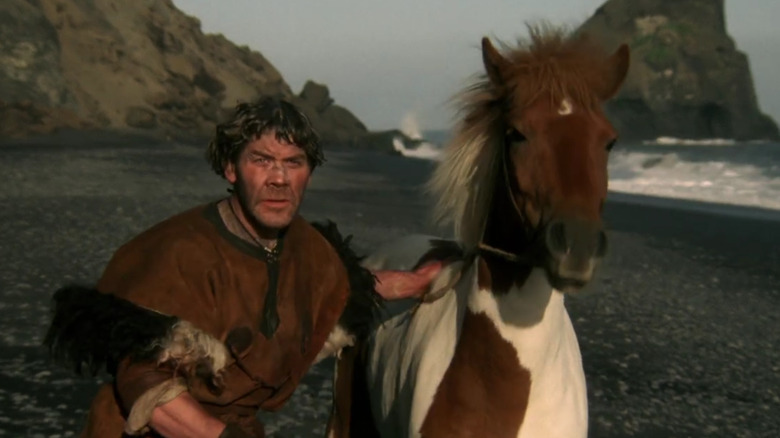
"When The Raven Flies" tells a tale as old as time: A young boy witnesses the death of his parents in a Viking raid, and seeks revenge as an adult avenger known only as Gestur (Jakob Þór Einarsson). It's a fairly straightforward story about the cycle of vengeance, but the no-frills way it describes Iceland's Vikings is captivating and chilling.
This, as it turns out, is the whole point of the movie. Director Hrafn Gunnlaugsson discussed the film in a 2005 interview with The Reykjavík Grapevine, happily comparing its narrative to a fairy tale and a spaghetti Western movie. However, he also revealed that his specific motivation to make it was to avoid the old "horned helmet" portrayal of Vikings and embrace realism. "[The Viking] times were more cruel and primitive than the romantic way of seeing them, the swords were like clubs. The Vikings who came to Iceland were political fugitives," Gunnlaugsson said. "I wanted to make a film that would portray Vikings more authentically."
Though Gunnlaugsson himself admitted that the film doesn't strive for complete accuracy, it nevertheless possesses an understated grittiness that's far more believable than many of the more stylized depictions of the Viking era. It's safe to say that the director's quest for authenticity was a success.