

At Just 27, George Lucas Directed The Sci-Fi Movie That Paved The Way For Star Wars
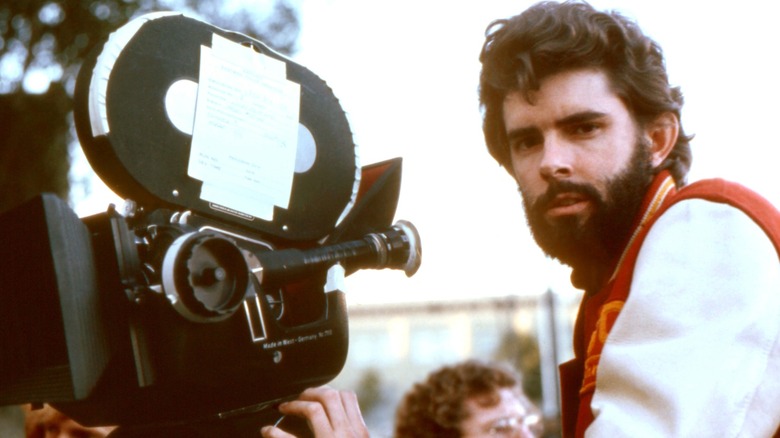
Before becoming a household name, George Lucas was a USC film school graduate trying to get his foot in the door. Lucas and his friend Francis Ford Coppola tried charting their own path outside the Hollywood system with the independent San Francisco-based production company American Zoetrope in 1969. As part of a distribution deal with Warner Bros., Lucas expanded his student film "Electronic Labyrinth: THX 1138 4EB" into a feature simply entitled "THX 1138." Although initially a failure, the sci-fi movie paved the way for something much bigger.
Released in 1971, when Lucas was just 27, "THX 1138" takes place in a dystopian future where individual expression is outlawed and emotions are suppressed through mind-altering drugs. When THX 1138 (Robert Duvall) and LUH 3417 (Maggie McOmie) take a break from their meds, their minds and hearts are opened, and they fall in love before gaining unwanted attention from the android police.
Like many '70s sci-fi movies that were way ahead of their time, "THX 1138" presented a bleak future that was in keeping with the sense of dread permeating the decade. Warner Bros. executives weren't too thrilled, causing them to cancel their deal with American Zoetrope. The film's chilly reception from critics and audiences caused Lucas to pivot towards '50s nostalgia with "American Graffiti," and he continued that move toward optimism with "Star Wars."
THX 1138 enjoyed a re-evaluation after Star Wars
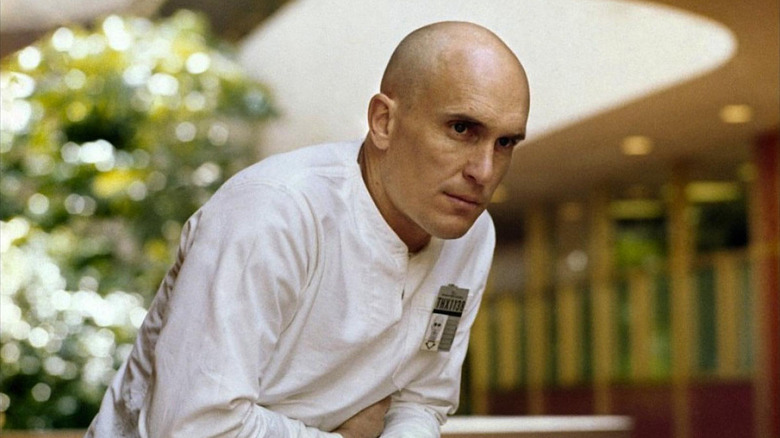
By the time "Star Wars" opened in 1977, audiences were hungry for escapism after a dreary decade. The first film presented an optimistic sci-fi vision despite taking place a long time ago in a galaxy far, far away. Its box office success forever changed Hollywood, as studios prioritized money-making blockbusters over smaller stories. Even when ranked against every "Star Wars" movie by how much they made at the box office, "A New Hope" still places high.
Although they appear to be polar opposites, both projects share a lot of DNA. One can see the frightening, simian-like "shell dwellers" in the cute and cuddly Ewoks in "Return of the Jedi." There's also the pristine sterility of the futuristic architecture, which found its way into the design of the Death Star. Most importantly, there's the theme of an individual fighting against tyranny, and the hope of collective rebellion. These similarities became more apparent as "Star Wars" moved into darker territory, as with the sequel "The Empire Strikes Back" and the TV series "Andor."
Now considered one of the best sci-fi movies of the '70s, "THX 1138" enjoyed a re-evaluation thanks to a 2004 directors cut. Released right as Lucas was wrapping up his "Star Wars" prequel trilogy, audiences could fully absorb the weirdness of Lucas's vision, and appreciate how he funneled that into the more commercially-viable package of "Star Wars."