

Steven Spielberg's Disclosure Day Flips A Core Theme Of Another Alien Movie
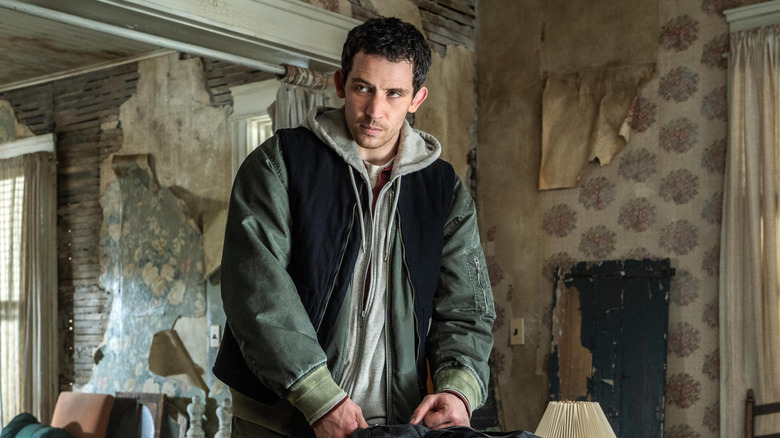
Steven Spielberg's "Disclosure Day" continues the filmmaker's fascination with aliens and humans colliding on Earth, a creative proclivity that has led him to helm some of the best sci-fi movies of all time, like "E.T. the Extra-Terrestrial" or "Close Encounters of the Third Kind." It'd be only natural for "Disclosure Day" to be in conversation with Spielberg's past alien-centric films, but one of the most fascinating parts of this project is how it correlates to his 2005 feature "War of the Worlds."
Specifically, "Disclosure Day" flips one of the core themes driving this Tom Cruise star vehicle. Both films are fascinated with the idea of humans being helpless in the face of otherworldly invaders. But both go about exploring these concepts in radically different ways. These variations reflect the individual tones of "War of the Worlds" and "Disclosure Day," not to mention the historical context in which the former film was released. The fascinating relationship between these projects' depiction of human helplessness embodies the sort of multi-layered thoughtfulness that permeates every Steven Spielberg movie, which are often richer and offer far more than typical summer blockbusters.
That quality also means Spielberg can return to the idea of human and alien contact without rehashing himself. For vivid proof of that, just look at how "Disclosure Day" and "War of the Worlds" each tackle the same concept so differently.
How human helplessness manifests in War of the Worlds
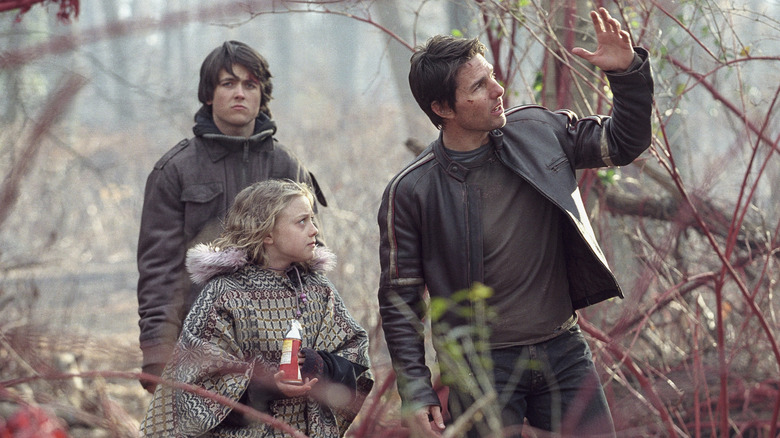
Many of the best Tom Cruise movies portray the actor as a courageous soul who can reliably get the audience and other characters through any difficult task. In "War of the Worlds," Cruise plays a father who's utterly helpless once towering alien tripods began blowing up Earthly locales. This isn't a movie about humans defeating aliens. It's about running, hiding, and trying to survive for just one more day. Since its release, many have interpreted "War of the Worlds" as distinctly reflecting what it was like to live through 9/11: The unthinkable has happened. You don't know why this is happening or who's doing it. You just want to protect your loved ones.
Thus, in "War of the Worlds," human helplessness in the face of alien invaders is rooted in real world, early 21st-century tragedies and terror. Tripods blast away at humans and turn them into ash, while specific explanations for why this bloodshed is happening elude everyone. Not even Tom Cruise is confident or full of answers in these circumstances. The ending of 2005's "War of the Worlds," which comes directly from the the H.G. Wells source novel, even reinforces this helplessness by noting that it's germs, not man-made bombs, that eventually defeat the alien invaders.
In "War of the Worlds," Spielberg made a bleak counterpoint to his earlier alien films like "Close Encounters of the Third Kind," with early 2000s horror informing a grueling depiction of human beings utterly unable to fight back in the face of extra-terrestrial invasion.
Disclosure Day has a more peaceful concept of human powerlessness
In the most messed-up sci-fi movie moment of "Disclosure Day," Daniel Kessler (Josh O'Connor) shows girlfriend Jane (Eve Hewson) the alien-related videos that convinced him to defect from the wicked Wardex corporation. These videos depict humans surgically experimenting on and torturing otherworldly creatures — echoing photos and videos of American soldiers torturing prisoners in Abu Ghraib. This encapsulates how "Disclosure Day" is an inverse of "War of the Worlds." That 2005 film channeled the experience of living through 9/11 to depict humans helplessly enduring alien adversaries. 21 years later, "Disclosure Day" emphasizes humans as the exploitative ones dishing out horrors reminiscent of what American forces inflicted on Middle Eastern citizens.
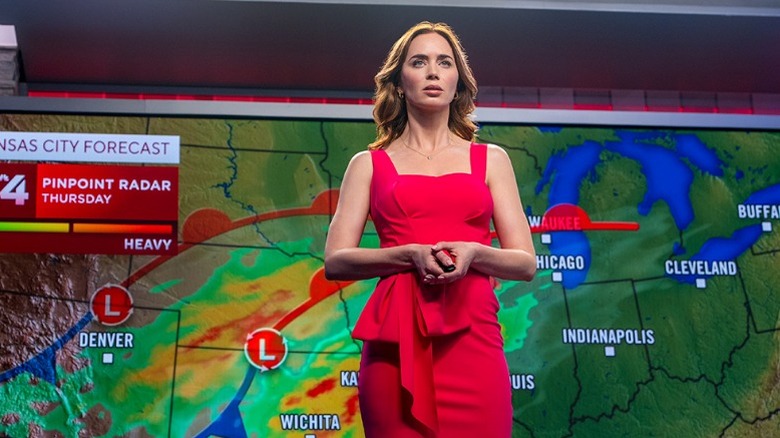
Similarly, in "War of the Worlds," human powerlessness against aliens is depicted as terrifying. "Disclosure Day" flips that, with characters like Hugo (Colman Domingo) insisting that humans have to stop controlling everything (including what information the public has access to). Margaret Fairchild (Emily Blunt), meanwhile, finally finds psychological solace when she stops evading the past and surrenders to it. Accepting one's memories or letting go of outdated beliefs isn't just framed as good; It's outright vital to be vulnerable and accept that humans aren't the be-all end-all of the universe.
"War of the Worlds" may be one of the darkest mainstream sci-fi films of all time, but "Disclosure Day" offers up a different set of possibilities, guaranteeing that these two sci-fi movies have distinctive identities even though they hail from the same filmmaker.