

5 Darkest Sci-Fi Movies Of All Time, Ranked
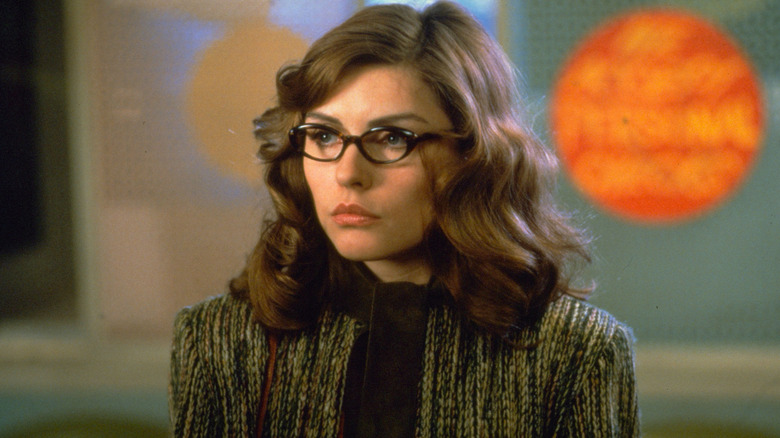
We may receive a commission on purchases made from links.
Science fiction can often be one of the darkest genres of them all, inviting audiences to ponder the worst hypothetical situations, with the most effective being just slightly different from our reality. The bleak dystopia of "Children of Men" doesn't look too dissimilar from modern Britain even if there isn't an extinction-level threat being posed by human biology, while plots involving artificial intelligence and surveillance technology creep ever closer to mirroring the worst headlines.
Modern life resembles a bad "Black Mirror" episode most days, so can any film in the genre still leave you with a pit in the stomach? For this selection of the five darkest sci-fi movies, we've opted to look towards separate subgenres to pick out the most despairing in each: space movies, dystopian tales and disaster movies are the most reliable in upsetting a crowd.
To narrow down the list, we made the decision to cut out anything with even the slightest shred of optimism, which meant that disturbing movies with glass-half-full open endings — such as the ending of the aforementioned "Children of Men" — didn't make the cut. We also didn't want to simply rely on movies with the darkest subject matter, instead opting for titles which handle that material in ways as thoughtful as they are bold; movies that keep you awake all night because they leave you so shaken by the ideas explored. These are the five which land with the biggest impact.
5. High Life
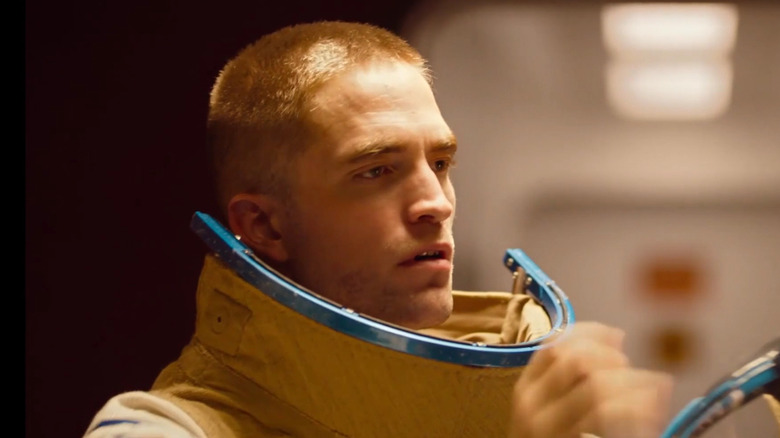
- Cast: Robert Pattinson, Juliette Binoche, Mia Goth, Andre Benjamin
- Director: Claire Denis
- Rating: R
- Runtime: 113 Minutes
- Where to Watch: Prime Video (rent or buy), Tubi, Plex, The Roku Channel
It's not just arthouse sci-fi like "Solaris" that deals with the existential emptiness of life in space; even emotive blockbuster crowd-pleasers like "Interstellar" and "Project Hail Mary" offer introspective examinations of the loneliness of intergalactic travel. But those movies at least offer audiences the release of friendship or romance; without those, floating around in space and prohibited from all human contact, you're liable to lose your sense of self and any guiding ethical principles.
That's certainly the case for the Death Row inmates on board the ship in Claire Denis' provocative "High Life," who are being used as guinea pigs for a mad scientist (Dibs, played by Juliette Binoche) determined to create new life via artificial insemination — a side-quest on the one-way mission they've all been forced into. We know that this is eventually successful as we open with Robert Pattinson's Monte raising a young daughter, but they still wind up being the last remaining humans in this desolate stretch of the cosmos. Is that better than being trapped with sexual predators and murderers who are free to act on their worst instincts, light-years away from Earth's laws?
Denis' 2018 film is uncomfortable precisely because it uses its sci-fi premise to explore life amongst those without moral compasses, freed from all Earthly restraints. Can the taboos they indulged on Earth still be considered such in the cruel and claustrophobic environment that they're self-governing? If you're the sort of person who finds "Interstellar" too sappy and sentimental, this is for you.
4. Melancholia
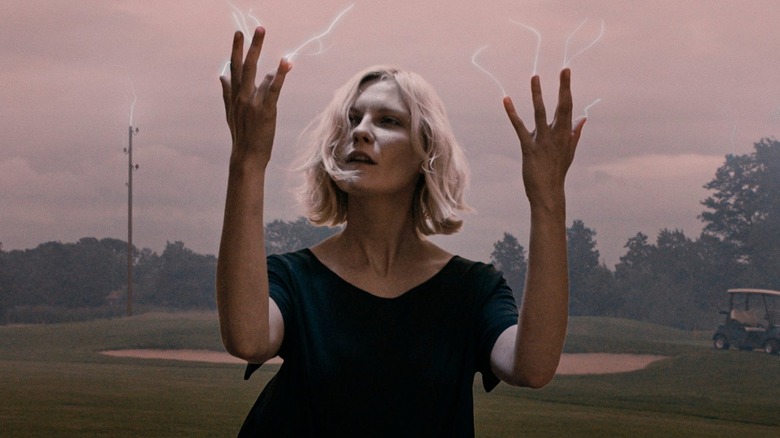
- Cast: Kirsten Dunst, Charlotte Gainsbourg, Kiefer Sutherland, Alexander Skarsgård
- Director: Lars Von Trier
- Rating: R
- Runtime: 136 Minutes
- Where to Watch: Prime Video (rent or buy), Apple TV (rent or buy), Tubi
The second film in Lars Von Trier's unofficially titled "Depression Trilogy" was inspired by a comment from his therapist that depressed people can often act the calmest in stressful situations because they always expect the worst. So the enfant terrible of Danish cinema followed 2009's "Antichrist" with his own spin on a classic apocalyptic disaster movie. It turned out to be this controversial director's most thoughtful, mature work — but this was still Lars Von Trier, so a newfound maturity didn't mean he'd lost the ability to upset and unsettle.
After an operatic overture depicting the end of the world, we're introduced to bride-to-be Justine (Kirsten Dunst), a woman who over the course of her wedding reception gradually begins to grow detached from her new domestic arrangement and the various external pressures placed upon her. It's the beginning of a depressive spiral, which continues as a visit to her sister Claire's (Charlotte Gainsbourg) estate coincides with the discovery of a planet hurtling towards Earth, destined to wipe out all life. As strange scientific and borderline supernatural incidents occur, and employees and loved ones die or disappear, Justine finds peace at last.
It's the end of the world not with a bang, but with an ice-cold whimper, with Dunst delivering her finest performance as the embodiment of severe depression. It's a classic Von Trier touch that her emotional remove from the severity of the situation is the only reprieve the audience is given from the unrelenting bleakness of it all.
3. Videodrome
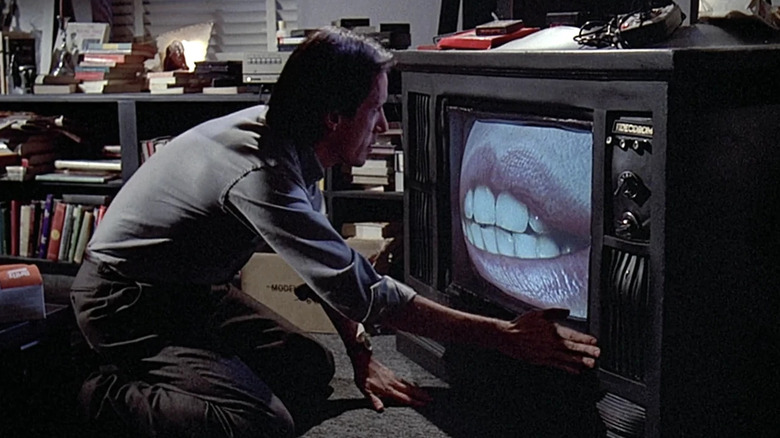
- Cast: James Woods, Debbie Harry, Sonja Smits, Peter Dvorsky
- Director: David Cronenberg
- Rating: R
- Runtime: 88 Minutes
- Where to Watch: Prime Video, Apple TV, YouTube (all rent or buy)
David Cronenberg's initial pitch for 1983's "Videodrome" was inspired by his childhood in Canada picking up U.S. TV network signals on his home set, anxious that he might see something not meant for public consumption. This gradually morphed into a conspiracy thriller about a channel which broadcasts live snuff content that generates warped transmission signals to the brain of any viewer — a form of psychological warfare that creates malignant tumors and intense hallucinations. It was the most extreme way Cronenberg could simultaneously satirize the increased policing of media by conservatives, and the increased sensationalism that was driving TV ratings.
Max Renn (James Woods) is the president of a local Toronto channel desperate for exploitative, counterculture programming that can drive ratings, thinking he finds salvation in the anonymous torture broadcasts he picks up. What he instead uncovers is a political movement behind the snuff films that's determined to change the fabric of society, intent on targeting those in society they deem morally corrupt.
With Max's intention to bring this "political movement" to the screens, "Videodrome" becomes a newly prescient warning about the ramifications of broadcasting and normalizing the most extreme views, even as it laughs at the very idea of censorship.
2. A Clockwork Orange
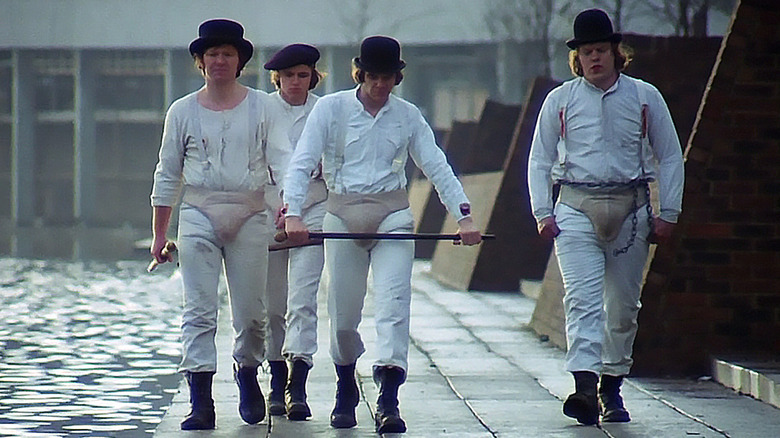
- Cast: Malcolm McDowell, Patrick Magee, Michael Bates, Warren Clarke
- Director: Stanley Kubrick
- Rating: R
- Runtime: 137 minutes
- Where to watch: Prime Video, Apple TV, YouTube (all rent or buy)
Even before it was banned in Stanley Kubrick's adopted home country of the U.K. at his own request, "A Clockwork Orange" was one of the most controversial studio movies of the burgeoning New Hollywood era. Following Alex DeLarge (Malcolm McDowell) and his gang of droogs as they indulge in sexual assault and "ultraviolence," the unflinchingly visceral nature of the atrocities committed — combined with the director's singular stylization and fondness for jet-black comedy — broke several onscreen taboos.
But it wasn't simply depicting the life of an idiosyncratic sociopath that made Kubrick's film such an unrelentingly bleak experience, as the despairing examination of moral and psychological reform is every bit as unsettling as the brutal crime wave that comes before it. By omitting the final chapter of Anthony Burgess' 1962 novel, in which Alex outgrows his tendencies, Kubrick instead suggests an infinite doom loop due to a society unable to offer any kind of meaningful rehabilitation.
It's an unambiguous critique of totalitarianism and the lengths an authoritarian government could go to in an attempt to control their citizens, using the most extreme case study imaginable to explore the concept of free will. "A Clockwork Orange" is an enduringly provocative film because it offers no easy answers to its unsavory moral dilemma, its controversial ideology likely to remain under your skin long after you've got over its most graphically violent sequences.
1. Threads
- Cast: Karen Meagher, Reece Dinsdale, David Brierly
- Director: Mick Jackson
- Rating: Not Rated
- Runtime: 117 Minutes
- Where to Watch: Tubi, Fandango at Home, Apple TV (rent or buy)
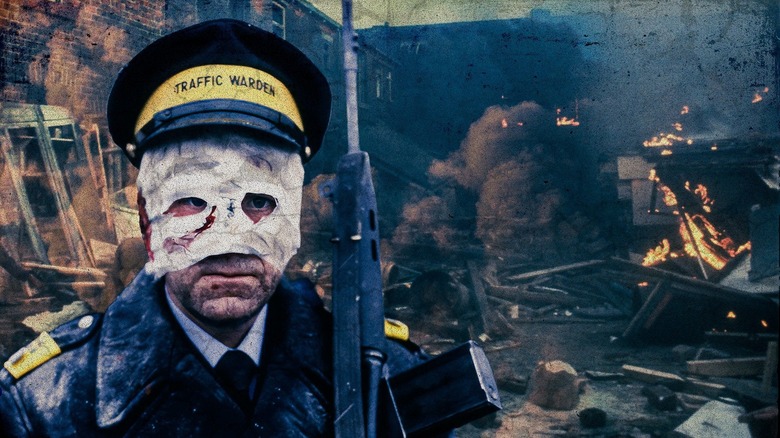
Nearly two decades after it banned the broadcast of the 1966 pseudo-documentary "The War Game," the BBC commissioned "Threads," a feature-length drama imagining the direct impact of a nuclear war on the British public and the years-long fallout from a devastating nuclear winter. Director Mick Jackson's intense research took him across the U.K. and U.S. to speak to everybody from scientists to defense ministers, even getting to view unredacted documents from various government bodies detailing how or even whether society could be rebuilt following a near-apocalypse.
These didn't paint an optimistic picture, and decades removed from Cold War anxieties, "Threads" will still make you feel completely helpless as it underlines the ways society would tear itself apart at the touch of a button. Set in the Northern English city of Sheffield, a humdrum family drama plays out against the backdrop of fuel and food shortages, and increased suppression of anti-war protests. After the bomb drops, martial law is implemented and mass starvation leads to the deaths of tens of millions; any children who do get born into this world suffer from lifelong radiation exposure and an unforgiving criminal landscape far closer to the Middle Ages.
It's the bleakest hypothetical for what could possibly happen next, and the most unrelentingly miserable dystopia ever depicted onscreen — a film that will make you stare into the middle distance, depressed and speechless, for at least an hour after the credits roll.