

5 Forgotten Slasher Movies That Still Hold Up Today
After films like "The Texas Chain Saw Massacre," "Black Christmas," and "Halloween" gave the horror genre new life in the 1970s, the following decades were full of folks trying to cash in. It seemed like there were slashers in theaters every weekend, as studios pumped out piles of pretty teenagers that audiences could watch get killed in a seemingly endless amount of creative ways.
Even if gore isn't your thing, you've likely seen at least a handful of the best slasher movies of all time, like "Scream," "Friday the 13th," "A Nightmare on Elm Street," and "Candyman." For every slasher franchise that stuck around, however, hundreds more failed to really get off the ground, not sticking in the popular consciousness the way some of those other movies did. But that doesn't mean those forgotten slashers were bad! Even if you thought they were lackluster back in the day, they may be worth revisiting now.
Plenty of forgotten slashers have held up, especially as tastes have changed and audiences have become more comfortable leaning into the inherent silliness of the genre. Some of the films below are legitimately good, while others are low-budget, straight-to-video sequels that nevertheless still managed to impress. If you've seen all the famous ones and are looking to get your fix of familiar-feeling fright fests that still shock and scare, check out the movies below.
The Town That Dreaded Sundown
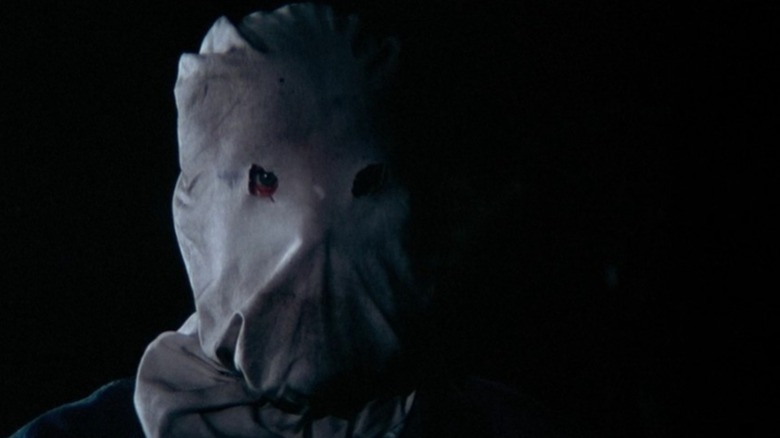
Most people credit "Black Christmas" and "The Texas Chain Saw Massacre," both from 1974, as early incarnations of what would become the slasher film. John Carpenter's "Halloween" cemented the tropes in 1978, and the genre was off to the races. But, in between, audiences were served up a heaping platter of horrifying sequences in "The Town That Dreaded Sundown," a 1976 film based on the real-life Texarkana Moonlight Murders that terrified a small Southern town in the 1940s. "Texas Chain Saw Massacre" isn't really a true story, but this one is.
Modern audiences who are fans of true crime will likely find much to appreciate about this movie's peculiar blend of documentary aesthetics with fictional storytelling. There's a newsreel-voiced narrator telling the story in deep, gravelly tones, and there is occasionally on-screen text that provides additional historical context. There are also scenes where the killer stabs someone with a knife tied to a trombone, and it's at once campy and cruel.
After all, this is a tried-and-true slasher film, and you can see its DNA in many movies that came later — from the burlap sack Jason Voorhees wears in "Friday the 13th Part 2" to the methodical, policework-based approach to serial killers seen in David Fincher's "Zodiac." It even culminates in a desperate chase across a field that leads to a row of silent, stark houses, bridging the gap between the nighttime farmland chase sequence in "Texas Chain Saw Massacre" and Laurie Strode's house-to-house suburban desperation in "Halloween."
Slumber Party Massacre II
By 1982, audiences knew how slashers worked, which leads us to Amy Holden Jones' wickedly clever film "The Slumber Party Massacre" — one of the best Golden Age slasher films. Feminist writer Rita Mae Brown wrote it as a satire, and Jones shot it like a full-on horror film, leading to an odd tone that sits somewhere in the middle. That movie has rightly been reclaimed as a feminist classic; after all, many credit it as the first slasher to be directed by a woman. By having the villain penetrate women with a power drill and stuffing the script with racy jokes, they made visible the exploitative nature of much man-on-woman violence in horror.
While some may remember the original, fewer know that there's a sequel that held up very well. "Slumber Party Massacre II" was also made by a woman, with Deborah Brock taking over both writing and directing duties. The sequel is more obviously silly, and it plays not like incompetence but a knowing, winking blast of '80s cheese. This is a movie for slasher fans who have seen it all, who will appreciate jokes like characters having the last names Kreuger and Voorhies, long before doing such a thing was considered cliché.
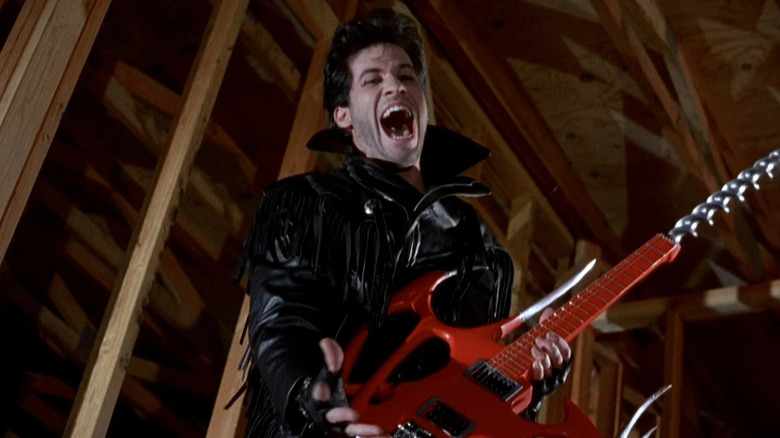
Its silliness is delivered directly to the face and backed by a screaming guitar solo; after all, this time, the Driller Killer isn't an escaped convict. He's a supernatural greaser, a hair metal rockstar who mounts his drill on the end of his electric guitar.
Maniac Cop 2
"Maniac Cop 2" is the first of two William Lustig-directed straight-to-video slashers on this list. We're fans of this guy because he leaned into the sleazy side of exploitation cinema, delivering classics like "Maniac" — the rare horror movie whose remake is better than the original. Importantly, Lustig also happily used the exploitation-flick format to critique power structures, making his films far more radical than audiences might expect. In the first "Maniac Cop," for example, Lustig sets up the story of a crooked cop named Matthew Cordell, a man who abuses the power of his badge to prowl the crime-ridden streets of '80s New York City while looking for victims of his own. It's a grimy, gritty film that gleefully goes for gore in a way that sometimes seems downright cruel.
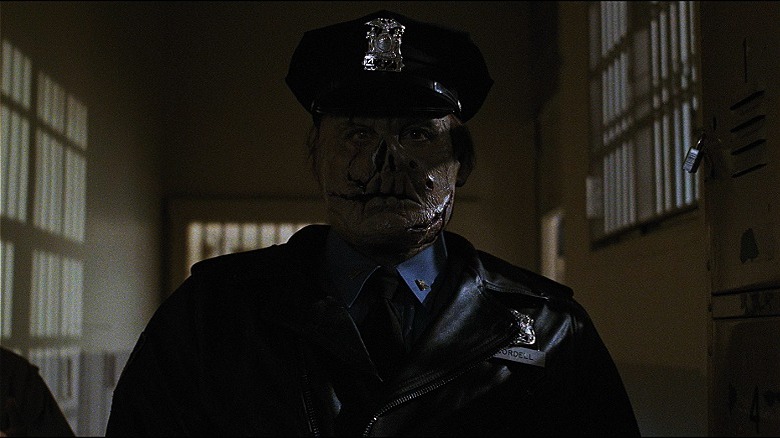
By "Maniac Cop 2," however, Cordell is something else entirely. He's now a zombie cop, a gruesome, garish figure who stalks the sidewalks of the city with the added benefit of some supernatural powers. It's a movie about how we trust in the power of authority, even when the people who wield those weapons very much do not deserve to deliver justice.
Like in most Lustig films, "Maniac Cop 2" features lots of practical effects likely to delight slasher fans. In addition to the grotesque prosthetics worn by the titular killer, there are some sadistic stabbings, shocking stunts, and even one ferocious fire effect that'll make you wonder whether the man beneath the flames was dead all along. Moviemaking like this is a vanishing art, so checking in on something like "Maniac Cop 2" will remind you of the lengths people used to go to give each other a good scare.
Uncle Sam
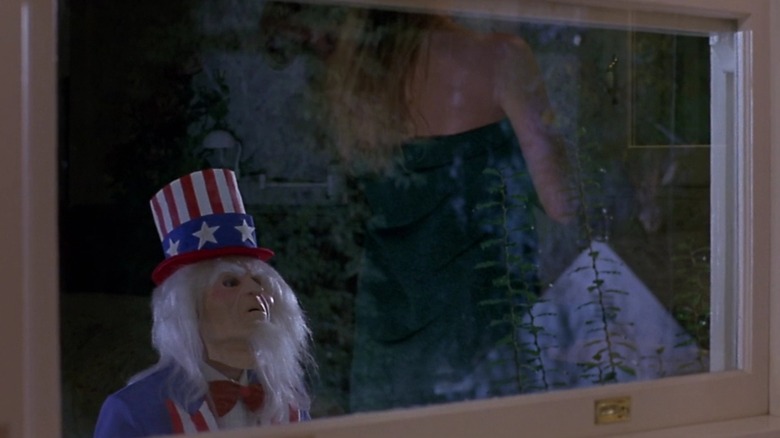
"Uncle Sam" is another William Lustig-directed slasher released right on VHS. This is a movie made for the shelves at Blockbuster, the kind of movie that sells itself based purely on the eye-catching box art. In this case, "Uncle Sam" features a poster that morphs the character from the classic American military recruitment poster into a skeletal monster pointing at the viewer alongside the excellent tagline, "I Want You... Dead!"
The Uncle Sam mask in the movie is significantly less grotesque; it's more like a Fourth of July mask you might find for sale at a CVS. It doesn't matter, though; "Uncle Sam" features a sick sense of humor that uses its limited budget to maximum effect, splattering prosthetic makeup, prop body parts, and buckets of fake blood all across the screen. There are some shots involving stilts — simultaneously laughable and eerie — that make "Uncle Sam" one of the most bizarre slasher movies ever made.
Like "Maniac Cop 2," "Uncle Sam" is also far more political than most slasher fans might expect. The movie is about a soldier killed by friendly fire in Kuwait who comes back for revenge, slaughtering the residents of his picturesque small town for not being sufficiently patriotic. This isn't just a Fourth of July-themed slasher movie the way "Halloween" was set on Halloween; this is a movie that critiques American imperialism, making visible the way that army recruitment seeks bodies to sacrifice for the good of the nation.
Valentine
Okay, look — we know the 2001 film "Valentine" only has an 11% critic rating on Rotten Tomatoes, and that director Jamie Blanks later asked for forgiveness. "A lot of people give me grief for ['Valentine'], but we did our best," Blanks told Cinefantastique in 2007. As fans continued to discover the film after its initial box office run, however, it seems that even the director came around to believe that making "Valentine" was worthwhile. He even supervised a new scan for home video release in 2019.
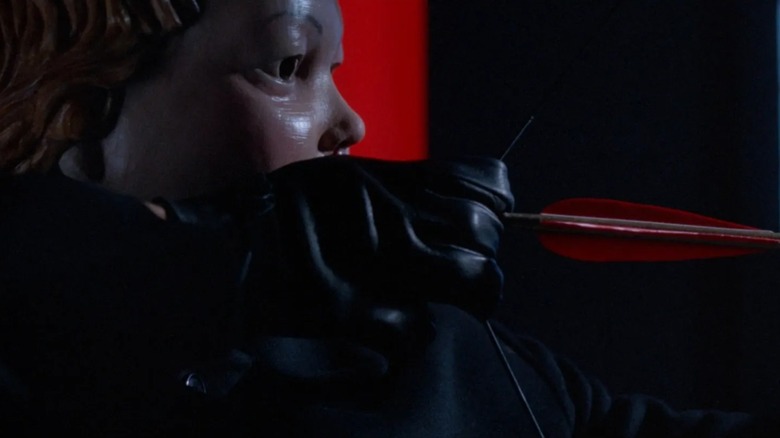
"Valentine" is about a group of friends being stalked by a killer in a cherub mask, a murderous madman who shoots arrows, beats people to death with clothing irons, and isn't afraid to pick up a knife. While audiences seeing the film a few years after "Scream" likely weren't interested in its faithful recreation of slasher tropes, they also might have missed its clear giallo influences. This is a movie all about the bright reds and deep blues of its color palette, one that sets up stylish kills simply because such things look awesome on-screen.
It's also a film about gender roles in a way that works even better now, 25 years later. At first, everyone assumes that the killer is someone from their past who was embarrassed by one of the women. Eventually, paranoia takes hold of the whole friend group, leading to a skewering of expectations — pun very much intended.