

5 Worst CGI Moments In The Star Wars Sequel Trilogy
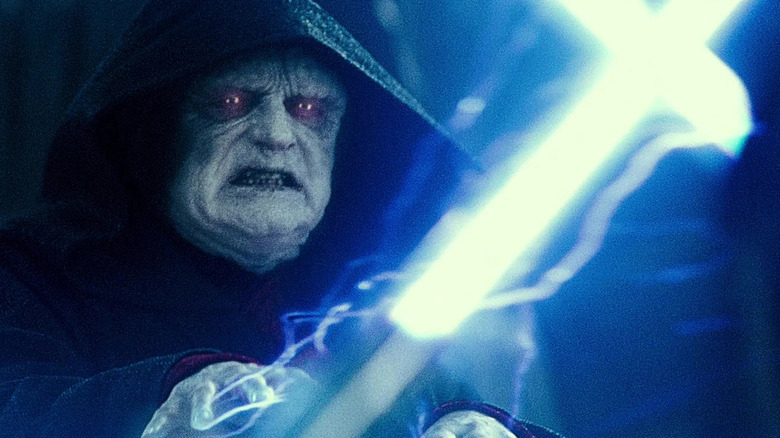
Computer-generated imagery (or CGI) can produce beautiful images and ensure once unthinkable storylines could finally get put on screen. Like any cinematic tool, though, they can also prove underwhelming when used poorly. For prime examples of this phenomenon, just look at the "Star Wars" sequel trilogy. This trio of movies featured many inspired uses of the tech, such as creating entirely digital characters like Supreme Leader Snoke (Andy Serkis) or (at least in her "The Force Awakens" incarnation) Maz Kanata (Lupita Nyong'o). The franchise's knack for groundbreaking technological wonders and visual effects triumphs was once again at the forefront.
Unfortunately, across this trilogy, particularly the two installments helmed by director J.J. Abrams, there were also underwhelming bursts of CG that harkened back to the clumsy characters from the 1997 re-release of "Star Wars" or the most galling green-screen work in "Attack of the Clones." The worst CGI moments in the "Star Wars" sequel trilogy (ranked below from "least worst" to absolute worst) are what happens when the possibilities of CG go under utilized. Instead, these moments jarred audiences right out of this galaxy far, far away.
To boot, they undercut the emphasis on old-school practical effects that the sequel trilogy was championing. Whatever makes these horrendous CGI moments bad, they're unfortunate examples of what happens when visual effects come up short in their potential.
The Rathtar invasion in Star Wars: The Force Awakens
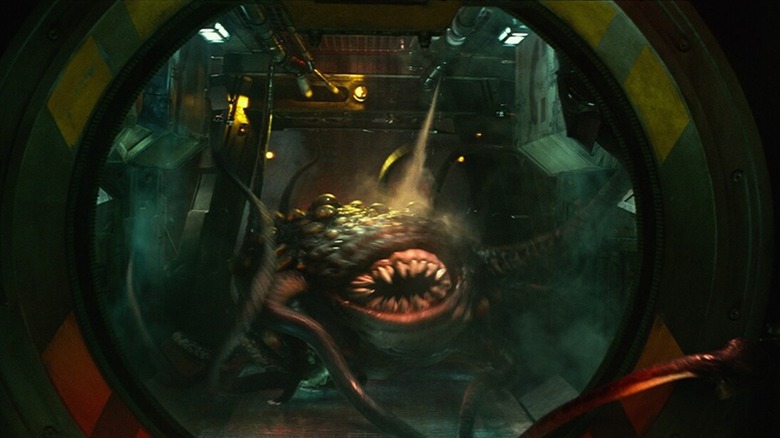
One weird facet of the Disney "Star Wars" movies was its emphasis on tentacle-laden creatures. "Rogue One" put poor Bohdi (Riz Ahmed) through the machinations of Bor Gullet, while "Solo: A Star Wars Story" featured gigantic tentacles descending from the skies in a Millennium Falcon chase sequence. Then there was the originator of this trend, the Rathtar's. These creatures were gigantic, toothy beasts that Han Solo (Harrison Ford) and Chewbacca (Peter Mayhew) were hired to transport before stumbling onto Rey (Daisy Ridley) and Finn (John Boyega). When some underworld figures Solo double-crossed show up at his doorstep looking for payback, Rey and Finn try to help by unwittingly unleashing the Rathtars.
One of the biggest complaints one could have with "The Force Awakens" is the movie's emphasis on practical effects wizardry means that its CG elements struggle to cohesively gel. That's what happens with the Rathtar invasion in "The Force Awakens." A film previously emphasizing immediately tactile alien critters was suddenly filled with CG creatures tossing people all over the place. There's a frustrating weightlessness to this sequence, and the Rathtars don't look as impressive as the film's coolest puppets or its superior CG creations.
Worst of all, lingering on digital Rathtars tossing digital doubles of the criminal baddies around leaves this set piece dramatically divorced from the central "Force Awakens" characters.
Digitally de-aged Leia in The Rise of Skywalker
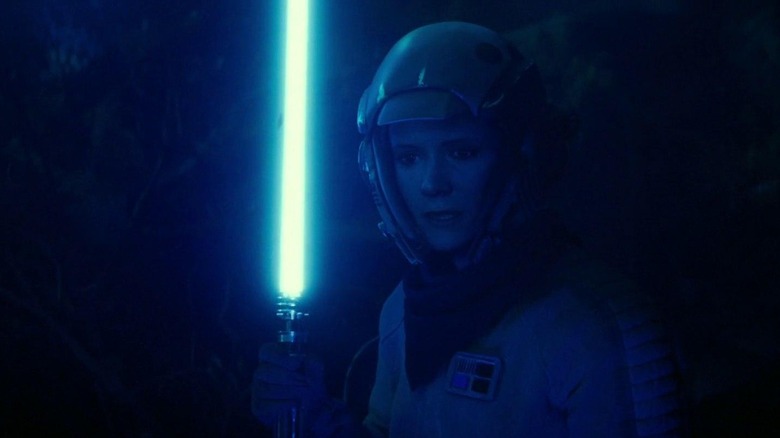
For every one instance of digital de-aging appearing superb on screen, there's countless examples of the technology missing its mark, reducing characters to wayward souls who look like they came from "The Polar Express." Poor legendary Carrie Fisher experienced the worst of it for the second time in a brief flashback in "Star Wars: The Rise of Skywalker" that showed Luke training a younger Leia in the Jedi arts.
Unlike in the "Rogue One," ending, where a digitally de-aged Leia was shown in vibrantly bright lighting, this one shrouded Leia in darkness (save for the illumination of a lightsaber) to possibly minimize how distractingly bad it looked. Unfortunately, this choice just made the whole scene look crummy in its lighting, while the flaws in the digital de-aging were still glaringly apparent. All the vibrant humanity of the real Fisher's face was absent from her digital simulacrum. Rather than looking like lost footage from the original trilogy, this digitally de-aged Carrie Fisher just looked creepy and lifeless.
The hollowness of the eyes especially hammered home the eerie uncanny valley vibes permeating this sequence. Poor Carrie Fisher deserved far better than being at the center of this digital de-aging disaster.
Palpatine unleashing his full lightning powers in Rise of Skywalker
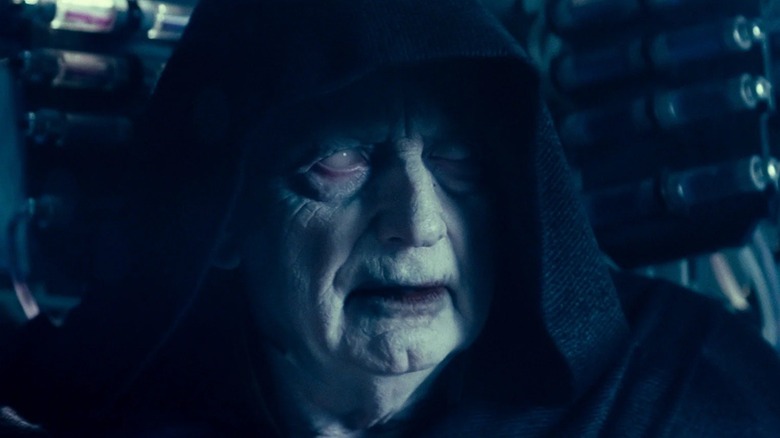
Often, a movie moment will go so off the rails that it becomes impossible to take anything afterward seriously. Sometimes this materializes as plot twists that ruined the movies they appeared in. Other times, its scenes in films that actors regret doing. "Star Wars: The Rise of Skywalker" had plenty of befuddling and bad moments before its final confrontation between Rey and Palpatine (Ian McDiarmid). However, one moment in the finale registered everything in this sequence totally inert dramatically. Said moment involved oodles of CG to realize the pinnacle of Palpatine's dark powers.
To demonstrate just how unstoppable he is, Palpatine demonstrates his Force Lightning to Rey by stretching his hand to the sky and unleashing a barrage of lightning that proceeds to obliterate countless hovering ships above. Conceptually, this moment is way too big for its own good. If Palpatine is this cartoonishly powerful, there's no conceivable way Rey and company can stop him. The CG used to realize this moment, though, renders this display of prowess hollow. Palpatine's not using the Force Lightning on flesh-and-blood people. It's all just digital animation, a bunch of ships clearly made in computers. There's no human element to ground the barrage of CG trickery.
Thus, Palpatine's grandiose power move just inspires yawns. It's a dismal moment that not only demonstrated how troublesome excessive CGI can be, but also further capsized the already tormented "Rise of Skywalker" climax.
Snoke's final appearance in The Force Awakens
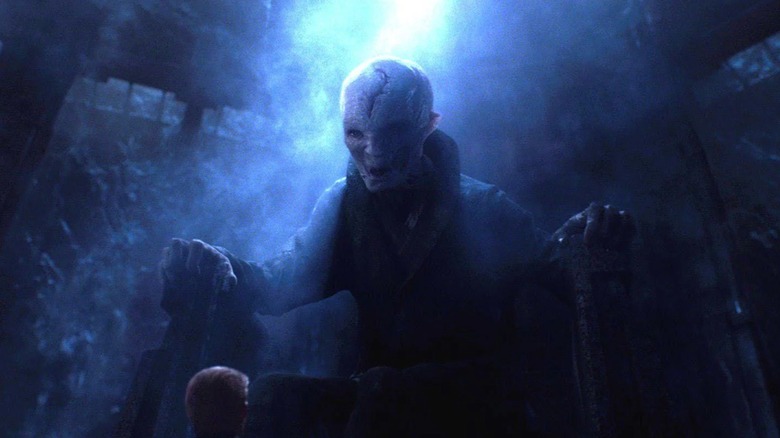
Supreme Leader Snoke's hologram form in "Star Wars: The Force Awakens" is an exceedingly inspired visual. For starters, making him a towering figure without the blue ripples/static draped over prior "Star Wars" holograms made him immediately distinctive. Meanwhile, juxtaposing his immense size with the fact that he's not actually there worked as a solid metaphor for the Dark Side offering only surface-level definitions of power. Plus, the smoke and beams of light covering him accentuate a majestic air. No wonder theories about Supreme Leader Snoke's identity abounded after "The Force Awakens."
However, Snoke's final appearance in the movie featured some unfortunately crusty CG. As Starkiller Base collapses, General Hux (Domhnall Gleeson) races to meet the Snoke hologram, who informs him that their defeat here isn't the end of The First Order. Unfortunately, perhaps as a byproduct of the hasty ambiance of this sequel tease, Snoke's CG looks a little worse for wear. Even considering the crumbling Starkiller planet around the hologram, Snoke's CG still looks distractingly weaker than in his earlier sequences. It's an odd detail that only accentuates the distracting vibes.
It's a shame Snoke's last "Force Awakens" scene was plagued by such underwhelming CGI. A character so visually impactful deserved consistently sublime digital effects work.
The digital backgrounds for the Death Star ruins fight in The Rise of Skywalker
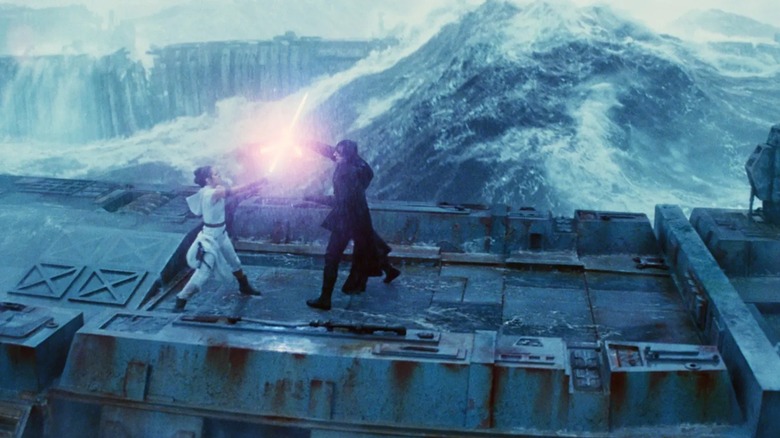
Ewan McGregor's challenges acting against green screens in the "Star Wars" prequels stem from the larger creative shortcomings those three movies suffered by leaning so heavily on digital backdrops. Likewise, effectively compositing live-action performers into unreal CG realms remains a problem long after "Revenge of the Sith." Case in point: "Star Wars: The Rise of Skywalker." Among the many scenes utilizing digital backdrops in this title was a set piece where Rey and Kylo Ren (Adam Driver) duke it out on top of some Death Star ruins on the moon Kef Bir.
The performers themselves do fine work acting like they're actually engaging in hand-to-hand combat against roaring waves. However, no amount of convincing performances can get over how little they belong in these environments. The duo appear like they've been pasted into these cosmic tableaus, which proves distracting from what's supposed to be a key fight scene. Any of the cutaways to poor Finn screaming at Rey also suffers from this problem, as John Boyega so blatantly looks like he's wandering around a green screen.
Nearly two decades after McGregor shot the prequel trilogy, this "Rise of Skywalker" scene showed Star Wars once more succumbing to distractingly poor CG backgrounds.