

At Just 28, Christopher Nolan Directed The No-Budget Movie That Hinted At His Future Greatness
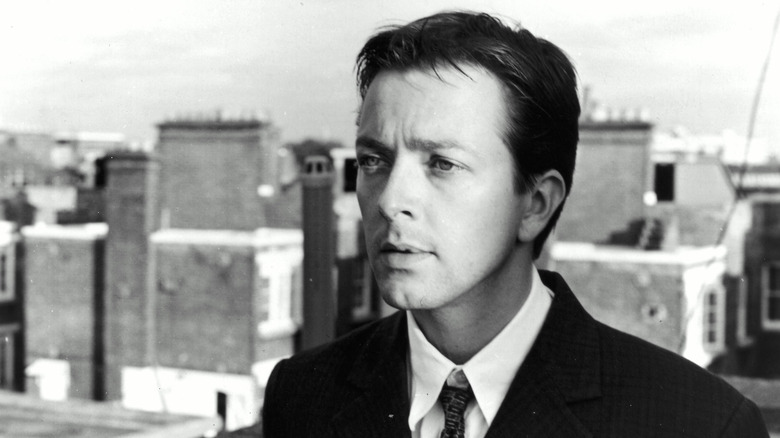
As Hollywood continues navigating a post-covid world, streaming services eat away at traditional distribution, and unchecked corporate consolidation erodes competition, Christopher Nolan has become as sure of a bet as we have. Likely the biggest director working today with the most consistent audience draw, theaters are sure to be packed once again for his massive new movie, "The Odyssey."
It's easy now to look at the man who got film bros into comic book movies and nearly hit $1 billion on an R-rated biopic and see only the institution he has become. But of course, everyone has to start somewhere, and Nolan's first step in the feature film space came via the movie "Following," which, in many ways, hinted to the work that would make him famous.
Made when the director was only 28, "Following" is a pretty short feature at just under 70 minutes. That's understandable given its absolutely tiny $6,000 budget (significantly less than even Kevin Smith's "Clerks") and 16mm cinematography. These days, though, there's something refreshing about a shorter film from Nolan, as his modern blockbusters have ballooned to well-used but nevertheless massive runtimes. A neo-noir thriller, "Following" centers on an unnamed aspiring writer (Jeremy Theobald), who takes up the strange habit of following people in public. This hobby eventually brings him into a strange sort of mentorship with a mysterious burglar (Alex Haw) and down a spiral of danger and criminality.
Following foreshadowed many of Nolan's later films
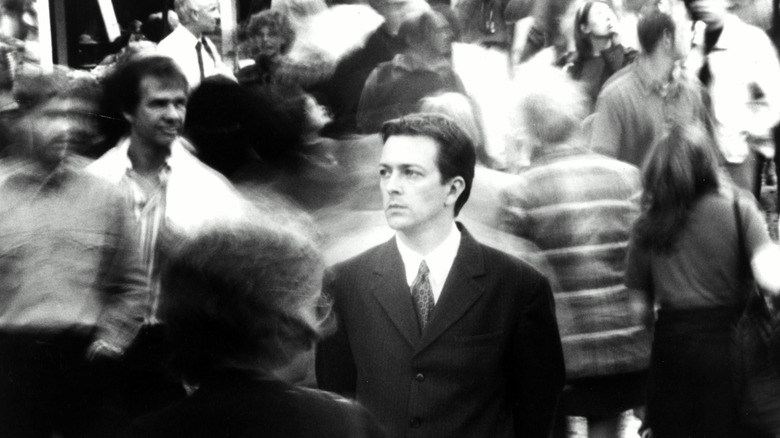
If you're already a Christopher Nolan fan, you'll instantly recognize some of his hallmarks in "Following." It is most comparable to his next movie, "Memento," in that both feature black-and-white cinematography, nonlinear storytelling, a small cast of characters delving into illegal behavior, and quick-cut montages set against character narration.
While those elements draw the most direct lineage between "Following" and "Memento," many individual pieces have reappeared elsewhere in Nolan's filmography. For the first decade-plus of his career, he primarily directed thrillers, with films like "Insomnia," "The Prestige," and even "The Dark Knight" trilogy exploring character psychology through a claustrophobic film craft. Nolan also returned to black-and-white in "Oppenheimer" which, similarly to "Memento," switches between it and color to differentiate points in a larger timeline. "Oppenheimer" also employs a nonlinear structure with protagonist narration and interview scenes used as framing devices, all of which can be seen in "Following." In "Tenet," Nolan's love of nonlinear storytelling becomes the foundational device of the entire plot.
More of an Easter egg than a creative throughline, the enigmatic burglar in "Following" goes by the name "Cobb" — the same of Leonardo DiCaprio's "Inception" protagonist. Both are robbers by trade, and specialize in stealing personal effects, with the Cobb of "Following" taking a strange joy in picking through strangers' personal mementos, and the Cobb of "Inception" dealing in people's memories and possessions of the mind.
How to watch Christopher Nolan's Following
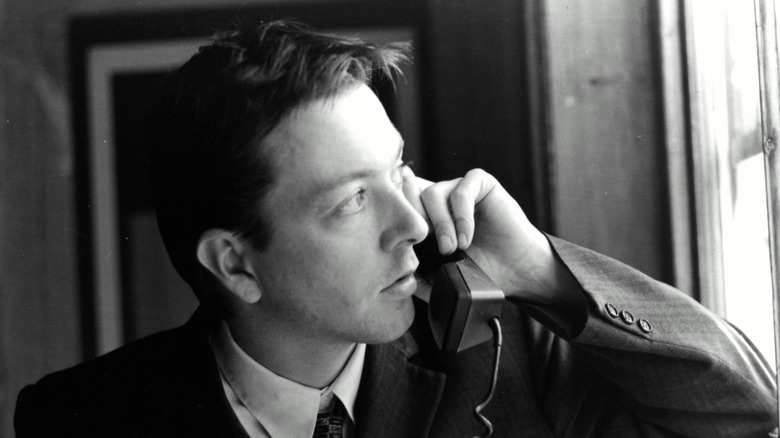
If you're trying to watch all of Christopher Nolan's movies, or just need something to keep you occupied while waiting for "The Odyssey," fear not. "Following" is pretty easy to get your hands on these days. The film is available on streaming for AMC+ subscribers, and it's widely rentable through video-on-demand (VOD) services like Apple TV.
For the more serious Nolan-heads, Criterion has a beautiful physical release of "Following." It features additional interview footage and audio commentary from the director, an uncompressed mono soundtrack, and a chronological cut of the film.
Seeing the scale Nolan works within now, it's fun to look back at what he made when money and logistics severely limited his production capacity. While far from the epic realm which Nolan would become most famous for, "Following" is still a compellingly shot and plotted film, with the same penchant for psychological tension that would shape the early years of his oeuvre.