

5 Romance Movies That Received A Perfect Rating From Roger Ebert
Over a decade after his death in 2013, the late Roger Ebert remains the gold standard in American film criticism. In his almost five decades of writing for the Chicago Sun-Times, Ebert claimed to have seen over 10,000 films, from gripping dramas and dazzling musicals to spine-tingling horrors and hard-hitting actioners.
Unsurprisingly, the critic also saw more than his fair share of romance. However, despite seeing hundreds of lovers embrace on the silver screen, Ebert admitted in a 1992 article reminiscing on the first quarter-century of his career that the genre was not his favorite: "Love? Romance? I'm not so sure. I don't much care for movies that get all serious about their love affairs, because I think the actors tend to take it too seriously, and end up silly."
Nevertheless, Ebert loved many movies about love, with at least one romantic suspense film ranking high among his best movies of all time. We have assembled a small sampling of the romance films that received a perfect four-star rating from Roger Ebert over his long career. Spanning decades, tones, aesthetics, and subgenres, these cinematic gems explore the power of love in all its heart-pounding (and heart-breaking) glory.
Casablanca
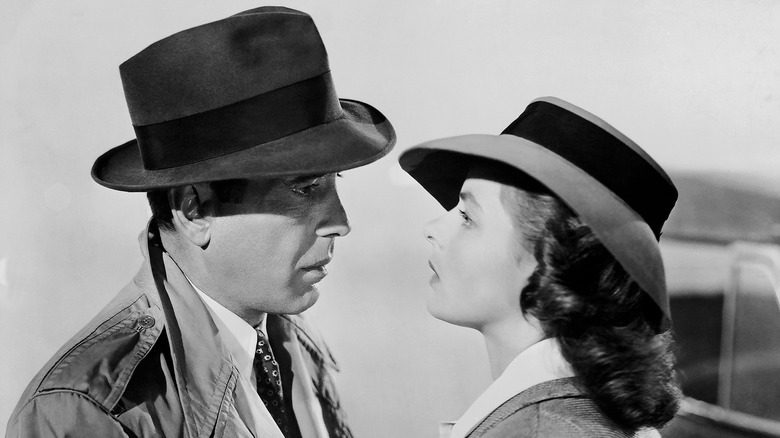
Is it possible to talk about perfect romance movies without mentioning "Casablanca?" An inarguable masterpiece and one of Humphrey Bogart's best movies, "Casablanca" almost exists in a realm beyond genre. Effortlessly balancing romance, adventure, suspense, and comedy, it is perennially ranked among the best films ever made.
And yet, Roger Ebert notes in his four-star review, "No one making 'Casablanca' thought they were making a great movie." Set in the Moroccan city during World War II, "Casablanca" follows cynical American expatriate Rick Blaine (Humphrey Bogart). Rick's conscience is reawakened by former lover Ilsa Lund (Ingrid Bergman) who walks into his nightclub seeking help for her husband Victor Laszlo (Paul Henreid), a resistance leader wanted by the Nazis.
Consider that "Casablanca" was filmed in 1942. Neither the actors nor director Michael Curtiz knew who would ultimately win the war, any more than the characters did. To Ebert, the film's power lied in that it "was largely the result of happy chance," with even the most famous line being allegedly improvised by Bogart. Eight decades have not dimmed the film's emotional urgency nor the impact of the climactic airport scene, where Rick and Ilsa must choose between love and duty. According to Ebert, "If there is ever a time when they decide that some movies should be spelled with an upper-case M, 'Casablanca' should be voted first on the list of Movies."
Beauty and the Beast
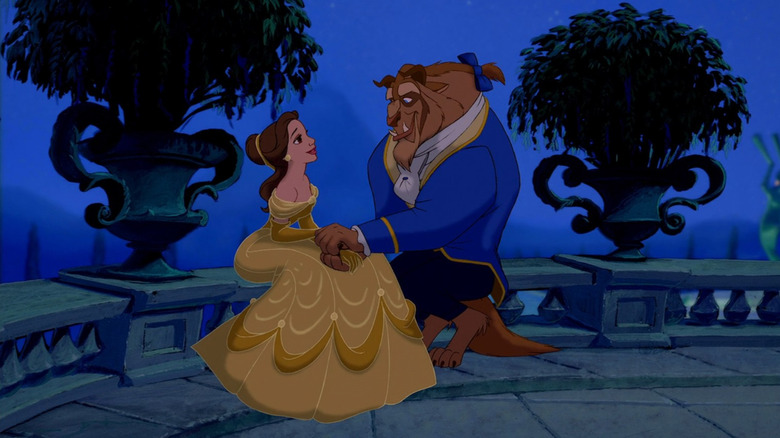
"Animation is the ideal medium for fantasy," wrote Roger Ebert in 1991 as he ruminated on Disney Pictures' latest animated film. "All of its fears and dreams can be made literal." An argument could be made that animation is also an ideal (if under-explored) medium for romance, as the transformative, redemptive power of love has never been more literally realized than in "Beauty and the Beast."
One of the crown jewels of the Disney Renaissance, "Beauty and the Beast" made history as the first animated film to be nominated for the Academy Award for best picture. In this sparkling version of the French fairy tale, the beauty is Belle (Paige O'Hara), a provincial girl whose love of books awakens her spirit of adventure. To save her father's (Rex Everhart) life, Belle vows to live with the fearsome Beast (Robby Benson) in his enchanted castle, and her bravery and compassion restore her captor's forgotten humanity. Their star-crossed love promises to break the Beast's curse and transform him back into a prince -– if the wickedly arrogant Gaston (Richard White) doesn't separate them first.
Ebert praised "Beauty and the Beast" as a "magical" piece of family entertainment, in the same league as Disney's earlier animated masterpieces "Snow White" and "The Little Mermaid." Decades later, the film's famous, sumptuously animated ballroom sequence –- featuring cutting-edge computer imagery and set to the Oscar-winning title ballad by Howard Ashman and Alan Menken –- remains unmatched in its romantic splendor.
Sid and Nancy
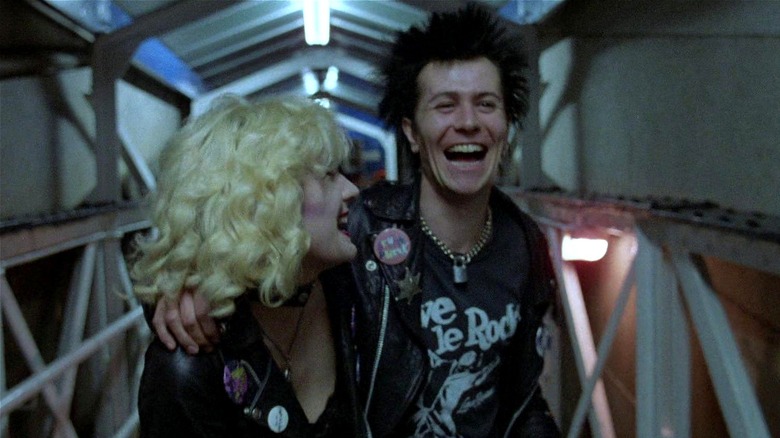
A bizarre footnote in Roger Ebert's career is "Who Killed Bambi?" — a 1977 script he wrote for the British punk rockers the Sex Pistols. The film fell apart, as did the band, with bassist Sid Vicious dying in 1979. "Who Killed Bambi?" remains one of the strangest "what if's" in moviedom; while Ebert never made Sid Vicious a movie star, he gave four stars to "Sid and Nancy," the 1986 biopic that depicts Vicious' desperate, disastrous love affair with Nancy Spungen.
Directed by Alex Cox, "Sid and Nancy" stars Gary Oldman, in one of his best movies, as Vicious, with Chloe Webb as Spungen, the American groupie who falls for the infamous musician. The two misfits find some solace in each other, but an apocalyptic combination of fame, codependency, and drug addiction drags them down into oblivion.
Ebert called the film "astonishing," and praised it for depicting its unruly subjects as real, complex people with pain and ambition, rather than rock caricatures. He continued, "If a movie can illuminate the lives of other people who share this planet with us and show us not only how different they are but, how even so, they share the same dreams and hurts, then it deserves to be called great."
If you or anyone you know needs help with addiction issues, help is available. Visit the Substance Abuse and Mental Health Services Administration website or contact SAMHSA's National Helpline at 1-800-662-HELP (4357).
Say Anything...
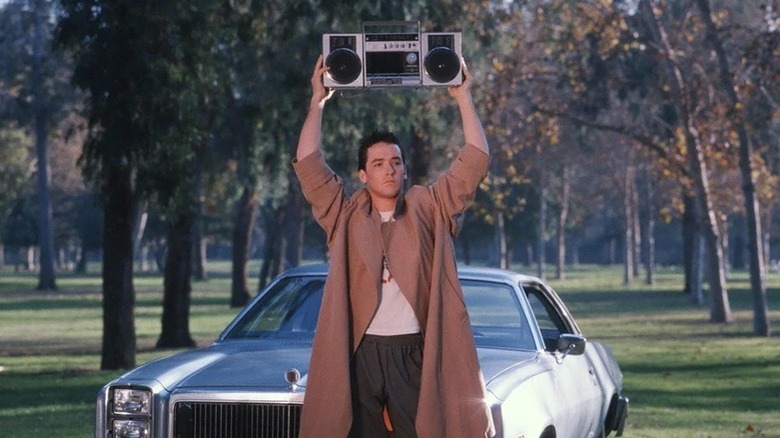
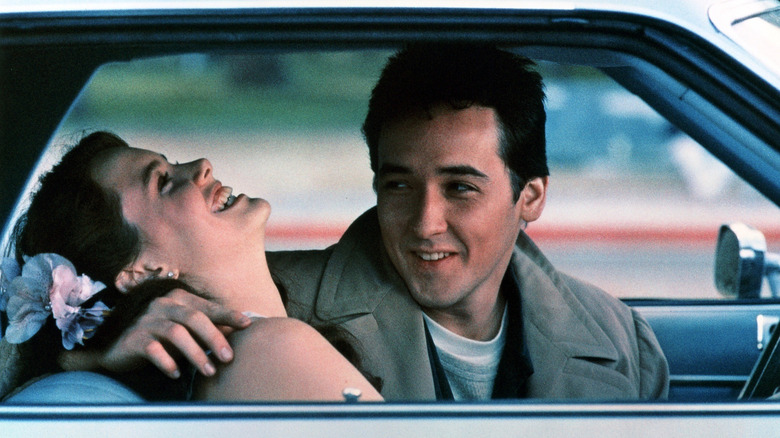
You can't say anything about "Say Anything" without first mentioning its most famous scene: lovelorn teenager Lloyd Dobler (John Cusack) lifting a boombox over his head, playing Peter Gabriel's "In Your Eyes" outside the bedroom window of the beautiful Diane Court (Ione Skye). Endlessly referenced and parodied, it's a remix of Romeo and Juliet's balcony scene for the MTV generation, and one of many things that put Cameron Crowe's directorial debut among the best romantic movies of all time.
Recently graduated from high school, Lloyd and Diane seem wildly mismatched -– he's an aimless underachiever and would-be kickboxer, and she's a valedictorian with a fellowship in England waiting for her. Even as their tender courtship blossoms into something deeper, Diane knows they can't have a future together. But when the father she idolizes (John Mahoney) is suspected of committing a major crime, everything Diane knows is suddenly thrown into question. Cue Lloyd — and his boombox.
An admirer of "Say Anything" upon its 1989 release, Roger Ebert revisited the film for his blog's "Great Movies" column, writing: "'Say Anything' depends above all on the human qualities of its actors. Cusack and Skye must have been cast for their clear-eyed frankness, for their ability to embody the burning intensity of young idealism." In 2002, "Say Anything" topped Entertainment Weekly's list of the best modern movie romances. Said Ebert in his same column: "I was not surprised."
Trouble in Paradise
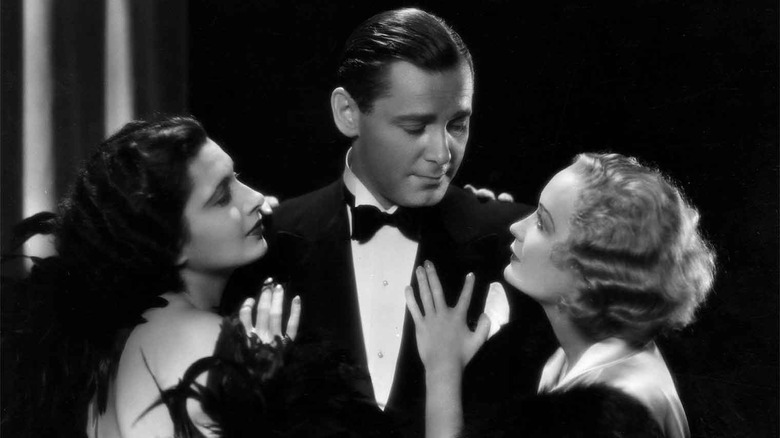
"When I was small I liked to go to the movies because you could find out what adults did when there weren't any children in the room," begins Roger Ebert in his review of the 1932 romantic comedy "Trouble in Paradise." He goes on: "It is about people who are almost impossibly adult, in that fanciful movie way — so suave, cynical, sophisticated, smooth and sure that a lifetime is hardly long enough to achieve such polish. They glide."
Suave, cynical, and sophisticated certainly describe Gaston Monescu (Herbert Marshall), a thief posing as a European nobleman. Gaston meets his match in Lily (Miriam Hopkins), a beautiful pickpocket -– the two fall in love instantly when they realize they've robbed each other. They plan to fleece the perfume magnate Mariette Colet (Kay Francis), who has hired Gaston as her personal secretary. But the sly, seductive Mariette is a different kind of thief, one who may walk away with Gaston's heart.
"Trouble in Paradise" carries the renowned "Lubitsch touch," the stylistic trademark of director Ernst Lubitsch, maker of elegant and witty romantic comedies. Made before the censorious Hays Code straightjacketed Hollywood, the film has a sparkling, almost scandalous sensuality. Ebert noted its transformative power: "What happens, and you are surprised to sense it happening, is that in a drawing room comedy of froth and inconsequence, you find that you believe in the characters and care about them."