

5 Horror Movies That Received A Perfect Rating From Roger Ebert
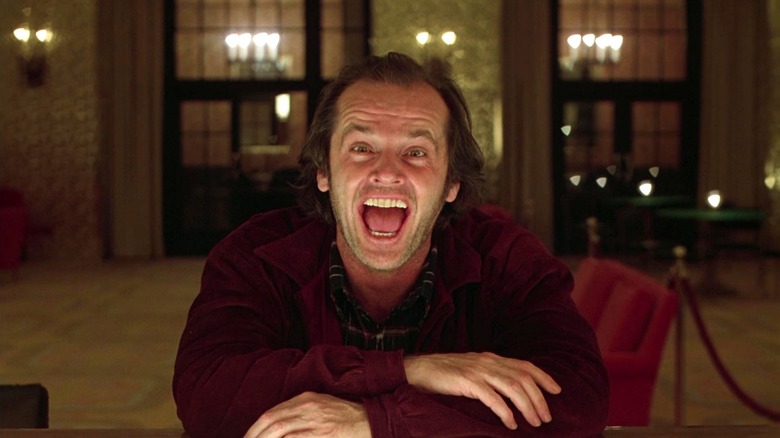
As one of the most famous movie critics of all time, Roger Ebert's opinion mattered. Whether those in the film industry admitted it or not, receiving a perfect score from Ebert was the ultimate endorsement. The best part? He wasn't a movie snob who looked down on one genre more than another, giving everything a fair shot — including horror.
In fact, Ebert dished out his perfect four-star rating to a few horror movies. Some of the recipients may surprise readers, but others are widely acknowledged as the best in class. Even so, it's fascinating to ponder Ebert's comments about these films decades later. His words of praise remain powerful today, encouraging readers to add his favorite movies to their watchlists and relive the experience.
With that said, let's check out the five horror movies that received a perfect rating from Roger Ebert and also what he said about them. Be prepared to fall in love with these films all over again and give them your own thumbs-up!
The Blair Witch Project
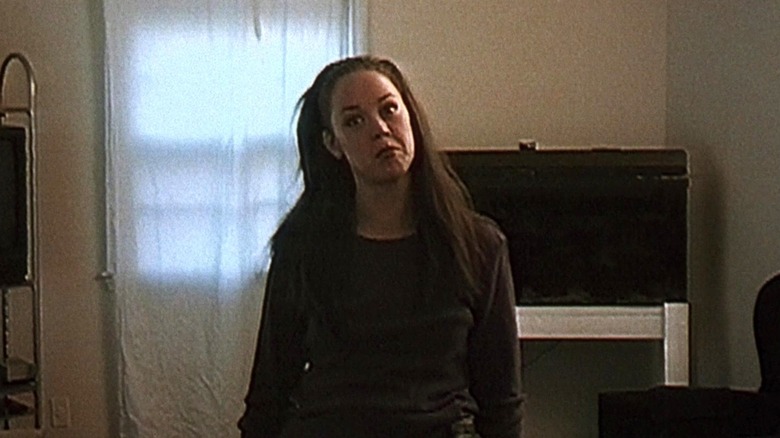
Thanks to its found-footage approach and successful marketing campaign that made full use of the internet, "The Blair Witch Project" captured the public attention in 1999. It felt all too real — as if the audience were there, experiencing the same terror as the three filmmaking students seeking out the fabled Blair Witch in an unsettling forest. Oh, and "The Blair Witch Project" ending ... it still chills the bone. Remarkably, the witch is never shown — not even once — but the mere thought of her brings terror.
Upon arrival, "The Blair Witch Project" drew widespread praise from critics, with most appreciating how the filmmakers created a titan of terror on the budget of a toasted sandwich. Roger Ebert gave the film a perfect rating, emphasizing the film's understanding of fear and reliance on the human mind to do the heavy lifting rather than flashy effects.
"At a time when digital techniques can show us almost anything, 'The Blair Witch Project' is a reminder that what really scares us is the stuff we can't see," he wrote. "The noise in the dark is almost always scarier than what makes the noise in the dark."
Body Snatchers
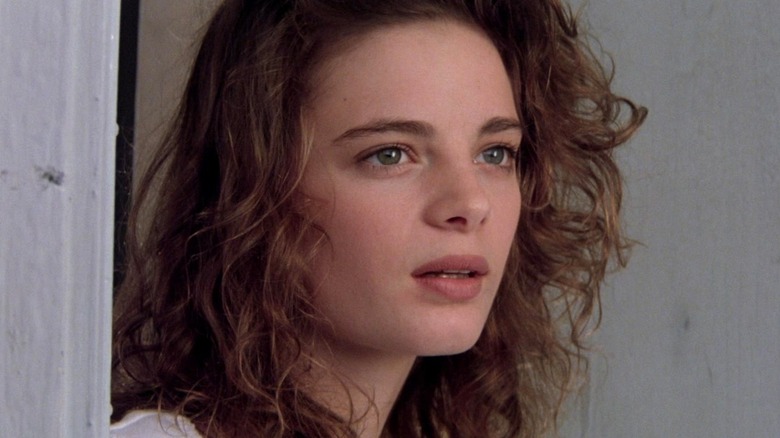
By the '90s, there had already been several screen adaptations of Jack Finney's novel "The Body Snatchers." However, director Abel Ferrara's version connected with a new generation of viewers.
"Body Snatchers" has a simple setup: Teenager Marti Malone (Gabrielle Anwar) and her family move to a military base with her dad Steve (Terry Kinney). Soon, the family discovers that the humans are being replaced by alien clones. The only way to tell if something is off is the lack of emotion from the clone. How do you prove a major conspiracy like this? And who can you trust?
"Body Snatchers" wasn't a slam-dunk with many critics. However, similar to the more-hated movies that Roger Ebert loved, the critic went against the grain, with high praise for the film — to the point he gave it four out of four stars. He also appreciated how Ferrara used the military base setting to his narrative advantage, writing, "Ferrara's key scenes mostly take place at night, on the Army base, where most of the other people are already podlike in their similar uniforms, language and behavior. There is a crafty connection made between the Army's code of rigid conformity, and the behavior of the pod people, who seem like a logical extension of the same code."
The Shining
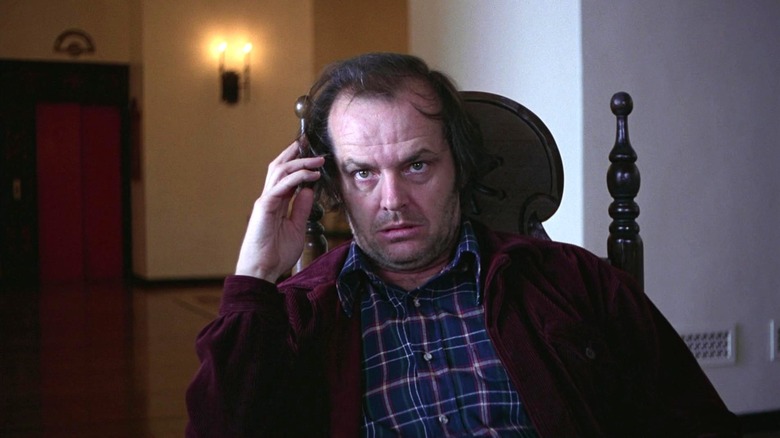
Author Stephen King might feel differently about the film adaptation of "The Shining," but it's now commonly heralded as one of the greatest horror movies of all time. The way in which director Stanley Kubrick showcases Jack Torrance's (Jack Nicholson) unraveling within the Overlook Hotel is a master class in scary storytelling. The unnerving story similarly pushes viewers to the brink, worrying about the safety of Wendy (Shelley Duvall) and Danny (Danny Lloyd), as they're trapped inside this spooky hotel with Jack — if it is still Jack, or something more sinister at play.
When it was released in 1980, though, not every critic was enamored. In fact, even major publications like Variety gave "The Shining" bad reviews. Roger Ebert, however, saw what lay beneath and the film's ability to toy with the viewer.
"In a snowbound hotel, three people descend into versions of madness or psychic terror, and we cannot depend on any of them for an objective view of what happens," Ebert wrote in his four-star review of the movie. "It is this elusive open-endedness that makes Kubrick's film so strangely disturbing."
Halloween
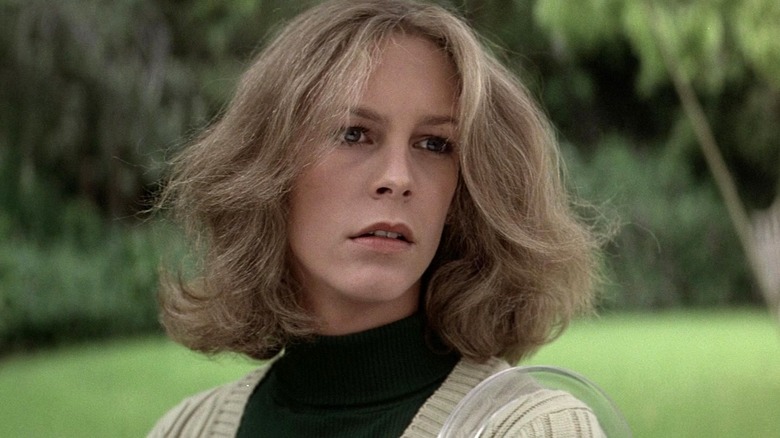
To the average person, John Carpenter's "Halloween" is a horror movie about a man wearing the mold of a William Shatner mask targeting people on Halloween because he's a creep. However, there's more to this 1978 film than just a slasher for the sake of it.
Unlike other movies that try to give a motivation to the killer, Carpenter's film treats Michael Myers (Nick Castle) simply as he is: evil personified. He kills because he can. That's it — and that's what makes it even scarier. There's no reasoning with this man, as he torments Laurie Strode (Jamie Lee Curtis) in this and across the continued "Halloween" story.
Roger Ebert showered "Halloween" with the highest praise, comparing it positively to Alfred Hitchcock's "Psycho." In his perfect-score review, Ebert singled out Carpenter's technical ability as key to the film's fright factor, stating, "It's easy to create violence on the screen, but it's hard to do it well. Carpenter is uncannily skilled, for example, at the use of foregrounds in his compositions, and everyone who likes thrillers knows that foregrounds are crucial: The camera establishes the situation, and then it pans to one side, and something unexpectedly looms up in the foreground."
The Descent
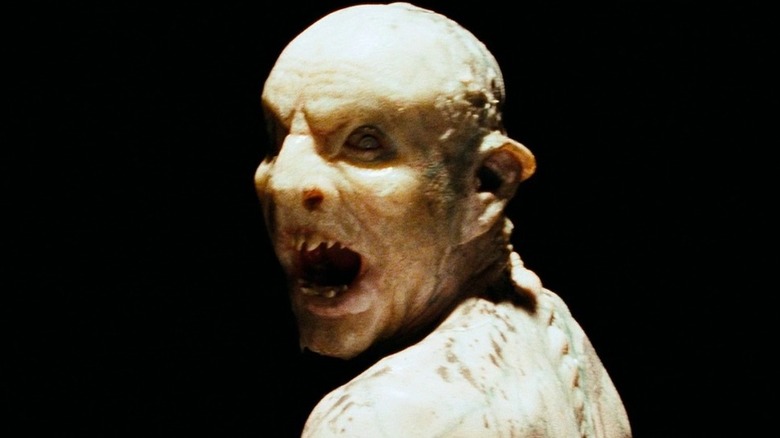
There are many horror films about home invasions, demonic possessions, and cannibal families, but not nearly enough about being trapped in a cave with murderous creatures. Thankfully, Neil Marshall's "The Descent" exists.
The film follows a female group of adventurers who head into a cave for exploration. There's one problem, though: Juno (Natalie Mendoza) tells the other ladies that they're heading off to an area not on the map, nor that the authorities know about. It sounds like a shockingly bad idea, and it is, especially after they encounter a humanoid species feeling hungry for flesh and violence.
In his review of "The Descent," Roger Ebert complimented the film for standing out from the horror pack in the 2000s. Movies such as "Final Destination" and "Saw" were full of gore, so the critic found Marshall's film to be refreshing. "Finally, a scary movie with teeth, not just blood and entrails — a savage and gripping piece of work that jangles your nerves without leaving your brain hanging," Ebert wrote. "And so, for a change, you emerge feeling energized and exhilarated rather than enervated, or merely queasy."