

The James Bond Codename Theory Still Works (& Is Even Better) With One Dark Twist
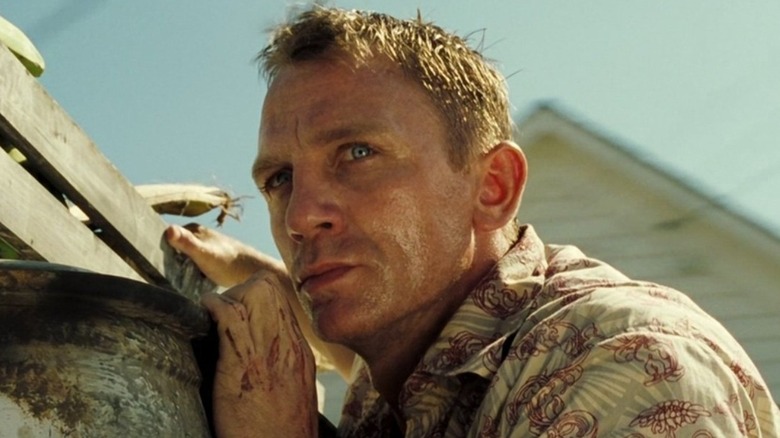
Welcome to "Fanon Fixing Canon," a weekly column where we investigate infamous plot holes or terrible storyline decisions. Through a combo of detective work and meticulous fan theorizing, we fix these problems so they no longer exist — and canon is immaculate once again.
Stop me if you've heard this one before: James Bond is a code name that's dealt to every agent who bears the 007 mantle. This explains the way James Bonds radically change appearance every few movies, as well as how the character has been able to operate in the field for so many decades.
It's a common fan theory, and one that holds water ... right up until it doesn't. For example, why would all these "different person, same name" Bonds all order the same, weird "shaken, not stirred" martini cocktail? Why are they so similar in personality, and have effectively the same backstory? Surely, even MI6 wouldn't be able to recruit so many top-level field operatives with the exact same fondness for cheesy one-liners? In other words, this seems like one of those famous movie theories people are completely wrong about.
Think again. We're going to shake ... sorry, stir this theory up by adding our own little dark twist. Namely, let's say that while yes, all those James Bonds are different people, they didn't become James Bond willingly: Each of them was brainwashed to give them that signature "James Bond" personality and backstory, and their previous identity was erased.
Here's a look at why this is the best way to explain the film franchise's long string of identically behaving, yet different-looking 007 agents.
There's a historical basis for MI6 trying to brainwash people
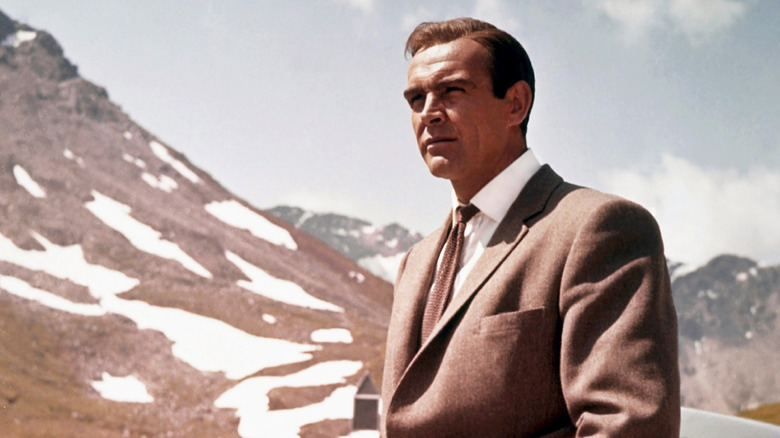
Let's kick things off with a fun fact from history: Much like the CIA did with its Project MKUltra, MI6 really did tinker with mind control back in the 1950s. This, it just so happens, is right around the time the first canonical James Bond (Sean Connery) would have started out as a field agent. "Dr. No" dropped in 1962, and 007 was already in full fling at this point — so the Connery version could very well have been one of the many military men who were duped into LSD-based mind control experiments by the agency circa 1953 and 1954. Bond comes from a Royal Navy background, and as it happens, MI6 did perform the experiments on at least one deeply misled Navy "volunteer" in real life.
It doesn't take a lot of narrative liberty from a spy action thriller series to take things further and assume that such experiments can rewrite a man's personality into the latest incarnation of James Bond. On occasion, the serving 007 would undergo major life events that would have to be incorporated into his backstory to maintain continuity. This is the reason later incarnations of Bond would remember, say, the George Lazemby version's marriage to the doomed Contessa Teresa "Tracy" di Vicenzo (Diana Rigg) in "On Her Majesty's Secret Service."
That's the "how" of it, then. The "why" of creating a series of identical superspy personalities is easier. For one, the agency knows what they're dealing with if their top agent always has the same persona. It'd also be much easier to maintain cover stories for a well-established type of person, not to mention drafting operational parameters.
The 007 brainwashing program failed hard with Raoul Silva
It's all fine and well so far, but how about the Daniel Craig era? Surely, the amount of backstory and characterization his Bond gets is noticeably different from the ones who came before him? Also, unlike every other Bond, Craig's has an origin story and a conclusion.
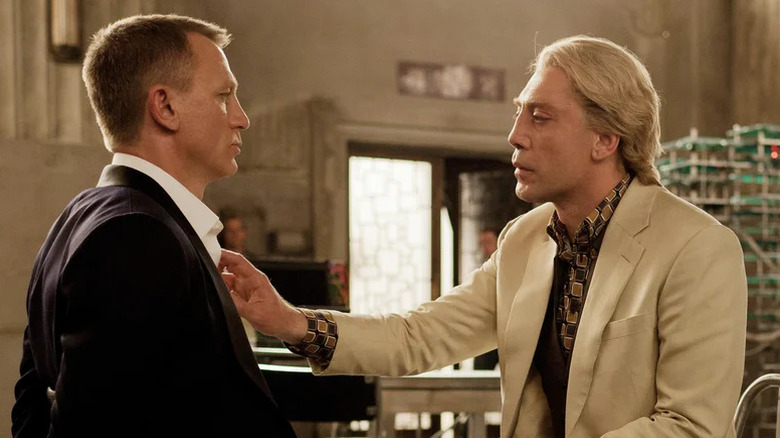
The answer comes in "Skyfall" with the introduction of the MI6 darling before him: Tiago "Raoul Silva" Rodriguez (Javier Bardem). This Big Bad is ostensibly a former MI6 agent who fell on black days when the future M (Judi Dench) gave him to the Chinese after finding out he'd been hacking them. This and the ensuing torture caused him to vow revenge against M. The problem is ... well, he doesn't really act like a geeky MI6 hacker guy, does he? Sure, he knows his computers, but at the end of the day he carries himself with the confidence and ability of a 00 agent.
As such, the real explanation for Silva's grudge could be that he's actually a former 007. Either before he was given to the Chinese or during his torture, he managed to escape his brainwashing programming, and now he really isn't happy that he was subjected to it in the first place. Some fans have even speculated that Silva might be the Timothy Dalton Bond (after a whole bunch of post-cyanide capsule reconstructive facial surgery, of course). After all, Silva began as an MI6 operative in the late 1980s — which just so happens to coincide with Dalton's 007 service.
Changing times forced MI6 to re-evaluate the 007 process
Silva's escape from the 007 thrall and his subsequent reign of terror would have been a serious spanner in the MI6 works — perhaps one that prompted a change in the program. This goes double because the Daniel Craig-era MI6 isn't the kind of entity it was during the heyday of the Cold War. At this point, bureaucrats like future M Gareth Mallory (Ralph Fiennes) are looking hard at the agency's procedures, presumably raising a querying eyebrow at several things that seem like crimes against humanity (not to mention overspending). Things like, say, brainwashing multiple dudes, giving them a license to kill and a large number of expensive experimental gadgets, and providing them with a seemingly unlimited budget for vodka martinis and condoms.
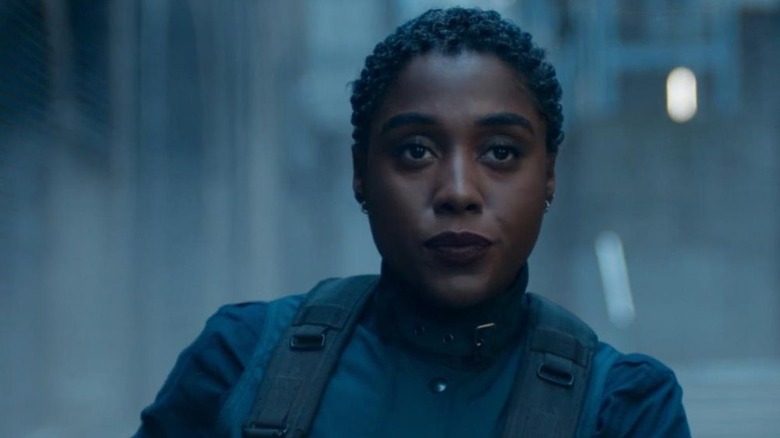
Hence, MI6 has no option but to loosen up the 007 program by the time Craig's bullish blonde candidate arrives. He still uses the name James Bond, and the cover is maintained to the point that his family's gravestone bears the name — something Silva notices in the movie and is darkly amused by. Yet, this James Bond does have a clear backstory of his own, as well as a different enough personality from the other Bonds to suggest that MI6 has cooled its brainwashing jets at this point. After that, the next logical stage would have been to drop the name, as well. And so, Lashana Lynch's Nomi in "No Time to Die" becomes the first 007 who doesn't use the James Bond name.
The brainwashing theory works regardless of what you think of Daniel Craig's James Bond
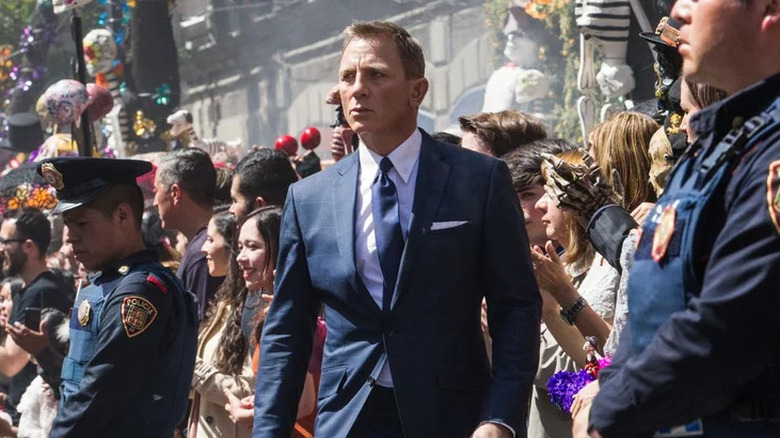
Of course, there's one potential hitch in this theory. It's the same one that plagues virtually every aspect of continuity regarding Daniel Craig, even though he stars in some of the best James Bond movies. The Craig Bond's tenure is effectively a soft reboot that brings in a whole bunch of previously seen Bond-verse elements as new versions. He encounters SPECTRE again, yet it's shown to be the first time. Same goes with key characters like his arch-nemesis Blofeld (Christoph Waltz), and Miss Moneypenny (Naomie Harris). We could get into the weeds here, but perhaps these are also other people using the same names as deceased people before them. Maybe other individuals are also brainwashed. Secret agent stuff — so complex.
As such, your mileage may vary on whether you consider this particular iteration of the character and his films a part of the "official" Bond lineage, or a fresh start — or perhaps even a temporary alternate timeline detour, depending on where the future of the franchise takes things. Still, the brainwashing theory holds water regardless of which school of thought you subscribe to.
If you like your Daniel Craig as an official part of the brainwashed Bond revolving door, just follow the theory as described above. If not, things get interesting. After all, this would mean that the brainwashing story stops at Pierce Brosnan's Bond with little further explanation ... and since that lineage doesn't feature a Raoul Silva that could break the cycle, MI6 could still be brainwashing new James Bonds as you read this.