

5 Best Vampire Movies People Don't Talk About Anymore
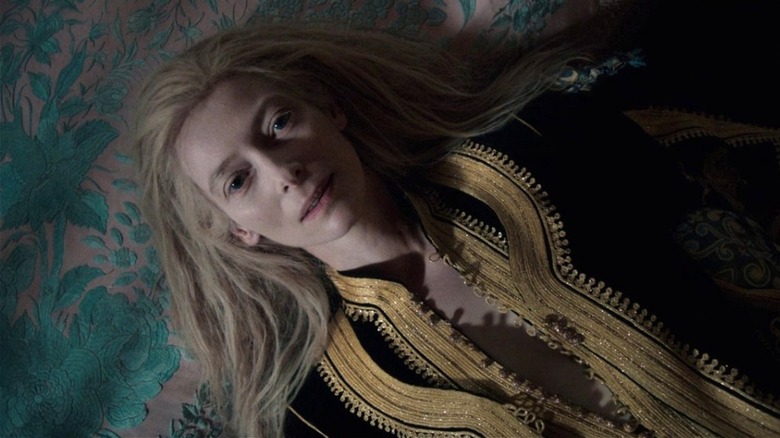
For almost as long as there have been horror movies, there have been vampire movies. Though not the first, F. W. Murnau's "Nosferatu: A Symphony of Horror" was released all the way back in 1922; filmgoers have been terrified of cinematic bloodsuckers ever since. "Nosferatu" was a thinly-veiled retelling of Bram Stoker's "Dracula," and filmmakers have attempted to adapt the novel in Murnau's wake. With Stoker's iconic character now in the public domain, you'll even find numerous bizarre international versions of "Dracula" out there.
Though most vampires owe at least some debt to Stoker, Count Dracula isn't the only bloodsucker on the block. There are countless other counts, and countless films that apply the basic vampire mythology to all sorts of other, allegorical contexts, too. Over the years, the subgenre has seen a great deal of evolution and change — even going through a sparkly, lovesick phase in the late 2000s and 2010s.
There's simply too much vampire cinema out there for one moviegoer to retain. Some really great vampire movies get left out of the conversation, struggling to stick around in the popular consciousness. The films on this list probably aren't the first to come to mind when the average person thinks about vampire movies, but they're all worth seeking out, especially if you've seen the classics.
The Hunger (1983)
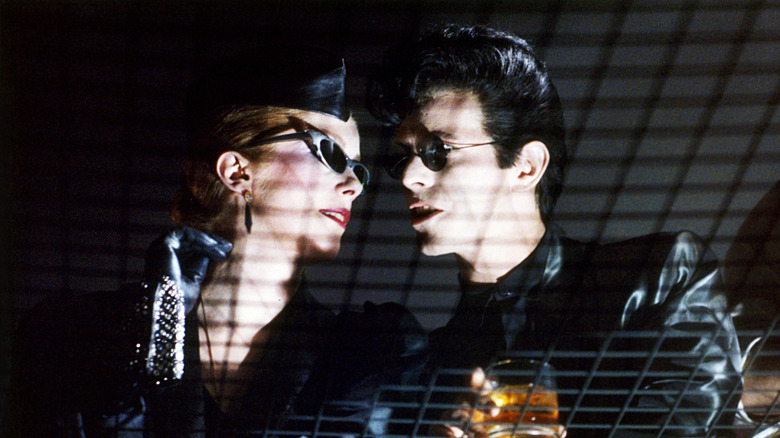
In 1983, Tony Scott directed "The Hunger," a steamy, queer, noir-inspired take on the vampire mythos. In Scott's seductive film, David Bowie plays John Blaylock, an elderly man who is periodically rejuvenated by drinking blood. He was turned hundreds of years ago by Miriam (Catherine Deneuve), an ancient creature who didn't fully explain the endless, eternal hunger that plagues the vampires to John.
Looking to find a cure, John visits aging researcher Dr. Sarah Roberts (Susan Sarandon). Soon Sarah is drawn into a twisted love triangle, fending off advances from Miriam as she tries to understand what's happening to John ... and herself.
While vampire movie fans might go in looking for horrific action-packed scenes of biting and bloodletting, "The Hunger" is a relatively somber affair. Still, that's what makes it such an interesting take. Made in the early years of the AIDS epidemic, "The Hunger" works as an allegory for societal outcasts facing an ailment that makes their bodies seemingly waste away and changes their relationship to their own immune system. Many remember the characters Bowie played in "The Prestige" and "Labyrinth," but his role in "The Hunger" deserves as much attention and a rightful place within the vampire film canon.
Lifeforce (1985)
Sitting alongside the best-all time horror directors such as John Carpenter, George A. Romero, and Wes Craven was Tobe Hooper, one of the genre's most notable luminaries. Hooper gave horror several bona fide classics, including "The Texas Chain Saw Massacre" and "Poltergeist," but he had a long career full of movies that haven't stuck around to the same degree.
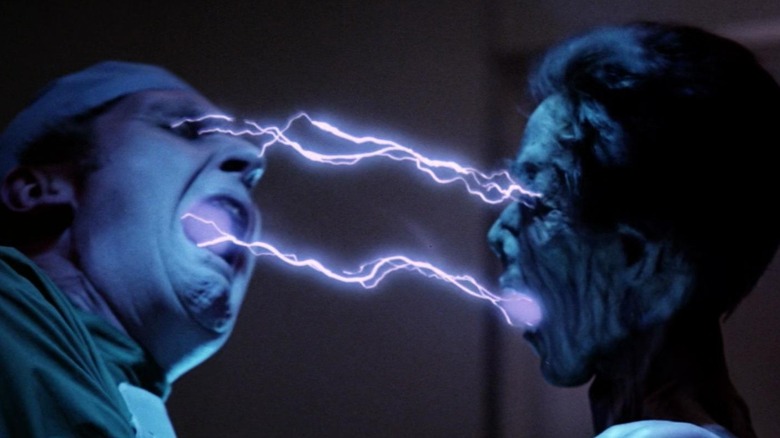
His 1985 film "Lifeforce" is best-remembered as the one about space vampires. When it was initially released, the movie baffled critics and fans alike; it only sits at 58% Fresh on Rotten Tomatoes. Viewers wondered how the man who had just made "Poltergeist" could produce something so brazenly weird. In the decades since, however, fans who love a bit of camp have come to realize that "Lifeforce" is a blast that's all the better for its strangeness.
"Lifeforce" imagines an alien invasion where the creatures from space don't just harvest Earth for its resources; they want our essence. When the vampires drain their victims, lightning shoots between them, reinvigorating the intergalactic desiccated corpses and turning them into beautiful, unclad humans. What's not to like?
The Addiction (1995)

More than a decade after Tony Scott used vampires as an allegory for AIDS in "The Hunger," director Abel Ferrara crafted "The Addiction." Lili Taylor plays Kathleen, a doctoral student in New York City who finds something sinister lurking in the shadowy alleyways of Manhattan. There was a lot of crime panic in those days, and Ferrara's film depicts a young woman being subsumed by a devious disease that eats away at her social life, alienating friends and loved ones as she stalks the streets for her next fix.
Vampires are often thought of as unholy. As much as "The Addiction" is a metaphor for drugs, it also engages heavily with concepts like sin and guilt, which Ferrara explained in a 2018 interview with Hey U Guys for the film's 4K restoration. Crediting screenwriter Nick St. John with the movie's theological explorations, Ferrara noted, "There's temptation, personal choice, redemption, resurrection. These things are not metaphors. He is a believer."
Though people don't talk much about Taylor's performance in "The Addiction," they should, because she's phenomenal. She has since appeared in a number of other horror films; in addition to movies like "Fear Street: Prom Queen," Taylor brought back her character from the first "The Conjuring" movie for the heartfelt swan song that was "The Conjuring: Last Rites."
Only Lovers Left Alive (2013)
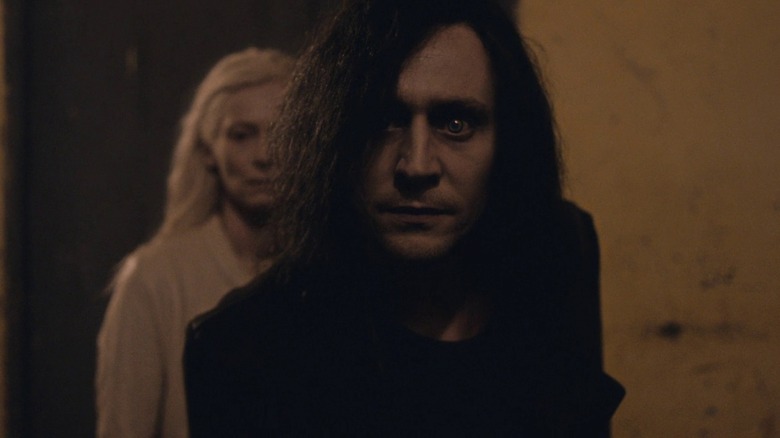
Tilda Swinton is no stranger to horror movies, having starred in Luca Guadagnino's "Suspiria," one of the best horror movie remakes of all time. In 2013's "Only Lovers Left Alive" from indie stalwart Jim Jarmusch, Swinton plays Eve, an ancient being feeling she has seen everything the world has to offer. For centuries, she and her lover Adam (Tom Hiddleston) have traveled the globe, experiencing every pleasure imaginable. They've landed in Detroit — a dying city — and both vampires are in danger of being completely consumed by their nihilism.
Swinton and Hiddleston give two of the best vampire performances ever. They're helped by supporting turns from Mia Wasikowska and the late, great Anton Yelchin, but for the most part, "Only Lovers Left Alive" hums along because of the chemistry between the two leads. They're ethereally beautiful and frightening in equal measure, becoming fiercely-empathetic figures that somehow still seem inhuman.
"Only Lovers Left Alive" understands that vampire stories are at their best when grounded in their setting and characters. Detroit becomes an eerie stand-in for the decaying empire that is 21st-century America, envisioning the once-thriving Motor City as a place that has been sucked dry by the never-ending demands of capitalism. It's not just about vampires; it's about all of us, stumbling through the future in a daze, wondering why we ever liked this place to begin with.
The Last Voyage of the Demeter (2023)
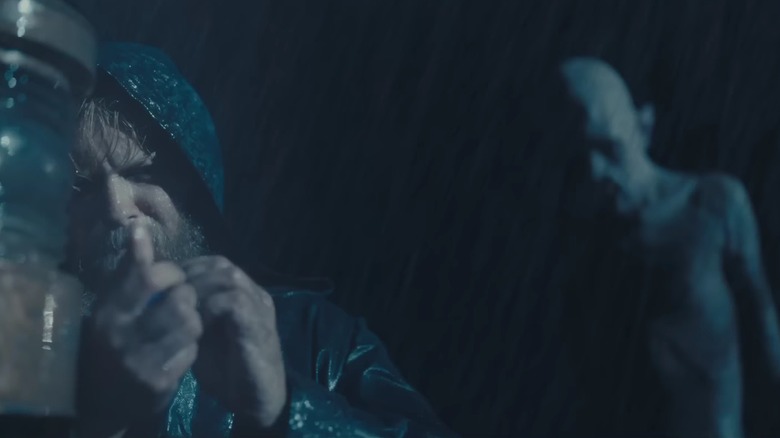
Viewers have grown familiar with the things that happen in every Dracula movie, from Jonathan Harker visiting the Count in his castle to Jonathan teaming up with Van Helsing to track down the vampire, stakes in hand. But even the biggest Dracula die hard won't expect what happens in "The Last Voyage of the Demeter."
This is a Dracula movie with the courage to leave "Dracula" out of its title, which might be why it failed to make much of an impact when it hit theaters in 2023. That's a shame, because it's excellent. André Øvredal's ultra-creepy film adapts what amounts to a brief chapter from Bram Stoker's novel chronicling the vampire's trip aboard the Demeter. Most "Dracula" movies show the vampire arriving on the shores of England on a ghost ship; "The Last Voyage of the Demeter" imagines what might've happened to the crew.
Most of the movie takes place on the boat, as the sailors slowly realize that something in the cargo hold has woken up. It depicts the blood-starved Dracula as an animalistic killer, a sort of half-human, half-bat abomination crawling through the rigging who pounces on victims as they peer through sea-soaked haze. It's a masterpiece of sound design, too; the lapping of the waves and the creaking of the wooden boat create a claustrophobic atmosphere.