

5 Visionary 2000s Sci-Fi Movies Ahead Of Their Time
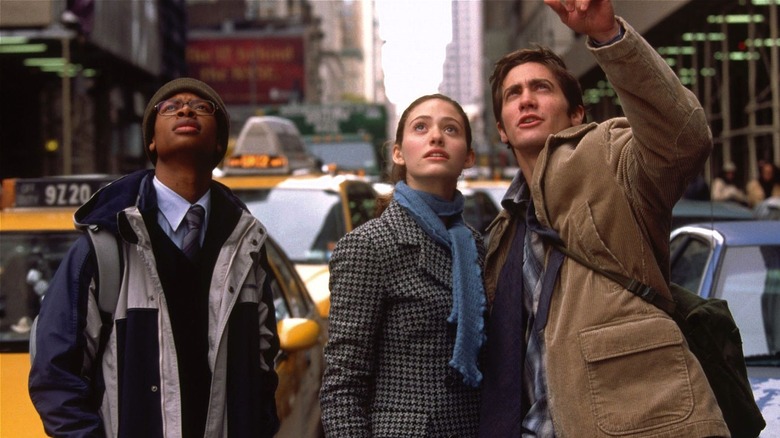
In many ways, "The Matrix" was the perfect sci-fi movie to close out the 1990s. There was a sense at the time that we'd reached what people took to calling "the end of history" — with the collapse of the Soviet Union, some believed that capitalism and liberal democracy had triumphed and that Western civilization had reached its zenith. There were some fears over the so-called Millennium Bug (the idea that computer systems would crash when the year 2000 arrived), but, generally, the feeling was that we had ironed out most of the societal kinks of the past few decades. As "The Matrix" points out, this was nothing but an illusion.
The Wachowskis made a film about a man compelled to pull back the curtain on the so-called perfect world people kept telling us we were living in. Neo (Keanu Reeves) soon finds that humanity had not actually cracked the code, as it were, and people in the real world would soon discover the same thing. The terrorist attacks of 9/11 rocked the entire planet and the internet became an increasingly inextricable part of our everyday lives, changing the way we interacted. It was clear that a lot more change was on the horizon, and science fiction had to adapt.
Many sci-fi movies made during the 2000s grappled with the fallout of the Patriot Act, passed following 9/11 to give the state increased surveillance powers. Others honed in on worrying societal trends, questioning where we'd end up if certain things kept happening. Plenty of sci-fi movies got the future right, but the films below all managed to capture something that might have seemed difficult to grasp at the time. Not all of them were hits, with some even bewildering contemporary audiences in ways that seem far more understandable to us now.
The Cell (2000)

Tarsem Singh's "The Cell" is indebted to the serial killer-focused quasi-horror thrillers of the 1990s, like "Se7en" and "Silence of the Lambs" (two great '90s movies that still hold up today), but it was also very much looking forward to a future where tech changes everything. Jennifer Lopez is fantastic as Dr. Catherine Deane, perfectly embodying the movie's seductively glamorous yet off-kilter tone. She's a psychologist who works with a technology that allows her to enter the subconscious territory of her patients, helping them confront traumatic memories they may not have realized were trapped somewhere inside. Then the government comes calling, asking Catherine to enter the mind of a twisted serial killer (Vincent D'Onofrio) in the hopes that they'll be able to find his last victim before she dies.
"The Cell" isn't just about Catherine's technology, but also the willingness of law enforcement to take advantage of it, probing deeper into the private lives of citizens without considering the ethical implications. Today, police forces are becoming increasingly reliant on tech, using AI tools that "risk embedding biases and chilling free speech," said the Brennan Center For Justice. Though we're still not able to explore each other's minds (there's currently no way for Jennifer Lopez to swan around in your brain in increasingly glamorous garments), advances in AI are taking us closer to a world in which our subconscious can be accessed and influenced. According to author and university dean Ignasi Beltran de Heredia, tech companies are currently developing "devices to directly create impulses that are irresistible for our subconscious mind in order to generate impulsive responses at a subliminal level, i.e. to create impulses."
Signs (2002)
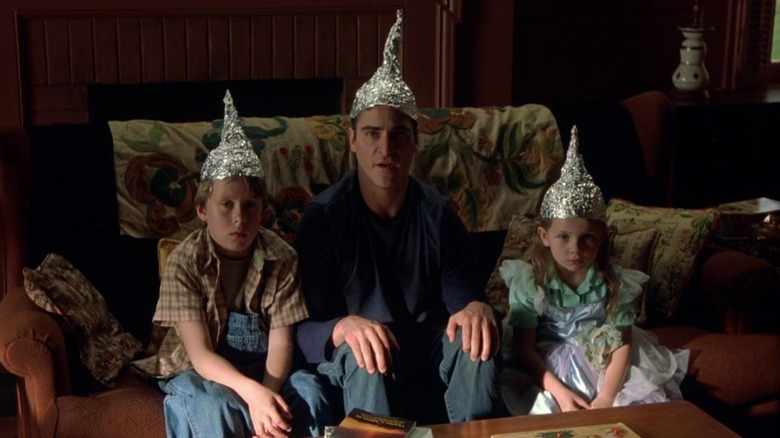
M. Night Shyamalan's 2002 film "Signs" follows a priest named Father Graham (Mel Gibson), a man who has recently lost his faith. He watched his wife die in a horrific car accident, leaving himself and his brother-in-law (Joaquin Phoenix) to care for their kids (Rory Culkin and Abigail Breslin). When aliens invade, Graham sees it not just as a test of his fatherhood but a test of his faith. However, according to Shyamalan, these are not actually aliens, but demons. "The characters in that movie called them aliens, but it was never explicitly demonstrated what they were or why they were on earth," he told SomethingAwful. "People are much more accepting of aliens these days, and the idea was that if demons appeared among us, they would be perceived as aliens."
More than two decades later, Shyamalan's commingling of demons and extraterrestrials seems particularly prescient. There are some in the media and at the highest levels of government that believe UFOs might not be visitors from other planets at all. That's the view held by United States Vice President J.D. Vance, who said on "The Benny Show" in 2026 that he thinks reports of UFOs (or UAPs, which stands for Unidentified Anomalous Phenomena, as they're now being referred to) aren't linked to extraterrestrials. "I think they're demons. I don't think they're aliens," he said. "When I hear about extra-natural phenomenon, that's where I go to: the Christian understanding that there's a lot of good out there, but there's also evil out there."
The Day After Tomorrow (2004)
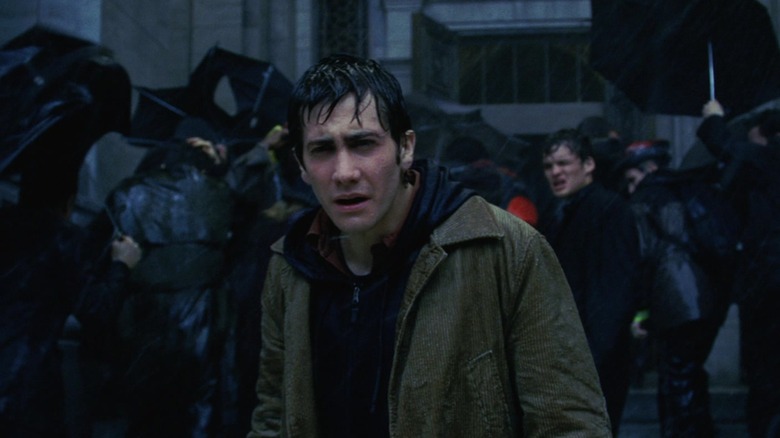
Roland Emmerich's "The Day After Tomorrow" is one of the best disaster movies of all time, but it's actually more insightful than most sci-fi films about global destruction. By the time of the movie's 2004 release, we were well aware of the concept of climate change, although Davis Guggenheim's Al Gore documentary "An Inconvenient Truth" was still two years away. In "The Day After Tomorrow," a convergence of meteorological events means that the climate crisis isn't something decades away that we can safely ignore for now; it's happening imminently. The day after tomorrow, in fact.
Dennis Quaid plays Jack Hall, a scientist in Washington, D.C. desperate to reach his son (Jake Gyllenhaal), who is trapped in a New York Public Library after a tidal wave ripped through the Big Apple. The movie is full of sequences where iconic locations get destroyed, as you'd want from any disaster movie, but it's also about the smaller communities that pop up whenever people need to huddle together to survive something society-altering — and that's kind of what life is like these days.
As "The Day After Tomorrow" anticipated, we never seem to know what chaos needs to be addressed until it's already too late, and when it does happen, the only way to make it through is by relying on one another. Every time a new crisis begins to dominate the new cycle we treat it like it's happened all of sudden, but, from wars to global pandemics, these things might have been mitigated long in advance had we not waited until the absolute last moment to act.
Children of Men (2006)
P.D. James wrote "The Children of Men" in 1992, but Alfonso Cuaron's richly-imagined adaptation could only have been made after 9/11. The story imagines a slow-moving apocalypse where mankind's ability to reproduce simply vanishes one day, inexplicably, with no warning. Suddenly, there are no more babies. This is the last generation that will ever exist on Earth. It's brilliant. Depending on who you ask, they may even tell you that "Children of Men" is the best sci-fi movie of all time. And yet, for most of the characters in the film, life simply ... goes on, a pervasive sense of nihilism having settled over everything.
Released in 2006, "Children of Men" correctly extrapolated that the post-9/11 culture of xenophobia about immigrants — the refugee crisis in Europe, the American hunt for "terrorists" both within and abroad — would result in a slow slide into widespread, atomized violence. In "Children of Men," daily life is punctuated by horrific, street-level violence that seems ideologically incoherent, but is nevertheless a reality that the characters must contend with. It feels a lot more relatable now, two decades after the film came out.
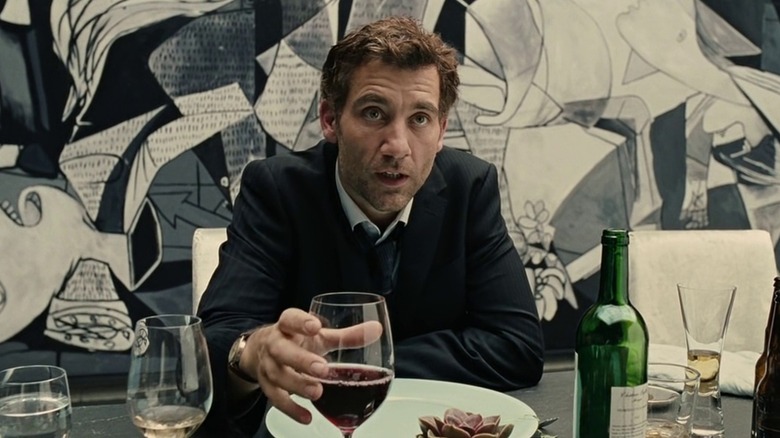
At one point, protagonist Theo (Clive Owen) visits his cousin Nigel (Danny Huston). He lives a life of luxury as head of the "Ark of the Arts," meaning his apartment is decorated with works like Michelangelo's David, ostensibly preserving them. By collecting valuable works, Nigel insists he's helping, but it requires an immense privilege to drink wine in front of something like Picasso's "Guernica" – a shocking, violent work depicting a massacre — and barely acknowledge the slaughter happening outside your own front door. That attitude toward art — something emptied of meaning, representing unimaginable wealth and nothing more — also seems more relevant than ever.
Idiocracy (2006)
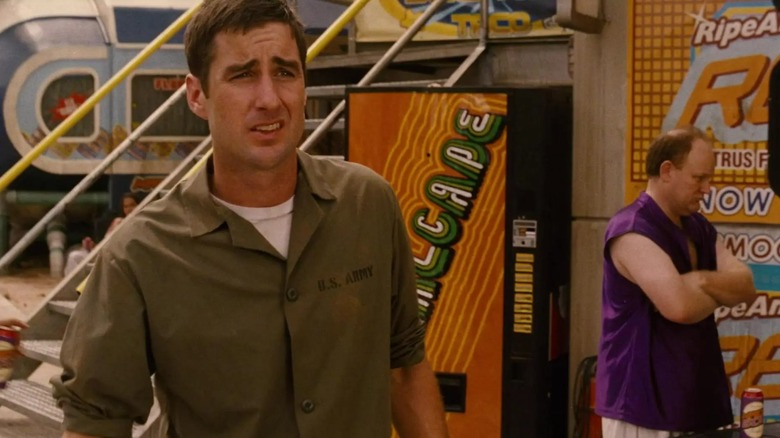
There's no way to talk about visionary 2000s sci-fi movies that were ahead of their time without mentioning Mike Judge's 2006 comedy "Idiocracy," one of the best satirical films ever made. The movie stars Luke Wilson as Joe Bauers, an Army everyman who is intentionally put in a coma so that he can be woken up in the future. Unfortunately, society gets incredibly stupid in the meantime. Joe remains frozen for five hundred years, only being revived when a landfill landslide uncovers his hibernation pod.
This is a very George W. Bush-era film, a reaction to the perceived lack of intellectual rigor that characterized fervent American patriotism in the 2000s. In 2016, the film's co-writer Etan Cohen noted that the gleeful anti-intellectualism they imagined eating American life alive by 2505 was close to being realized way ahead of schedule. "I never expected 'Idiocracy' to become a documentary," he wrote on X. Another decade has passed since Cohen said that, and "Idiocracy" has only become more prescient in that time.
While the comedy in "Idiocracy" is very broad, its satire is incredibly sharp. The movie imagines that people will worship energy drinks shilled by politicians, find themselves suspicious of anyone who uses big words, strip all creativity out of entertainment, and allow massive piles of trash to become fixtures of everyday life. "Idiocracy" even assumes that people will treat mass surveillance as normal, including giving corporations the ability to remotely disable your car. Sure, we still don't have a television show called "Ow! My Balls!," but if they announced it tomorrow, would you really be surprised?