

5 Groundbreaking '60s Horror Movies That Still Hold Up Today
We may receive a commission on purchases made from links.
It's rare for horror movies to remain haunting to generations born long after they were first released. The Universal Monster movies of the 1930s are still heralded as classics, for example, but you'll have a hard time finding anyone nowadays having sleepless nights thinking of Dracula or Frankenstein's Monster. The same is true for other retro horrors of this period, where the scariest moments may feel kitschy to modern audiences, even if the movies themselves still hold up on their own merits.
As horror fans know, the 1960s was a pioneering decade for the genre. Following the abolition of the Hays Code and prior to the arrival of the MPAA's rating system in 1968, Hollywood was pushing what was acceptable onscreen, in the process laying the foundations for two of the most enduring subgenres of them all: slashers and zombie movies. Many of the most iconic horror films and franchises of all time –- from "Halloween" to "Scream" — likely wouldn't exist without the redefining influences of the titles on this list.
The titles below weren't all beloved when they premiered (one was so poorly received, its director was forced out of working in his home country) but have endured in the years since, still every bit as nerve-wracking and exhilarating as they were 60 years ago. Here are our picks for the movies which reshaped a genre in their own image.
Eyes Without a Face
- Cast: Pierre Brasseur, Alida Valli, Edith Scob
- Director: Georges Franju
- Runtime: 90 Minutes
- Rating: Approved
- Where to Stream: HBO Max, Tubi, The Criterion Channel
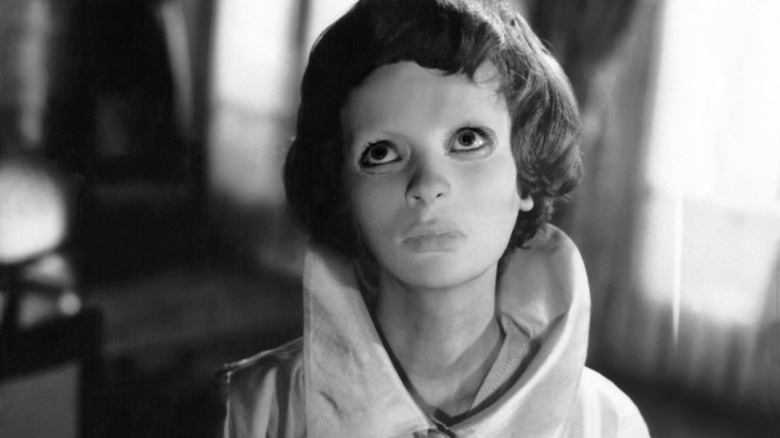
Dismissed by European critics and released in a completely butchered edit when it arrived in the U.S., director Georges Franju's subtle shocker has had a lasting legacy which has outlived its initially poor reception. John Carpenter has said that Michael Myers' mask in "Halloween" was inspired by the unnervingly lifelike mask of Christiane (Edith Scob) here, while the gloriously silly "Face/Off" appears to directly homage it at times. Not bad for a movie considered so hated at the time that one critic reportedly almost got fired for liking it.
Franju's intention with "Eyes Without a Face" was to make a horror film that got critics to take the genre seriously. While a thankless endeavor at first, it's aged impeccably because underneath its tale of a mad scientist kidnapping women to graft his daughter a new face is an almost tender look at a woman reassessing her relationship with her father. The surgery scenes repelled audiences, even though Franju's decision to keep Christiane as the focus over her surgical knife-yielding dad felt like a bold subversion of a classic horror trope. Now that cinema has grown far gorier, it's far easier to appreciate Franju's attempt to make a slow burn character drama out of a trashy monster movie premise.
The Haunting
- Cast: Julie Harris, Claire Bloom, Richard Johnson
- Director: Robert Wise
- Runtime: 112 Minutes
- Rating: G
- Where to Stream: Rent on Apple TV, Prime Video
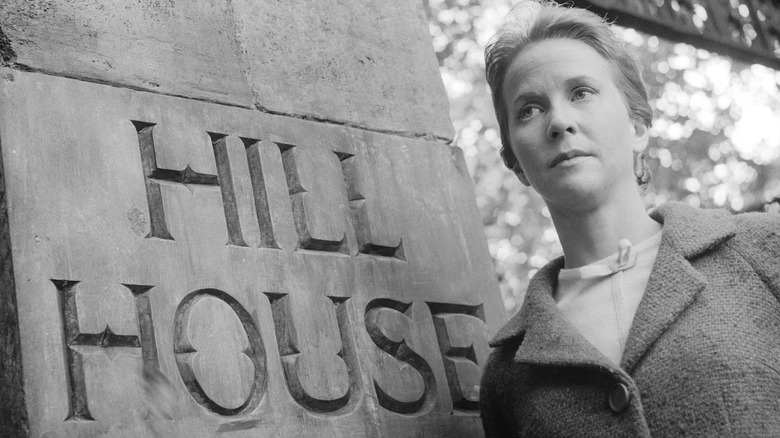
Both Steven Spielberg and Martin Scorsese have labelled this adaptation of Shirley Jackson's "The Haunting of Hill House" as the scariest movie of their lifetimes. As quoted in "The Letters of Shirley Jackson," the author herself was left bored, and the most terrifying part of her experience was leaving the theater to find she'd received a parking ticket. Jackson's novel has been adapted several times since –- most notably in Mike Flanagan's Netflix miniseries -– but nothing has bested this original take from "West Side Story" director Robert Wise that, through his interpretation, broke new ground.
Wise viewed it as a tale of a woman having a nervous breakdown, not designed to be taken at face value; Jackson assured him that the haunting was literal. While he toned down the rug-pull reveal, his protagonist's mental state is nevertheless open to audience interpretation -– the kind of openness that audiences of that era weren't accustomed to.
Even critics were unimpressed, with The New York Times writing that the movie "makes more goose pimples than sense," interpreting the deliberate ambiguity as a plot hole. Thankfully, "The Haunting" has proven to be one of the greatest ghost movies of all time, a sophisticated horror story that gradually reshaped the genre.
Night of the Living Dead
- Cast: Judith O'Dea, Duane Jones, Marilyn Eastman
- Director: George A. Romero
- Runtime: 96 Minutes
- Rating: R
- Where to Stream: Netflix, Prime Video, Tubi
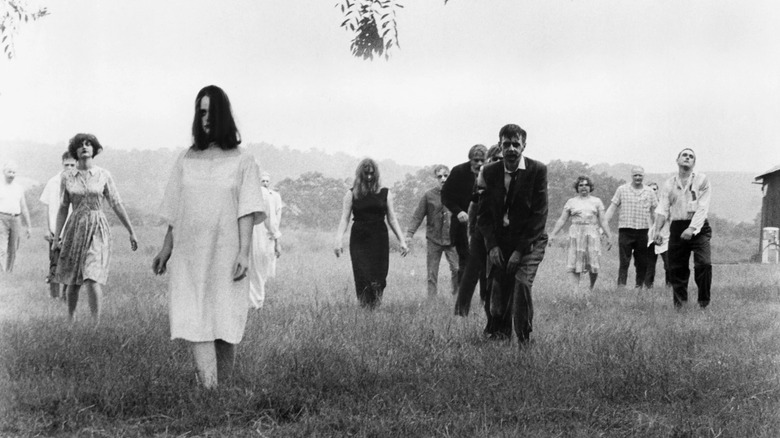
A film that needs no introduction, "Night of the Living Dead" reshaped horror with its birthing of the modern zombie movie, groundbreaking depictions of onscreen gore and violence, and overall darker storytelling where evil couldn't easily be defeated. Such pessimism was alien to audiences who had grown accustomed to the day being saved, ripping up the rulebook and initiating a wave of nihilistic classics in its wake.
By casting Duane Jones as Ben, George A. Romero also unwittingly broke new ground when it came to onscreen representation too, although he famously didn't consider the radical political implications of his downbeat ending until people started seeing it. Even without it, his film was richer in social allegory than audiences had come to expect from a scary movie.
However, the biggest lasting impact was its effect on low-budget filmmaking. Romero started with a budget of only $6,000, using the initial footage he shot to get investors on board (the final budget was still only $114,000, just over $1 million in today's money). This approach has influenced countless indie filmmakers in the decades since, many of whom have turned their own self-funded scare-fests into global blockbusters. Safe to say, the genre would look completely different without its influence.
Peeping Tom
- Cast: Karlheinz Böhm, Moira Shearer, Anna Massey
- Director: Michael Powell
- Runtime: 101 Minutes
- Rating: Not Rated
- Where to Stream: Tubi, The Roku Channel
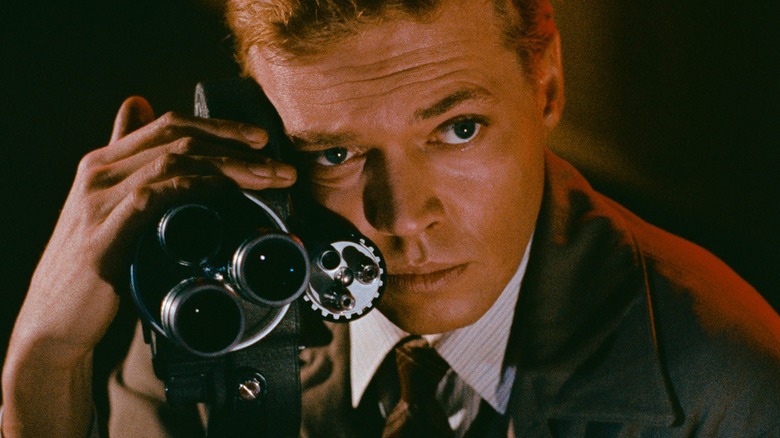
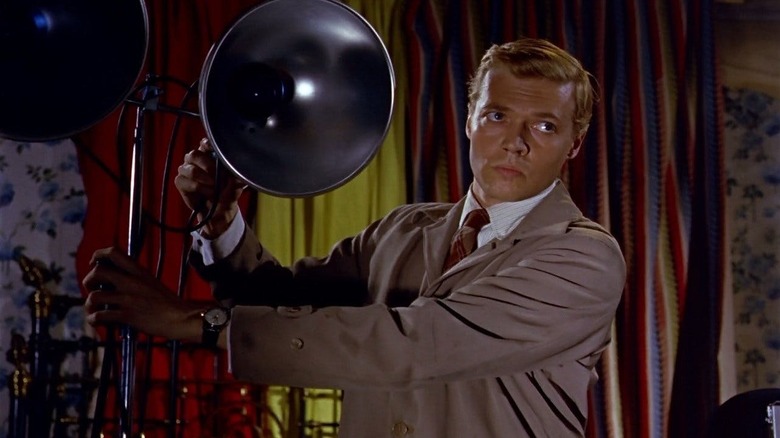
Now a regular fixture on polls of the best British movies ever made, "Peeping Tom" was easily the most despised movie on this list. The reaction was so radioactive, it even forced director Michael Powell (one half of Powell & Pressburger, directors of "The Red Shoes" and "A Matter of Life and Death") out of his home country for the rest of his career.
As with that year's "Psycho," this was a key precursor to the slasher genre, following camera-wielding serial killer Mark Lewis (Karlheinz Böhm) who voyeuristically captures the last living moments of his victims. The manner of these methodical killings made it immediately controversial, disgusting early reviewers. The general consensus was that Powell himself must have been a pervert for making it.
The film has since been reappraised by horror fans, who not only see it as a crucial foundation for the slasher concept, but as a rich work which builds upon the twisted psychological themes bubbling under Hitchcock's movies. Additionally, "Peeping Tom" was also a formative influence for several major directors. Martin Scorsese once claimed the movie "says everything that can be said about filmmaking," suggesting it also functioned as a metaphor for the voyeuristic impulses of anybody who picks up a camera. It's a great, shocking thriller, but there's far more beneath the lurid surface.
Psycho
- Cast: Anthony Perkins, Janet Leigh, Vera Miles
- Director: Alfred Hitchcock
- Runtime: 109 Minutes
- Rating: R
- Where to Stream: Rent on Prime Video, Apple TV
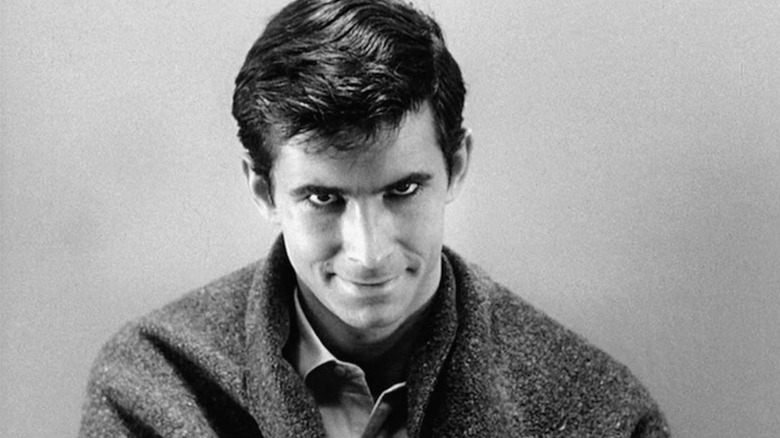
We couldn't complete the list without including this one. Alfred Hitchcock's film received a warmer reception than "Peeping Tom" — largely because he refused to screen it for critics–- but felt every bit as transgressive to an unsuspecting mainstream, who likely assumed the Master of Suspense would be back with another crowd pleaser like "North by Northwest." So much has been written about how "Psycho" pushed the boundaries for horror, further cementing what a slasher movie could be with its brutal central kill that ensured no scream queen was safe for too long.
Hitchcock famously lobbied to get Robert Bloch's source novel of the same name removed from stores to avoid spoiling the movie before its release. Even if any audience members had read it, they would still probably be caught off guard by the onscreen violence. "Psycho" proved groundbreaking even in its most minute details: it was the first movie ever to depict a flushing toilet, much to the shock of censors.
Its many innovations aren't why it has held up so well; Hitchcock approached brand new horror territory with the same ease as he would a classic thriller, turning controversial material into blockbuster entertainment. Few others could pull this off -– and if you've seen the 1998 shot-for-shot remake, you'll know how true that is.