

5 Movies That Changed Summer Blockbusters Forever
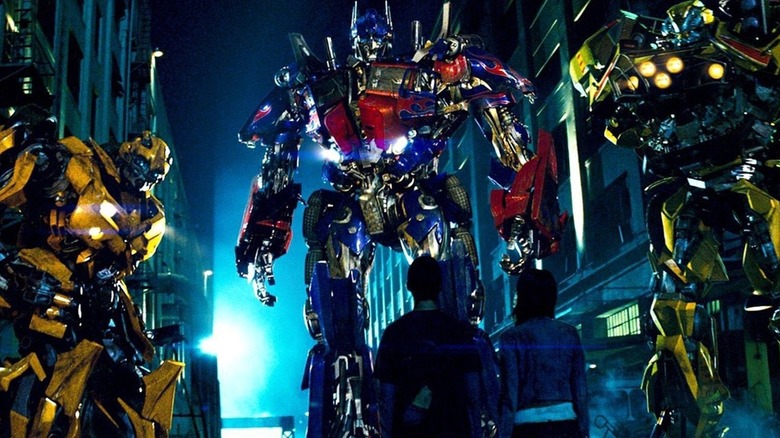
In the 1970s, "Jaws" and "Star Wars" established the de facto mold for the summer blockbuster. From there, Hollywood embraced summertime movies as the ultimate way to make lots of money. Titles like "Raiders of the Lost Ark," "Superman II," "Gremlins," and "Return of the Jedi" proceeded to show just how lucrative these projects were. With so many kids and even some adults off from their responsibilities for the summer, people had extra disposable time and income to spend seeing major motion pictures. A new paradigm for box office hits had opened up, one largely defined by action and fantasy movies.
Just because "Star Wars" and "Jaws" established the mold for summer blockbusters, though, doesn't mean that this lucrative form of cinema hasn't undergone some key changes over the years. Since "Jaws" shattered box-office records 50+ years ago, the summer blockbuster has ebbed and flowed to get with the times. Five films in particular have permanently changed the summer blockbuster, and these changes have taken many different forms. Some of these five films upended conceptions of what a "typical" summer blockbuster looks like; others redefined the marketing and release strategies behind these projects.
The summer blockbuster is constantly evolving, even when it feels like such films are just carbon copies of one another. "Jaws" and "Star Wars," it turns out, were just the beginning for this cinematic space.
Batman (1989)
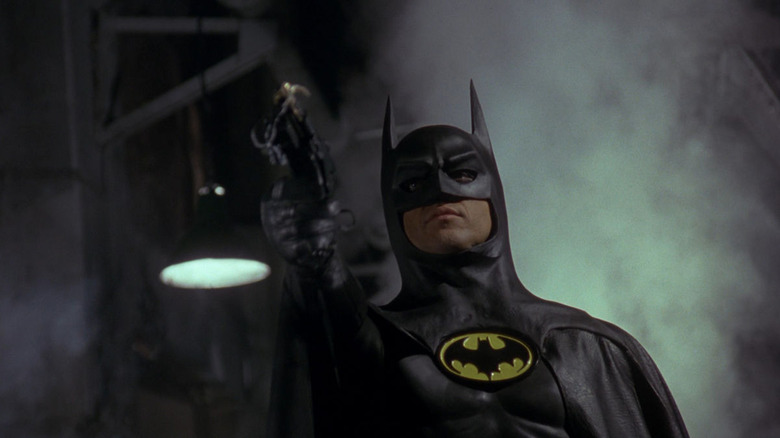
Superhero movies existed before 1989: four "Superman" installments starring Christopher Reeve had already made their way to theaters before that year. Even Batman himself had hit the big screen in 1966 by way of "Batman: The Movie," which focused on Adam West's take on the character. However, 1989's "Batman" was the breakthrough point for summer blockbuster superhero features. One of the biggest summertime films of the 1980s, "Batman" changed superhero movies forever, even though you may have barely noticed.
For starters, the prerelease marketing campaign for "Batman" was on another level of pervasiveness. It was impossible to avoid the Bat symbol that fateful year as Warner Bros. beat the drum on the film's imminent arrival. Subsequent superhero films and comic book adaptations would closely follow this style of blanket marketing. These post-1989 motion pictures would also emulate key facets of the "Batman" aesthetic: A PG-13 rating. An eye-catching director not known for superhero films. Embracing casting choices (like Michael Keaton as Batman) that seem unorthodox on the surface but pay off in the long run.
"Batman" even reinforced to Hollywood that exploiting preexisting brand names (rather than leaning on original concepts for blockbusters, like "Star Wars, "Raiders of the Lost Ark," "Ghostbusters," and "Back to the Future") was an easy route to printing money. In every way imaginable, "Batman" provided a lucrative blueprint that summer blockbusters are still imitating to this day. This was the birth of the modern superhero movie and then some.
The Lion King
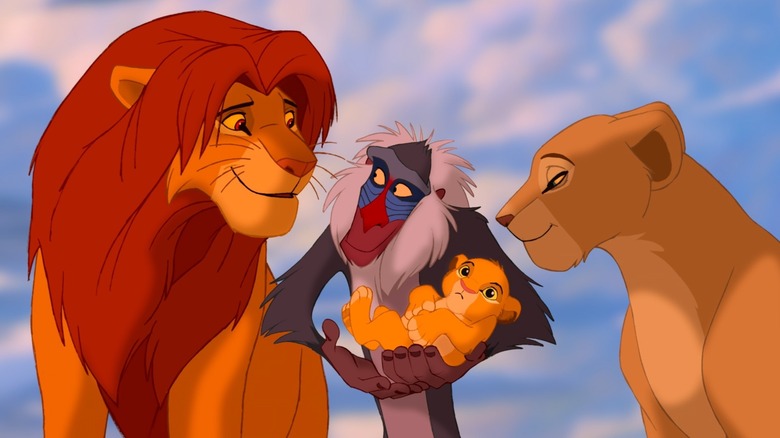
The features comprising the Walt Disney Animation Studios canon weren't entirely unfamiliar with summertime release dates before 1994 (as one can attest from "Alice in Wonderland" and "Lady and the Tramp"). However, traditionally, Disney's animated titles like "The Jungle Book," "Robin Hood," and "Beauty and the Beast" dropped in the final three months of a given year. Originally, 1994's "The Lion King" was set to follow in their footsteps with a Thanksgiving 1993 launch. Production delays, though, forced Disney to postpone it until the following summer. Simba and company debuted in June, the heart of the summer moviegoing season and far away from the holiday season realm in which "Aladdin" and "The Little Mermaid" thrived.
When "The Lion King" hit the big screen, it had no problem shattering box office records that may never be broken again. In its initial theatrical run alone, "The Lion King" made $312.85 million (subsequent rereleases would take it to $424.97 million in the U.S. alone) and became the second biggest movie of 1994 domestically. With that success, Disney Animation began releasing its new titles annually in June. Starting with "Cars" a little over a decade later, Pixar took over that release slot on an annual basis.
To this day, Disney is still launching massive animated hits in that June slot, including "Elemental" and "Inside Out 2." "The Lion King" and its mighty box office solidified animated Disney smashes as a staple of the summer blockbuster season.
Transformers
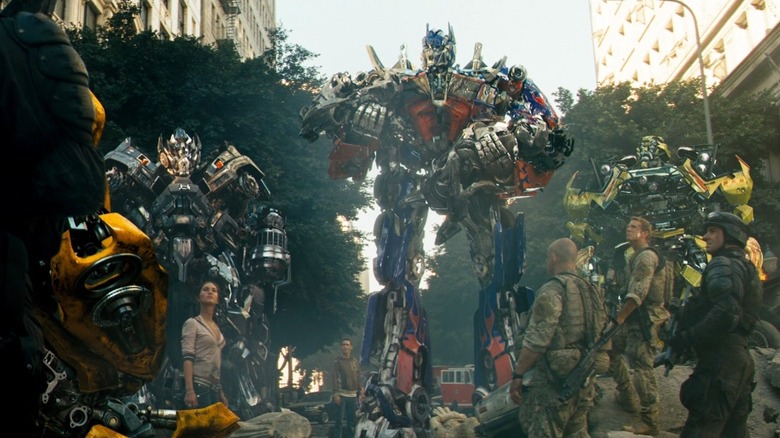
Michael Bay's "Transformers" movies are often regarded with disdain, and not for unwarranted reasons. The various sequels especially hammered home the hollow spectacle and lazy jokes that mark the worst of Bay's motion pictures. Back in 2007, though, merging Bay's filmmaking style with the first live-action incarnation of the robots in disguise was more than enough to get moviegoers flocking to their local theater. Despite not being a sequel, "Transformers" managed to outgross (domestically at least) bigger follow-ups from that same summer, like "Pirates of the Caribbean: At World's End" and "Harry Potter and the Order of the Phoenix."
The legacy of "Transformers" wasn't just confined to dollars and cents, though. This project also had a lingering artistic impact on broader cinema, believe it or not. Less than a year after its debut, "Iron Man" hit theaters with visual effects heavily informed by the CGI breakthroughs on "Transformers." In 2009, Marvel Studios head honcho Kevin Feige excitedly pointed to the "Transformers" movies as the new standard for blockbuster spectacle that the then-upcoming "The Avengers" would have to surpass.
Plus, the entire conceit of making a major theatrical movie out of a toy was popularized by "Transformers" breaking the bank. Everything from "Battleship" to "The Lego Movie" owes this title a debt of gratitude. Optimus Prime and company may not have won over Michael Bay skeptics, but their first movie certainly overhauled the summer blockbuster moviegoing landscape.
The Avengers
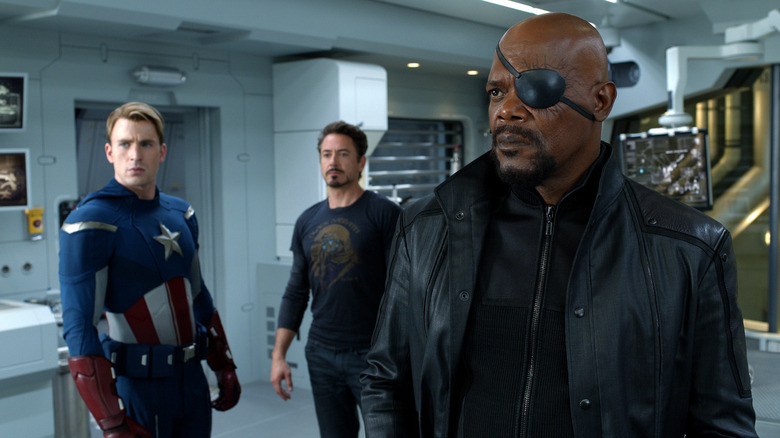
Ten years after "Spider-Man" became the first movie to clear $100+ million domestically in a single weekend over May 2002's first frame, "The Avengers" became one of the biggest opening weekend record holders of all time. This movie was a gargantuan smash in every way imaginable and endures as one of the best movies to hit $1+ billion worldwide. Suddenly, Hollywood didn't just have one new hit blockbuster to emulate. It had a whole web of films to imitate. "The Avengers," after all, existed in a shared continuity with multiple other superhero films. Rival studios saw this project as a way to launch many different hits simultaneously.
Thus, "The Avengers" became the movie to mimic for the rest of the 2010s. Not only did Warner Bros. try getting its DC Extended Universe into overdrive, but there were also tons of other cinematic universe attempts that failed miserably. Universal, for instance, tried absorbing its Universal Monsters brand into the Dark Universe. Valiant Comics tried launching a new franchise with "Bloodshot." There were even once proposed plans for a Robin Hood cinematic universe. Meanwhile, end-credit teases to set up sequels (a key element that teed up "The Avengers" years before its premiere) became a prerequisite for any post-2012 blockbuster.
"The Avengers" was the culmination of a long-standing dream for Marvel Studios. For Hollywood writ large, though, it was the beginning of a new (often creatively and financially tortured) era of interconnected summer blockbusters.
Barbie
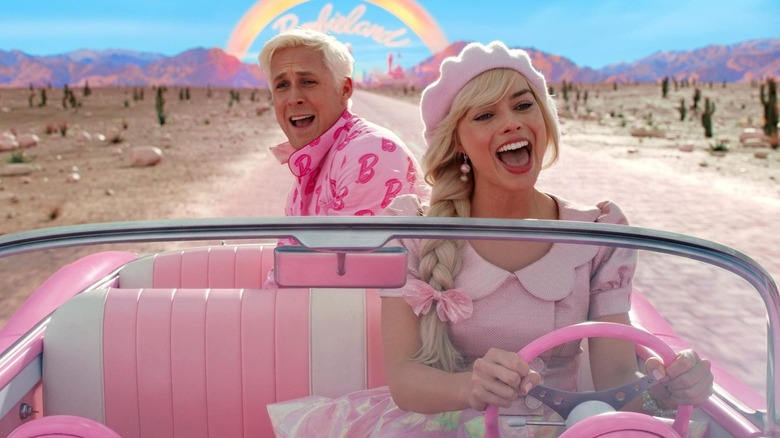
Releasing "Barbie" on July 21, 2023, was a sign of supreme confidence from Warner Bros. That mid-July spot is one Warner Bros. had previously reserved for projects like "Harry Potter and the Deathly Hallows: Part 2" and the "Dark Knight" sequels. That's a tremendous box-office legacy "Barbie" had to live up to, especially because it wasn't a typical mid-July tentpole. Rather than being a legacy sequel action film, it was the first live-action movie adapted from Mattel's Barbie doll line. To boot, it was also a wacky comedy, a genre that has often done well in the summertime (as the first two "Hangover" films can attest) but has rarely hit the box-office highs of a typical "Spider-Man" installment.
Just as Barbie dolls can do anything, though, Greta Gerwig's "Barbie" ended up defying all the odds and doing what nobody thought possible. Becoming 2023's biggest movie at the domestic box office by a massive margin, "Barbie" was a juggernaut that utterly dominated the cultural zeitgeist. It also excitingly suggested a bold new future for what summer blockbusters could look like. Typically, summertime movies grossing $400+ million domestically had to be either animated kids' movies or action films. A super wacky comedy devoid of explosions like "Barbie," though, suggested the mold of a summer blockbuster was a lot more expansive than people realized.
With this movie's success, exciting fresh frontiers for the summer blockbuster suddenly opened up. This season of moviegoing would never be quite the same.