

Small Details You Missed In Star Wars: Maul - Shadow Lord
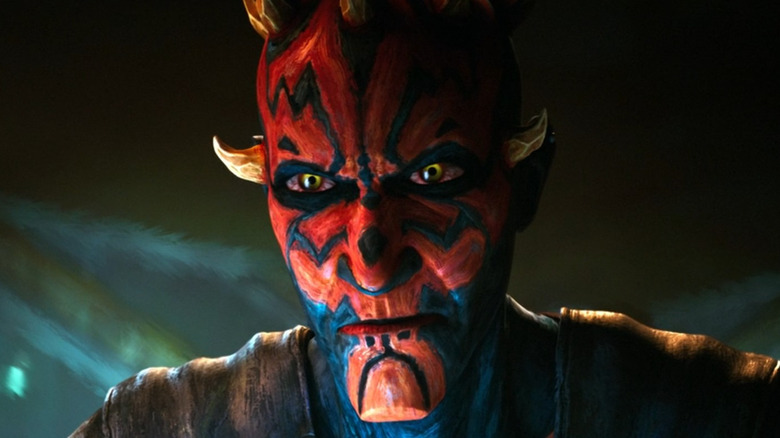
If you love lightsaber forms, "Batman" references, and shots that remind you how good "Andor" was, "Star Wars: Maul — Shadow Lord" is the show for you. There's plenty to enjoy besides the Easter eggs, of course — underworld power plays, noir-style investigations, Jedi being cowards, and a great new planet in Janix, featuring a lot of detail and depth. All in all, "Maul" is one of the best things Disney has done with "Star Wars" so far, and it's certainly near the top of the list of Disney+ shows. But for the lore hunters and Wookieepedia scroungers out there, this is also a show that's full of little details.
With the show's first season now over and done, and Season 2 officially on the way, it's the perfect time to take a look back at the first batch of episodes and shine a light on some less-discussed moments. From genre nods to Clone Wars callbacks, these are the small details you may have missed in "Star Wars: Maul — Shadow Lord."
Noir and the Batman
"Star Wars" has long taken inspiration from high-genre classics, be they samurai movies, ray gun sci-fi serials, Westerns, or Arthurian myths. "Maul — Shadow Lord" goes in a different direction with a strong noir inspiration, pulling from both classic detective fiction and the neo-noir cyberpunk stories of the '80s and '90s.
Janix itself is one of the most cyberpunk-y planets we've seen in "Star Wars" yet — a better executed version of Daiyu from the "Obi-Wan Kenobi" show. New character Brander Lawson, voiced by Wagner Moura, provides a classic, one-day-away-from-retirement POV character who approaches every scene with that mildly disheveled, four-coffees-deep vibe that detective fans know and love.
Speaking of crime fiction, Moura's star rose substantially after his starring turn on the Netflix crime series "Narcos," where he played Pablo Escobar. He becomes the third leading actor from "Narcos" to take a major role in "Star Wars," following co-star Pedro Pascal's starring turn in "The Mandalorian," and Diego Luna's acclaimed run as Cassian Andor, following his own tenure on the spin-off "Narcos: Mexico."
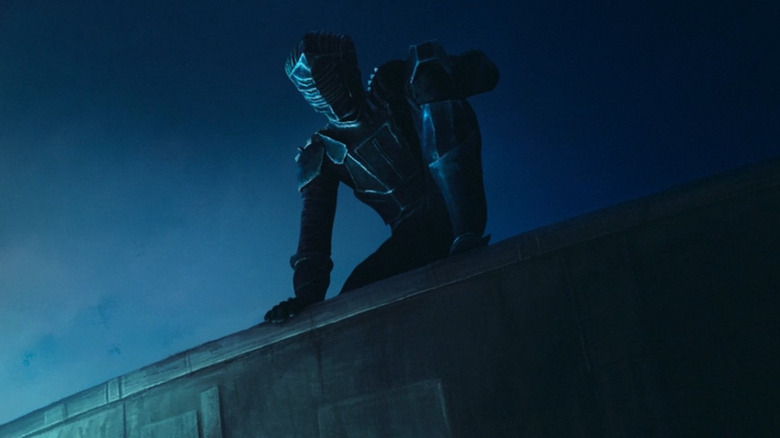
The noir references get a bit more specific once the Imperial Inquisitors show up. Marrok (A. J. LoCascio) gets a couple of dead-on "Batman" shots, including a caped and cowled crime scene investigation in Episode 5, and a rooftop aura shot near the start of Episode 7 that's practically ripped straight from the storyboards of "Batman: The Animated Series."
Lightsaber forms and Jedi exiles
If you're one of those prequel fans who knows all of the different lightsaber forms, you probably already love "Maul — Shadow Lord." While many of the Disney-era movies and shows have had great fight choreography and saber work, it often comes out feeling quite different from the specific style popularized during the prequels. But in Maul, all of that is back.
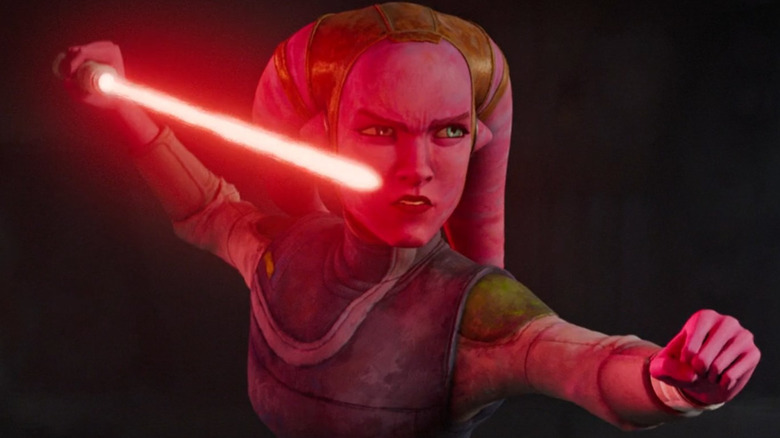
This is a show where characters fight in specific ways for specific reasons. There is a lot of Form III (known as Soresu) — AKA Obi-Wan's favored form — particularly from young Jedi Devon Izara (Gideon Adlon), though Maul's persistent goading pushes her from time to time into the more aggressive Form IV, favored by Anakin Skywalker. Maul himself uses a variety of styles, and we even see him training in single-bladed forms in Episode 6 before switching to the dual-bladed Form VII. We did a full breakdown on all the lightsaber Easter eggs in "Maul," and how the show uses different styles to tell a specific emotional story.
In addition to lightsaber lovers, this is a great series for Jedi haters — Maul himself included. Devon's master, Eeko-Dio Daki (Dennis Haysbert), is an example of the hypocritical Jedi. He repeatedly tells Devon that their mission is survival, not helping the people of Janix — a claim in direct violation of the Jedi code. His lack of presence in any previous "Star Wars" stories adds another layer, which is that he may not have served on the front lines of the Clone Wars, as many Jedi did. Perhaps part of the reason Maul chooses Devon as his new apprentice is because he can sense the level to which her current master is already revealing to her the contradictions of the Jedi order.
Palpatine and Obi-Wan loom large
In the story of Maul, Obi-Wan Kenobi and Darth Sidious play parallel roles as tormenters and rivals — the eternal targets of Maul's unquenchable thirst for vengeance. While neither appear in the flesh in Season 1, both loom large. Maul has visions of his early days with Sidious in Episode 8, which show a brutal, abusive apprenticeship. He also recalls the death of his brother, Savage, at Palpatine's hand — an event that takes place at the end of "The Clone Wars" Season 5. That death is mirrored earlier in "Maul," when one of the two Zabrak brothers in the former Sith's gang is murdered by an Imperial Inquisitor.
Obi-Wan is a less direct presence in the story, but there are a lot of interesting ways in which Maul's show parallels Kenobi's own Disney+ outing. Both show their respective protagonists at something resembling rock bottom, hiding from the Empire and fighting off Inquisitors while trying to provide guidance to a Force-sensitive girl, or in Maul's case, a young woman. Both stories involve heavily urbanized cyberpunk planets, and both involve their protagonists revisiting traumatic pasts. The main difference, of course, is that "Shadow Lord" is a much, much better show.
But by far the most wild reference to either Obi-Wan or Palpatine comes at the beginning of Episode 8, when Maul launches himself off of a perch, lightsaber blade held out before him like a drill, and does the exact same infamous spin move that Palpatine uses against a group of Jedi masters in "Revenge of the Sith." He even does the same little screech that Sheev does. Maybe it's necessary for the technique, but either way, it's hilarious.
Inquisitors and the early Imperial era
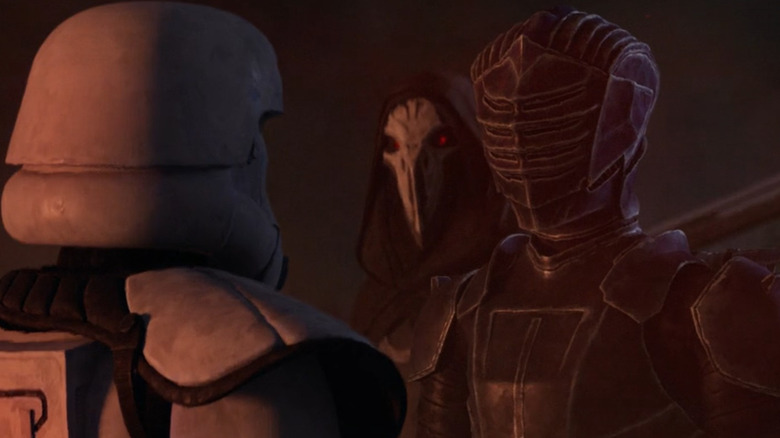
Like many of the more recent "Star Wars" installments, "Shadow Lord" is set in the early years of the Imperial era, and there are a number of small details you'll pick up on if you've watched shows like "Tales of the Jedi," Tales of the Empire," and "The Bad Batch." When the Empire arrives on Janix in Episode 5, the deployed troopers where the distinctive "TK" helmet and armor designs — a midway point between the Phase III Clone Trooper armor and the Stormtroopers of the original trilogy.
Both Inquisitors who appear in "Maul" are also returning characters, with Marrok having debuted in "Ahsoka" season 1, and the Eleventh Brother popping up in "Tales of the Jedi." Both characters die in those shows, and both are killed by Ahsoka Tano. What's more intriguing is that these two Inquisitors in particular have a level of mystery beyond their "brethren," with the Eleventh Brother practically deflating after his duel with Ahsoka, and Marrok exploding into a puff of green smoke. Both also wear masks at all times. Could their pairing in "Shadow Lord" suggest they have a shared origin, despite their differing appearances?
Lastly, you can feel that "Maul" was made in the wake of "Andor" redefining quality in "Star Wars." There's a similarly zoomed-in look at how the Imperial military bureaucracy scuffs up against regional security forces, and Brander Lawson has a hologram mugshot moment with Maul that feels meant to evoke the same moment between Cassian Andor (Diego Luna) and Syril Karn (Kyle Soller) in "Andor" Season 1.
Darth Vader and Starkiller
"Maul — Shadow Lord" Season 1 ends with a duel that some "Star Wars" fans have been asking for since 1999, when Maul and his dwindling crew come face to face with Darth Vader himself. The entire final episode is one long, sprawling fight, which at times becomes a full three-vs-three, with Vader and his Inquisitors facing Maul and his two unlikely Jedi compatriots.
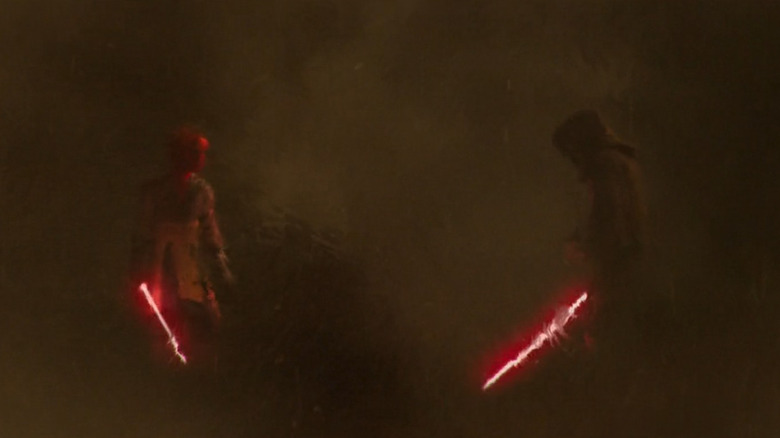
Vader's appearance at the end of Episode 9 occurs in a foggy grove, which feels evocative of Dagobah and the mystical cave where Luke duels a vision of him in "The Empire Strikes Back." Framing the dark lord like this gives him a haunted energy, which fits with his abject silence in Episode 10, and the way he's choreographed like a Jason Voorhees-esque horror villain.
Vader's fighting style is stiff and brutal. By contrast, the full three-vs-three parts of the battle evoke the flips and flows of the "Old Republic" cutscenes, where Jedi and Sith battle each other in groups — fights that have developed their own distinct niche in the fandom. Maul realizes Vader's identity early on — a callback to "The Clone Wars" Season 7, when he reveals to Ahsoka Tano that he knows Darth Sidious' plan revolves around turning Anakin Skywalker to the Dark Side.
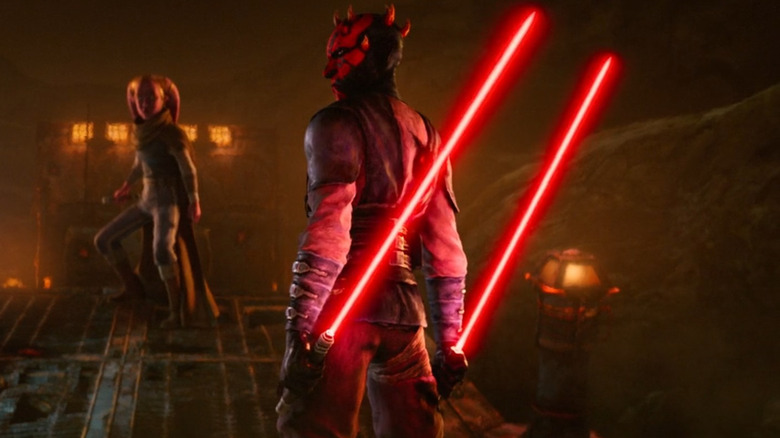
In Episode 9, Maul channels a reference to a different Force user with a familiar pose, breaking his saber into two and igniting both behind his back in a clear wink at the "Star Wars: The Force Unleashed" video games. The protagonist there, known as Starkiller, is one of the Star Wars Legends characters who hasn't been restored to the modern canon. However, he was also voiced by Sam Witwer, the actor behind Maul, making the pose a nice little nod to EU fans.