

Star Wars & Star Trek Are Struggling. Here's What Both Sci-Fi Franchises Can Learn From Each Other
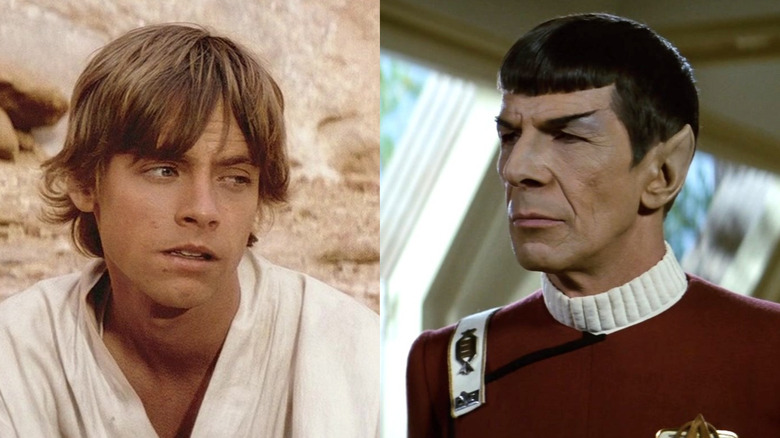
Star Wars and Star Trek should never be the same. They don't need to be twinsies dressed up in the same colored cargo pants and dancing along to Dua Lipa in unison. Having said that, there's still a lot they can learn from each other — especially as both franchises head toward new eras, respectively.
It's been tough watching Star Wars and Star Trek in recent years. While it hasn't been all bad — "Andor" and "Star Trek: Strange New Worlds" stand out as notable bright sparks — it often feels like the franchises have been spinning their wheels in the mud, going nowhere slowly and making a mess in the process. I'm no longer excited when the news about an upcoming show or movie drops; instead, my mind presumes it will all be bad and the subreddits will become even more unbearable than usual. Simply put: it can't go on this way. Something has to change before further damage is done to their legacies.
The good news is there is a way forward, if both franchises take a good hard look at each other and jot down what the other does better than them right now. For Star Wars, it could learn from Star Trek in terms of committing to new characters and making them the center stage. For Star Trek, lessons could be taken from how Star Wars manages to create more emotional and well-defined character arcs.
Here's what Star Wars can learn from Star Trek
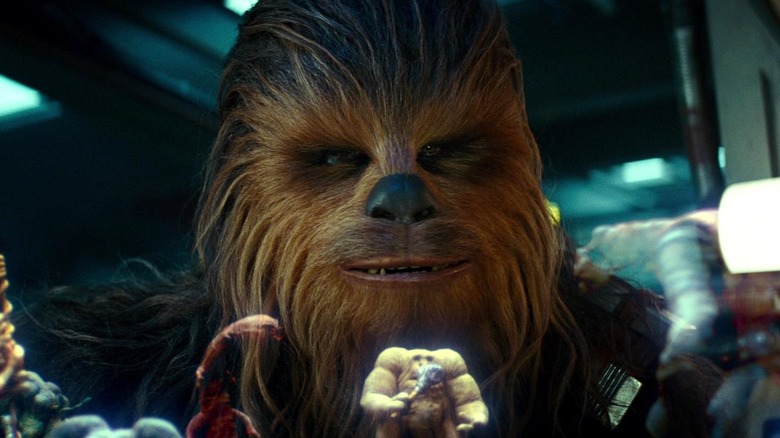
One of the biggest mistakes that Star Wars makes is its over-reliance on the Skywalker Saga. It refuses to close the chapter on that book, constantly returning to that era for its storylines and revisiting the same-old characters. Considering how vast the Star Wars timeline is, there are different eras it can visit in the past and future to tell fresher tales.
This is something that Star Trek gets right for the most part. Look at how "Star Trek: The Next Generation" and "Star Trek: Deep Space Nine" focus on different crews and story arcs rather than stay obsessed with Captain Kirk and his gang. Yes, there's an in-universe continuity and established shared world, but everything else changes. The franchise allows for significant time to be spent with these new characters, making them the focal part of the universe, then moves on as soon as a story naturally concludes. The series doesn't necessarily reinvent itself but evolves while remaining familiar to viewers.
For Star Wars to do this, though, the decision-makers will need to temper their expectations and not be as trigger-happy with cancelations as they normally are. For example, "The Next Generation" Season 1 had good ratings, but it wasn't universally praised when it debuted. It took about three seasons for the show to find its footing and really discover itself. From there, it elevated from good to great. Nowadays, it's difficult to get this type of commitment and trust, as there's a knee-jerk reaction from executives to act straight away once there's noise online. There needs to be more trust in the creative process and the bigger picture rather than hitting the reset button after every minor wobble.
Here's what Star Trek can learn from Star Wars
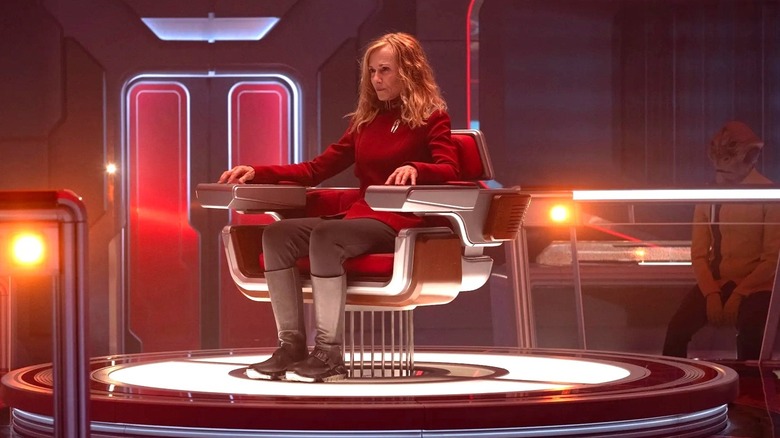
While Star Trek still keeps an elevated form of humanism at the core of its storytelling, it has lost something in the strength of its characters and their arcs. The likes of Kirk, Jean-Luc Picard, and Benjamin Sisko are relatable and easy to empathize with, but there's no connection with Gabriel Lorca or Nahla Ake on a personal level. They aren't bad characters per se, but who are they as people and why should I care about their challenges?
Star Wars knows how to grip the audience with solid and emotional character-driven arcs. Look at Ben Solo from the latest trilogy as a prime example. The quality of the movies may have been all over the place, but his arc satisfies, as there's a deeper understanding of who the character was and finally becomes. That's something that the soap opera side of Star Wars has always been good at — knowing how to shape arcs for memorable characters. Whether it be hero or villain, everybody has a powerful backstory and overall motivation for what they do.
As mentioned before, this also requires the Star Trek executives to give time and space for the shows and movies to breathe and allow arcs to fully develop — and not rush to the next shiny idea. It's like with any relationship, really: you have to invest time in getting to know the other person better, because you'll learn more over weeks and months than a single date.
It's all very well to say Star Wars and Star Trek can take lessons from each other, but none of this will matter if the powers that be fail to support the decisions. That's where the true test lies.