

5 Time Travel TV Shows Everyone Needs To Watch At Least Once
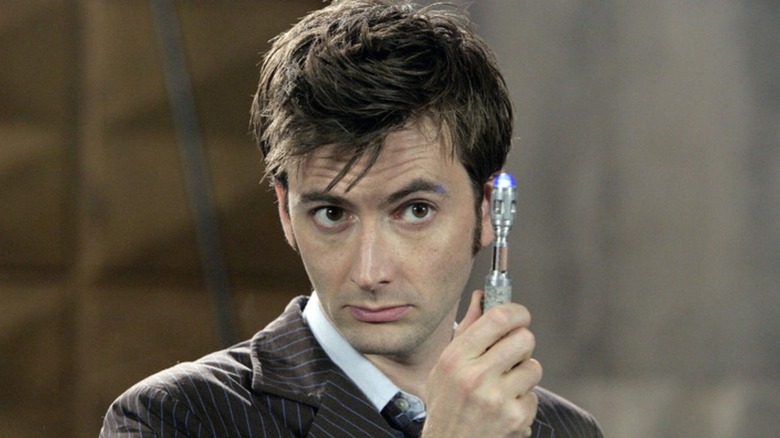
Whether it's presented as metaphysical fantasy, serious science fiction, or some wibbly-wobby timey-wimey thing in between, time travel can be one of the most fun and exciting tropes in fiction. Sometimes the appeal lies in the freedom to have adventures in any possible setting. On other occasions, it's the mechanics of time travel itself that create the drama: is it possible to change the past? If you can change it, would you? Should you?
There have been many great stories about time travel (and if you need more recommendations, here's Looper's top 54 time travel movies of all time ranked). Here, we're focusing on the cream of the crop of time travel TV shows. Pretty much anyone with even a passing interest in stories about traversing the space-time continuum is likely to love these five shows — and even if you don't love them, you should give them a try anyway, because who knows how much you'll benefit from this cultural enrichment in the future.
Russian Doll
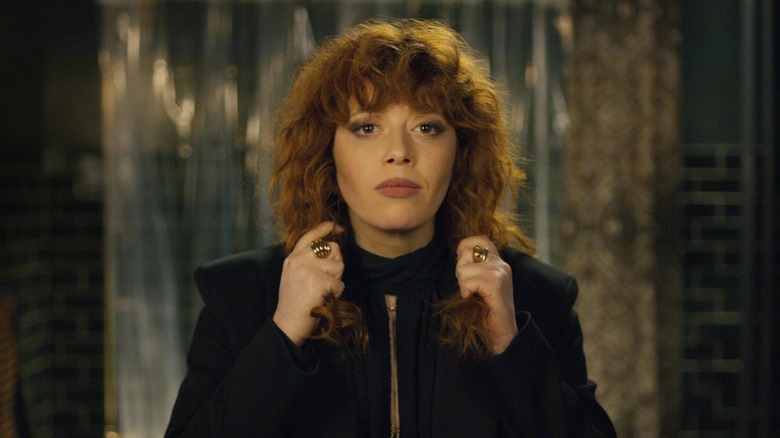
In 2019, the first season of "Russian Doll" blew Netflix subscribers away with one of the best TV series takes ever on the time loop subgenre. Co-created by Natasha Lyonne, Leslye Headland, and Amy Poehler, the show stars Lyonne as Nadia, a woman who keeps dying on a loop during her 36th birthday. Before "Poker Face," "Russian Doll" proved Lyonne's character actor cool could translate to leading a whole series. Its expert balance of different tones — sometimes hilarious, sometimes heartbreaking — and creative expansion of the "Groundhog Day" formula added up to a perfect self-contained binge.
If "Russian Doll" ended right there, it would already be a must-watch. But Netflix wanted more when they saw the viewership numbers, so they ordered a second season — and it was still really good. Not as great as the first season, but the writers found new thematic and emotional depths in a new time travel twist of Nadia entering the bodies of her mother (Chloë Sevigny) and grandmother (Irén Bordán and Ilona McCrea at different ages). Season 2 also could have been a satisfying ending, but Lyonne is already planning a third season that will arrive eventually, and will surely blow our minds and capture our hearts all over again.
Futurama
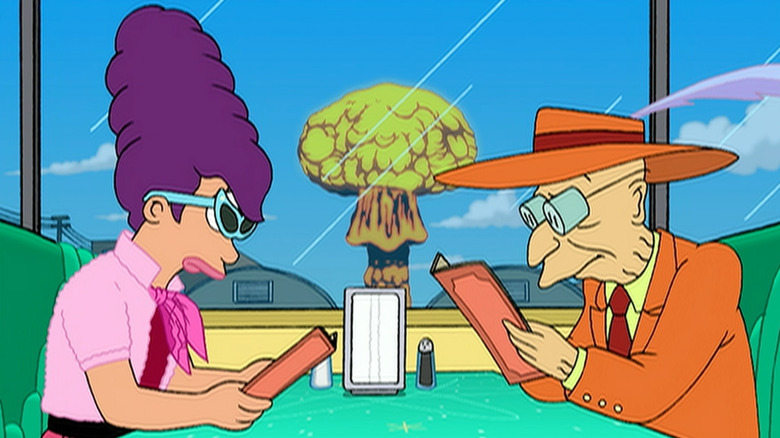
Does "Futurama," the cult favorite sci-fi comedy from "The Simpsons" creator Matt Groening and David X. Cohen, count as a "time travel show"? From a certain point of view, its premise of a 20th century slacker starting a new life in the 31st century plays like "time travel," but there's no space-time bending involved in this temporal displacement, merely some cryogenics.
According to the DVD audio commentary for "Roswell That Ends Well," the first "Futurama" episode involving backwards time travel, the writers resisted time travel stories for the first few seasons and only started approving them if the circumstances of said travel were unusual enough to not be a regular occurrence.
Irregular forms of time travel now happen pretty regularly on this continually uncanceled cartoon. The Planet Express crew have journeyed through time by such means as microwaving Jiffy Pop in a supernova, entering a binary code from a mysterious tattoo into a time sphere, and licking the preserved heads of U.S. presidents. They've tested time machines that only move forward through a cyclical universe and others that can move back in time by just five seconds. At this point, "Futurama" has toyed with just about every paradox of time travel, and built many of its funniest and most moving stories around these complexities.
Samurai Jack
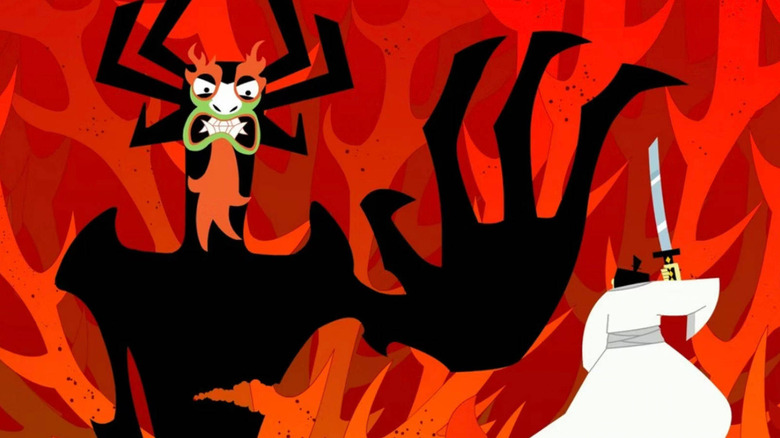
"Samurai Jack" tells the story of a warrior from the past (Phil LaMarr) who's flung into the future, and his quest to return to his original time to defeat said future's evil wizard ruler Aku (Mako in Seasons 1-4, Greg Baldwin in Season 5).
"The past," as envisioned by creator Genndy Tartakovsky, is an anachronistic mix of anything cool from throughout history — Jack is a samurai trained by Egyptians, Romans, Vikings, and Robin Hood, among others — akin to how Tartakovsky's "Primal" blends anything cool from throughout prehistory. "The future," similarly, becomes a playground for any genre homage the show wants to throw at you, as well as a convenient excuse to make sure almost everyone Jack kills is a robot.
Jack's greatest strength is also his greatest obstacle in his quest: when forced to choose between a way to return home and helping those in need, he'll always choose the latter as much as it pains him. He never did get back to the past in the original Cartoon Network run from 2001-04, but the final season on Adult Swim in 2017 gave his story a proper if somewhat controversial ending. Pitched right at the intersection between Saturday morning pulp and gorgeous experimental art, "Samurai Jack" is one of the best cartoons to ever air on television.
Erased
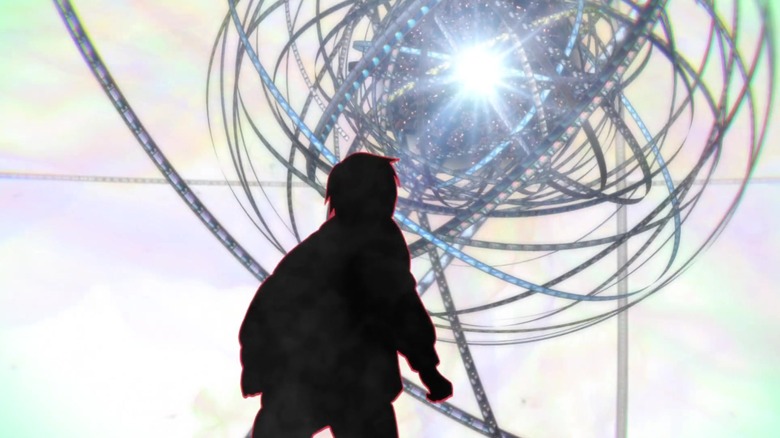
The 2016 anime series "Erased," known as "Boku dake ga Inai Machi" ("The Town Where Only I Am Missing") in Japanese and based on the manga by Kei Sanbe, offers another fresh take on time travel. Manga artist Satoru Fujinuma (Shinnosuke Mitsushima) has the rare ability of "Revival," dodging death via time travel. When his mother Sachiko (Minami Takayama) gets murdered, Satoru's Revival ability sends him back in time a full 18 years, making him relive the fifth grade (Tao Tsuchiya voices young Satoru) to solve the mystery of a serial killer who has taken too many of his loved ones.
"Erased" excels as both a suspenseful mystery and a heartfelt character drama, using its fantastical conceit to explore childhood regrets from an adult perspective. The later episodes have their flaws — condensing eight volumes of manga into 12 episodes, written simultaneously with the manga's final chapters, leads to some pacing issues — but the show remains extremely compelling throughout. A live-action Netflix adaptation also exists, but it's the animated version (streaming on Crunchyroll and Hulu in the U.S.) that you need to watch.
Doctor Who
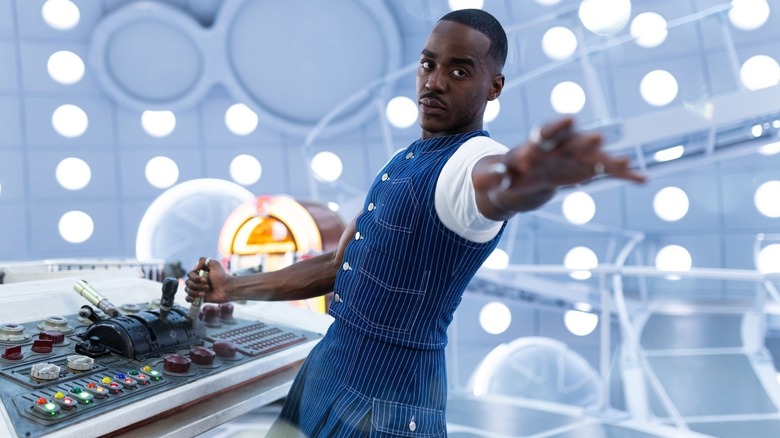
You can't talk about time travel TV shows without bringing up the granddaddy of them all. "Doctor Who" started in 1963 as an educational children's show that quickly discovered it was better at terrifying kids than teaching them — and that its wit and imagination appealed to adults as much as kids. It ran for 26 seasons until taking a hiatus in 1989, then returned with a TV movie in 1996 and a full revival in 2005 that's lasted another 15 seasons and counting. While the future of "Doctor Who" is currently uncertain beyond a promised 2026 Christmas special, it's safe to say its place in British pop culture and television history is guaranteed.
The secret to how "Doctor Who" stays great after so many decades is that every few years it becomes a new show. William Hartnell, the first actor to play the alien Time Lord known simply as The Doctor, was in poor health, so to keep the show going, the writers decided The Doctor could regenerate into different bodies when on the verge of death, allowing different actors to give their own unique take on the character. Fans will always debate which of the 15 official incarnations of the Doctor is the best — the most consistent thing about "Doctor Who" may be its inconsistency — but there's something to enjoy in every era of the show. If you're intimidated about jumping in, try the 2005 season as a clear, newcomer-friendly introduction to the show's mythology.