

5 Movies That Prove 1982 Was The Best Year For Sci-Fi By Far
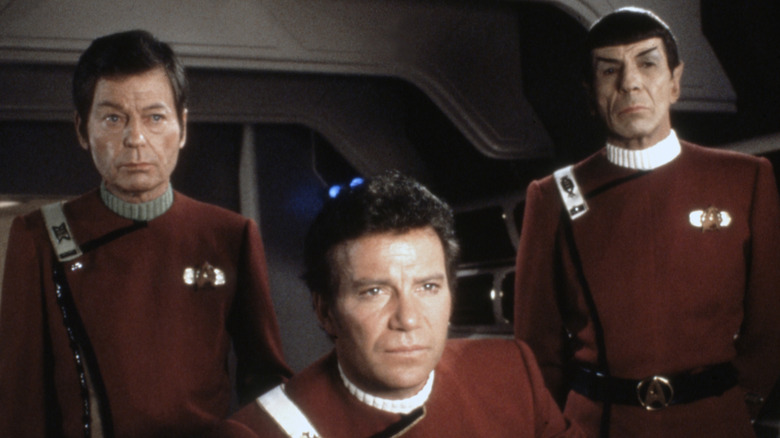
When looking at the best sci-fi movies of all time, the 1980s loom large. That decade saw the start of several soon-to-be iconic sci-fi franchises, the best installments of some ongoing franchises, and a number of standalone classics, all converging to form the perfect storm for a golden age of sci-fi on the big screen. You can throw a dart at a list of all the years in the '80s and hit one that has at least one all-time great — but even with all that, 1982 stands alone.
It is often said that it takes a few years into a new decade for that decade to truly begin, especially in terms of art and pop culture. So it stands to reason that 1982 would be the starting point for everything that was special about '80s cinema as a whole, which is certainly part of the reason '82 was such a fertile breeding ground for greatness. On top of that, it saw several rising filmmakers first finding their footings, just hitting their creative strides but not yet being fully swallowed by the Hollywood machine, which tends to bring with it a loss of a certain scrappiness for any filmmaker.
As to why sci-fi in particular saw so much excellence in '82, that becomes a bit more difficult to pin down. It's best to just examine the individual movies that best make the case for the year as the greatest for the genre, as they likely paint the full picture.
E.T. the Extra-Terrestrial
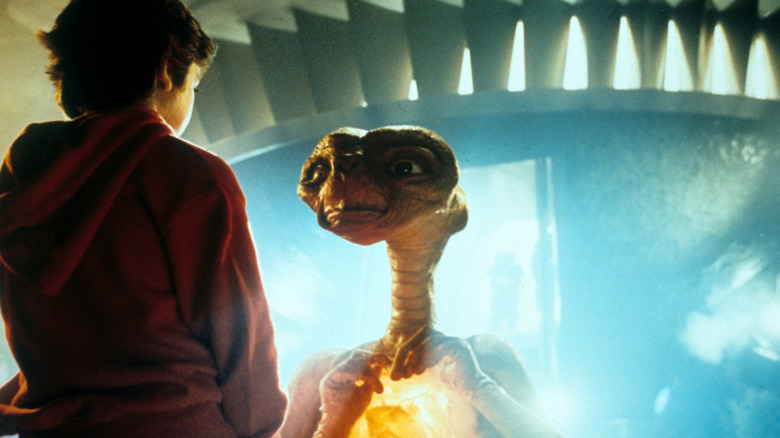
Before the 1980s, the bulk of family-friendly and/or kid-leaning sci-fi was on television — "Lost in Space," "Buck Rogers in the 25th Century," and so on, to say nothing of the many sci-fi cartoons. But when it came to movies, there seemed to be more of a trend towards sci-fi geared at grown ups. "Star Wars" went a long way in changing that, but even then, those movies weren't family movies in the traditional sense.
Of the many reasons "E.T. the Extra-Terrestrial" was groundbreaking, it being a traditional family movie — that happened to center around an alien from outer space — definitely broke new ground for sci-fi. That a kid is the main character was even more unusual for the genre, and in fact remains fairly rare for sci-fi movies to this day.
But "E.T." isn't just great because it blazed trails. It's also just a legitimately excellent, nearly timeless (beyond some dated gadgets) sci-fi adventure about a boy who finds an alien that subsequently bonds with him in more ways than he could've ever expected. It set a new bar for family movies that, more than 40 years on, is still only occasionally met, and almost never exceeded.
Blade Runner
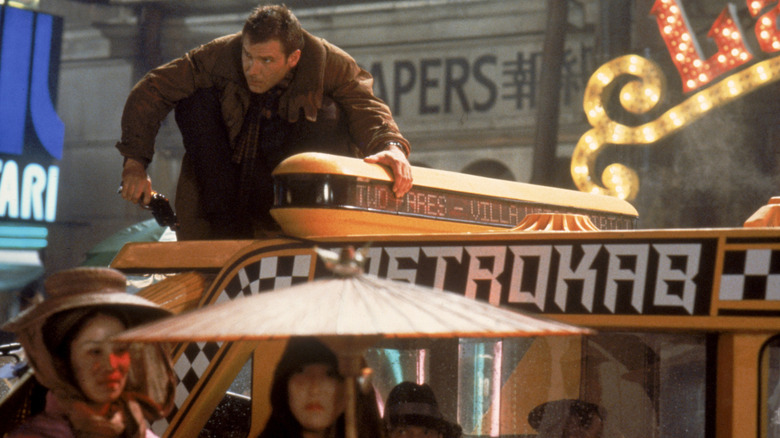
We have previously made the point that "Blade Runner" is the best sci-fi movie of all time, owing not only to its undeniable influence on the genre but also how incredibly well it executed on its creative ideas. And like so much great sci-fi, "Blade Runner" was met with a fairly tepid response upon its initial release and needed years of revisiting and reappraisal for the world to finally recognize its genius.
There is often a debate as to whether Han Solo or Indiana Jones is Harrison Ford's most iconic role, but Rick Deckard deserves to be part of that conversation as well. "Blade Runner" sees Deckard tasked with finding and taking down a group of rogue replicants: bioengineered humanoids whose purpose is supposed to be cheap labor. But the replicants became self-aware and didn't want to just be disposable worker bees anymore, and are rebelling in order to achieve free will. It's a concept that borderlines on cliche these days, but it was still novel when "Blade Runner" was released, and even more so when the Philip K. Book story on which it is based was released 14 years prior.
Ford brings his trademark cold grumpiness to the role of Deckard, particularly fitting since one of the great debates about "Blade Runner" is whether Deckard is a replicant himself. You know a sci-fi movie has done its job when people are still coming up with theories, and passionately arguing about said theories, decades after it is released.
Liquid Sky
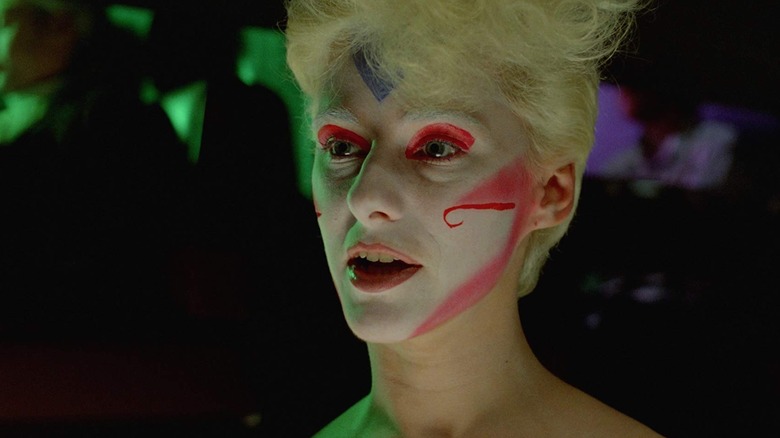
No, this isn't just some forced, obligatory hipster entry, a way to include at least one lesser-known film in order to prove our cred on this topic. In fact, "Liquid Sky" is the second-highest reviewed movie on this list, behind only "E.T." That is damned impressive, considering what undeniable and universally beloved classics it is up against.
Set smack dab in the middle of the New Wave club movement of music and pop culture, which was already big in Europe but had only just started to make its appearance in the U.S., "Liquid Sky" was modern and hip in a way that sci-fi seldom is. It arguably wouldn't be until "The Matrix" when another sci-fi movie would feel so cutting edge and of its moment. Not only that, but "Liquid Sky" wasn't afraid to have its alien invaders specifically target humanity's sexuality, centering on said aliens trying to harness the chemicals the human brain releases during climax.
On its surface, "Liquid Sky" seems to be a celebration of sex, drugs, and rock 'n roll wrapped in a cyberpunk fantasy. And it's plenty enjoyable to read it as such. But when you dig deeper, you'll find that it is also somewhat poking fun at those things — or at least, the way boring middle America looks at those things. There are multiple layers to peel back here, but part of the genius of "Liquid Sky" is that you can also just go along for the fun, neon-soaked ride and still have a blast.
Star Trek II: The Wrath of Khan
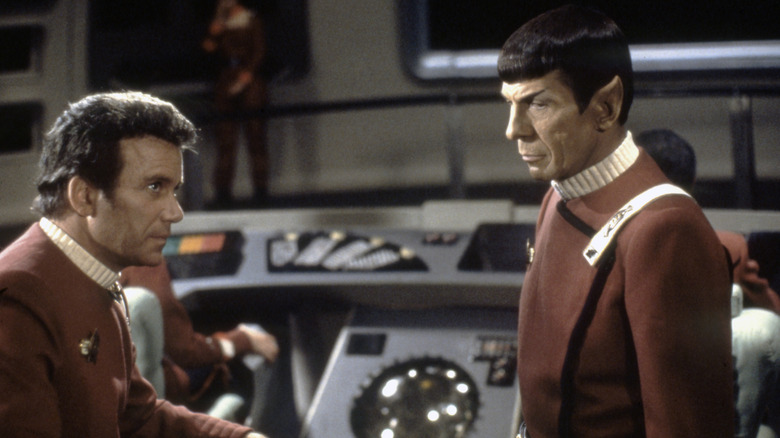
For "Star Trek" fans who didn't jump in until the era of "The Next Generation." "Deep Space Nine," and new films every few years, it's hard to fathom how many times the franchise came close to ending. The original TV show was nearly cancelled after the first season and only brought back through fan campaigning; even then, it only got three seasons of less than 100 episodes. And when it was first brought to the big screen via 1979's "Star Trek: The Motion Picture," it got poor reviews from critics.
Even Spock himself would've found it difficult to justify the logic of making a second "Star Trek" movie, but it's a good thing it happened. "Star Trek II: The Wrath of Khan" is incredible. It feels like the creative potential of the franchise finally being fully fulfilled. In fact, its creative and commercial success is generally seen as having saved the entire "Star Trek" franchise from ending right then and there.
One of the biggest issues with the original series is that it typically relied on a villain of the week format, which saw most new threats neutralized in the same episode in which they were introduced. "Wrath of Khan" brought back one such villain, the titular character from all the way back in Season 1 of the show, thus ushering the franchise into a new era of bad guys that come back and are battled over a prolonged period. This is not only a hallmark of "Star Trek" these days, but of any sci-fi brand that has been able to become a franchise.
The Thing
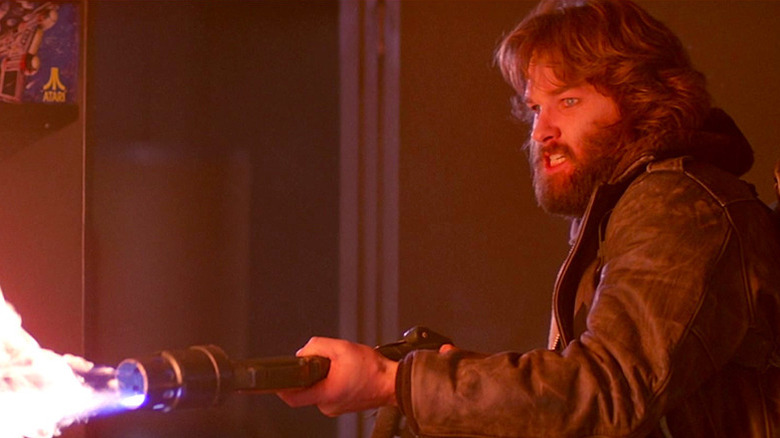
One sometimes overlooked subgenre of sci-fi is sci-fi horror, in large part because the "horror" tends to become the main descriptor. But John Carpenter's 1982 remake of "The Thing" not only deserves equal attention as both a sci-fi movie and a horror movie, but it is also in fact the best sci-fi horror movie of all time. Which makes sense, as Carpenter has proved a master of both the horror and sci-fi genres individually, so naturally he'd be the one to be able to merge them so effectively.
A masterclass in tension, much of what makes "The Thing" so effective for the first chunk of its runtime is the way it plays on the very identifiable themes of mistrust and paranoia. The premise: One of the people who have been brought together in a desolate arctic research station is actually a parasitic alien creature in disguise. It could be anyone, and in trying to suss that out, everyone immediately begins turning on one another, which is precisely what the alien is counting on.
Not to give too much away if you haven't seen it, but it must be noted that you do, in fact, eventually see the creature — and the fact that that doesn't ruin the whole thing, like in so many other movies of this ilk, is one of the most impressive things about "The Thing." It is a triumph of makeup, puppetry, and practical effects magic, making those scenes age better 40-plus years on than a CGI creature from even the 2010s.