

'70s Horror Movies That Still Hold Up Today
The 1970s was a great decade for horror. For a long time, the film industry had been governed by the so-called Hays Code, a system of censorship in place that controlled what could be shown on screen. The Hays Code prohibited things like violence and gore, even micro-managing plots to make sure the bad guys lost. There were strict rules actors had to follow in Old Hollywood that even governed their personal lives, not just their characters. The Hays Code fell in 1968, so by the time the '70s rolled around, filmmakers had begun to push the limits of what was acceptable in American cinema.
The new era of experimentation and boundary-pushing brought us some of horror's greatest auteurs crafting some of the genre's scariest villains. It was a decade of dastardly deeds on screen, helped along, no doubt, by the decade's famed drug culture. Some 1970s horror movies seem like relics of their time, but others feel as relevant as ever, and the movies you'll find below have very much held up over the years. All influential in their way, some of the films on this list launched franchises that continue today, while others have been remade, revisited, referenced, and rebooted numerous times.
The '70s pushed boundaries, but it was also the decade that birthed the blockbuster, turning cinemas into megaplexes focused on delivering maximum entertainment value. If you're looking for an education in 1970s horror, the movies on this list are must-watches that deserve their massive, lasting reputations as classics. Here are some '70s horror movies that still hold up today.
The Texas Chain Saw Massacre (1974)
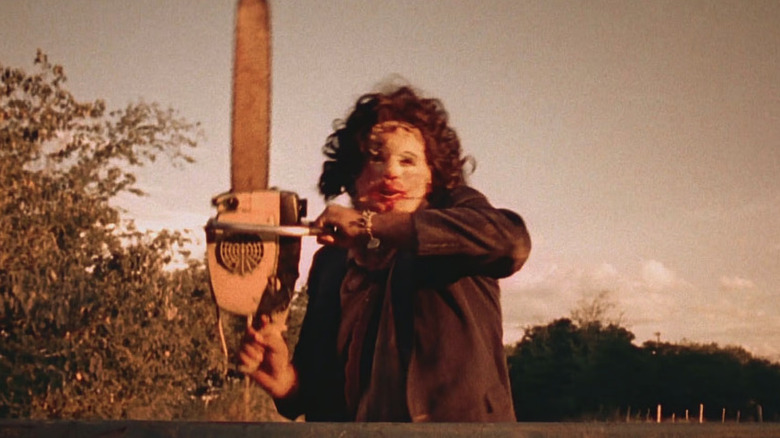
You're not alone if you need the entire "Texas Chainsaw Massacre" timeline explained, because this franchise has been stretched past its breaking point and then stitched back together again, not unlike the mask worn by its iconic villain. While most of the later sequels, prequels, remakes, and reboots have been pretty bad, though, the first installment in the legendary horror series very much still holds up on its own.
Tobe Hooper directed "The Texas Chain Saw Massacre" back in 1974, before pop culture had any concept of slasher villains as we currently understand them. That same year brought us "Black Christmas," but no one particularly cared about that movie's killer. It wouldn't be until "Halloween," four years later, that we'd get another slasher that birthed a horror icon as memorable as Leatherface. This is a movie about people who eat people, but it's also a movie about a young man desperate for the approval of his parents, and that makes it even more uncomfortable.
The original "Texas Chain Saw Massacre" is a well-made film, which might be surprising for people who expect a trashy exploitation flick like many other '70s horror movies. It is that, to be sure, but there's not as much blood or violence as you'd expect in that first film. Instead, revisiting the movie decades after its premiere, you're likely to be surprised by how downright elegant the filmmaking is. Some of the camera movements are beautiful, and the imagery resonates just as much now as it did then.
Jaws (1975)
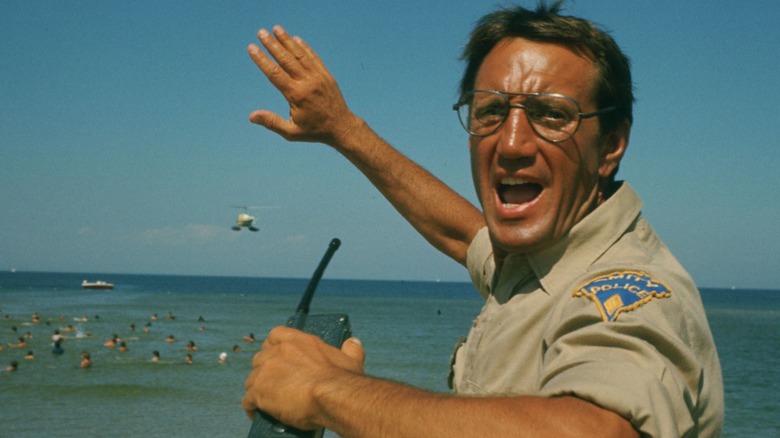
Many horror fans alive today can't even imagine what it was like to see "Jaws" in 1975, but we're still living in the aftermath of its release. Steven Spielberg's shark-attack monster movie essentially invented the concept of a "blockbuster" wholesale, becoming such a box-office sensation that scores of cinemagoers lined up down streets around the country, waiting for their turn to catch a glimpse of that scary shark and to hear that ominous cello sting.
In a 2026 interview, Spielberg reflected to Empire, "I haven't directed a horror film yet, and I've always wanted to, and someday I may." He's wrong, though, because "Jaws" definitely counts. Universal Studios is well-known for their classic monster movies — films like "Frankenstein," "Dracula," and "The Creature from the Black Lagoon" — and the shark in "Jaws" is scarier than those creatures ever were. There are few scenes in all of cinema as eerie as the anecdote about the sinking of the U.S.S. Indianapolis that Quint (Robert Shaw) tells his friends, and there are few jump-scares in horror history as effective as the severed head that pops out of a sunken ship. Those gnashing teeth are just a bonus.
"Jaws" isn't just a monster movie, though. It's also a horror movie about the bureaucratic nightmare that small-town American life had become, which is why the movie holds up today. Watching Amity Island's mayor (Murray Hamilton) keep the beaches open despite warnings from the experts that people are going to die, it's hard not to think about the failure of the government to handle just about every public health crisis that's threatened Americans in the half-century since "Jaws" first swam onto screens.
Carrie (1976)
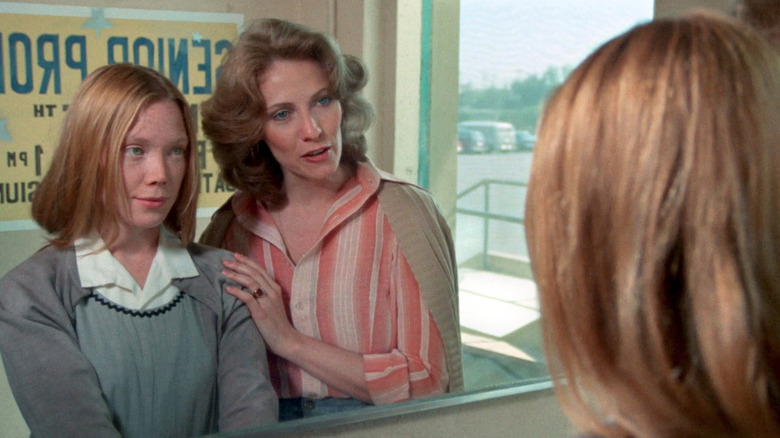
"Carrie" is an essential Stephen King novel that everyone should read at least once, and Brian De Palma's 1976 film adaptation is an essential horror movie that every horror head should watch. The movie starred Sissy Spacek as the titular teen, a girl who develops terrifying telekinetic powers shortly after experiencing her period for the first time. This is a terrible tale of high school hatred, a story of students who can't help but be cruel to their classmates, and that's what makes it as relevant as ever. Sure, the haircuts in "Carrie" may make you laugh, but bullying, it seems, never goes out of style.
That might be why "Carrie" is one of the most-adapted horror stories in recent memory. There have been numerous other adaptations of King's novel, a sequel with the clunky title "The Rage: Carrie 2," and even a splashy musical version that's been performed everywhere from Broadway to "Riverdale." Noted King aficionado Mike Flanagan is even in the process of crafting a TV version, and that's likely to be great, because few people understand King better than the director of "Gerald's Game," "Doctor Sleep," and "The Life of Chuck."
Still, the original De Palma film is the definitive version of "Carrie," as far as many fans are concerned. Between Piper Laurie's bravura turn as Carrie's ultra-religious mother Margaret, a goofy appearance from a pre-"Grease" John Travolta, and that frightening, frenzied prom sequence, the 1976 version of "Carrie" more than holds up.
Dawn of the Dead (1978)
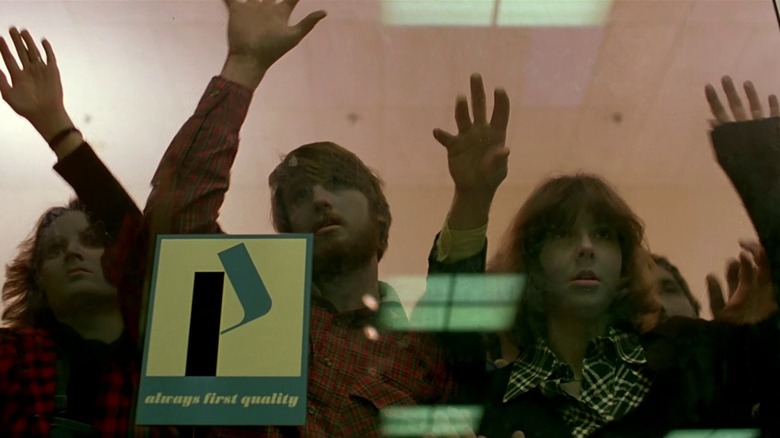
In 1968, George A. Romero's "Night of the Living Dead" reshaped horror tropes forever. Before Romero, zombies featured primarily in stories about mind control, and after Romero, zombies were almost always monsters that resulted from the dead rising from their graves. The original film was made on a shoestring budget, and while it launched his career, Romero consciously avoided doing another horror film for quite a while.
In 1978, however, he returned to the Pittsburgh area to film "Dawn of the Dead," a movie that expanded on the zombie outbreak from his original film. This time, Romero set the action inside the Monroeville Mall, turning his zombies into not just ravenous creatures, but walking metaphors. "Dawn of the Dead" resonates still today because it's not just a horror movie; it's a critique of consumerism run amok, a film as much about capitalism-crazed maniacs as it is about beings who hunger for brains. Romero knew that when mankind wants something, we become a mob, and some scenes in "Dawn of the Dead" could easily be mistaken for viral videos of crowds on Black Friday.
Zack Snyder remade "Dawn of the Dead" in the 2000s, applying those tropes to another era where people ran wild with consumerism. It's good! Still, the original film holds up, too. There's nothing quite like Romero's use of color and costuming, making it seem like the movie takes place in a weird kind of limbo, at once surreal and ultra-real.
Alien (1979)
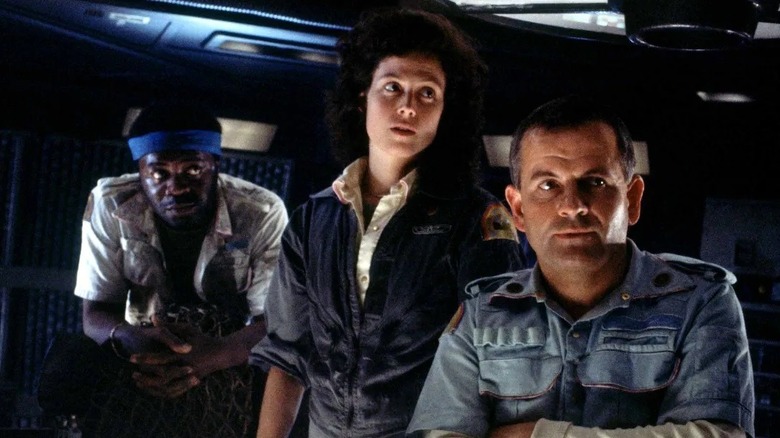
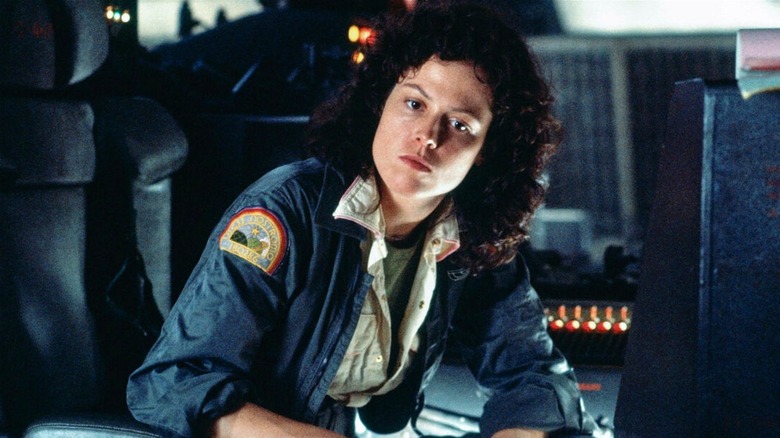
One of the best aspects of "Jaws" is the way Steven Spielberg teases the shark, refusing to give you the gory glory shots until the last act of the film. That's a format that Ridley Scott applied to "Alien," a horror movie that might get mis-categorized by people who insist it's not horror but science fiction. It's both! "Alien" is a monster movie and a haunted house movie, two tried-and-true horror genres. It just happens to have an extraterrestrial killing machine as its monster, and the haunted house in question is a spaceship. It still counts!
Like all of the movies on this list, "Alien" spawned a whole host of prequels, sequels, spin-offs, and rip-offs, but the original movie still plays as well as it ever has. The third act — when the Xenomorph is finally revealed in all its gruesome glory — is a maelstrom of noises, lights, alarm bells, screams, and, scariest of all, silence. There's very little in all of cinema that matches its intensity.
It's kept aloft by Sigourney Weaver's brilliant performance as Ellen Ripley, who is one of the best final girls in horror movie history. The fact that the movie is centered around such a strong woman even helps unlock its central metaphor. This is a movie about a penetration-threatening monster with several life cycles' worth of phallic protrusions, and it all takes place in a ship ruled over by a computer called MU/TH/UR , or "mother." In other words, this is a movie about the fear of sexual assault, of having your bodily autonomy stripped from you by a monster who wants to use you as an incubator for its young. It's as effective now as it was back in 1979.