

5 Box Office Bombs Turning 30 In 2026
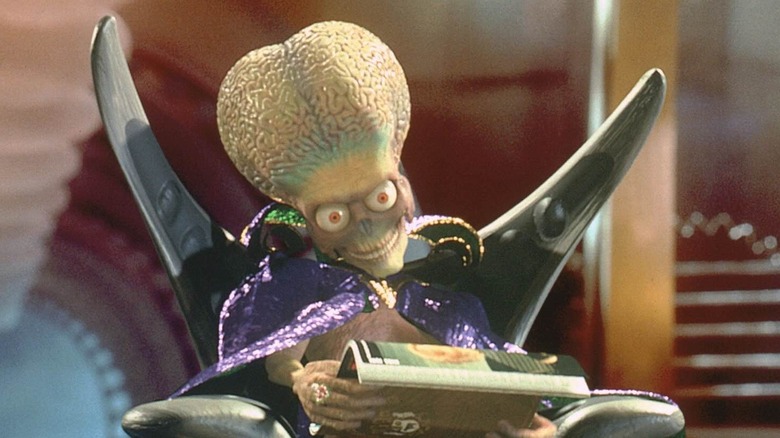
1996 was the year of the "Macarena" and "Always Be My Baby" blasting out of everyone's speakers. It was also the year the Summer Olympics descended on Atlanta, Georgia, and inspired sports legends like Lilia Podkopayeva. And then there were the year's movies. This was the year disaster movies dominated the cultural consciousness, as titles like "Twister" and "Independence Day" tore up both the Earth and box office records. People couldn't get enough of seeing houses, buildings, and landmarks getting obliterated by cutting-edge digital effects technology.
Other major box office hits like "The Birdcage," "Jerry Maguire," and "Scream" also helped define the year's cinematic landscape, drawing hordes of audiences to movie theaters. It was a successful year for multiplexes, but there's never a financially bulletproof year for cinema. Bombs are inevitable, and 1996 was no exception. The year of the "Macarena" delivered several flops that are turning 30 years old this year. Five of those financial misfires are especially fascinating to look back on during this momentous anniversary.
That fascination stems from a slew of different factors. Some reflect peak mid-90s Hollywood hubris. Others rebounded after this dismal box office run and have captured immense cult followings in the decades since their debuts. There's so much going on with these 1996 box office duds that are on the cusp of becoming 30 years old. Let's take a dive into the past, exploring the finer financial nuances of these 1996 motion pictures.
Escape from L.A.
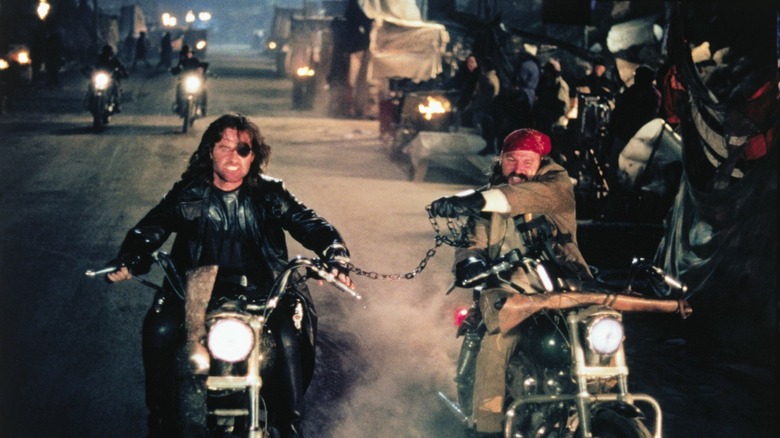
While not a massive hit, "Escape from New York" made a solid $25.24 million domestically in 1981. It may have been outgrossed by other, more forgotten films from that same year like "Only When I Laugh" and "Tarzan the Ape Man," but it was overall a financial success. A prime example of a B-movie that's actually awesome, "Escape from New York" could've been a natural start to a long-term franchise chronicling Snake's adventures. Such a follow-up, though, took ages to materialize. It would take 15 years for Snake to ride again into theaters for the 1996 feature "Escape from L.A."
This time, the action shifted to Los Angeles, which was just as seedy and dangerous as New York City. The hope was that absence made the hearts of moviegoers grow fonder and that there would be extra high levels of anticipation to see Snake again. Instead, this project crashed and burned, grossing only $25.4 million on a $50 million budget. On its opening weekend, "Escape from L.A." narrowly outgrossed the sixth weekend of "Independence Day," a reflection of how little impact this title was having on audiences.
Any future adventures for Snake were immediately shelved after this financial performance. In another timeline, an "Escape from New York" sequel could've been a moneymaker. It should've been made in a more timely fashion than 1996's flop "Escape from L.A."
The Phantom
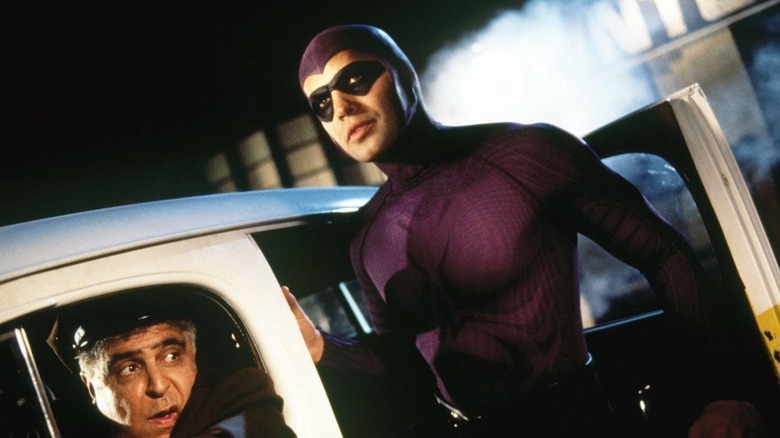
The mid-to-late 90s were not the greatest era for the American superhero movie. While "Blade" was a moneymaker, other titles in this field, like "Turbo: A Power Rangers Movie," "The Crow: City of Angels," "Spawn," and "Batman and Robin," struggled to break even. In hindsight, these were the darkest days before 2000's "X-Men" reaffirmed that "Blade's" box office success was no fluke and that non-"Batman" superhero movies could be big mainstream business. Before that moment, though, the superhero movie was plagued by flops and critical derision. Among those titles contributing to that perception was 1996's Billy Zane star vehicle "The Phantom."
Lee Falk's comic strip character The Phantom first appeared in February 1936, but it would take 60 more years for director Simon Wincer to bring the character to life in a major summertime movie. Hitting 2,159 theaters (then a mighty amount of multiplexes to launch a feature in) on June 7, 1996, with a $45 million budget, "The Phantom" was an instant flop with a dismal $5.07 million opening. No post-opening legs came to the rescue to save this feature, as it only amassed $17.22 million domestically.
The Phantom character didn't have enough cache with '90s moviegoers to make this movie adaptation a must-see event. Plus, other retro-superhero movies like "The Rocketeer" and "The Shadow" diluted this period piece's distinctiveness. Unfortunately, "The Phantom" only reinforced that the mid-90s weren't a great time for superhero fare financially.
Mars Attacks!
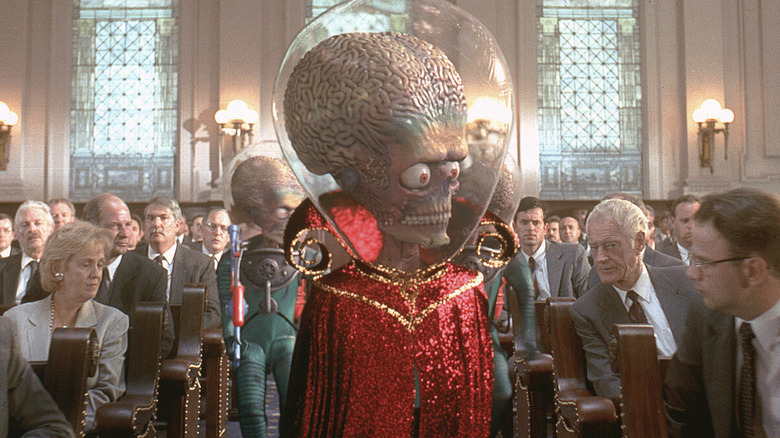
During his initial run as a director, Tim Burton's specific brand of weirdo movies were a reliable moneymaker. "Beetlejuice," the first two "Batman" installments, "Edward Scissorhands," Burton had a talent for making extremely offbeat projects something wider audiences could latch onto. However, in 1996, he hit a major financial wall trying to make his passion projects lucrative. That was the year "Mars Attacks!" hit theaters and struggled to make its specific style of lunacy something the wider public was interested in.
Despite scoring a sprawling cast, a massive budget (which went towards lots of special effects wizardry), and a prime December release date, "Mars Attacks!" was largely ignored by audiences. It only grossed $37.77 million during its domestic run, which included a domestic bow where "Mars" got trounced by the significantly cheaper Tom Cruise movie "Jerry Maguire." Its lackluster numbers never rebounded, with "Mars Attacks!" getting overshadowed at the box office by titles like "Scream" and "Michael."
With "Independence Day" arriving a few months earlier, audiences had already had their fill of alien invasion spectacle. Plus, the retro vibes of the film weren't as appealing as more distinctly modern December 1996 fare like "Scream." Ironically, "Mars Attacks!" is very much one of those box office bombs from the '90s that are actually worth watching. Its madcap mayhem and amusingly warped use of famous faces is reliably entertaining. However, those qualities weren't enough to make this project another one of Tim Burton's lucrative offbeat ventures.
Bio-Dome
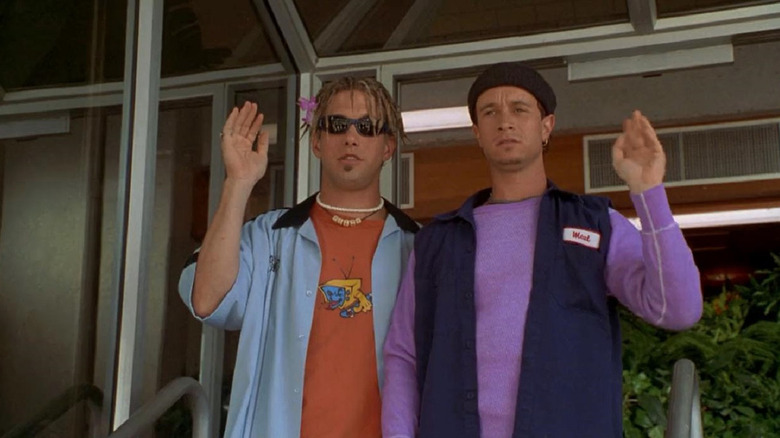
Two-time Oscar-nominated cinematographer Phedon Papamichael has lensed for a bevy of impressive auteurs, including Gore Verbinski, Wim Wenders, James Mangold, Alexander Payne, and Carl Franklin. In his first decade of working as a feature film cinematographer, though, Papamichael also worked as the cinematographer on one of the worst movies ever made: "Bio-Dome." This "Dumb and Dumber" pastiche about two knuckleheads who accidentally get locked up and isolated from society in a science experiment for 12 months starred Pauly Shore and Stephen Baldwin. Critics were not amused by "Bio-Dome's" vision of wackiness.
On the contrary, they were outright hostile, and the staggeringly bad reviews that greeted "Bio-Dome" informed a toxic reception around the movie that endures to this day. Sometimes, films can achieve box office lift-off even with dreadful critical marks. Just look at ten notable movies that were box office hits despite terrible reviews. However, "Bio-Dome" was very much not one of those projects. Instead, it could only muster $13.4 million domestically, an anemic gross reflecting Shore and Baldwin's limited allure as motion picture leading men.
Not even the presence of pop star icon Kylie Minogue in "Bio-Dome's" supporting cast could get people to shell out money for this property theatrically. "Bio-Dome" was a box office dud that quickly became a blemish on Phedon Papamichael's largely impressive filmography. However, in terms of small victories, "Bio-Dome" did, among '90s "Dumb and Dumber" knock-offs, much better financially than "Meet the Deedles."
James and the Giant Peach
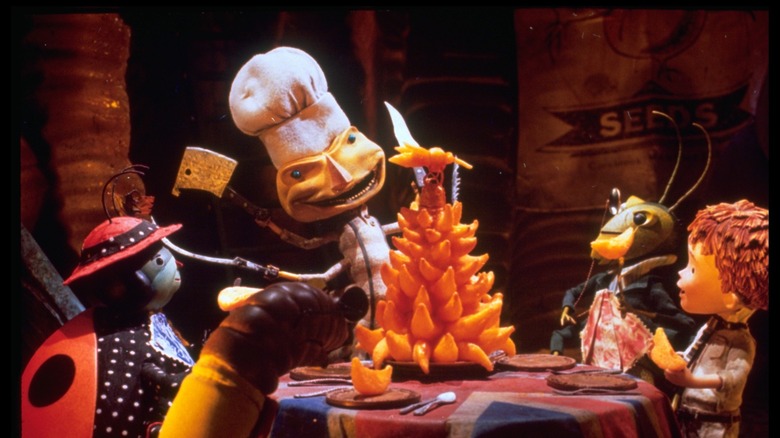
Today, director Henry Selick's film adaptation of "James and the Giant Peach" has cultivated a largely positive reputation. It's often ranked as one of the most beautiful stop-motion animated films ever, while folks ranking Roald Dahl book adaptations from worst to best often have "James and the Giant Peach" towards the top. However, it took time for this darker project to establish that legacy. Initially, "James and the Giant Peach" was a financial misstep for distributor Walt Disney Pictures when it dropped in April 1996.
In its original domestic run, "James and the Giant Peach" grossed $28.9 million, already a disappointing sum given that it cost $38 million to make. However, more pressingly, this was only a little more than half of the $50 million the last Selick Disney movie, "The Nightmare Before Christmas," made domestically in its original 1993 theatrical release. Given that "James and the Giant Peach" was based on a beloved Roald Dahl text and had a slightly lighter tone than "Nightmare Before Christmas" (it actually went out under the Walt Disney Pictures banner from the get-go, unlike "Nightmare"), Disney had to be hoping for more financially.
Thankfully for Selick and all the artists who put so much effort into "Peach's" stop-motion wizardry, the film's story didn't end with this box office run. Eventually, "James and the Giant Peach" amassed a sizeable fanbase that ensured its financial performance was nothing more than a distant memory.