

5 Sequels That Killed Animated Movie Franchises
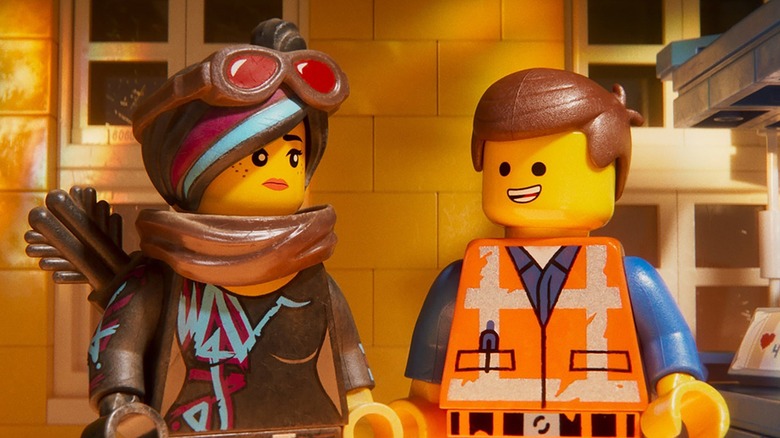
Not so long ago, theatrical animated movie sequels were a rarity. As noted in Charles Solomon's "The Art of Toy Story 3," before 1999's "Toy Story 2," this sparsely populated domain largely housed flops like "The Rescuers Down Under" and "An American Tail: Fievel Goes West." Of course, that has radically changed in the 21st century. Once "Shrek 2" became the third biggest movie domestically in history at the time of its release, animated sequels were no longer getting sent straight to VHS and DVD. They were big business. Today, the majority of the biggest animated features ever worldwide are animated sequels like "Inside Out 2" and "Ne Zha 2."
Entire studios, like Illumination and DreamWorks Animation, have even built their libraries heavily on franchises that can regularly produce new movies. However, just because these titles are more common doesn't mean every single follow-up becomes a moneymaker on par with "Incredibles 2." On the contrary, there have been multiple instances where animated movie sequels underwhelmed enough financially to halt a previously thriving franchise dead in its tracks. Five especially potent examples of sequels that killed animated movie franchises reflect how precarious these kinds of movies can be.
Produce the right kind of animated movie sequel and you get a hit like "Zootopia 2." These five films, though, are the other side of the coin. Rather than printing money, they indicated that a family-friendly universe had fully run its course. Animation studios beware — your next sequel could end up like these five cautionary tales.
The Secret Life of Pets 2
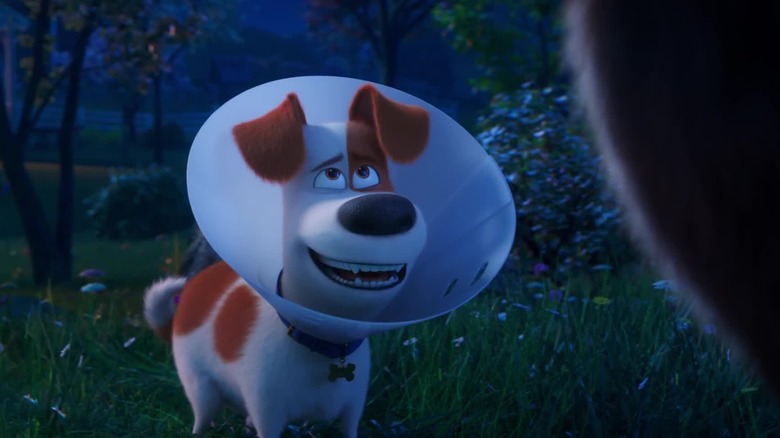
When that first "The Secret Life of Pets" was unleashed on audiences back in July 2016, it wasn't just a solid hit. It was a box office behemoth that became one of the highest grossing original films in history. Bringing in $886 million worldwide, all these New York City critters were not going to have just one adventure. Illumination, the house that "Despicable Me" built, was going to promptly get a sequel going in hopes of recapturing that box office success. Given how consistently lucrative the "Despicable Me" movies have been, it wasn't a far-fetched idea to imagine "The Secret Life of Pets 2" taking the box office by storm.
Unfortunately, this title debuted as so many summer 2019 blockbusters were flopping. Though by no means a money-loser, "Pets 2" was a disappointment that didn't reach its fullest financial potential. Its $446.44 million worldwide haul was roughly half of what the first movie made globally, while its $159.2 million domestic total made it the first fully computer-animated Illumination feature to make under $200 million domestically. Though it only cost $80 million to make and turned a profit theatrically, these weren't figures indicating a franchise that would continue for years to come.
While some ardent fans of these films still wondered whether or not there will be a "Secret Life of Pets 3," it currently looks like this project is shelved. With no recent news on "Pets 3," it seems that these characters have gone to a nice farm upstate.
The Lego Movie 2: The Second Part
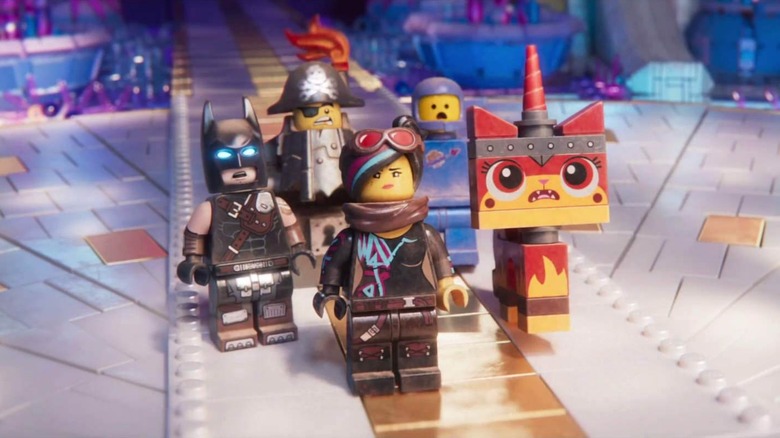
Once "The Lego Movie" became a hit in 2014, Warner Bros. moved quickly to further exploit the property. "The LEGO Batman Movie" and "The LEGO Ninjago Movie" each debuted in theaters in 2017. Finally, in February 2019, a proper follow-up to the original "Lego Movie" premiered in the form of "The Lego Movie 2: The Second Part." In between the two "Lego Movie" installments, Chris Pratt (who starred as a plucky Lego minifigure named Emmet) had enough time to play Star-Lord in three different Marvel Cinematic Universe properties. That lengthy wait didn't do "The Second Part" any favors in its box office run.
Instead, this production only grossed $105.8 million domestically and $192.3 million worldwide. This meant the sequel not only made significantly less than its predecessor, but also failed to double its $99 million budget. Suddenly, a property that was previously a cornerstone of the Warner Bros. empire was now yesterday's news. Unsurprisingly, Warner Bros. and Lego parted ways when it came to new original movies less than a year after "The Second Part's" underwhelming box office. Lego has since tried various times to get new Lego movies off the ground at Universal Pictures to no avail, save for the standalone 2024 arthouse documentary "Piece by Piece."
Kids and adults alike remain as captivated as ever by Lego minifigures. However, when it comes to the "Lego Movie" franchise, that property has been gathering dust.
Happy Feet Two
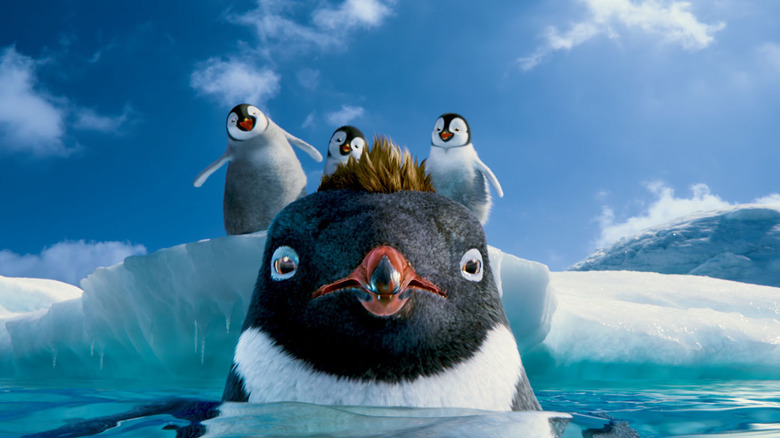
For so many years, the original "Happy Feet" was the biggest computer-animated movie not from an animation studio owned by either Disney or Universal. That immense box office success spoke not only to how popular penguins were in the mid-2000s, but also how much "Happy Feet" as a standalone movie had resonated with people. Warner Bros. Pictures wasn't about to let that feature and its immense financial pull remain a one-off. Five years after "Happy Feet," those crooning penguins returned for "Happy Feet Two," which focused on a new generation of penguin chicks navigating feeling like outcasts.
"Happy Feet Two," though, fell off steeply from its predecessor's box office sum. Whereas the original "Happy Feet" was by far the biggest family movie attraction in November 2006, this follow-up opened in a crowded field for kids fare that also included "Hugo," "The Muppets," and "Puss in Boots." Thus, "Happy Feet Two" only grossed $64 million in its lifetime domestic gross, less than $2 million more than the original "Happy Feet" amassed in its first seven days of North American play. With only $95.18 million from overseas markets, "Happy Feet Two" was a total financial bust.
After this project, the "Happy Feet" franchise went on ice (no pun intended) and Warner Bros. shifted focus to productions originating under its newly-created Warner Animation Group label (like "The Lego Movie" and "Storks"). At least this saga will always have the initial installment's impressive box office records.
Sherlock Gnomes
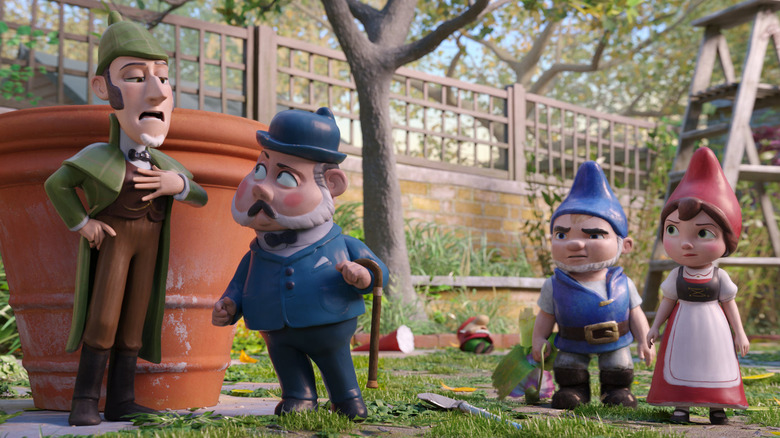
Elton John has never minced words about what a struggle it was to make "Gnomeo & Juliet." On the surface, this 2011 animated film would seem like just a routine animated family movie. However, it took ages for this project to come to fruition. During that time, "Gnomeo" survived several regime changes at Disney and shifts in the studio's animated cinema priorities. There were even times where it was reported that "Gnomeo & Juliet" was outright canned. John, though, kept believing in the project, partially because of him being a father and also because he thought his songs would excel in a "Romeo and Juliet" story. Though it became a box office success, the "Crocodile Rock" singer has alleged that Disney refused to congratulate or celebrate "Gnomeo's" financial triumphs.
Given how long Elton John spent making "Gnomeo & Juliet" a reality, it isn't surprising that he wanted to keep this universe going. Equally unsurprising is that Disney didn't return for the follow-up, "Sherlock Gnomes." Paramount Pictures handled this project, which hit multiplexes a whopping seven years after its predecessor. Unsurprisingly, any heat surrounding "Gnomeo" had long evaporated. "Sherlock Gnomes" was a box office disaster, grossing only $90.4 million worldwide, less than "Gnomeo's" domestic total.
Much like various legacy sequels that flopped at the box office, "Sherlock Gnomes" was a follow-up nobody really asked for. It provoked neither nostalgia nor general interest from the moviegoing public. Thus, not even Elton John's love for the "Gnomeo & Juliet" universe could keep this franchise going beyond the box office dud "Sherlock Gnomes."
The Penguins of Madagascar
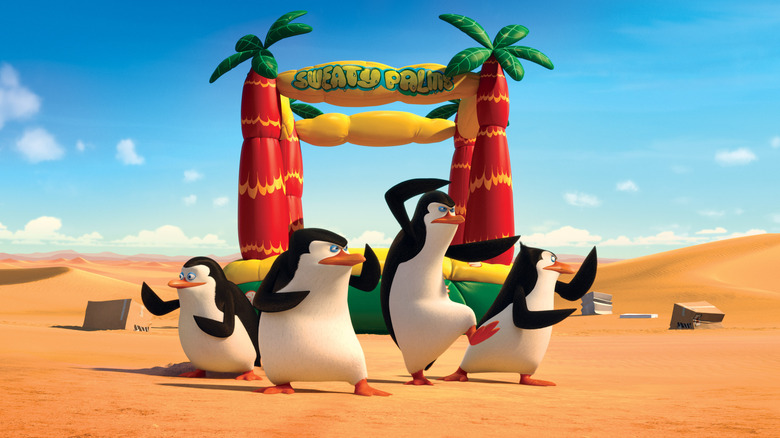
The first three "Madagascar" movies each made between $180 and $216.39 million domestically. This franchise's core staples, like energetic atmosphere, goofy gags, and things only adults notice in the "Madagascar" films, kept this DreamWorks Animation franchise thriving at the box office. It's no surprise, then, that DreamWorks opted to not only keep the "Madagascar" saga going, but find ways to branch it out into other potentially lucrative motion pictures. This is how the spin-off title "Penguins of Madagascar" was born. Skipper and the other three penguins had already headlined a Nickelodeon TV show, and now it was time for a (standalone) motion picture.
Unfortunately, pivoting to a wacky side-adventure focusing just on these critters didn't prove a recipe for box office success. Opening over Thanksgiving 2014, "Penguins of Madagascar" flopped with a disastrous $83.85 million domestically. This made "Penguins," at the time, the third lowest-grossing CG-animated movie ever from DreamWorks in North America, only ahead of "Flushed Away" and "Turbo."
There isn't a single reason why certain DreamWorks Animation movies flop. For "Penguins," it seems to have simply been that this feature didn't look engaging enough for non-family audiences, as well as competition from titles like "Big Hero 6." Inspiring a $57 million loss for DreamWorks Animation, "Penguins of Madagascar" ensured that the entire "Madagascar" franchise has seen been shelved. The good box office times for this saga came to an abrupt, grisly end with this ill-advised spin-off.