

5 Sci-Fi Movie Flops That Changed The Genre Forever

When we think about the most important science fiction films of all time, big, epic blockbusters immediately spring to mind. "Star Wars" amazed audiences who saw it in 1977 and revolutionized the genre with its tale of Luke Skywalker and Darth Vader in a galaxy far, far away; "Avatar," the 2009 saga of the blue-skinned alien Na'vi protecting the planet Pandora from human colonizers, made over $2 billion at the box office and stands tall as the highest grossing film of all time.
Of course, box office alone doesn't define a movie's legacy. A film can make a billion dollars and still be a flash in the pan (does anyone actually remember the plot of "Furious 7" or "Transformers: Dark of the Moon"?), and sometimes box office bombs leave the biggest impacts. This is especially true for science fiction films, which by their very nature, are often concerned with future worlds, technologies, and even the evolution of human consciousness.
The following films were considered box office flops upon their release, but all have transformed the genre in inescapable ways. While a few of have justifiably faded from memory, remembered only as cautionary tales for studio executives, others have become genuine sci-fi classics that continue to shape the imaginations of fans and filmmakers all over the world.
Tron
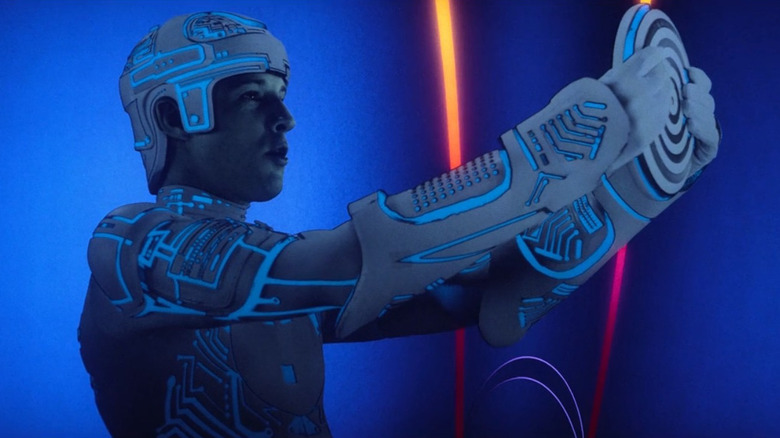
Today, it's virtually impossible to imagine science fiction films like "Project Hail Mary," "Avatar: Fire and Ash," or "Dune: Part Three," without some degree of computer-generated imagery. In 1982, however, CGI was brand new and a major artistic risk. "Tron," director Steven Lisberger's fantasy of a virtual world inside video games, was revolutionary in its combination of live-action footage and animation, with approximately 15 minutes of the film fully computer-generated.
Starring Jeff Bridges as Kevin Flynn, a software engineer uploaded into the computer world called the Grid, "Tron" was released by Disney in hopes of broadening the studio's appeal to adult audiences. The film was a financial disappointment, with the negative reaction causing a steep drop in Disney's 1982 stock. Nevertheless, "Tron" had its defenders (in his four-star review, critic Roger Ebert called it "brainy, stylish, and fun"), and a cult following rallied around its groundbreaking visuals and composer Wendy Carlos's dazzling electronic score.
"Tron" inspired a generation of artists who would change science fiction — and Hollywood — forever. In the 2002 documentary "The Making of Tron," Pixar's John Lasseter affirmed that it was "one of the milestones of computer animation," and that "without 'Tron,' there would be no 'Toy Story.'" In the decades since its release, Disney has repeatedly tried to spin "Tron" into a film franchise equal to the CGI-enhanced blockbusters it inspired, with decidedly mixed results. But who knows how many science fiction filmmakers may be influenced by "Tron: Ares" in 40 years?
John Carter
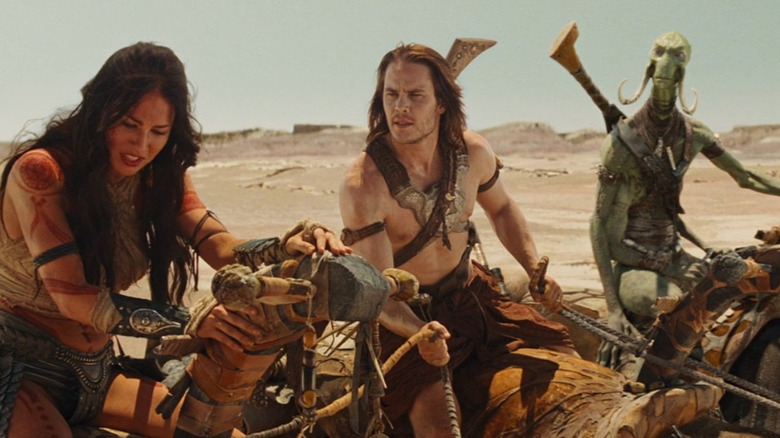
Before Luke Skywalker, there was John Carter, the Civil War veteran turned interplanetary warlord created by "Tarzan of the Apes" author Edgar Rice Burroughs. The pulp fiction adventures of Carter and Princess Dejah Thoris on the planet Mars (also known as "Barsoom") left an incredible impact on science fiction, from "Star Wars" to "Avatar." In 2012, Disney finally brought Barsoom to the big screen. Directed by "WALL-E" maestro Andrew Stanton and starring Taylor Kitsch, "John Carter" was meant to be Disney's next mega-franchise.
Instead, "John Carter" was one of Disney's biggest live-action failures, forcing Disney to take a $200 million write-off. The online autopsies of "John Carter" were swift and brutal, blaming its failure on a disastrous marketing campaign, including a teaser trailer that was low on action and failed to mention Carter's sci-fi legacy or Stanton's Pixar hits.
Then there is John Carter himself. A century after his creation, the character is no longer a pop culture juggernaut; decades of filmmakers remixing the tale of a roguish warrior and a space princess on a desert planet made the original seem dull and unoriginal. John Carter's legacy now casts a shadow over the genre. According to The Hollywood Reporter, its failure was "the moment Disney became the servant of sure bets," prioritizing a cinematic slate of proven hits, sequels, and remakes. "John Carter" was supposed to be Disney's "Star Wars." Mere months after it bombed, Disney bought "Star Wars."
Blade Runner
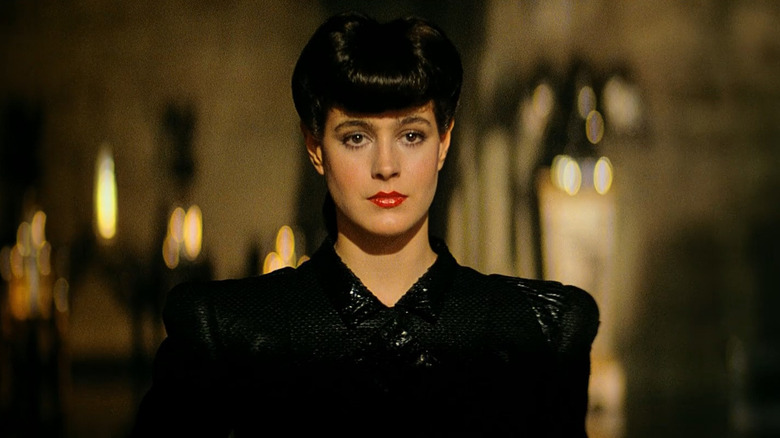
Arguably no film of the 20th century has influenced science fiction more than "Blade Runner," Ridley Scott's neon-stained and noir-tinged vision of the future. Adapted from the novel "Do Androids Dream of Electric Sheep?" by Philip K. Dick, the film is set in a dystopian Los Angeles where former "blade runner" Rick Deckard (Harrison Ford) is charged with eliminating five escaped replicants: artificial humanoids created for off-world slave labor. Deckard's hunt is complicated by his romance with Rachael (Sean Young), another replicant — and the growing suspicion that he may be a replicant, too.
Released in 1982 – a year crowded with sci-fi classics like "The Thing," "E.T. the Extra-Terrestrial" and the aforementioned "Tron" — "Blade Runner" initially suffered from a compromised cut featuring a studio-mandated happy ending and voice-over narration by a bored-sounding Ford. The film underperformed theatrically, but its reputation rapidly grew among cinephiles for its uniquely stylish, synthesizer-scored world of flying cars, punk cyborgs, and forbidden love.
The 1992 release of a re-edited "Director's Cut," followed in 2007 by Scott's definitive "Final Cut," has cemented "Blade Runner" as part of the science fiction canon and the ultimate cyberpunk film. Atmospheric and existential, its influence on film, television, music, video games, and anime is almost impossible to quantify, with works as varied as "Ex Machina," "Cowboy Bebop," and "Cyberpunk 2077" indebted to it. To many, "Blade Runner" is the best science fiction film of all time.
Ghost in the Shell
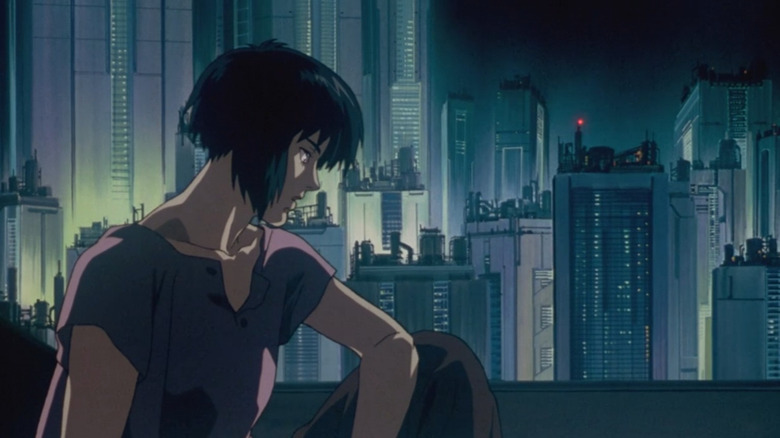
When sci-fi fans hear the words "Ghost in the Shell" and "flop," they probably think of the 2019 live-action film starring a miscast Scarlett Johansson. What they might not realize is that its inspiration — a cyberpunk anime masterpiece now ranked among the best sci-fi movies of all time – was considered a financial disappointment when it was released in 1995. Adapted from Masamune Shirow's manga series, "Ghost in the Shell" imagines a future where technological enhancements are common (the human spirit is the "ghost" inside a robotic "shell"), and the cyborg Major Motoko Kusanagi is on a mission to stop a cyber-brain hacker called The Puppet Master.
Combining 2D animation with cutting-edge computer graphics, "Ghost in the Shell" director Mamoru Oshii expanded on the manga's philosophical themes; the result was a strikingly beautiful film more interested in the meaning of human consciousness than in cool robot fights (but the robot fights are still pretty cool). Making only $10 million at the global box office, "Ghost in the Shell" was, like many sci-fi cult pics, rediscovered on home video, and it became one of the first anime films to break through to western audiences.
That audience included filmmakers Lana and Lily Wachowski — "Ghost in the Shell" was a major influence on "The Matrix" and its many imitators, green digital rain and all — as well as "Avatar" director James Cameron, who praised Oshii's film (via The Guardian) as "a stunning work of speculative fiction."
Mars Needs Moms
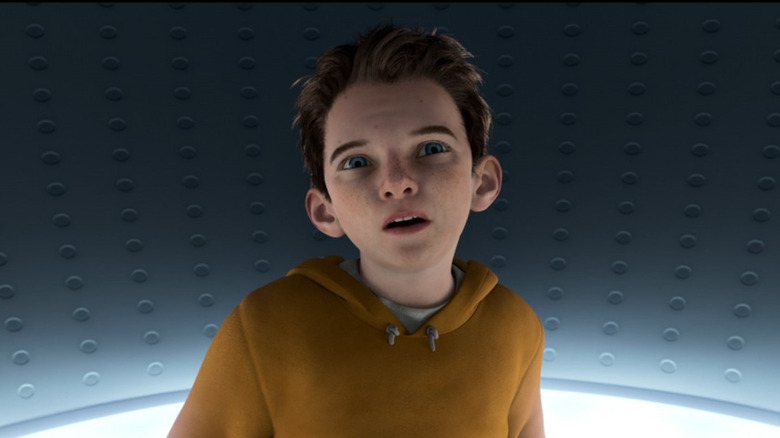
"Mars Needs Moms" is a rare type of box office bomb, a movie so bad it took an entire animation style down with it. The story of Milo, a young boy (physically performed by Seth Green but dubbed by Seth Dusky) who only learns to appreciate his mother (Joan Cusack) after she's kidnapped by killer aliens, "Mars Needs Moms" was one of the final gasps of motion-captured animated films.
Pioneered by "Back to the Future" director Robert Zemeckis and his ImageMovers Digital production company, motion-capture animation used state-of-the-art 3D technology to digitize the movement and facial expressions of performers. The results, as seen in 2004's "The Polar Express" and 2007's "Beowulf," were highly detailed and hyper-realistic, but with one major drawback: they were intensely creepy. As the Village Voice stated in its review, "Its characters boast the waxy complexions, unreal movements, and dead eyes of mannequins come to surreal, energetic life."
While "The Polar Express" has managed to become a minor Christmas classic, audience goodwill towards mo-cap animated films was mostly spent by 2011, with "Mars Needs Moms" making a paltry $39 million worldwide. Also dooming the film? Disney's announced closure of ImageMakers Digital in March 2010, nearly a full year before "Mars Needs Moms" crash-landed in theaters. Visually upsetting and too dark for younger children (that whole "killer aliens kidnap Mom" plot), "Mars Needs Moms" effectively killed this style of animation, with announced adaptations of "Yellow Submarine" and "The Nutcracker" biting the space-dust.