

5 Best Movies With Late Title Card Drops
There are countless ways that motion pictures can subvert expectations. The greatest movie plot twists of all time are vibrant examples of this reality, as these titles pulled the rug out from under viewers to deliver gasp-worthy developments. There's also the unique ways movies can play with the images and public personas of famous movie stars, such as having nice everyman Jimmy Stewart play darker roles in various Alfred Hitchcock films like "Vertigo." Other features have surrealistic imagery that contorts and upends the de facto visual aesthetics that most movies adhere to.
With all these and countless other possibilities for movies to play around with, it feels like a waste for a feature to just adhere to the rules and give people what they already expect. Subverting standards can even materialize in something as simple as movies nestling a title card drop deep into a production's runtime. Typically, title cards fill the screen just a few minutes into a movie. Some features, though, opt to deliver these titles in a more creative fashion. These five best movies with late title card drops illustrate how this maneuver functions, as well as how creative it can be.
Through something as simple as just delaying a title's entrance, these movies uncovered unique ways of surprising viewers, reinforcing individual creative aesthetics, and executing immense showmanship. These five films didn't bend to the rules and instead gave viewers the unexpected. More cinema should take a cue from these movies and their title card reveals.
Babylon
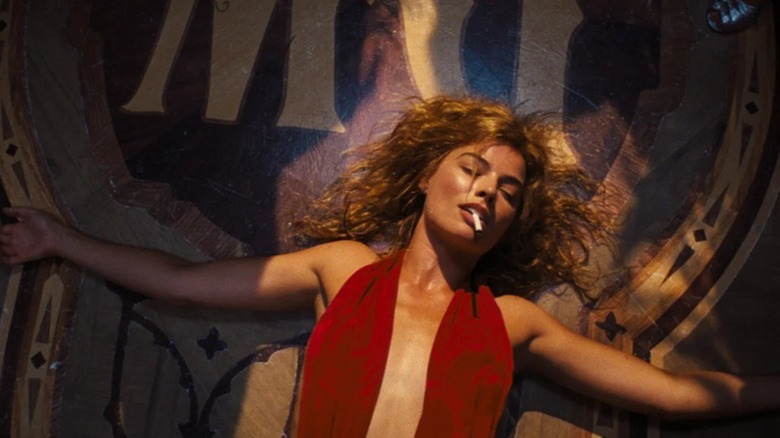
Damien Chazelle's criminally underrated "Babylon" hits the ground running as audience point-of-view protagonist Manny Torres (Diego Calva) stumbles into a massive party, where he discovers fellow leads Nellie LaRoy (Margot Robbie) and Jack Conrad (Brad Pitt). From here, the viewer is flooded with all kinds of debauchery, sexually titillating cabaret numbers, and even an elephant stampeding through the party. Composer Justin Hurwitz sets all the mayhem to the tune of his original pulsating track "Voodoo Mama," which really amplifies the partygoing atmosphere and makes the audience feel like they're in the middle of this cocaine-lathered chaos.
The whole cold open ends with Torres bringing Conrad home and a hint that this normal, everyday guy might just have a long-term future in the nascent days of the film industry. Suddenly, 32 minutes into this project, "Babylon's" title card consumes the screen. It's a bold, mic-drop moment signaling to people just how expansive "Babylon" is.
Look at the tidal wave of mayhem that's manifested before "Babylon's" title even flickers on screen, and just imagine how much chaos is still in store in the rest of the movie. Plus, the title coincides with Torres firmly committing himself to sticking around and trying to make it in a place that lives up to the classical definition of Babylon (a city where opulence and rule-breaking was the norm). In other words, the title card mirrors Torres' newfound ambitions. Beyond lending insight into Torres, this form-breaking title card reaffirms "Babylon's" dedication to enthrallingly upending expectations.
RRR
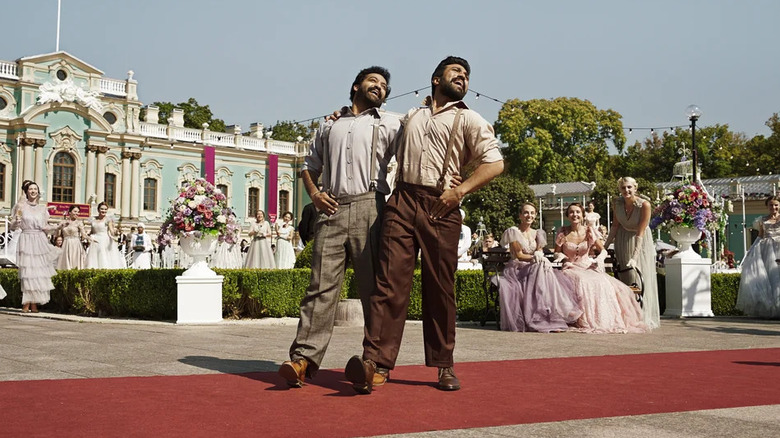
The 10 most exhilarating scenes in "RRR" are just the tip of the iceberg when it comes to all the maximalist and transfixing joys that this S.S. Rajamouli directorial effort provides. Long after "RRR's" best picture snub left its fans seeing red, the film's incredibly impressive artistry has endured. In the years since its release, there's truly never been another movie like this one. Rajamouli's gift for epic storytelling meant "RRR" was a one-of-a-kind miracle you don't experience every day.
Among "RRR's" idiosyncratic qualities is when, in its 187-minute runtime, its title card drops. Here, it takes roughly 40 minutes before the full title comes on-screen. Before then, three more title cards delineate when important prelude segments are beginning and ending. "The Story," "Fire," and "Water" are the tags that precede key sequences, with the solitary R's in each word getting emphasized. These really build up anticipation for the final title (which is translated to mean "Rise, Roar, Revolt" in many territories) thanks to the prominence of each of those R's.
Once the title card does drop, it's like a culmination of all the prologues that have built up to "RRR's" proper story. Rajamouli and company also make sure the title card is executed with real flair and showmanship. With such vibrant panache, it's more than worth the wait to see this title card. Leave it to "RRR" to even make the deployment of on-screen text something riddled with absorbing flair.
Drive My Car
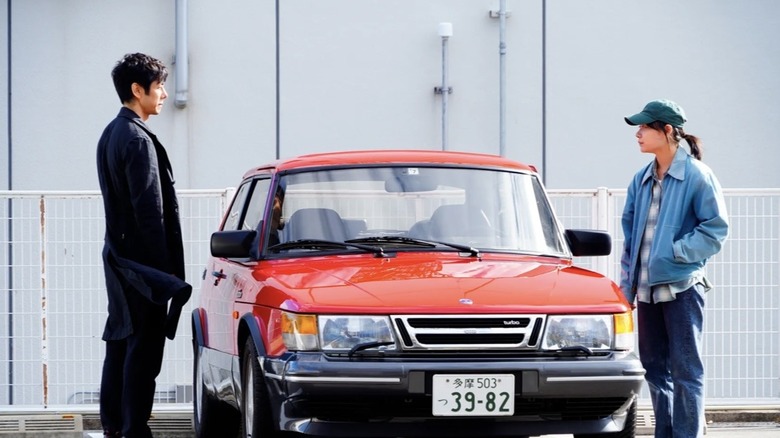
Writer and director Ryûsuke Hamaguchi's masterful observational filmmaking immediately makes "Drive My Car" something special in how it chronicles the normal life of stage director and performer Yūsuke Kafuku (Hidetoshi Nishijima). His wife Oto, a fellow artist, is a core part of both his life and creative process. However, these staples of his existence come crumbling down once he discovers that Oto is cheating on him and he's in danger of losing his eyesight. Shortly after these devastating developments, Oto suddenly passes away, throwing Kafuku's life into further chaos.
Hamaguchi then flashes forward a few years later, with the despondent Kafuku traveling to Hiroshima to helm a stage play. It's here that "Drive My Car's" title finally comes up, functioning as a way of suggesting a split between Kafuku's past and present. Before the title appears, we witness the trauma that quietly torments his mind every day. After it flickers on-screen, viewers watch Kafuku encounter a series of characters who are also navigating their own complexities and hardships. The late-arriving title, then, provides a barrier between yesteryear's isolation and the present's hopes for subtle connections.
There's simply no end to the reasons that "Drive My Car" is one of the 13 best Japanese films of all time. Among its greatest qualities, though, is Hamaguchi's willingness to just let this movie unfold at its own pace. This is an unhurried production marinating in everyday life. That quality is even apparent when "Drive My Car" finally unveils its title.
Mandy
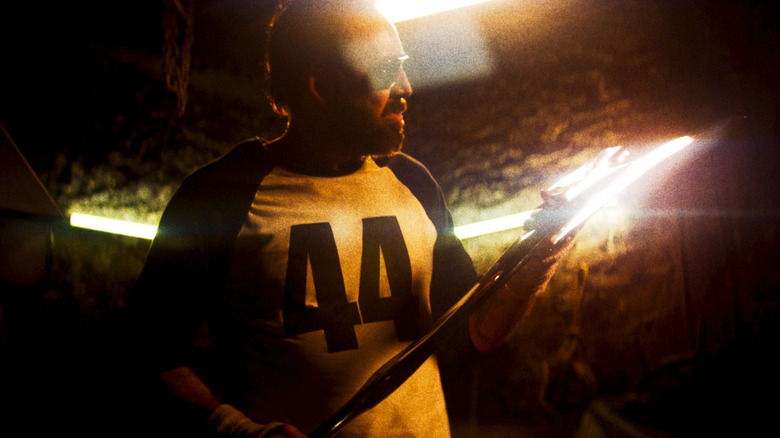
Among the very best Nicolas Cage movies is the unhinged revenge thriller "Mandy." This Panos Cosmatos directorial effort is a gorgeous-looking film full of luscious colors, as well as a transportive and grim vengeance-fueled ballad. Cage plays Red Miller, a man who is living a happy life with his girlfriend, Mandy (Andrea Riseborough). Local cult freak Jeremiah Sand (Linus Roache), though, kills Mandy, sending Miller into an anguished spiral that eventually results in the man embarking on a bloody revenge mission. It's time to take out Sand and his followers with various weapons, including a chainsaw.
It takes a little over an hour into this 121-minute movie for the "Mandy" title card to appear. This unusual maneuver works on multiple levels, including how it reinforces the name of the woman Miller is seeking to avenge. More importantly, though, it reflects how "Mandy" is a bonkers movie that doesn't live by any rules. These characters exist in some purple and red-soaked nether realm, while the antagonists are as arch as they are terrifying. None of this is supposed to be grounded in realism, nor adhering to standard narrative conventions. Within those subversive confines, a normal approach to the opening credits and title card just wouldn't do.
Instead, "Mandy" opts to drop it just over halfway through the production. It's a subtle reinforcement that anything can and will happen in this universe, including losing the love of your life or a random guy becoming a bloodthirsty one-man army.
Hundreds of Beavers
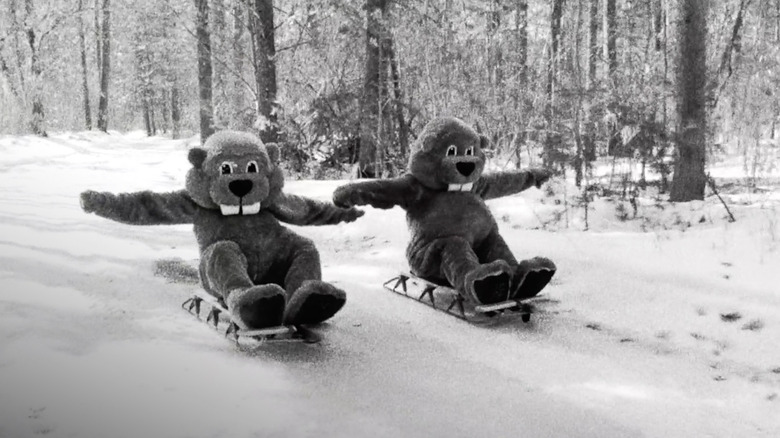
It isn't very surprising to hear that acclaimed movies like "Challengers" and "Wicked" delivered some of the best movie scenes of 2024. However, many might be surprised to see a film called "Hundreds of Beavers" on such a list. What on Earth could a movie with that title be about? This indie comedy from writer and director Mike Cheslik is nothing short of a handmade miracle, a black-and-white ode to silent film comedies depicting an applejack brewer, Jean Kayak (Ryland Brickson Cole Tews), who contends with surviving in the snowy wilderness. Those struggles include facing off with animals — including beavers — realized as humans in animal costumes.
The entire production is comic lunacy that never fails to constantly deliver visual gags and unexpected silliness. Part of its creative "anything goes" approach includes its piecemeal execution of the opening credits. Rather than occurring at the movie's beginning, traces of the opening credits (like the "written by" credit) first appear about 30 minutes into the movie, accompanying a more confident Jean Kayak as he treks back into the wilderness.
Meanwhile, the title only appears at the end of the second act when The Merchant (Doug Mancheski) makes it clear what it'll take for Kayak to marry his daughter, The Furrier (Olivia Graves). He'll have to kill... hundreds of beavers. The sudden cut to the dramatic title card in this moment is amazingly timed. "Hundreds of Beavers" make you wait for its title reveal, but it's more than worth it.