

10 Bad Trailers For Great Movies
Movie trailers are a glorious way of telling stories. Done right, as seen with the 12 best movie trailers of 2025, they function as delightful standalone pieces of artistry that captivate audiences and take on an extra life beyond the feature films they're promoting. Great elements like an unforgettable trailer needle-drop or trailer narration, such as "In a world..." live on eternally. Sometimes, these trailers are even superior to the films they're spotlighting. Just look at some of the epic trailers that were wasted on the worst movies.
But what about the inverse scenario? What happens when a great movie receives an underwhelming trailer? While the art form of trailers is outstanding, that doesn't mean every single trailer is a masterpiece. Sometimes, underwhelming trailers do materialize, and not just for titles like "Meet the Spartans." They also plagued outstanding features that deserved only the best.
In the following 10 movies, the final motion pictures delivered outstanding stories and characters, but their trailers told audiences there was nothing special to look forward to. Some of these trailers underwhelmed because they were too conventional, while others ignored what made the final films so special. Still, others suffered from technical problems like editing issues that were just embarrassing. Whatever plagued these 10 trailers, they were nowhere near the level of quality people associate with the movies they were marketing. Trailers can be a magnificent art form, but they can also, unfortunately, be gravely disappointing.
Fantastic Mr. Fox
In the late 2000s, 20th Century Fox had cornered the market on noisy family movies. Between "Alvin and the Chipmunks" and "Night at the Museum," not even Disney could keep up as the home for the biggest, rambunctious PG movies in the world. This experience became a problem, though, when it was time for the studio behind "Space Chimps" and "Aliens in the Attic" to start marketing Wes Anderson's "Fantastic Mr. Fox." Anyone whose seen this 2009 masterpiece knows that what makes "Fantastic Mr. Fox" ingenious is how it perfectly translates Anderson's visual aesthetic and humor to a PG-rated talking animal cartoon.
Kids can watch the proceedings, but it also doesn't talk down to them and isn't afraid to tackle heavier themes. The unique tone and creative ambitions of "Fantastic Mr. Fox" deserved an equally distinctive marketing approach. Instead, 20th Century Fox kicked off the film's marketing campaign with a staggeringly bad trailer that tried embarrassingly hard to make this movie look like a standard kid's movie. Gags that work splendidly in the final film were rehashed clumsily in the trailer.
Meanwhile, the emphasis on the famous names in the voice cast and auditory elements like a record scratch made "Fantastic Mr. Fox" look like something DreamWorks Animation would've cranked out in 2005. 20th Century Fox's marketing team only knew how to market one kind of family movie and that left "Fantastic Mr. Fox" with a terribly misleading first trailer.
Pirates of the Caribbean: The Curse of the Black Pearl
By the early 2000s, the Disney corporation had almost two decades of experience marketing PG-13 and R-rated movies through the companies Touchstone and Hollywood Pictures labels. However, it appeared that marketing "Pirates of the Caribbean: The Curse of the Black Pearl," the first PG-13 Walt Disney Pictures title, initially proved a challenge for the studio. Just look at the film's generic initial teaser poster featuring a skeleton at the steering wheel of a ship. Even clumsier, though, was the dismal teaser trailer for "Black Pearl."
This piece of marketing is almost entirely devoid of any footage from "The Curse of the Black Pearl." Instead, archival footage of sharks swooping in at the camera, waves crashing down, and sunsets fill up the teaser as on-screen text explains elements specific to the Caribbean. A CG skull-shaped island was the teaser's big underwhelming capper. There's no hint of the characters that fill up "The Curse of the Black Pearl," nor the anarchic tone director Gore Verbinski brought to the proceedings.
This teaser is instead devoid of any personality, let alone an ambiance evoking the movie it's promoting. This teasers so divorced from "The Curse of the Black Pearl" that it features both a totally different title logo and a credit for original composer Alan Silvestri (Hans Zimmer did the final "Pearl" score). None of the confidence permeating the eventual "Pirates" movie materialized in this tepid piece of Disney marketing.
Paddington
What's so wonderful about all three "Paddington" movies, but specifically, the first two installments, is that director Paul King (who didn't helm "Paddington in Peru") and company made these films far more than just routine live-action/CGI kid's movies about a pre-existing family media icon. Rather than mimicking "The Smurfs" and "Alvin and the Chipmunks," King's "Paddington" films are genuinely well-made creations with polished visuals and hysterically witty gags. Everything about these two movies goes above and beyond expectations, a rarity in these kinds of titles which usually just skate by on nostalgia and bathroom humor.
In 2014, though, audiences who witnessed the teaser trailer for the first "Paddington" wouldn't have any notion that this project was something special. This teaser was solely concerned with an extended scene of Paddington Bear navigating a bathroom for the first time. It's an extended display of slapstick that works fine in the movie, but as a standalone teaser, doesn't offer much hope or excitement for the final film. It all just looks like a noisy echo of "Home Alone" or other family movies where domestic homes descend into chaos.
This teaser is also devoid of any hints of the heart-defining "Paddington" films, while the bear's endlessly endearing vocals (which were initially provided by Colin Firth before he dropped out) are similarly MIA. The "Paddington" motion pictures are cinematic gifts. This initial teaser that introduced the saga to so many, though, was a derivative mess.
Suspiria (2018)
When it hit the ground running, Amazon MGM Studios had a tendency to crank out some uninspired or weirdly edited trailers for its movies. The company's newness to the cinema marketing game was apparent in these defects, with even the "Manchester by the Sea" trailer suffering from some peculiar pacing woes. Three years into the studio's existence, Amazon MGM Studios hadn't quite ironed out these issues, as seen by the main trailer for its 2018 "Suspiria" remake. Director Luca Guadagnino's vision for this motion picture was toweringly detailed and atmospheric.
Meanwhile, this trailer didn't have nearly that level of precision. The biggest problem was a decision to only cut between shots through brief fades to black. No matter what atmosphere or level of intensity this trailer pursues, it never just cuts to the next image. There's always a second-long pause centered on a black screen. Rather than accentuating ominousness, this motif just deflates tension. It offers viewers an escape (however fleeting) from madness.
Compare this to the "Hereditary" trailer from the same year, which featured jagged, punchy cuts from one image to the next. That approach made it feel like there was a relationship between every frame flickering on-screen. In contrast, the editing in this "Suspiria" trailer works against a grim aesthetic. Even maintaining the standard, shimmering Amazon MGM Studios logo for the trailer is a miscalculation undercutting the atmosphere. While the 2018 "Suspiria" movie went above and beyond what a horror remake could be, its trailer was frustratingly amateurish.
How to Train Your Dragon
In 2008, Disney and Pixar kicked off the marketing campaign for "Up" with a teaser trailer that ran through the various past Pixar classics people loved. This montage featured footage of titles like "The Incredibles" and "Ratatouille," with the characters and settings bleeding into each other to suggest how trustworthy and artistically sound the Pixar brand was. Roughly a year later, DreamWorks Animation promoted "How to Train Your Dragon" with a similar teaser that took audiences through the worlds of "Shrek," "Madagascar," and "Kung Fu Panda."
The echoing of Disney was felt in this particular "Dragon" teaser by utilizing a piece of music from James Newton Howard's "Dinosaur" score. The problem with this trailer, though, wasn't that it was hewing closely to Disney-established materials. Instead, this piece of marketing didn't really hammer home everything that was unique about "How to Train Your Dragon." The pathos, effective character beats, and sweeping scope didn't have a chance to register since this trailer spent so much time rehashing past DreamWorks films.
In an attempt to connect the first adventure between Hiccup and Toothless to previous box-office hits, DreamWorks Animation forgot to show off the qualities that would inform the mind-boggling Rotten Tomatoes scores of the "How to Train Your Dragon" movies. Instead, the trailer just made it look like a rudimentary animated adventure feature. An excessive focus on the past left audiences in the dark on the specialness of a DreamWorks movie in the here-and-now.
Rise of the Planet of the Apes
In 2009, "Avatar" normalized various cutting-edge visual effects and filming techniques for the broader public. Suddenly, new movie trailers, hoping to get some of that "Avatar" money, were deploying on-screen text that would've been unthinkably impenetrable just two years earlier. An early "Resident Evil: Afterlife" teaser, for instance, declared to viewers that this project was "filmed with the James Cameron/Vincent Pace Fusion Camera System." The first Jake Sully motion picture adventure also got a shout-out in the inaugural trailer for "Rise of the Planet of the Apes" in 2011, which also hailed from "Avatar" studio 20th Century Fox.
At 66 seconds into this trailer, on-screen text informs the viewer that the "Apes" feature CG work "from Weta Digital, the visual effects company for 'Avatar.'" That cumbersome amount of text is just one of many problems in this trailer. While "Rise of the Planet of the Apes" is considered one of the stronger saga entries when people are ranking "Planet of the Apes" movies from worst to best, this teaser didn't touch on the qualities that made "Rise" so special.
The film's character-centric screenplay or quieter, tender moments weren't emphasized. Instead, CG apes devoid of personality leap across the screen. Lifeless James Franco lines didn't help either. "Rise of the Planet of the Apes" artistically thrived by breathing humanity into Caesar and friends. Its first trailer, though, stumbled mightily.
The Avengers
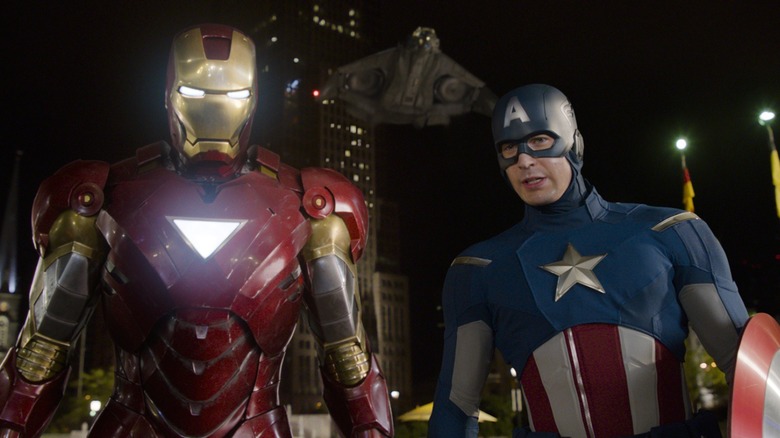
After years of anticipation, comic book geeks and superhero movie devotees got their first proper glimpse (beyond a "Captain America: The First Avenger" post-credit scene) at a live-action incarnation of The Avengers with the first teaser trailer for "The Avengers" in October 2011. What would end up making this feature so beloved for people was the easygoing dynamic between the lead characters. These actors had sizzling chemistry and the script was rife with memorable opportunities for them to just bounce off each other. Bloopers that make us love the Avengers even more reinforce how the down-to-earth qualities about these characters are their greatest superpowers.
That quality, though, wasn't apparent or even referenced in the first "Avengers" teaser. This perfunctory piece of marketing, launched seven months before the movies debut, clearly had few VFX-heavy scenes to work with. Thus, the teaser is comprised of whatever threadbare, simple imagery was already shot and completed. The result is an awkward teaser devoid of either people interacting with each other, nor any exciting action. Attributes everyone connects to team-up movies were bizarrely absent from this trailer.
Only a final bit where Tony Stark pokes fun at Bruce Banner turning into the Hulk hinted at the lighter, character-driven side of "The Avengers." This teaser struggled and came up short in its mission to spin gold out of a movie still deep into production. Thankfully, the final product would be both more entertaining and significantly more cohesive.
One False Move
Carl Franklin's 1992 "One False Move" is an incredibly underrated crime noir. Kicking off with a harrowing depiction of three criminals committing a series of murders, the story then unfurls to follow Star City, Arkansas Police Chief Dale Dixon (Bill Paxton). This officer is determined to solve these murders and catch the crooks responsible, even as out of state law enforcement officials look down on him. It's a yarn full of sudden, shocking bursts of violence that you can feel in your chest and masterfully executed suspense sequences. Along with "Devil in a Blue Dress," it's the peak of Franklin's impressive motion picture directorial career.
Anyone whose seen "One False Move," though, will stand around with their jaw on the floor in shock at the truly terrible trailer this film was saddled with. A grim crime drama getting so much mileage out of a despair-ridden atmosphere is here presented to audiences with a barrage of corny voice-over narration. These tidy bits of expository audio totally undercut the chaotic core of "One False Move." The bleak aesthetic of the final film is impossible to ascertain from this trailer that's trying so hard to cram "One False Move" into a more conventional presentation.
The film's title is even introduced through the announcer making a pun about how "sometimes, the difference between living and dying is ... one false move." This is an absolutely disgraceful trailer that doesn't come close to doing justice to such a memorably impactful project.
Blockers
"Blockers" is a bit of a miracle movie. Director Kay Cannon's comedy about three parents (John Cena, Leslie Mann, and Ike Barinholtz) trying to stop their teenage offspring from having sex on prom night evolves into something surprisingly touching and, regarding its teen characters, deeply sympathetic. All the material with Hunter (Barinholtz) and his closeted daughter Sam (Gideon Adlon) is especially tender and beautiful, particularly their climactic conversation about how Sam's friends will always love her no matter what. Who knew a film with John Cena butt-chugging would stoke up tears?
However, in its trailers, 2018's "Blockers" didn't suggest any of that depth. Instead, it just looked like a routine American R-rated comedy that would exclusively focus on parents creepily controlling their kids. Any poignancy, depth, or queerness was totally absent from these haphazardly edited trailers. In an attempt to make "Blockers" look "safe" to general audiences, the film just had all of its personality erased. What a shame, since quality modern comedies like "Barb and Star Go To Vista Del Mar" have delivered distinctive teasers that retain the enjoyably loopy personalities of the films they're promoting.
Alas, "Blockers" didn't get that treatment, which made it so difficult to convince people (once this title hit theaters) that it was actually worth watching. Don't let the slipshod, generic trailers fool you. "Blockers" has plenty of creative belly-laughs as well as tons of engaging heart. These trailers did it no justice.
Tangled
In March 2010, Disney's "Rapunzel" was renamed to "Tangled," presumably to make the feature more appealing to boys after "The Princess and the Frog" wasn't as big as "Shrek" or "Up" at the box office. This marketing approach extended to the first proper "Tangled" trailer that launched at the screening of "Toy Story 3" in June 2010. This trailer only focused on the roguish thief Flynn Rider, with Rapunzel only showing up a little over halfway through the trailer. Shockingly, the lead character in "Tangled" didn't have any dialogue in this trailer, with all the chatter going to Rider, who was positioned as the protagonist.
This approach wasn't just condescending to boys and exclusionary to girls, but it was also flagrantly inaccurate as to what kind of movie "Tangled" was. None of the title's joyous musical numbers were even hinted at here. Rapunzel's buoyant personality and engaging personal journey (she wants to see the lanterns!) that were the foundations of "Tangled" were nowhere to be seen. Even key supporting characters like Mother Gothel were absent from this teaser. Instead, the "Tangled" teaser promised the Flynn Rider show and a distinctly modern sensibility (as seen by the trailer being set to a P!nk tune).
Ironically, "Tangled" would kick-off a new era of classical Disney fairytale movies that would include "Frozen" and "Moana." Singing princesses are often a recipe for big bucks, as it turns out. The idea of excluding them from misleading marketing materials like the teaser for "Tangled" would soon sound incredibly ludicrous.