

10 Hit Sci-Fi Shows Nobody Talks About Anymore
Without science fiction, there would be no cinema. One of the very first fiction films ever was a movie about the moon for space lovers, as Georges Méliès took viewers on "A Trip to the Moon." Ever since, audiences have been enthralled by futuristic stories that imagine frontiers as yet unexplored by mankind, from the spacefaring franchise adventures of "Star Wars" and "Star Trek" to heady mind trips like "Primer" and "Looper."
On television, however, science fiction tends to either stick around and become something iconic — "Star Trek" again, for example — or disappear from the public memory quickly. "The Twilight Zone" has been revived a number of times because no one can forget such an iconic brand; the television shows on this list, however, have been quite forgotten.
Especially in the 2000s and 2010s, in the wake of smash-hit shows like "Lost," plenty of sci-fi television experiments found audiences and even some staying power. The shows below left the public consciousness almost as soon as they left the airwaves, blinking out of existence as if they'd never been here in the first place, like Marty McFly creating a time-travel paradox and watching himself fade right on out of view. Read on to revisit 10 hit sci-fi shows that nobody talks about anymore.
Altered Carbon (2018-2020)
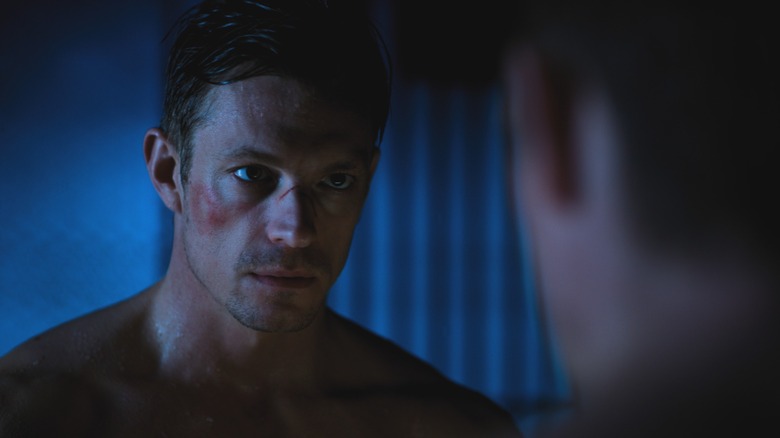
"Altered Carbon" premiered on Netflix in 2018, and at first, it came with a whole lot of buzz. Joel Kinnaman starred in the first season as Takeshi Kovacs, a prisoner whose consciousness has been digitized, uploaded, and then downloaded into a new body. He's set loose in this cyberpunk dystopia to solve a crime in exchange for time off his sentence, and the show is all about digital consciousness and body-hopping, filled with exciting special effects, solid performances, and more than a few ruminations on the philosophical nature of identity.
Unfortunately for its continued existence, the show had a budget problem. Codex reported that the show was filmed in ultra-high definition, including making use of some extremely expensive, rare lenses that resulted in a 5K image. That choice reportedly ballooned costs to over $7 million per episode.
When they retooled the concept for the second season — jumping ahead several decades and swapping Kinnaman out for Anthony Mackie — critics were fans of the streamlined refocusing. Audiences couldn't be bothered. The second season landed at 81% Fresh on Rotten Tomatoes, but the audience score plummeted from 91% on the first season to a bleak 37%. Netflix swiftly canceled the show, and it fell out of the public consciousness faster than ... well, faster than Takeshi Kovacs getting shut down and stuck back in the cloud. These days, everyone ignores "Altered Carbon."
Colony (2016-2018)
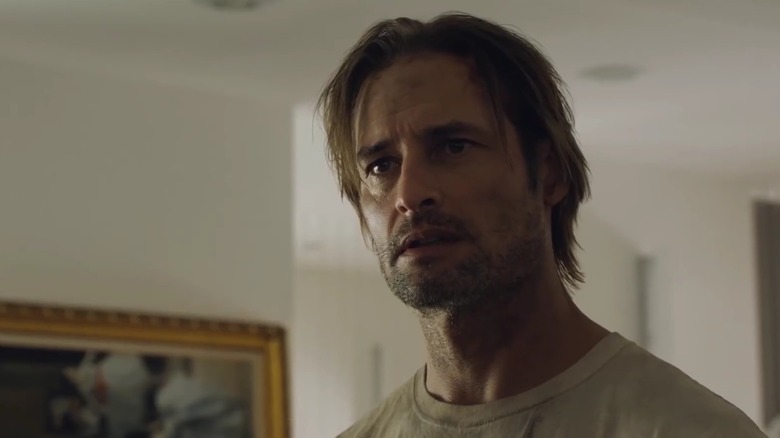
If you were a fan of sci-fi television in the aughts, you might find yourself wondering what happened to the actor who played Sawyer on "Lost." His name is Josh Holloway, and like several of his co-stars from the hit ABC series, he hopped from the island into another sci-fi universe altogether. Holloway starred as Will on "Colony," a three-season hit on the USA Network.
The first two seasons focused on an alien invasion shutting down Los Angeles, walling off parts of the city. Holloway's character Will becomes a revolutionary of sorts, figuring out ways to move his family around the aliens who have a chokehold on America's second-largest city. At first, fans were interested in his every move, and critics watched, too; the show overall sits at 92% Fresh on Rotten Tomatoes.
Unfortunately, USA couldn't sustain the show's production costs, and they radically retooled its concept for its third season, which took more than a year to air after the end of Season 2. Will and his family went on the run, which meant the show was now largely filmed in the woods. The move drastically slimmed the budget, but it slimmed the audience, too, and "Colony" was unceremoniously canceled.
Eureka (2006-2012)
Of all the shows on this list, "Eureka" lasted the longest. It was part of a class of shows that revitalized SyFy in the aughts, turning the network into not just a destination for bad movies you should watch once, but for airy, enjoyable procedurals. The show premiered in 2006 to great fanfare; at the time, it was by far SyFy's highest series launch. More than 4 million people tuned in for the feature-length pilot episode, and that was enough to carry the show for years. (Those are numbers that, these days, just about any network would kill for).
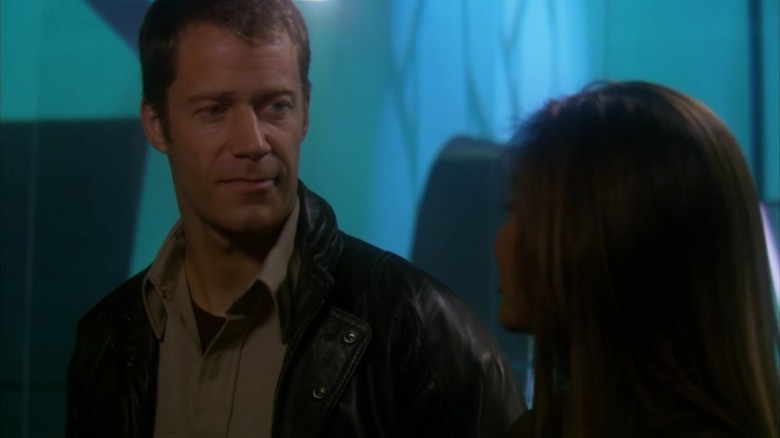
"Eureka" followed Colin Ferguson as Sheriff Jack Carter, a normal cop who gets transported through space-time to a town where nothing seems to work according to the normal rules of physics. The fittingly named titular town of Eureka was full of portals, creatures, high-tech gadgets, and plenty more weirdness, and each episode took Jack and friends on zany adventures.
The show was popular enough (by SyFy standards) that it ran for five seasons, and as things drew to a close, the network made some changes. "Our highs are higher. The darks are darker. The funny episodes are funnier ... It is the best stuff that we've ever done," Ferguson insisted to ComicsOnline. That may all be true, but more serialized story arcs weren't enough to save the show; it concluded in 2012.
Falling Skies (2011-2015)
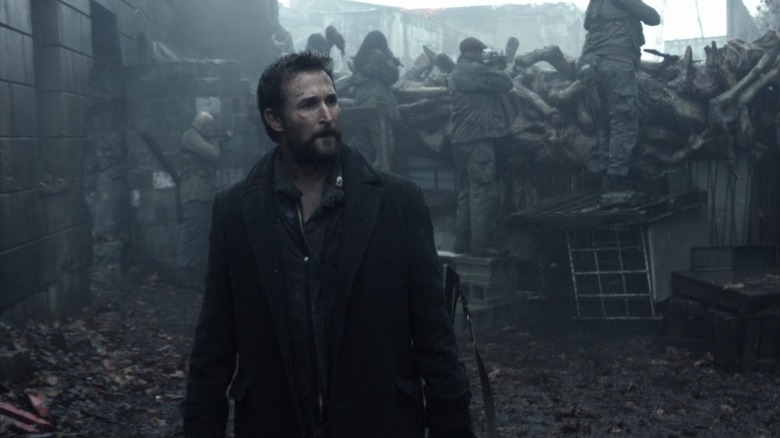
When "The Pitt" premiered in 2025, fans everywhere were excited to have "ER" star Noah Wyle back on serialized television. After all, he'd ruled the '90s as Dr. John Carter on the iconic network procedural, so fans were excited to check back in with the actor, watching him weekly again after all these years.
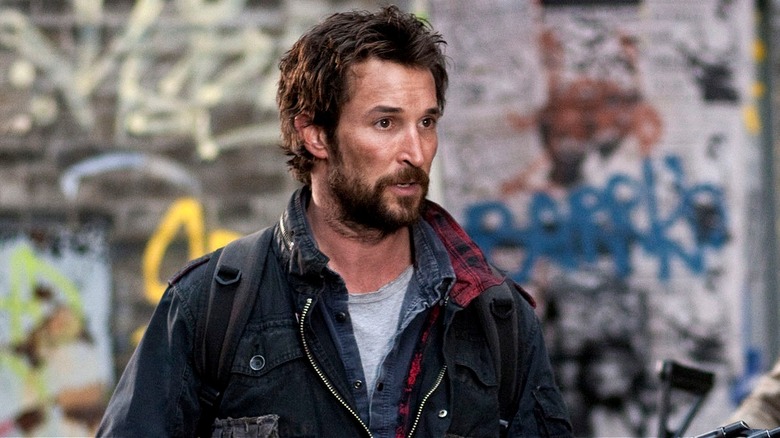
Most fans are likely unaware that Wyle was on several long-running television shows in the years since "ER." In addition to a series based on his "The Librarians" franchise of made-for-TV adventure films, Wyle starred from 2011 to 2015 on "Falling Skies," an expensive-looking TNT show about (what else?) aliens. He played Tom on the show, a man trying to figure out how to keep his son safe in a new world where super-creepy critters called Skitters swarmed around the globe.
There was a ton of buzz around "Falling Skies" when it first premiered; after all, the show came from the mind of Steven Spielberg, a man whose best movies are about aliens. (You'll see even more extraterrestrial-related Spielberg below.) The show even tied the then-new "American Horror Story" as the biggest new cable series that year. Though "American Horror Story" went on to become a cultural juggernaut that is still going strong more than a decade later, "Falling Skies" burned bright and fast, its cultural relevance now amounting to little more than a footnote in Wyle's filmography.
FlashForward (2009-2010)
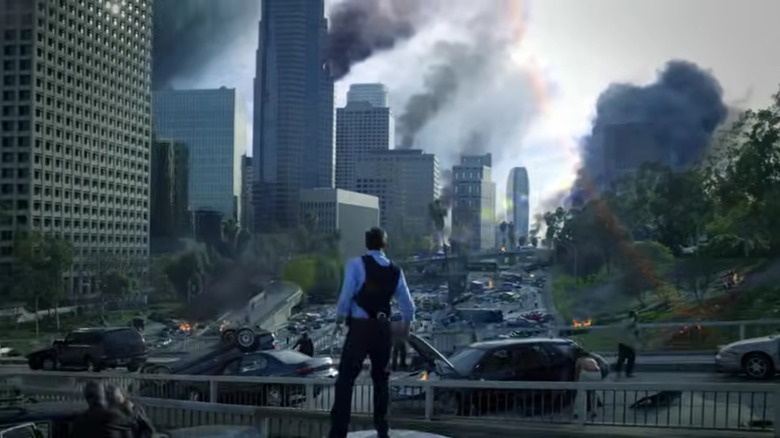
"Colony" wasn't the only post-"Lost" show to feature a member of the core "Lost" cast. In 2009, while most of his former castaways were still trapped on that kooky island, Dominic Monaghan returned to ABC in another flashy, high-concept sci-fi show that promised to hook viewers with weekly clues toward an overarching puzzle.
In the opening episode of "FlashForward," everyone around the world blacks out and experiences a brief vision of what their lives will look like several months in the future. The odd event throws society into utter chaos, not least of which stems from the fact that everything spun out of control while literally every single person alive was unconscious; cars crashed, planes dropped from the sky, and everything everyone thought they knew had to change.
At first, it was gripping, and the audience stuck around to see just how everyone's lives would inevitably get closer to their visions of the future. And then the show went off the air for several months, inexplicably forced into a scheduling hiatus just as the ongoing mystery was getting good. By the time the show came back to finish out its first season, we'd pretty much reached the time of the titular "FlashForward." To keep things exciting, everyone flashed forward again, but the viewership numbers had absolutely cratered. TVSeriesFinale.com reported that 12.47 million people had watched the premiere, but after the show's hiatus, only 4.75 million people had stuck around. Ouch.
Phil of the Future (2004-2006)
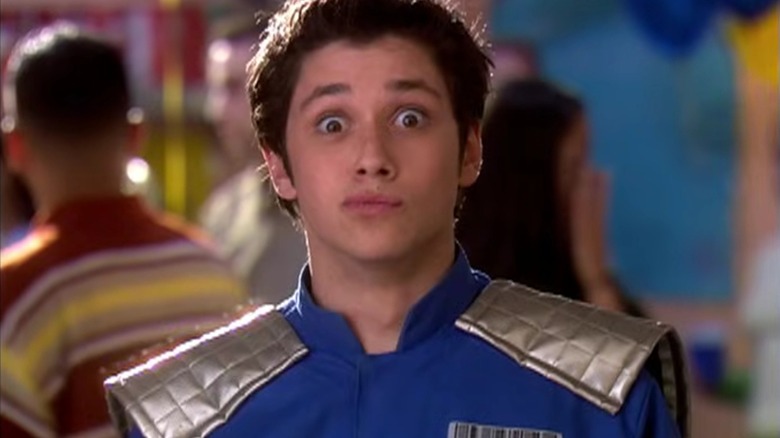
If you're a millennial or a Zoomer of a certain age, you were probably glued to The Disney Channel in the aughts. The network had a stellar run of shows, pumping out iconic hits like "That's So Raven," "The Famous Jett Jackson," "Lizzie McGuire," "Even Stevens," and more.
While those shows were on the air, however, they had a sci-fi sibling who lasted just as long as the rest of them. "Phil of the Future" was about a kid named Phil who came from the future and was stuck in post-9/11 America, trying to be a normal teenager, and trying not to show that his family had brought numerous wacky gadgets with them back through time.
The show aired for 43 episodes and was nominated for numerous awards, including Young Artist Awards for much of its cast, which included teen-show royalty like Aly Michalka and Kay Panabaker. The show was nominated for a WGA Award, and Fred Savage even picked up a DGA Award nomination for directing an episode, but you wouldn't know it from the show's current reputation, which is ... well, pretty nonexistent. Star Raviv Ullman sat down with E! News in 2022 to take a look back at the show, and they asked whether he'd ever be interested in a reboot. "I'm not going to be the one to turn that down," he said, before admitting, "but I haven't heard any rumblings."
Sliders (1995-2000)
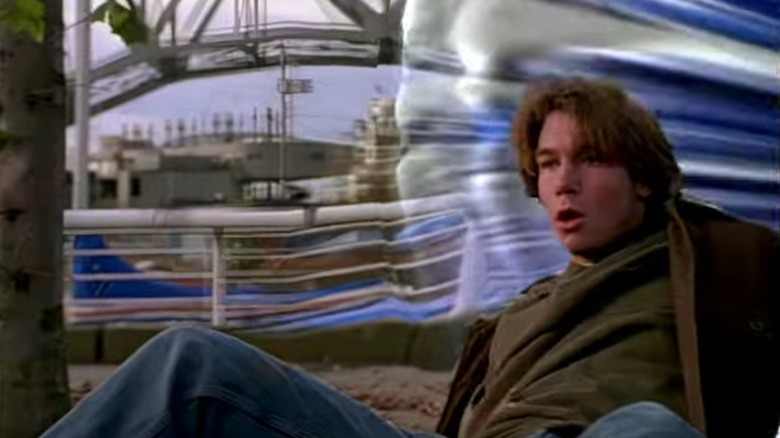
Actor Jerry O'Connell has had many lives in Hollywood. He was a child star in "Stand by Me," an iconic film based on a Stephen King novella. He's part of the cast of "Star Trek: Lower Decks," an animated show set beyond the final frontier. He's been on "The Big Bang Theory," hosted his own talk show, proven himself a Bravo fanboy, guest-hosted "Big Brother," and plenty more.
That's a fitting resume for an actor who spent 1995 to 2000 starring on "Sliders," a show about a group of people tumbling through an endless series of wormholes, spitting them out in an endless series of parallel dimensions. Though the show had a strong fan base for its first few years, things got positively silly as the show limped onward, a fact that O'Connell himself later acknowledged. "I love my experience and everyone involved but come Season 3, we had all new bosses," he wrote on X. "A lot more guns/CGI/Explosions. I personally preferred the first two seasons."
O'Connell said he would try to take the show back to its roots, should anyone ever be interested in a reboot. We're not sure we can see that happening anytime soon, because unlike those other properties O'Connell has found himself attached to over the years, "Sliders" doesn't seem to have all that much staying power.
Taken (2002)
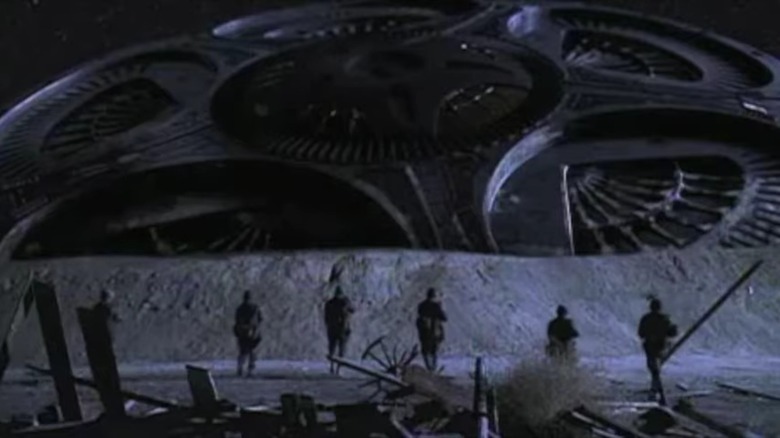
Steven Spielberg has made his mark on the world of extraterrestrials entertainment many times over, delivering films like "E.T. the Extra-Terrestrial," "Close Encounters of the Third Kind," and the 2026 film "Disclosure Day."
The 2002 miniseries "Taken," on the other hand, hasn't made as much of a lasting mark on pop culture. The short series aired on Sci-Fi before it became SyFy, following a family who experience repeated alien abductions across generations. At the time, "Taken" was a smash success, racking up numerous award nominations. Spielberg even won an Emmy for the show, which starred a young Dakota Fanning a few years before he once again threw aliens at her in "War of the Worlds."
Spielberg himself doesn't talk much about "Taken" these days. In a 2026 interview for "Disclosure Day," he told The Hollywood Reporter about what it was like to convince someone to let him make "Close Encounters," back when no one was talking much about aliens and UFOs. These days, he says, the subject has a lot more interest. "I don't know any more than any of you do," he said, "but I have a very strong suspicion that we are not alone here on Earth right now."
Terra Nova (2011)
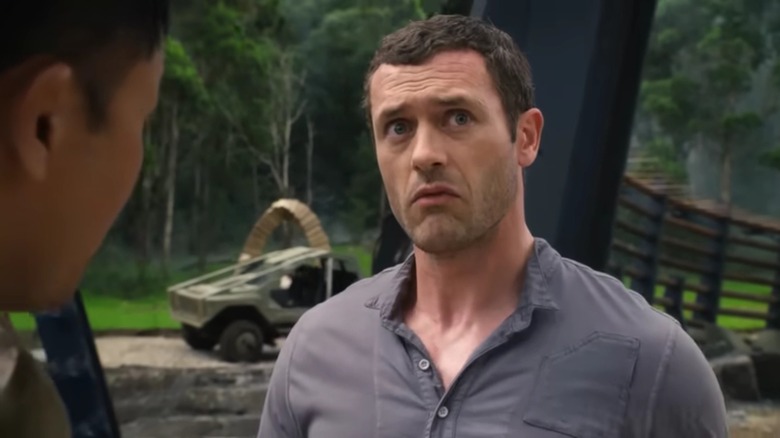
"Terra Nova" is yet another sci-fi show that touted involvement from Steven Spielberg, made a big splash when it premiered, and then vanished from our collective memory like the details of a midnight alien abduction seeming hazy in the morning light. The show premiered in 2011 and centered on a group of humans from the near future. Facing an overpopulated, climate crisis-ravaged world, humanity invents time travel, sending a civilization's worth of explorers back to the dinosaur years. That way, we buy ourselves a few million years before we run out of space again. What could go wrong?
Lots can go wrong, it seems, even when you have someone like Spielberg in your corner. At first, "Terra Nova" had the best week-over-week audience retention of any new show that year, according to Deadline. Soon after, though, the audience fled for greener pastures. Unlike "Falling Skies," which lasted several years beyond its early interest, "Terra Nova" quickly fizzled out.
Star Jason O'Mara was quite frustrated when Fox declined to pick up the show for another go. He told The Hollywood Reporter, "[T]here was a lot more story to tell. Creatively, we probably could have made some slightly better decisions halfway through but I think that's par for the course for such an ambitious series." They could've fixed those decisions if only time travel were real ... alas!
Under the Dome (2013-2015)
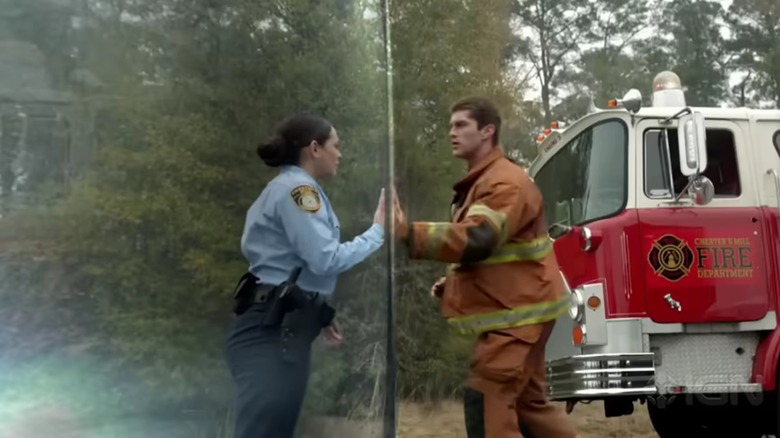
The 2013 CBS series "Under the Dome" began as a miniseries, and when it premiered that summer, it set ratings records, becoming the highest-rated new summer show on any network in more than 30 years.
Based on the Stephen King novel of the same name, "Under the Dome" is about a town called Chester's Mill. One day, just like in "The Simpsons Movie," a gigantic dome suddenly appears over the town. Some people are stuck inside; others are left on the outskirts. Anyone who happened to be standing right where the dome dropped got sliced in half.
The book is fun, and the early episodes of the show were, too. Overall, though, "Under the Dome" became a victim of its own success. CBS picked the show up for more, stretching its mythology far beyond the events of the novel. Fans simply weren't interested in sticking around, and the viewership disappeared. The show frustrated King's fans, too, who didn't like all of the changes that the show made to the source material. King wrote an open letter on his website about the differences from his book, defending the show's decision to stretch things beyond the breaking point. "[F]eel free to take the original down from your bookshelf anytime you want," he comforted his fans. "Nothing between the covers has changed a bit."