

5 Essential Stephen King Books Everyone Should Read At Least Once
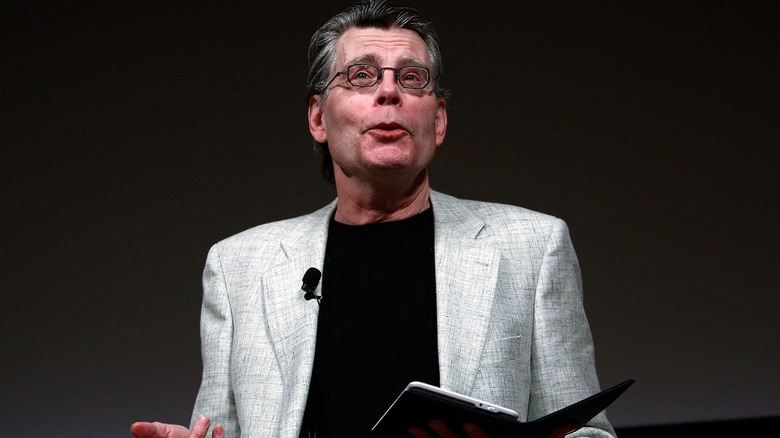
It's hard to overstate Stephen King's influence on pop culture. The man has dominated the horror space for decades, somehow managing to pump out an average of one book a year, and often more; in fact, early in his career, he wrote under the pseudonym Richard Bachman so that readers wouldn't be overwhelmed by how often King was publishing. His extensive library has also been a reliable source of material for filmmakers looking to adapt horror for the big screen, resulting in numerous bona fide horror classics based on his books. If you've only ever seen the best Stephen King movies and haven't actually read King's work, fear not; we've got five solid recommendations below.
In a 1986 interview with Time magazine, the self-effacing King said, "[My novels are] the literary equivalent of a Big Mac and large fries from McDonald's." Still, critics and fans alike have found much to love in King's output over the years, just as McDonald's has customers who return all the time. English professor George Stade told Time that King is comparable to popular writers like Arthur Conan Doyle and Bram Stoker, noting, "We need these guys around, and we tend to read them more than we read James Joyce."
The five books below will give you an overview of King's career, from some early, iconic successes to later works that fulfilled the promise of those early years. King calls his fans Constant Readers, but everybody should read these five essentials at least once.
Carrie
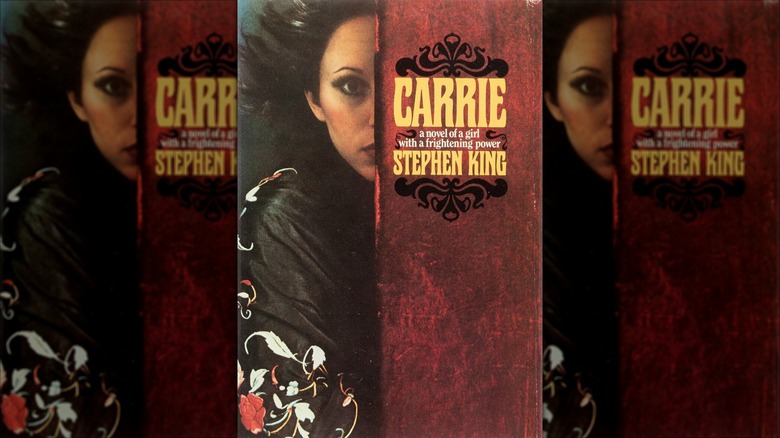
"Carrie" wasn't the first novel Stephen King wrote; many of the Richard Bachman books were completed earlier, some while he was still a teenager. "Carrie" was, however, the first novel he published under his own name, in 1974. He and his wife were quite poor before the book's paperback rights sold for $400,000, changing everything about his life.
This one is a standout in King's oeuvre not just because it was first, but because it's structurally so different than a typical horror novel. "Carrie" is a quasi-epistolary novel, told through excerpts of letters, article clippings, interviews, and quotes from books that don't really exist. It tells the story of Carrie White, a telekinetic teenager who realizes that she now has the power to fight back against not only the bullies at school who make her life hell, but the overbearing religious mother who turns her home into a maelstrom of preaching and penance.
The book was later turned into an excellent Brian De Palma film starring Sissy Spacek in the role of Carrie White, meaning you're probably familiar with the broad strokes of the story; as in the film, there's a bucket of blood that makes an appearance at the prom, giving horror one of its most indelible images. The source novel is worth reading, though, to experience how provocative a new voice like King's seemed on the horror scene; the book is profane, sadistic, sad, and funny, making it an excellent introduction into his world.
The Shining
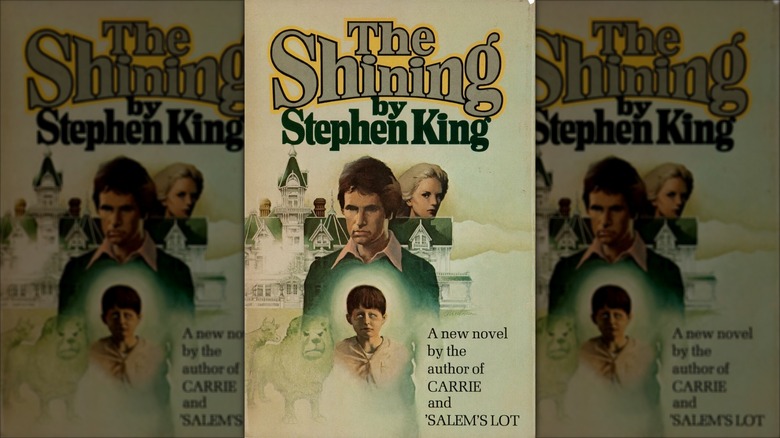
Brian De Palma's "Carrie" had been a hit at the 1976 box office, meaning there was much anticipation for what Stephen King would do next. He published "The Shining" the following year, and it still stands as one of King's most iconic works, as well as an essential read for any horror fan.
King hated the 1980 film adaptation by Stanley Kubrick, which cemented its creepy story in the popular imagination; he told Time, "Stanley Kubrick's stated purpose was to make a horror picture, and I don't think he understood the genre." Reading the novel, it's easy to see why King was miffed by the movie, which most people agree is a masterpiece; it's just different. So much of the experience of reading King comes from his idiosyncratic use of language, his insistence on handing you a childish-sounding term and then expecting that you'll buy in. The title refers to an odd yet powerful psychic awareness experienced by a young boy named Danny Torrance, a kid who's snowbound in the very haunted Overlook Hotel with his father, Jack, and his mother, Wendy, as they all go mad.
The novel is far weirder than the film, including a whole subplot about evil hedge-maze animals that come to life. It's the kind of thing you have to be willing to go along with on the page, so reading "The Shining" is a good litmus test for whether you'll be interested in some of King's bigger, weirder works like "It" and "The Stand."
Different Seasons
Many of Stephen King's novels are massive, with fans often joking that they'd make great doorstoppers. "It," for example, is over 1,000 pages, a far cry from the slim, pulpy paperbacks that defined postwar horror. He doesn't just write big books, though: King is also a master of the short story and the novella, having published hundreds in numerous magazines.
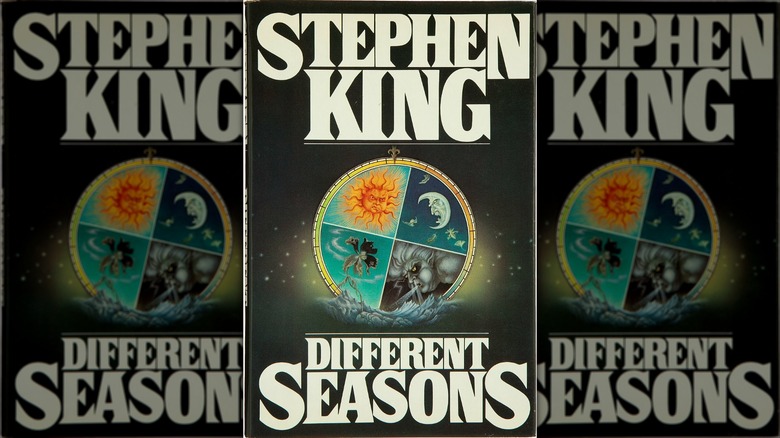
King has published a number of excellent collections that gather up his shorter fiction, but the most essential of the bunch is "Different Seasons," a 1982 tome featuring four novellas. These aren't horror tales in the way many of King's novels are; instead, they're largely more realistic dramas that show King can apply his perspective on the world to situations that don't involve, say, evil alien-clowns who lurk in the sewers. These are stories about growing up and finding your place in the world.
Three of the four have been adapted into films, leaving only "The Breathing Method" as a complete surprise for anyone who's unfamiliar with King's filmography. "Different Seasons" is essential reading because in one book, you'll get to experience "The Body" — the basis for "Stand By Me," the best movie based on a Stephen King story – you'll read "Apt Pupil," a chilling tale of a boy who befriends a Nazi, and you'll also encounter "Rita Hayworth and the Shawshank Redemption," yet another novella that became one of the best movies of all time.
Misery
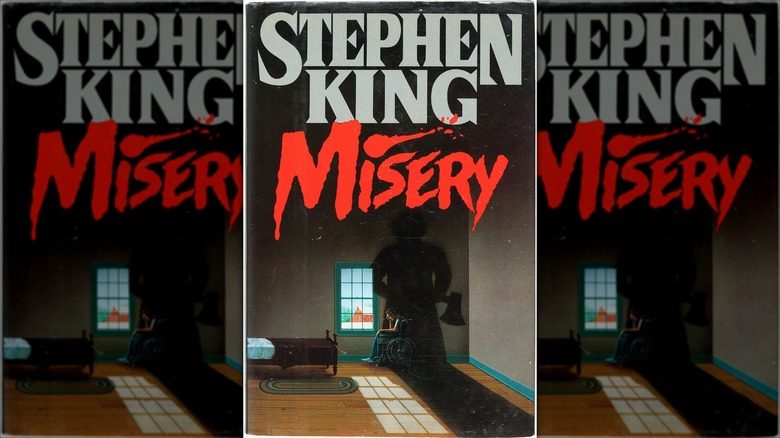
Stephen King has written many books in which a writer was the protagonist, including "The Shining," "'Salem's Lot," "Bag of Bones," and other lengthy tomes. "Misery," on the other hand, is a relatively short, sharp shocker that produced one of the best, most unforgettable villains in any King novel.
This one's about Paul Sheldon, a writer who awakens from a car accident to find he's now bed-bound in the home of Annie Wilkes, a nurse who describes herself as his number one fan. Annie loves Paul's romantic series about Misery Chastain, a wild, voracious heroine who's everything the oddball Annie isn't. Unfortunately, in the last "Misery" book, Paul killed his character off — and now Annie doesn't want to let Paul get better until he writes a new "Misery" story, one just for her.
Some of the most violent scenes in "Misery" made it into the film adaptation by Rob Reiner, who also directed "Stand By Me." Kathy Bates won an Oscar for her portrayal of Annie Wilkes, and it was well-deserved: Bates' "hobbling" scene in "Misery" is the stuff of legend. The original novel, however, includes a lot more than what wound up in the movie, and it's all written with a freewheeling sense of grotesque glee, as though King is daring himself to make it even more gross. Mission: accomplished.
11/22/63
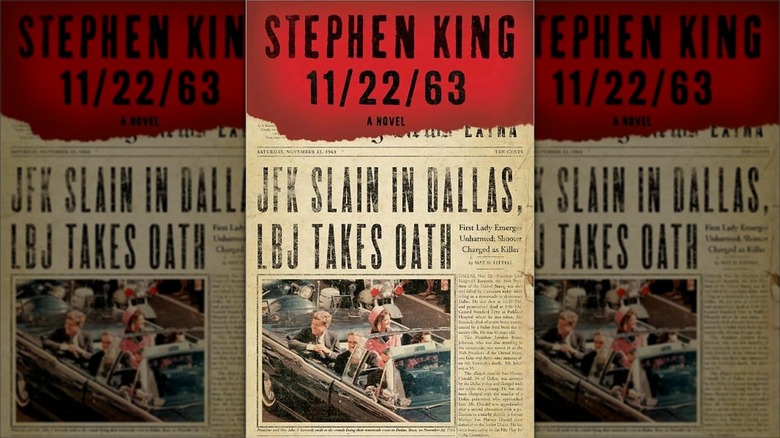
Stephen King has written a lot of classics, especially in his early career, but the quality of his output has waxed and waned over the years. For every iconic book like the dark "Cujo," there are forgotten ones like "Rose Madder" and "Insomnia," about which King wrote in his "On Writing" memoir, "These are (much as I hate to admit it) stiff, trying-too-hard novels." He wrote that he works best when he doesn't plot out his books too much, preferring instead to find a scenario that gives rise to a story.
With his 2011 tome "11/22/63," however, King finally made over-plotting work — and it really, really worked. The book is about a teacher named Jake who is shown a portal to the past in a diner basement. The portal always leads to the same moment in 1958, no matter how many times he comes and goes; Jake realizes that, if he's willing to give up years of his life, he can stay in the past until 1963 and perhaps save John F. Kennedy from assassination.
This is an intricate, sprawling story, finally making good on the promise of so many things King explored earlier in his career. It's got a cosmic-horror bent, but it's a work of historical fiction too, as well as an alternate-universe what-if that demands a lot from the reader even as it's packed full of pure entertainment. It's one of the best things he's written in the last few decades, making it an indispensable read for anyone looking to dive into King's later work.