

Project Hail Mary's Most Confusing Moments Explained

Contains spoilers for "Project Hail Mary"
Well before it officially premiered, "Project Hail Mary" was already drawing stellar first reactions, with those familiar with the source material (a tale about an alien microbe dimming the sun and threatening life on Earth) declaring themselves more than happy with the adaptation. Those with no knowledge of author Andy Weir's book of the same name were equally impressed — everywhere you looked, Ryan Gosling's feel-good space adventure was stunning critics and fans alike. But just because a movie is received well doesn't mean it's easy to follow.
This two-and-a-half hour apocalyptic space romp moves through its narrative at a rapid pace and in a non-linear fashion, meaning you'll likely have a question or two coming out of that initial viewing. If you're curious about some of the confusing parts of "Project Hail Mary," then you've come to the right place. We've rounded up some of the biggest questions and confusing moments from the film and provided the answers and explanations to them.
Why are the other astronauts dead when Grace wakes up?

While there's some brief explanation in the movie, it's easy to miss why the other two astronauts on the Hail Mary are dead and shriveled up when Ryland Grace (Ryan Gosling) wakes up from his coma. Grace gives his deceased companions, Olesya Ilyukhina (played by the AT&T commercial girl Milana Vayntrub) and Yáo Li-Jie (Ken Leung), a worthy space funeral, but why did they die in the first place?
The book gives us a more in-depth explanation. The astronauts on the Hail Mary are put into a forced coma to avoid psychotic breakdowns while living in a cramped space on the years-long trip to Tau Ceti, a star that has the same alien microbe as our sun (known as Astrophage) but isn't dimming in the same way. The book version of the ship is much smaller than the one in the movie, so concerns over depression and potential breakdowns are even more valid.
The science to do this is only effective for humans with specific gene markers that can resist the coma for extended periods of time. Only one in a million humans have this marker (including Grace, which is part of why he's forced to go). Even so, the process is extremely risky. It turned out that, even though Li-Jie and Ilyukhina had the right genetic markers, Grace was the only one whose body survived the trip.
How long has Rocky been at Tau Ceti?
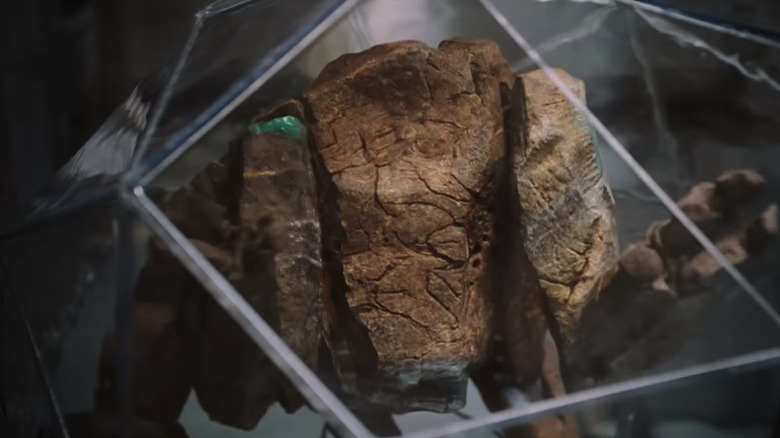
When Grace arrives at Tau Ceti looking for an answer to the Astrophage problem, he's quickly joined by Rocky in the Blip-A ship. From there, the story moves forward as the two make first contact, learn to communicate, and collaborate on their shared mission to procure a predator that will get rid of the Astrophage and save their respective civilizations (Rocky's planet is also endangered by the microbe). Everything moves along so rapidly that it's easy to miss something: how long was Rocky in the area before Grace arrived?
Rocky had been hanging around Tau Ceti for 46 years by the time Grace showed up. As Grace puts it after finding out the statistic, "He's been stuck in this system for longer than I've been alive." Fortunately, Eridians have longer lifespans than humans. Rocky informs Grace that he's already 291 in Earth years and the average Eridian lifespan is 689 years. Still, even with his long life by human standards, Rocky's been in isolation for a long time, which makes the arrival of the Hail Mary that much sweeter.
What happened to Rocky's crew?
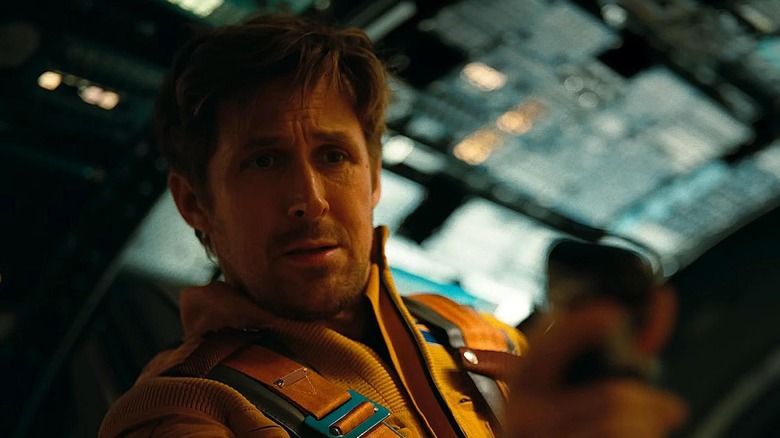
Ryland Grace's crew consisted of himself and two others, both of whom perished on the trip to Tau Ceti. Rocky, meanwhile, was one of 23 Eridians on board the Blip-A who set out from Erid. Why is Rocky the sole survivor when there were originally so many crew members on board his ship? The short answer: radiation.
Without getting overly technical (Andy Weir gives plenty of scientific details in the book), Rocky's home planet, Erid, is big, hot, has an ammonia atmosphere, doesn't have light on the surface, and is protected by a strong magnetic field. The conditions protect those on the planet from radiation, but it's a different story in space.
The Blip-A's crew was exposed to radiation for years. They got sick and died along the way from radiation poisoning. Rocky, as the ship's engineer, had a workshop in the back of the vessel. This was near tanks filled with Astrophage — Astrophage works as rocket fuel, and it also happens to block radiation. This shielded Rocky while his crew slowly and unknowingly met their doom.
What's up with Rocky's eating?
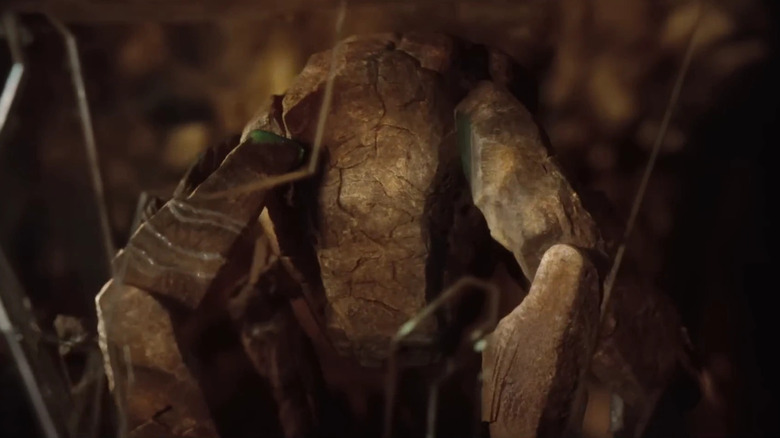
One of the more bizarre moments in the film comes when Rocky makes fun of Grace for his disgusting human eating habits before saying that his own people's food consumption is beautiful. From there, he shoves into his orifice. This, folks, is an Eridian eating. At least, that's how it's portrayed in the movie. The book is a little different. First off, Rocky is just as embarrassed to eat in public as he is grossed out by Grace eating. The process is more complex, too.
Rocky rips open a stony food package to pull out the meaty flesh inside. He shreds this with his hands, before clearing out his orifice, presumably with the leftovers of his last meal, and then flipping onto his back and "opening wide." Here's how Grace describes what happens next in the book: "[Rocky] reaches over with a few of his hands and grabs some choice morsels of food. He brings them to his opening and drops them in. He repeats this process, slowly and methodically, until all the food is in his...mouth? Stomach?"
That's it. No chewing. No teeth. Once Rocky is done eating, his orifice closes up, and he literally passes out to digest his food. He's what's known as a monostome — there's only one opening. The food and waste go in and out of the same place.
Why can't Rocky sleep alone?

Rocky shows some really clingy habits when he meets Grace. One of the oddest of these is that he insists on watching the human while Grace sleeps and vice versa. The explanation for this becomes clear in the book when Grace says, "[Eridians] don't 'sleep' like a human does. They're legitimately paralyzed. And the brain, also being maintained, has no conscious function during that period. A sleeping Eridian can't wake up."
Later on, Grace elaborates on the cultural impact of this need to watch each other while in a paralytic state of slumber: "A fear of sleeping alone is probably hard-wired in [Rocky's] brain. Interesting...that might have been the beginning of their pack instinct. And a pack instinct is required for a species to become intelligent. That weird (to me) sleep pattern could be the reason I'm talking to Rocky right now!"
Rocky technically can sleep alone. He obviously does so for 46 years while living alone on the Blip-A. But when you understand why Rocky doesn't want to sleep alone, the revelation is more sobering. It's tragic thinking of the Eridian's inability to address the instinctual desire to have someone nearby to watch him while he sleeps. How much more excited must he have been to encounter another being after thousands of nights spent alone, unwatched?
What happens when Rocky breaks into Grace's oxygen environment?
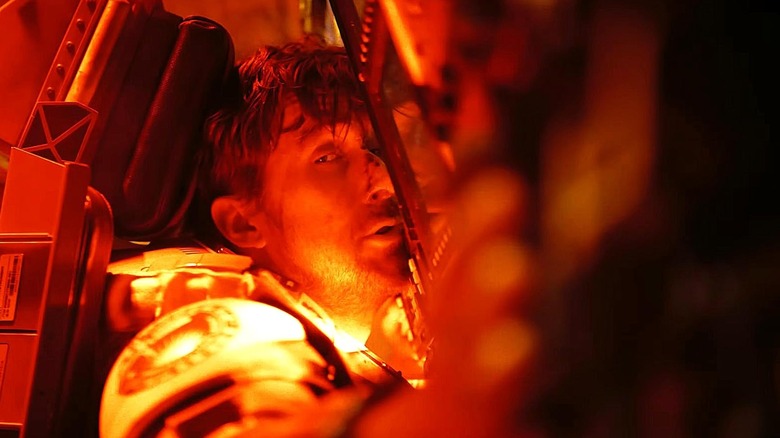
When Rocky and Grace head into the upper atmosphere of Adrian in search of the Taumoeba (a "predator" that is eating the Astrophage), they nearly break the Hail Mary ship before they can get her out of orbit and into space again. In the process, one of the Hail Mary's Astrophage tanks springs a leak, and it sends the ship into a hard spin. The centrifugal force pins the weaker Ryland Grace to the wall, unable to reach the controls. Then, we get a series of events that are choppy, in and out of the light, and occasionally shown from Rocky's sound-sensory perspective. It's hard to follow, but here's what happens in a nutshell.
When Grace passes out, Rocky bursts through the xenonite barrier that separates his very hot environment from Grace's. For comparison, Rocky lives in over 400-degree heat and breathes ammonia, so entering a much chillier oxygen environment isn't good for his health. The Eridian rushes over, hits the right controls to eject the Hail Mary's damaged fuel tank, and then drags Grace to the sick bay, where his robotic assistant can put an oxygen mask on him. This saves Grace's life, but Rocky is nearly killed in the process. He barely drags himself back to an unbroken part of his ammonia-filled tunnels before he, too, passes out, setting the stage for Grace to wake up and try to help him.
What are the beetles?
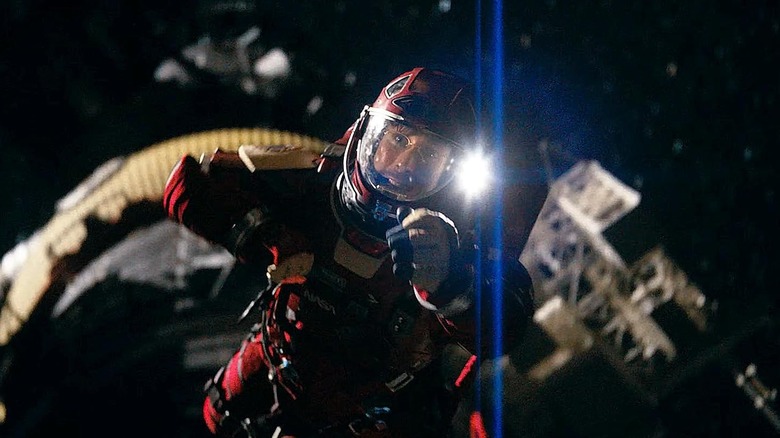
At the end of the movie, we get a quick shot of four probes or "beetles" in the Hail Mary named after the four members of the iconic British band The Beatles: John, Paul, George, and Ringo. Their purpose is simple but highly important: They are unmanned mini-ships designed to be sent back to Earth containing samples of the Taumoeba that Grace's home planet desperately needs to fight off the Astrophage infection of the Sun. This works, but in the book, the beetles are actually important for more of the story than that quick ending shot.
When the Hail Mary exits the atmosphere of Adrian in its nearly-disastrous attempt to retrieve Taumoeba, the ship's fuel lines become infected with the Astrophage-eating microbial predators. This leaves the Hail Mary dead in the water, unable to return to Rocky's ship, which is brimming with Astrophage fuel. The solution? The pair work to use three of the four beetles (with their separate and unpolluted fuel supplies) to power the Hail Mary back to Rocky's ship. The role of the beetles was simplified in the movie, although their mission-critical task of taking the Taumoeba samples back to Earth remained intact.
What does the Taumoeba do to Rocky's ship, exactly?
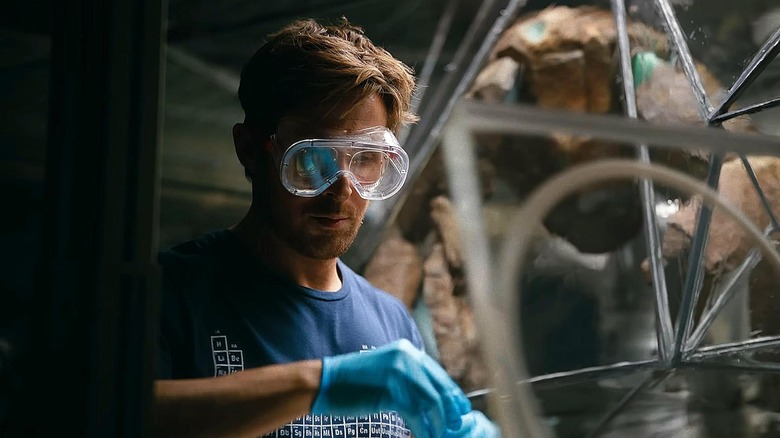
At the end of the movie, Grace has to ship off the beetles before turning back to find Rocky's Blip-A ship stranded in space. The Taumoeba, which are so critical to the survival of both of their planets, has sabotaged the Eridian's vessel — but how, exactly?
The book explains that when Grace and Rocky breed a unique strain of Taumoeba that can survive and fight Astrophage in their own solar systems, the process also gives the microbial predator the ability to hide in and move through xenonite, the unique building material that Rocky's race uses. It's much stronger than anything humans use, but the microscopic organisms find a way through it.
Seeing as Rocky's ship is made from xenonite, that's not good news for the Eridian. The microorganisms get into his fuel tanks, where they eat all of his Astrophage fuel. This leaves the ship helpless and Rocky in grave danger, until Grace shows up with a non-xenonite ship. Not only does he save him, but his ship is capable of carrying the Taumoeba back to Rocky's home world.
Does Grace return to Earth?
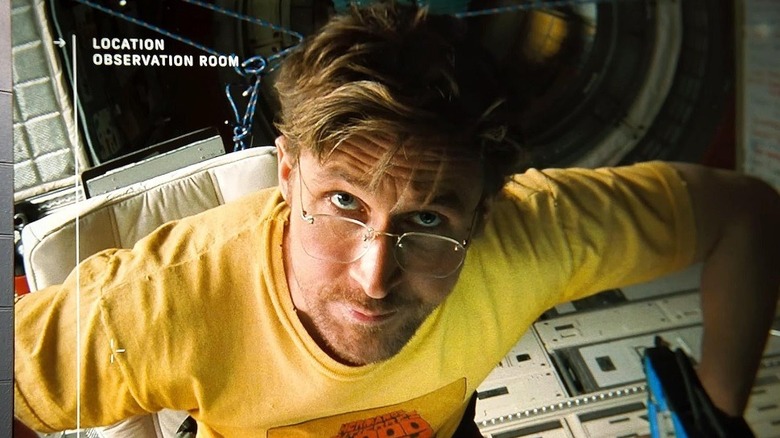
At the end of the movie, Grace is on Erid, and Rocky tells him that the Hail Mary is fixed and he can head home if he wants to. The human sounds hesitant and asks for more time to think about the decision, indicating that he likes his new life on the alien planet. In the book, he sounds even more sure of this decision. Andy Weir explains that Grace's last scene takes place long after reaching Erid: It's been 16 years, and Grace thinks he's around 53 years old at this point (it's hard to be specific due to the time dilation of space travel.)
When he learns that the Earth's sun is now burning brighter, indicating that his people got the Taumoeba he sent home and managed to use it to deal with the Astrophage, saving humanity, he does say: "Maybe I will go home someday. Maybe I'll find out for sure." But in the book, just like in the movie, Grace's heart remains on Erid. In fact, the human scientist follows that statement with the line, "But not right now. Right now, I've got work to do." The former teacher has got a new life educating young Eridians out of a custom-built, human-friendly area, and he's thriving.
Where is Eva Stratt at the end of the story?

Eva Stratt (Sandra Hüller) is shown at the end of the movie on a ship sailing through icy, unidentified waters. This scene is part of an unexplored subplot about Stratt's fate back on Earth — in an interview with SlashFilm, directors Phil Lord and Chris Miller revealed that she was jailed for the drastic measures she took. If you look closely during her final scene you may spot a tattoo on her arm that's a nod to her jail time. "She has a little tattoo that has a V with a line through it, meaning V as in life and then the line meaning without parole," Miller said.
Miller also confirmed that this came from Andy Weir, who liked the idea that Stratt had "gone to prison without parole, but then had broken out of prison from her connections and then was sort of on the lam." Stratt being jailed for her actions is actually hinted at in Weir's novel. In a subplot from the book that was originally in the script but cut for time, Stratt has Antarctica nuked to release trapped methane gas that will, in theory, insulate the planet and save humanity. She does this knowing full well that she will likely end up behind bars.
"Once the Hail Mary launches, my authority ends. I'll probably be put on trial by a bunch of p***ed-off governments for abuse of power. Might spend the rest of my life in jail," Stratt says in the book, adding, "We all have to make sacrifices. If I have to be the world's whipping boy to secure our salvation, then that's my sacrifice to make." While we never get any closure with Stratt in the book, it's fun to think Weir, Lord, and Miller snuck a little finality to her story into the movie.
What is going on in that last scene?

The final scene in the movie is a bit confusing at first. Grace is living on a beautiful ocean shore. How is this possible? It turns out the human is inside a xenonite bubble on Erid, where they've built him a little slice of Earthly heaven so he doesn't have to deal with their oppressive (to humans, at least) atmosphere. It looks like home, but he's actually on an alien planet. Grace walks along the constructed beach with Rocky and then sets up to teach a class of Eridian children on the other side of the large xenonite enclosure. The movie version of the ending is actually much grander than the book.
The basic concept is the same, but the space is minimally furnished in Andy Weir's novel. There's no ocean view. There is no toothbrush mentioned. Grace has graduated from a diet of Taumoeba to one of human meat (cloned from himself, which he calls "meburgers"). Even though he's only in his early 50s, he uses a cane and is already developing arthritis due to the heavier gravity of Erid. While the scene is much rougher around the edges, it has the same heart-warming effect when Grace meets his class of tiny Eridians and starts teaching them, not with the spoken word, but in their own language through playing an organ.