

5 Ways Batman V Superman: Dawn Of Justice Changed Superhero Movies Forever
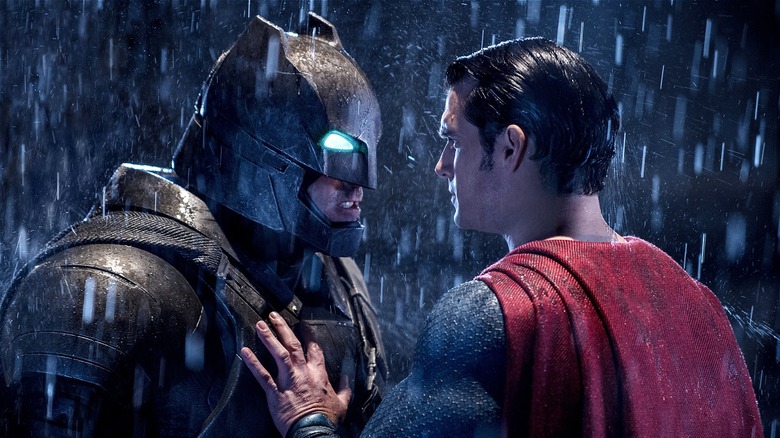
As hard as it may be to believe, Zack Snyder's "Batman v Superman: Dawn of Justice" is now 10 years old. This long-stewing showdown between the two icons of DC Comics hit theaters on March 25, 2016 and immediately became divisive. For some, this deconstruction of the biggest superheroes on the planet was an excitingly fresh take. For others, though, it was a bloated mess trying way too hard to be impactful. The word "Martha," jars of urine, and stories about drowning horses would never be the same after "Dawn of Justice."
A decade later, the live-action DC Comics movie space has moved on from the DC Extended Universe. Though James Gunn and Peter Safran's DC Universe is now inhabiting movie theaters, "Dawn of Justice" still drums up severe opinions and passionate discussion. It's also still producing ripple effects powerfully reverberating through the superhero landscape. The biggest ways "Dawn of Justice" changed superhero cinema reflect, on one hand, this production's less-than-ideal critical outcome adversely affecting post-2016 DC movies.
On the other hand, "Dawn of Justice" has also had other, unexpectedly positive effects, including introducing superheroes that have gone on to have impressive solo outings. Perhaps these five lasting effects of "Dawn of Justice" weren't what Snyder and company had in mind when they made this blockbuster. However, a decade later, they reflect how people are still talking about "Dawn of Justice."
It started years of uncertainty for DC movies
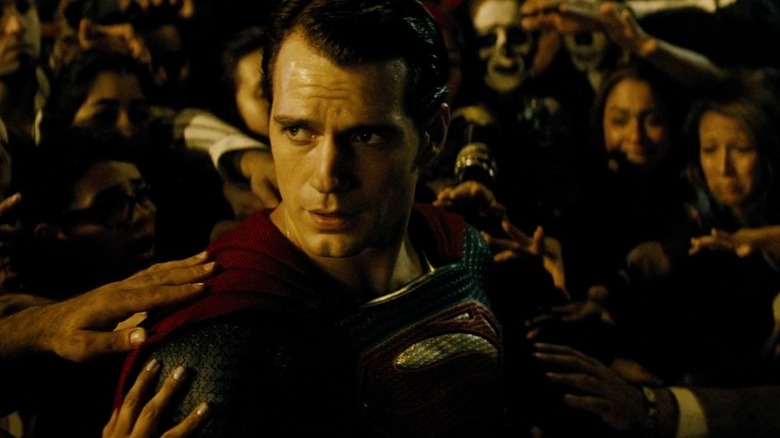
"Batman v Superman: Dawn of Justice" was envisioned as a game changer for Warner Bros. and its DC film slate that would inspire financial stability. Instead, the title's divisive reception started years of executive turmoil. Just two months following "Dawn of Justice's" debut, Jon Berg and Geoff Johns were tasked with handling DC's motion picture exploits under the new company DC Films. The former figure wouldn't even last two years in this leadership position, as Walter Hamada took over the role in early 2018.
The game of musical chairs preceded a slew of further DC Universe drama. Zachary Levi bemoaned outside interference that led to a proposed "Shazam! Fury of the Gods" mid-credit scene getting scrapped. Dwayne Johnson tried pitching his own vision of how DC's movie universe could go down. Confusion reigned supreme over which incarnation of "Justice League" was canon. Through all this disparate drama, uncertainty underpinned everything.
Unfortunately, "Dawn of Justice" seems to have been the seed that sprouted all these chaotic plants. When this project didn't automatically become beloved by audiences, a series of "course corrections" were implemented to get DC back on track in theaters. Rather than a steady stream of blockbusters, "Dawn of Justice" spawned nothing but turmoil.
DC became associated with darkness
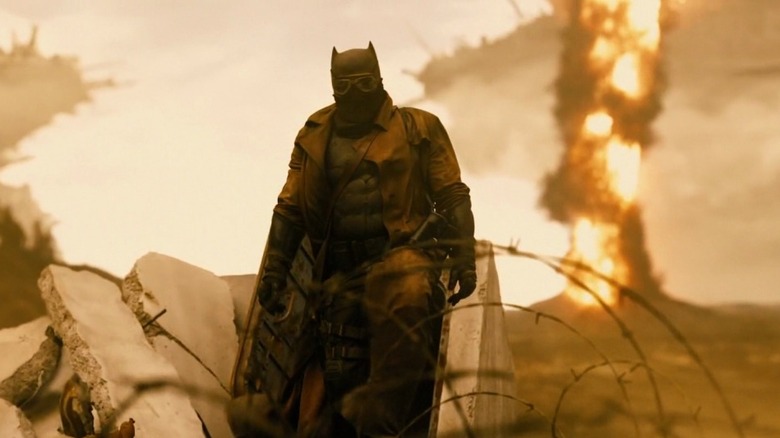
For years before "Dawn of Justice's" premiere, allegations that DC's movie exploits were "serious" and "dark" abounded. There was the whole "no jokes" kerfuffle of 2014, when allegations surfaced that DC movies were working under a new, humorless mandate, accentuated by the tone of "Man of Steel." However, "Dawn of Justice" really solidified the perception that DC equaled dark. After all, this was a movie where Batman branded people, Martha Kent was viciously held for ransom, and a post-apocalyptic nightmare sequence took up a good chunk of the runtime.
Delivering some of the most messed-up comic book movie moments and countless instances of superheroes going too far inspired a reputation for DC that was hard to avoid. In the years following "Dawn of Justice's" premiere, the final "Deadpool 2" trailer featured Deadpool quipping, "So dark! Are you sure you're not from the DC universe?" to Cable, while "Teen Titans Go! To The Movies" also lampooned grim superhero outings like "Dawn of Justice." Even after zippier, lighter DCEU fare like "Shazam!" and "Aquaman," the perception that DC only delivered grim n' gritty projects has endured.
"Dawn of Justice" didn't invent that perception (Christopher Nolan's "Dark Knight" films really solidified that concept). However, it did amplify that reputation and cast a grim shadow over DC movies that they only recently began emerging from.
Marked an end to Hans Zimmer's tenure in superhero movies
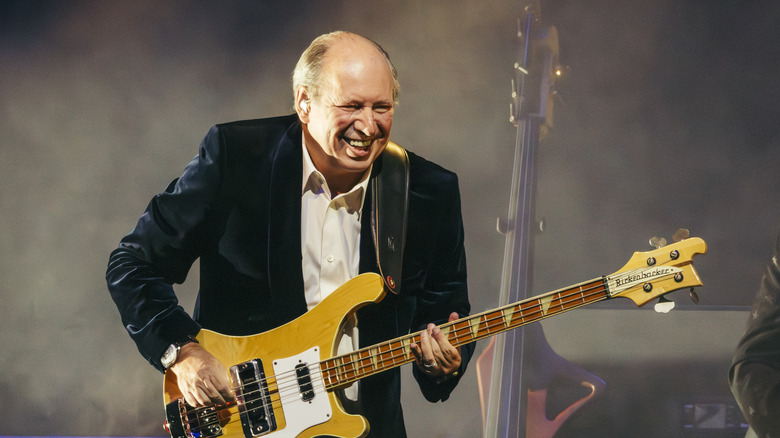
Composer Hans Zimmer has proven especially influential in molding the first 16 years of 21st century superhero cinema. Zimmer's orchestral works were profoundly prominent across the first slate of modern superhero tales including the "Dark Knight" trilogy (the first two installments of which he composed with James Newton Howard), "Man of Steel," and "Batman v Superman: Dawn of Justice."
Following "Dawn of Justice," though, Zimmer announced he was stepping away from scoring superhero movies for the foreseeable future. "Dawn of Justice," which he composed with Junkie XL, was apparently a trying creative exercise for Zimmer as he struggled to find new musical ideas. That's not surprising, since this film saw Zimmer score for superheroes he'd already worked with before. Rather than scramble to figure out how his tracks could evolve with rebooted versions of famous crime-fighters, Zimmer opted to leave the subgenre.
Zimmer's only broken this departure twice since "Dawn of Justice," for "Dark Phoenix" and "Wonder Woman 1984." Otherwise, the architect of some of the most famous superhero movie scores has been MIA from a cinematic realm he's still influencing. In this regard, "Dawn of Justice" was the end of an era. Of course, it was far from Zimmer's end. The acclaimed composer's career has included recent hits like the "Dune" movies.
Less reliance on interconnected stories
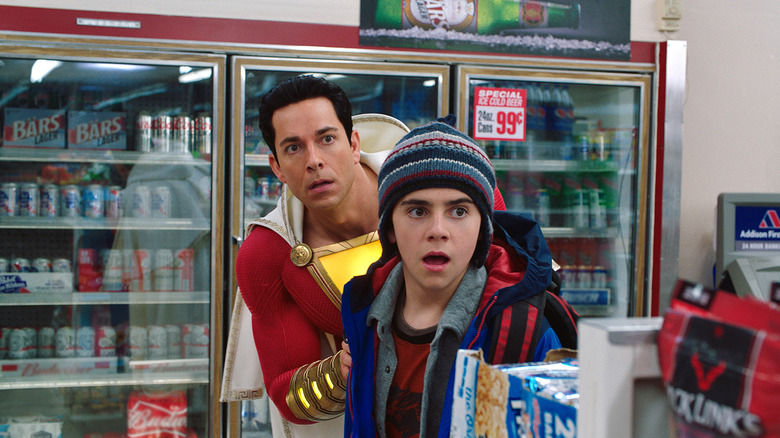
"Batman v Superman: Dawn of Justice's" runtime was crammed with other DC superhero cameos (including an unrecognizable visit from a future version of The Flash) and teased multiple forthcoming DC Extended Universe movies. Audiences weren't enthralled with all the sequel and spin-off showcases, especially since they didn't add anything exciting to the movie they were watching. After this title, Warner Bros. and DC began pulling back on their ambitions for everything in this universe to be interconnected.
The projects that would eventually form the entire DCEU timeline still featured their fair share of cameos. However, movies like "Shazam!" and "Aquaman" largely functioned as standalone exercises. Even other comic book movie outfits began embracing more standalone outings, like "Logan," "Black Panther," and "Captain Marvel." These entities touched upon other comic book movies, but mostly focused on one superhero's self-contained saga.
Granted, the late 2010s still featured "Avengers: Infinity War" and "Avengers: Endgame," which blew everyone away at the box office. Those two crossover titles, though, were the exceptions in a post-"Dawn of Justice" world. For the most part, everyone's superhero film plans got a lot less reliant on setting up endless sequels in the wake of this particular DC crossover extravaganza. Considering "Wonder Woman" and "Aquaman's" box office success, that move proved shrewd for DC.
We were introduced to several popular superheroes
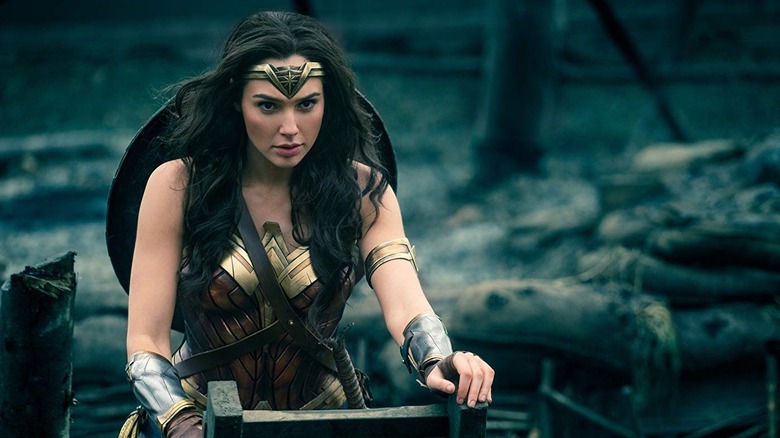
One of "Batman v Superman: Dawn of Justice's" most positive impacts on superhero movies was in finally bringing several DC Comics legends to the big screen. Diana Prince/Wonder Woman (Gal Gadot), for instance, made her live-action cinema debut with "Dawn" before anchoring her solo movie a year later. Meanwhile, a montage of Prince watching security footage of other methaumans offered viewers a glimpse at Aquaman (Jason Momoa) and The Flash (Ezra Miller) before their "Justice League" and standalone excursions.
These cameos did more than bring comic book legends to your local movie theater. They also inspired box office sensations that would forever change the superhero movie landscape. When it released, "Wonder Woman" temporarily became the highest grossing superhero origin story of all time and was seen as a rejuvenating pop culture phenomenon that expanded what superhero blockbusters could look like.
The following year, "Aquaman" passed $1 billion at the global box office, a threshold not even "Batman v Superman" or "Justice League" had hit. These characters had long been thought of as too silly to headline feature films. Once they finally got the chance to be movie stars, though, Wonder Woman and Aquaman anchored some of the biggest DC movies in history, and it all began with those "Batman v Superman: Dawn of Justice" cameos.