

10 Classic '90s Sci-Fi Movies That Aged Poorly
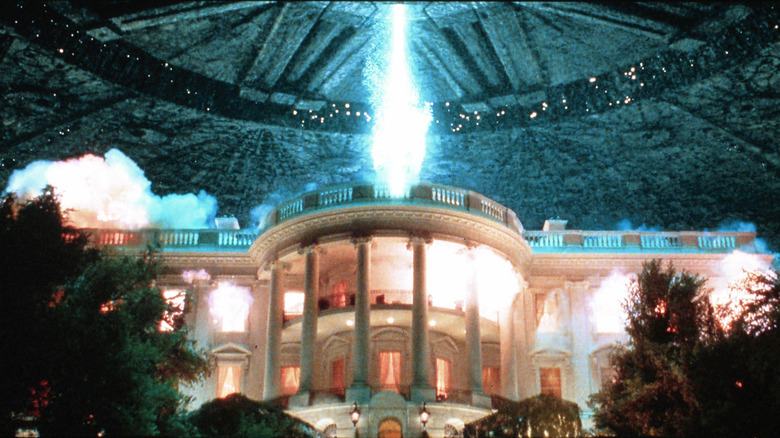
The '90s were objectively one of the greatest decades ever for science fiction cinema. Genre-defining directors like Paul Verhoeven and Steven Spielberg were at the peak of their powers with hits like "Total Recall," "Starship Troopers," and "Jurassic Park," while the next generation of sci-fi auteurs began to assert themselves — most famously the Wachowskis, who dropped arguably the decade's defining sci-fi blockbuster with "The Matrix" in 1999. Sci-fi horror thrived with films like "Alien 3" and "Event Horizon," and special effects were redefined for the modern era with the likes of "Terminator 2: Judgment Day" and "Star Wars: Episode I — The Phantom Menace."
Sounds like a golden era, right? And it was. But in parallel with all of these classics came other films that, while popular in their day, haven't quite stood the test of time. Some are held back today by a distinctly '90s vision of the future, full of zany aesthetics and Clinton-era politics that are just a lot harder to reckon with these days. Others took big swings on the burgeoning CGI movement that, unlike the films previously mentioned here, just don't look good at all now. Or maybe the direction of a franchise in the 21st century left its '90s iterations looking lousy by comparison.
Whatever the reason, many of these films are still iconic — lovable in a nostalgic, campy kind of way, but not taken nearly as seriously anymore. Let's take a look at 10 classic sci-fi movies from the '90s that aged poorly, and why.
Timecop
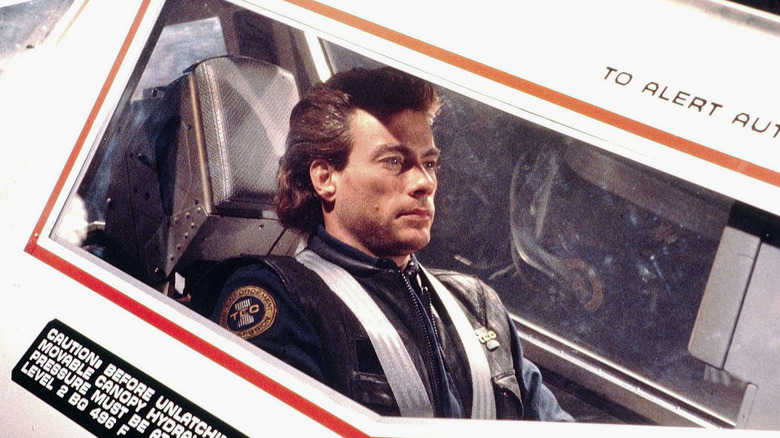
Coming out of the action movie boom of the '80s, Jean-Claude Van Damme carved a distinct niche for himself in the martial arts/genre actioner space. Though he missed the level of acclaim that '80s icons Stallone or Schwarzenegger did with their best films, Van Damme developed a dedicated following going into the '90s with films like "Bloodsport" and "Kickboxer." That led to starring opportunities in the massive realm of '90s sci-fi action, with films like "Universal Soldier" in 1992 and "Timecop" in 1994.
Though the former was directed by soon-to-be blockbuster phenom Roland Emmerich, neither has stood the test of time especially well. But "Timecop" was a pretty big hit for Van Damme, clearing $100 million worldwide on a $28 million budget to become his biggest commercial success as a solo star. That said, the film didn't exactly get great reviews, even at the time, and it's only harder to watch now.
Based on a Dark Horse Comics miniseries, the film follows a generic plot set in an alternate '90s/2000s where time travel exists and an American agency has been set up to stop people from messing with the past. In a shocking twist, someone powerful begins messing with the past anyway, sending titular Timecop Van Damme on a quest to suss out the conspiracy. At the time, this was pretty standard fare for the genre, but it does nothing special in terms of effects, action, or writing to really make it worth the return watch, other than as part of a larger '90s sci-fi retrospective. And while JCVD's quippy, stilted acting was a sort of style unto itself in 1994, it's tough to go back to. There are better time travel movies, better campy action movies, and much better '90s sci-fi movies than "Timecop."
Wing Commander
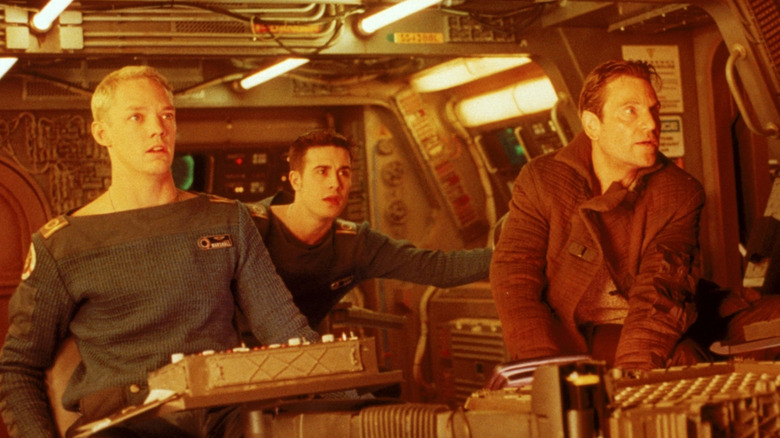
The 1990s saw the real beginning of a film trend that would haunt Hollywood for decades: the lackluster video game movie adaptation. And in truth, not every example back then was as bad as the genre would get in the 2000s. The First "Mortal Kombat" movie is a camp classic, for example, but we also got adaptations like "Super Mario Bros.," "Double Dragon," and "Wing Commander."
Calling the last of these a "classic" might seem like a stretch. "Bomb" would certainly be more accurate, given that "Wing Commander" grossed just $11 million on a budget nearly three times that amount. But there are things here besides the connection to a legendary game franchise (the film was directed by game creator Chris Roberts) that have kept "Wing Commander" in the memory of sci-fi fans. Most notably, with its young leading trio of Freddie Prinze Jr., Saffron Burrows, and Matthew Lillard, the movie caught big stars of the next decade and a half before their explosion to fame. But does the film hold up?
No, no it does not. "Wing Commander" bears many of the hallmarks we'll see again and again on this list: effects shots that do little to aid a young CGI technology, zany puppets, alien suits, and practical effects that don't really hold up, and a distinctly '90s attitude that's far more bizarre than timeless. Whatever appeal it had in its day is surely gone now.
Godzilla 2000
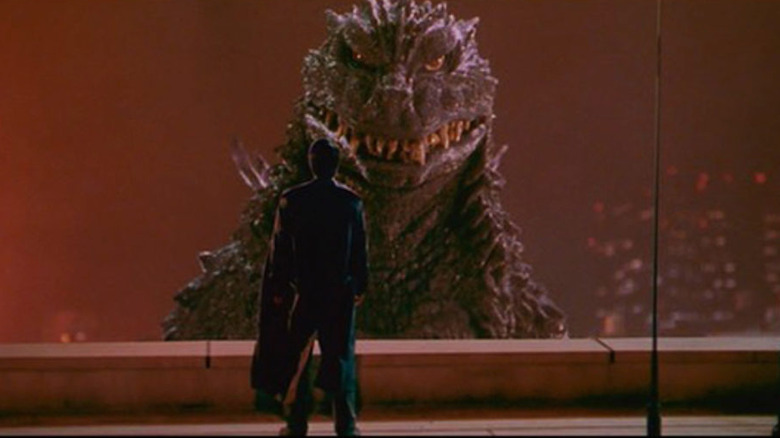
The 1990s were a great decade overall for Godzilla, hosting roughly half of the franchise's stellar Heisei era. That run included 1993's "Godzilla vs. Mechagodzilla II," and 1995's "Godzilla vs. Destoroyah," which many fans view as one of the greatest Godzilla films ever made. There was also, of course, the 1998 American travesty starring Matthew Broderick, but we couldn't bear the thought of labeling that disaster a "classic" (that's right, even though we just did for "Wing Commander" — it's that bad).
Instead, we've selected the film that immediately followed the first American "Godzilla," and which kicked off Toho's Millennium Era with the "Godzilla 2000" series, which despite its title, first came out in 1999. A reboot of the franchise after the much more strict linearity of the Heisei films, "2000" is, on paper, a back-to-basics kaiju movie. Godzilla is primarily an antagonist to humanity once again, sporting a thicc new design and a red-orange atomic fire breath. There's also a mysterious alien spaceship that ultimately transforms into a massive rival kaiju called Orga, whom Godzilla must defeat in a begrudging defense of Earth (or his own pride, perhaps).
Nothing in there sounds that bad, and at the time, there was plenty of reason to get excited. A new generation of Japanese Godzilla films was a pretty compelling proposition, and the film is much easier to watch for sure than its American counterpart from the year before. But looking back now, there's just ... nothing here, aside from some effective suitmation. The pacing is overly drawn out, with very little of the compelling thematic layers that mark the strongest entries in the series. Add an enemy kaiju who was so forgettable he's never been brought back on screen — even in the 2005 free-for-all film "Final Wars" — and you have one of the weaker Godzilla movies all-around.
RoboCop 2
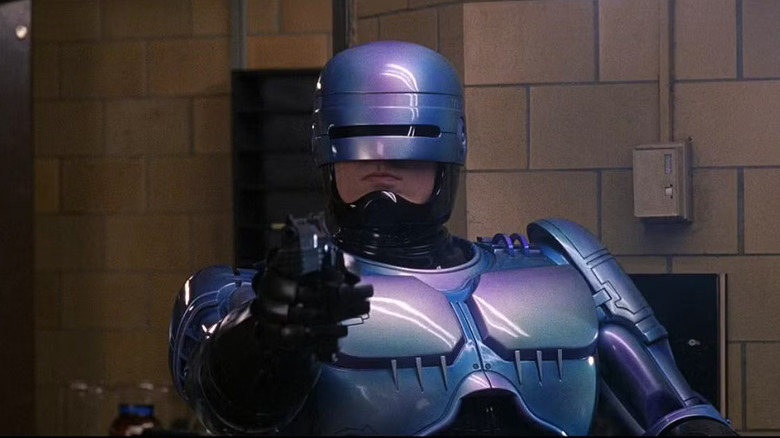
"RoboCop" is an absolute classic — a masterpiece of political satire, anti-corporate cyberpunk dystopia, and railing against the militarization of the police. It's the exact sort of wild, wacky, ultra-violent, socially conscious sci-fi that director Paul Verhoeven continued to thrive on in the '90s (with films like "Starship Troopers" and "Total Recall"). "RoboCop" was also a big hit, grossing over $50 million on a budget of just $13 million. So, inevitably, they made a sequel — this time with "The Empire Strikes Back" director Irvin Kershner behind the camera and comic book legend Frank Miller writing the script, alongside Walon Green.
Much of what made the original film so successful is still here. Kershner is a more-than-capable filmmaker, and he continues the anti-capitalist themes of Verhoeven's film. But the blend of satire, commentary, action, and genuine science fiction just doesn't hit the same stride the second time around. "Gone is the heart of the first film," Gene Siskel wrote for the Chicago Tribune, and other critics concurred. But while the initial reception to the film wasn't great, even at the time, the film has remained somewhat iconic for turning a one-off movie into a longstanding sci-fi franchise that's still getting new entries decades later.
Sure, there hasn't been a "RoboCop" movie since the (underrated) 2014 reboot starring Joel Kinnaman, but there was a new video game as recently as 2023. Many will point to "RoboCop 3" as the point where the series lost all substance and became little more than a recognizable brand to rehash over and over again, but looking back now, "RoboCop 2" bears a good deal of the blame as well.
Armageddon
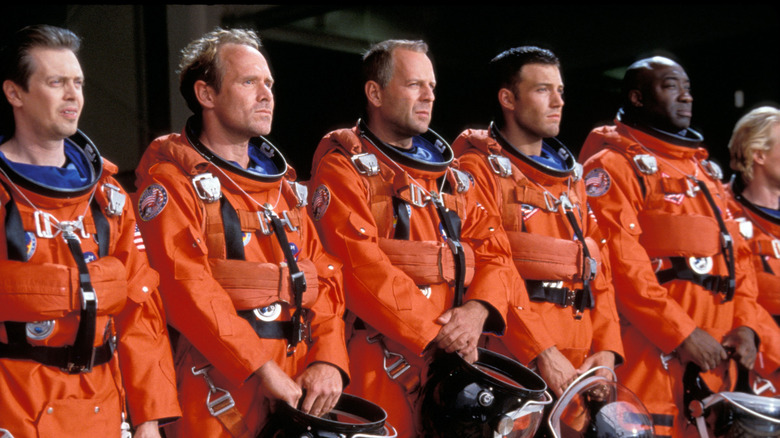
Michael Bay was a rapidly rising hotshot in Hollywood when he put out "Armageddon" in 1998 — fresh off back-to-back hits with "Bad Boys" in '95 and "The Rock" in '96. Here was another bombastic, explosive action-adventure movie, but with a more cosmic focus: a meteor bound for Earth, which can only be destroyed by a ragtag team of oil rig workers. "Armageddon" was the highest-grossing film released in 1998, and it foretold the future of Bay's career better than either of his prior films.
To be clear, this film was never taken especially seriously. It was always seen as an absurd spectacle — silly, too long, with a bloated cast of movie stars, none of whom got to really do great work due to the breakneck pacing and overpacked action menu. But at the time — in a decade largely when directors like Roland Emmerich and John Woo were superstars — "Armageddon" fit into a distinct sort of cinema.
Watching it now, though, is a different story. Yes, there's such a thing as watching a movie ironically. Many of Bay's films can be well used in that way. But at two and a half hours, you'll run out of fun before you even hit the halfway mark, even if the whole point is just to laugh. Bruce Willis cannot save this movie. Neither can Steve Buscemi, Michael Clarke Duncan, nor even a memorable guest turn from the always great Peter Stormare. At the time, "Armageddon" may have been a zany epic, but now it's just a mess.
The Arrival
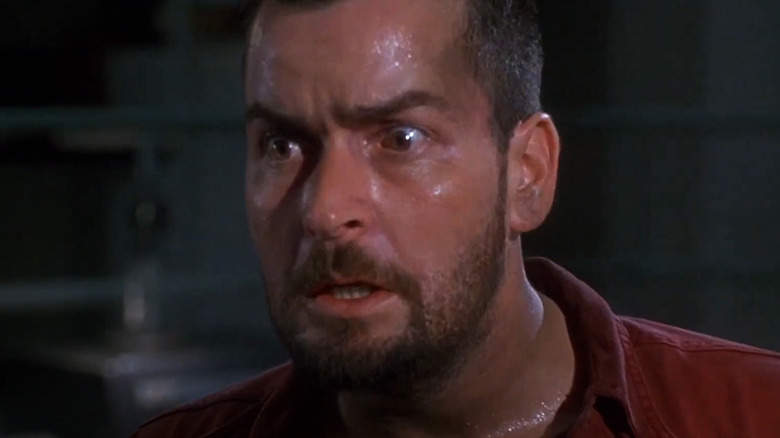
Remember when Charlie Sheen was a movie star? Exactly.
Helmed by future "Riddick" franchise writer/director David Twohy, 1996's "The Arrival" is one of several prominent films from the decade specifically focused on SETI (Search for Extraterrestrial Intelligence) initiatives. Of those, "The Arrival" is certainly the one that has most clearly fallen off the shelf of cinematic relevance today. A big blow took place the very next year in 1997, when Robert Zemeckis' "Contact," starring Jodie Foster and Matthew McConaughey, took a much more artistic and lasting approach to a very similar setup.
Then there's the matter of the name — one which is now solely associated with the astounding 2016 film from Denis Villeneuve, which also deals with alien visitors to present-day Earth. If you search "Arrival sci-fi movie" on Google or any other search engine these days, you have to scroll a ways just to find a single link related to the Sheen film.
Is the movie bad? It's not horrible, and it's not great. Perhaps that's further to its detriment these days. Were the film more trashy or hilarious in that classic '90s sci-fi way, it may have retained some semblance of relevance in rewatch culture today. Instead, it's become entirely superfluous.
Independence Day
Some will take umbrage at seeing such a classic appear on this list, but come on, we can't take cheap shots at video game movies and Charlie Sheen the whole time. "Independence Day" is, for some, a definitive blockbuster of the '90s — right up there with "The Matrix," "Jurassic Park," "Terminator 2," and ...
Oh ...
Do you see it now?
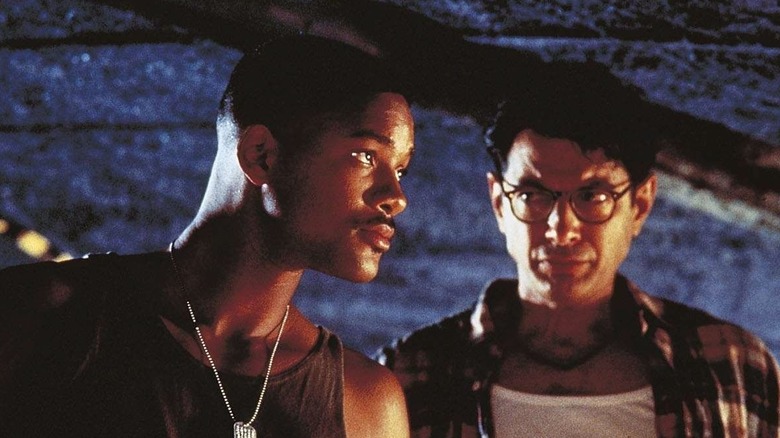
While Roland Emmerich's magnum opus — the film that, along with "Stargate," earned him the reputation to make decades of forgettable genre thrill rides — is iconic, it doesn't really hold up that well. If you rewatch it and try to keep that '90s nostalgia at bay, you'll see it. The lack of compelling character work, the one-note absurdity, the gung-ho American military patriotism that just reads as so hollow now ... It all coagulates into an extremely dated mass that, despite its spectacle, isn't even all that entertaining anymore.
Emmerich's films since have been generally relegated to a specific dustbin of mildly flavorful garbage, but a combo of nostalgia and '90s style has kept "Independence Day" on a higher tier in the eyes of many. Maybe that's thanks to Will Smith and Jeff Goldblum, who are undeniably charming despite a middling script. If there were any doubt left as to how "Independence Day" holds up, the sequel you definitely forgot about should have put it to rest.
Judge Dredd
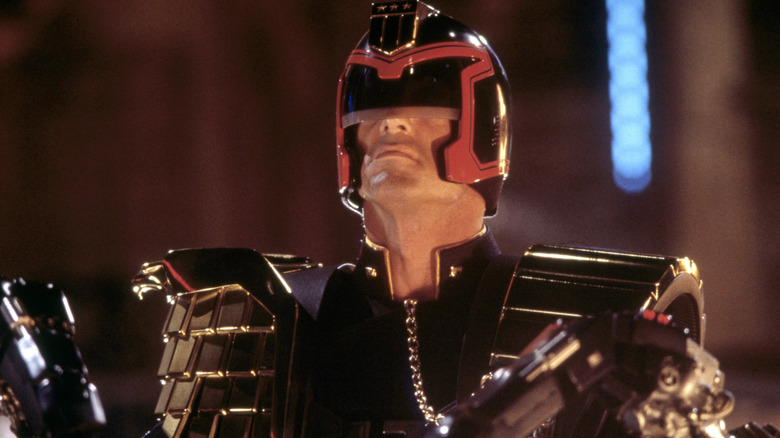
Sylvester Stallone had a bunch of movie hits through the '80s and '90s. He also had just as many — if not more — critical and/or commercial duds. But somehow, we don't seem to mind. Is "Cobra" a good movie? Absolutely not. Is it incredible? Why yes, yes it is. "Over the Top," "Tango & Cash," these are movies of questionable quality but undeniably iconic status. Stallone himself is the institution here. You come for a certain vibe, and that vibe doesn't really care if the movie it's coating is good or not. Neither do we.
That said, not all of Sly's famous flops have aged as gracefully. There is such a thing as too much silliness — the wrong kind of camp. "Judge Dredd" was a costly undertaking when it came out in 1995, grossing only about $113 million on a reported budget of around $85 million. It was also far from a critical hit. And yet, the combination of fun costumes, memorable production design, infamous one-liners, and that familiar brand of Stallone action kept it something of a cult classic, albeit an ironic one.
But then 2012 came, and we got "Dredd." And suddenly, there was no reason for anyone to watch Stallone's version ever again.
In 1995, the screenwriting duo of William Wisher ("The Terminator") and Steven E. de Souza ("Die Hard') was a pretty compelling team to script a new sci-fi actioner about a cop in the future. But that script holds little water compared to the one crafted by sci-fi master Alex Garland for the 2012 adaptation, and Karl Urban's Judge Dredd is so good that it will wipe even the goofy, entertaining bits of Stallone's performance from memory.
Sometimes, you just get one-upped by the reboot.
Demolition Man
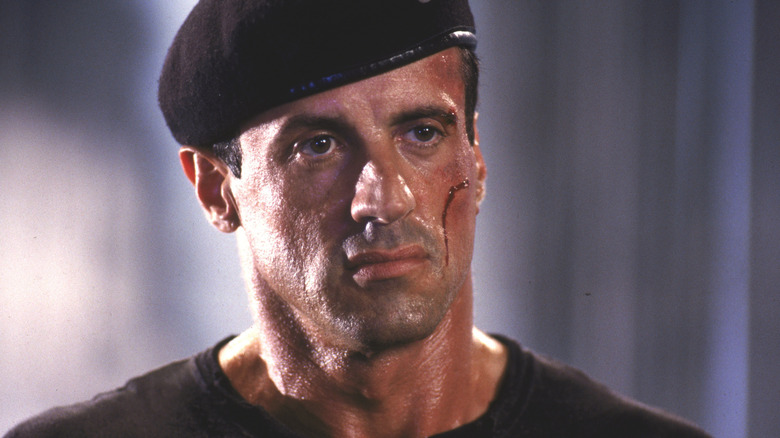
Speaking of Sylvester Stallone sci-fi action movies from the '90s that haven't aged well, we have to talk about "Demolition Man." Perhaps the silliest entry in the actor's very silly genre catalog from the era, the film also starred Sandra Bullock and Wesley Snipes in a near-future utopia/dystopia where violent crime has largely been eradicated, behavior is highly monitored and controlled, the only restaurant is Taco Bell, and no one knows what the three seashells are for.
The intention here is a sort of satire of the bleeding-heart '90s vision of the future, where all people hold hands in a circle, the police are a bunch of ineffectual softies, and the joy of life has been replaced by a kind of hivemind adherence to rules and restrictions. And therein lies the problem. In a cinematic decade loaded with confused, contradictory politics, "Demolition Man" may be the worst offender. It's a vision of the future where unchecked corporate monopoly leads to a sterile but prosperous life for all; where sexual liberation is quelled by rampant liberalism; where violence is a tool of liberation but rarely a tool of the state. No matter what angle you enter the film from, you are bound to leave baffled by whatever it might be trying and failing to say.
And then there's the sci-fi action component, which only feels more generic and forgettable in hindsight. There are so many incredible movies in that genre from this era that, unfortunately, there's just no reason to watch "Demolition Man" again.
The Fifth Element
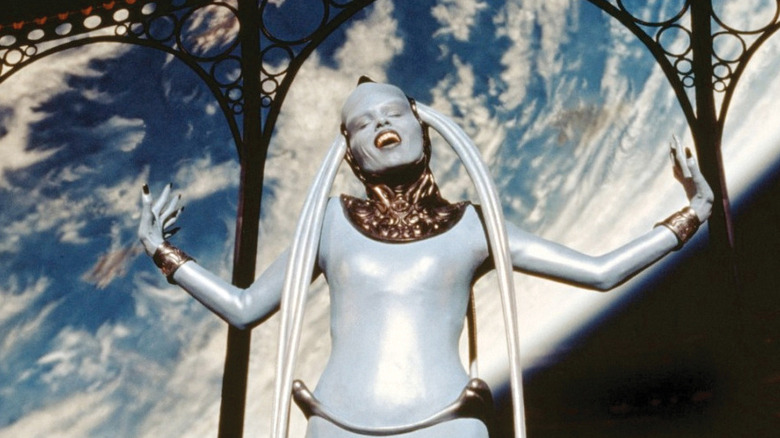
Closing out on a film that many might call a gem of the '90s, we have Luc Besson's "The Fifth Element" — a psychedelic, intentionally bizarre sci-fi odyssey starring Bruce Willis, Milla Jovovich, and Gary Oldman. Like "Independence Day," this pick may be controversial. But on a rewatch in 2026, it just doesn't hold up the way you'd hope.
Let's start with the things that were always great: the costume design, boundary-pushing special effects, and overall production aesthetic. There is still, to this day, very little that looks like "The Fifth Element." But while that clear visual identity helped it stand out in 1997, it all looks a lot more dated now.
That's not just referring to the early CGI, which certainly cracks at the seams compared to effects work today. The whole bizarro look and feel of "The Fifth Element" may have felt like a vision from a strange future in the '90s, but now it just feels like a vision of the '90s, and not a terribly cohesive one. It's a spaghetti-at-the-wall approach to world building, and that strategy extends to the hyper-campy performances from the likes of Oldman and Chris Tucker.
The camp is intentional, yes, but that doesn't make it effective. There are moments where the Technicolor montage blends together into a semblance of something distinct and intentional, but those moments are fewer and farther between than you remember. It's not drag so much as an impersonation of drag, and it's not groundbreaking science fiction so much as a zany coat of paint on something very familiar.