

10 Box Office Hits That Were Initially Rejected By Movie Studios
Once a movie becomes a big deal at the box office, it's easy to look back and say that the project was always a slam-dunk. The truth, though, is far more complicated. Getting anything made in Hollywood is a miracle. Countless promising-sounding projects were stopped in their tracks by uncertain studio executives, budgetary concerns, filming problems, or other issues. So many obstacles can crop up when conceiving a film that can make studio heads and financiers nervous.
Projects that eventually excel at the box office can initially look like guaranteed flops in the conceptual stage. Thus, many future financial hits were jettisoned by uncertain movie studios before moving to their final distribution homes. Behold Steven Spielberg directorial efforts or horror video game movie adaptations that sold countless tickets, yet were deemed too risky or uncommercial by the biggest companies on the planet.
For the studio executives who passed on these ten films, looking back on their decisions must stir up a cavalcade of mixed emotions. For everyone else, though, they are fascinating glimpses into the tumultuous world of studio filmmaking. Even the biggest box office juggernauts can seem like unnecessary risks to certain — eventually unlucky — studios.
E.T. the Extra-Terrestrial
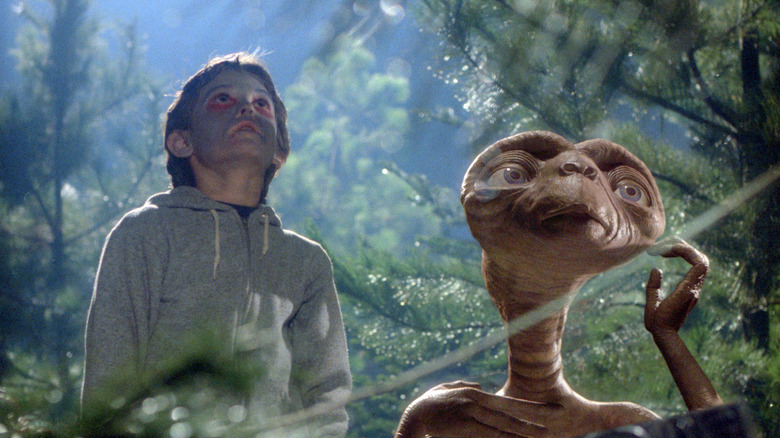
Steven Spielberg's "E.T. the Extra-Terrestrial" wasn't just a moneymaker back in 1982. It was a theatrical juggernaut that ended up becoming the biggest film of all-time at the domestic box office, dethroning "Star Wars" for that honor. Given what a lucrative enterprise this was and its enduring fanbase, it's impossible to imagine that "E.T." was ever a project that Hollywood would express skepticism about. However, when Spielberg and company were first getting the project realized, studio executives were wary.
The gentle, humanistic "E.T." started life as the grim horror movie "Night Skies," a quasi-sequel to Columbia Pictures' "Close Encounters of the Third Kind," also helmed by Spielberg. Because Columbia had been involved in "Skies," the studio got first dibs on "E.T." However, even after spending tons of cash on pre-production, executives opted to pass on this family film. Columbia brass perceived it as skewing too young, so off the project went to Universal (where Spielberg previously made "Jaws").
"E.T." went on to make $439 million domestically alone for Universal across multiple theatrical reissues. What happened to the studio that passed on making "E.T.?" Columbia Pictures had the second-biggest movie of 1982 domestically, "Tootsie," and released further smash hits like "Ghostbusters" and "The Karate Kid" in the following years. The studio may have not crumbled without "E.T.," but losing out on such a box office sensation still stung.
Lincoln
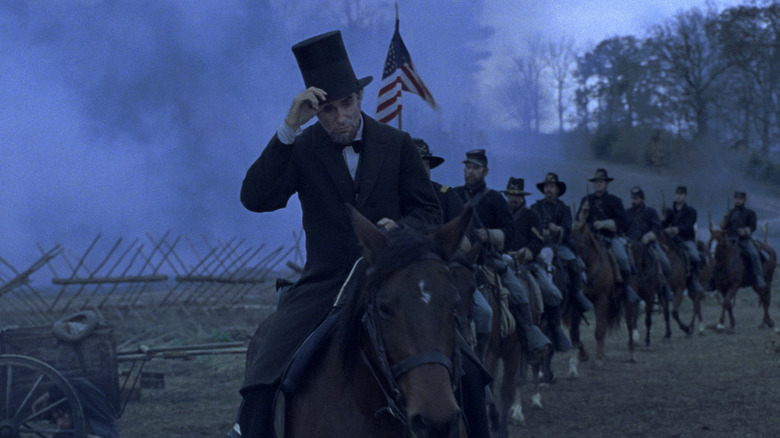
Decades after "E.T.," poor Steven Spielberg still couldn't catch a break. By the time the 21st century arrived, Spielberg had become fixated on making an Abraham Lincoln movie, which would've starred Liam Neeson as the famous U.S. President. Initially, plans were set into motion to get the project going in 2009, but it took a few more years before "Lincoln" finally started shooting. That's because Paramount Pictures, its original home, passed on the project.
In late 2008, Paramount and the Spielberg-founded movie studio DreamWorks SKG had parted ways. Paramount's disinterest in "Lincoln" was likely just collateral damage in the split, while the perceived difficulty of adult-skewing dramas during the Great Recession likely also played a role in the decision. Eventually, Disney's Touchstone Pictures division, as part of a long-term distribution deal with DreamWorks, picked up the film in North America while 20th Century Fox came on to co-finance.
With that, "Lincoln" was released in November 2012. Paramount's perception of the film's limited appeal proved ill-founded, as it grossed a massive $182.2 million domestically. A tremendous moneymaker on a $65 million budget, Spielberg's fixation was shared by the wider public. Better yet, "Lincoln" outgrossed all of Paramount's 2012 live-action projects domestically. The irony was so poetic you'd think it hailed from a script by "Lincoln" screenwriter Tony Kushner.
Back to the Future
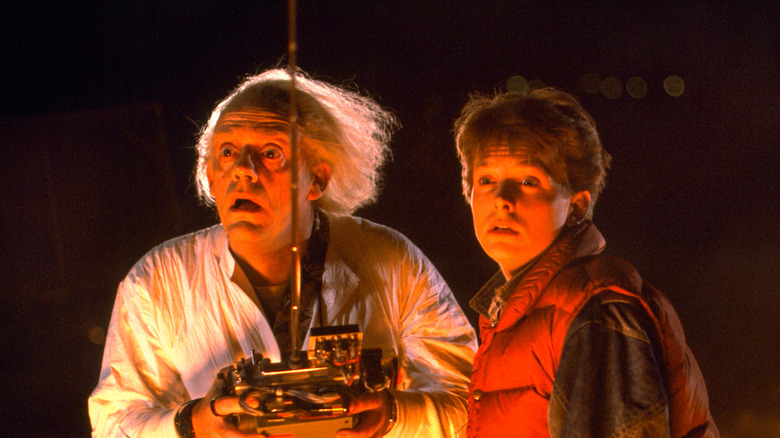
"The power of love/is a curious thing", Huey Lewis and the News once crooned. Even more curious, though, is how 1985's "Back to the Future" was initially perceived as a no-go proposition by multiple movie studios. Columbia Pictures initially brewed "Future," but executives shrugged the film off because it wasn't viewed as properly lewd enough to compete with the biggest comedies of the '80s.
Writer/director Robert Zemeckis and fellow screenwriter Bob Gale kept pushing the project at other studios, including pitching to Walt Disney Pictures brass. Disney, though, was not enthusiastic. While Columbia had rejected "Back to the Future" for not being R-rated enough, Disney saw its core plot elements as contrary to the studios brand. Then-recent memories of tonally incongruous Disney box office misfires like "Condorman," "Tron," and "The Black Hole" certainly didn't help the sci-fi comedy's standing with the Mouse House.
Eventually, Zemeckis developed enough filmmaking clout for Universal Pictures (then-home to "Future" producer and Zemeckis mentor Steven Spielberg) to pick up "Back to the Future" for a 1985 release. Soon, all that studio hesitation looked laughably short-sighted, as "Back to the Future" became a massive success. 1985's biggest movie domestically, "Back to the Future" proved more powerful than "the power of love."
Deadpool
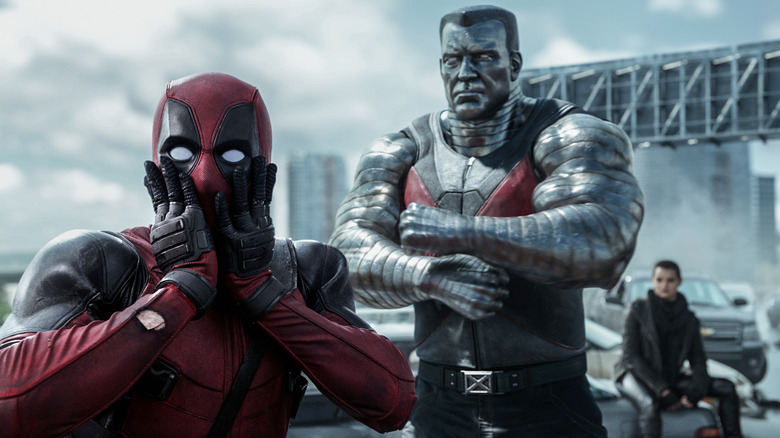
20th Century Fox executives spent years being hesitant that Ryan Reynolds' Deadpool could work as a leading man. Though the project had its roots in the late 2000s superhero film "X-Men Origins: Wolverine," it wouldn't be until 2016 that "Deadpool" finally hit the big screen. Screenwriters Rhett Reese and Paul Wernick first got attached to "Deadpool" in January 2010, and the duo remained loyal to the film (as would Reynolds) for the years of disappointment that followed.
Even the explosion of popularity in superhero movies in the early 2010s didn't help "Deadpool" out, as family-friendly titles like "The Avengers" only exacerbated concerns 20th Century had about this project's unusual qualities. Reynolds' box office difficulties headlining costly blockbusters like "Green Lantern" and "R.I.P.D." didn't help.
All hope looked lost for "Deadpool" until one July 2014 day when test footage directed by Tim Miller was leaked online. While the material hadn't won over 20th Century Fox executives years earlier, it blew up on the internet. The enthusiastic reception convinced the studio to finally green-light the film they'd rejected so many times before. After all that, "Deadpool" grossed $782.8 million worldwide, proving the initial skepticism was wildly misplaced.
Ted
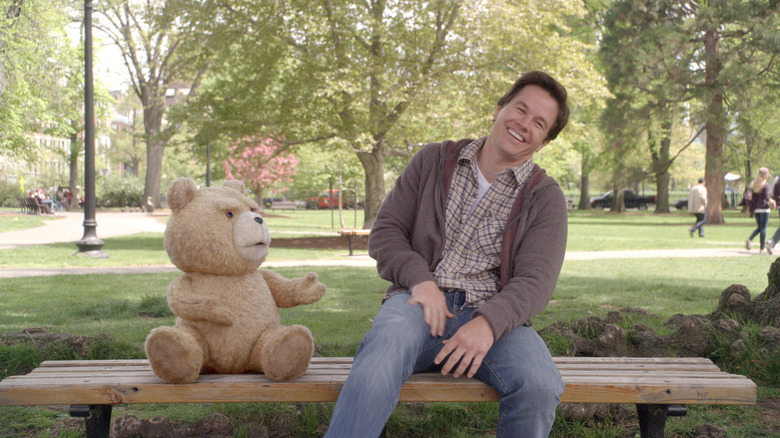
Though the Fox network initially canceled Seth MacFarlane's "Family Guy" in 2002, by 2010, there was no chance Fox was ditching Peter Griffin or any other TV show MacFarlane was attached to. "Family Guy" had become a behemoth, while MacFarlane had kickstarted further animated sitcoms "American Dad!" and "The Cleveland Show" for the network. This guy had such a sublime track record that one would imagine that any label would've followed him to the ends of the Earth.
However, 20th Century Fox (once the sister film studio arm of the Fox network) passed on "Ted," MacFarlane's feature-length directorial debut. The studio had lots of initial qualms including its costs and R-rating. MacFarlane and his crew tried addressing these problems, but none of it was enough to satisfy Fox brass. At the time, Fox's emphasis was on family movies and PG-13 comedies like "Date Night" and "Big Mommas: Like Father Like Son."
Meanwhile, Universal Pictures, which had made a fortune off of R-rated comedies like "Knocked Up" and "It's Complicated," was comfortable financing and distributing MacFarlane's vision. The result was a gargantuan box office juggernaut that grossed $556 million worldwide. If only Fox had trusted MacFarlane just one more time.
Twilight
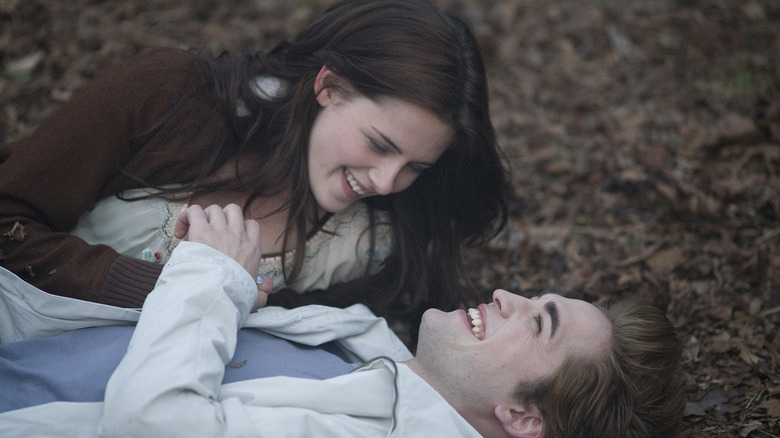
There was a time before "you better hold on tight spider monkey" and "from now on, I'm Switzerland, okay?" where studios were wary of bringing the "Twilight" books to the screen. Stephanie Meyer's texts were initially optioned by Paramount Pictures for a big screen adaptation, but the studio was heavily overhauling the "Twilight" stories in translating them to cinema. Fans would've been baffled by the radically different takes on Bella Swan and Edward Cullen.
Eventually, Paramount lost interest in "Twilight" and put the adaptation on ice. The "Twilight" brand was seen as so risky that the production was eventually set up not at Warner Bros. or Universal Pictures, but Summit Entertainment. This smaller co-financing label had only just gotten into self-distributing titles in North America in 2007. However, Summit saw the potential in "Twilight" and agreed to bankroll the romantic fantasy.
The rest is history. Summit's decisions not only paved the way for things that happen in every "Twilight" movie, but also "Twilight's" $403 million worldwide gross ($194.3 million of which came from North America), with future entries reaching as high as $830 million. Allegedly, Paramount executives were so infuriated over losing this property that the studio scrambled to ascertain who at the company was responsible for letting the project go. Paramount's loss was Summit's gain, as this smaller studio launched a franchise that proved formative for countless moviegoers.
Do the Right Thing
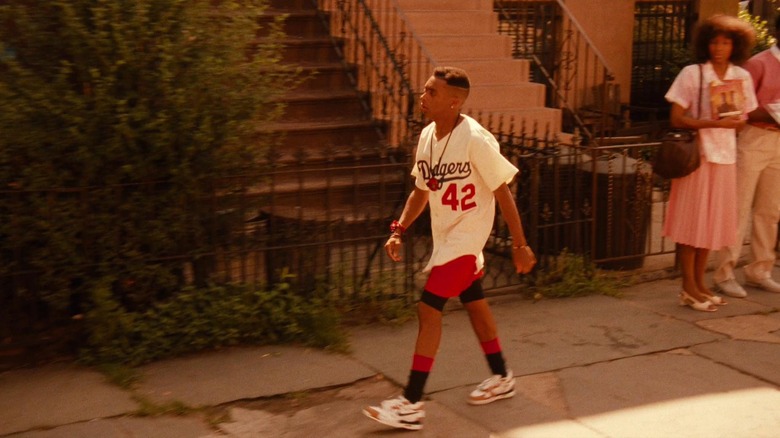
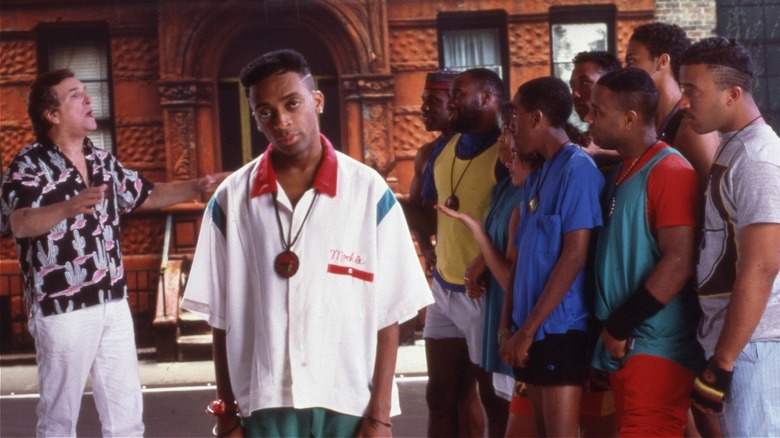
1989's "Do the Right Thing" wasn't the first Spike Lee directorial effort, but it was the movie that kicked off his reputation as a cinema master. Even with his immense reputation, though, Lee's often had trouble getting executives to go along with his exciting visions resulting in numerous Spike Lee movies we'll never get to see.
This extended to "Do the Right Thing," which was initially set as a Paramount Pictures project. Everything was all ready to go for "Right Thing" at Paramount, until studio executives insisted that Lee give the film a sentimental, tidy wrap-up. Specifically, they requested an ending where Mookie (Lee) and Sal (Danny Aiello) reconciled and hugged. Any ambiguity or reflections of real-world uncertainty left by "Right Thing's" captivating finale, which focused on a riot following the murder of Radio Raheem (Bill Nunn) at the hands of the police, would've been squashed if Paramount's proposed ending had been accepted.
Lee understandably took "Do the Right Thing" elsewhere, with Universal eventually picking up the production so long as it stuck within inside strict budget parameters. This decision paid off nicely for Universal, which more than quadrupled "Do the Right Thing's" $6 million budget after the title made $26 million domestically. Chances are, the positive word-of-mouth surrounding "Right Thing" would've been severely diluted if Lee delivered Paramount's ending.
The Day After Tomorrow
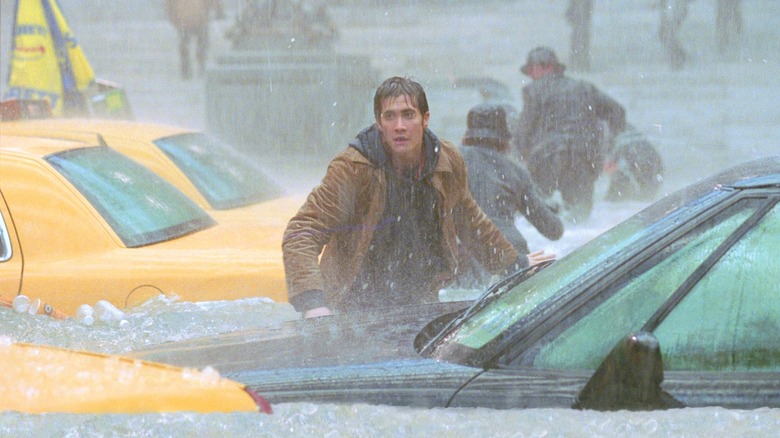
In the early 2000s, director Roland Emmerich had a track record for delivering big summer movies that exceeded $100+ million domestically. 1996's "Independence Day" went especially ballistic with its massive $800+ million worldwide haul. One would think every Hollywood operation would be lining up for anything Emmerich wanted circa. 2002. This was the year Emmerich sought financiers for "The Day After Tomorrow," his big climate change disaster movie.
However, DreamWorks SKG famously turned down "The Day After Tomorrow." This was apparently one of many projects then-DreamWorks head Michael De Luca was trying to get made at the studio. Unfortunately, "Day After Tomorrow" was just one of several potential DreamWorks titles that De Luca couldn't get other studio executives excited about. Attempts to make "The Day After Tomorrow" at the studio behind "Gladiator" went nowhere, perhaps because some DreamWorks heads saw a disaster film from the "Independence Day" director as being incongruous with the studio's "artsy" image.
Whatever led to DreamWorks passing on "The Day After Tomorrow," 20th Century Fox welcomed it with open arms. In the process, they snagged one of 2004's biggest features, as "The Day After Tomorrow" grossed $555.84 million worldwide and $186.74 million domestically. DreamWorks SKG sure could've used that cash considering the beleaguered studio was sold to Paramount a little over a year after "Tomorrow's" debut.
Five Nights at Freddy's
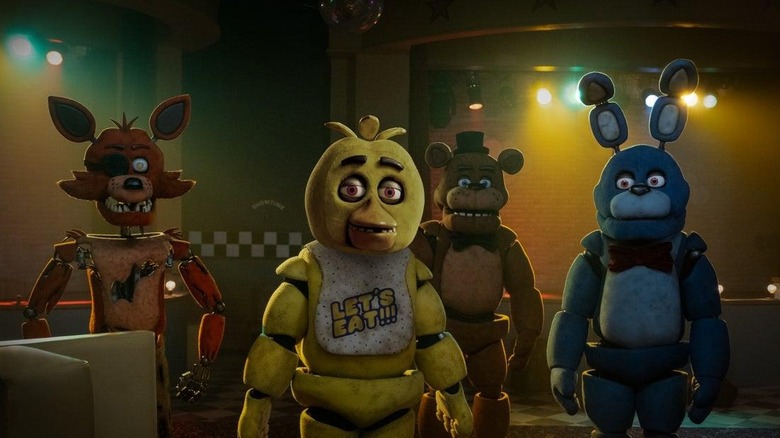
Long before the existence of those "Five Nights at Freddy's 2" moments that make no sense, there was immense struggle to get the first "Freddy's" movie adaptation going. Even with the original "Five Nights at Freddy's" video game being a massive deal online, it took ages for Freddy Fazbear and company to gain any momentum in Hollywood. Warner Bros. was the first studio to score the film rights to the "Freddy's" world, with the studio hoping that the source material would spawn a frightening new franchise
Just a few months after Warner Bros. scored the "Freddy's" license, "Monster House" and "Poltergeist" filmmaker Gil Kenan was hired to direct. This initially indicated that Warner Bros. was looking to make the movie sooner rather than later, but afterward, further "Five Nights at Freddy's" updates dried up. Two years later, Warner walked away from the enterprise.
This opened the door to Blumhouse Productions scooping up the "Freddy's" film rights and setting into motion what would become 2023's "Five Nights at Freddy's." Though many critics declared "Five Nights at Freddy's" a horror-comedy with no laughs or scares, this Emma Tammi directorial effort eventually made $297.2 million worldwide. This project, once orphaned by Warner Bros., was now the biggest Blumhouse title ever globally at the time of its release.
Barbie
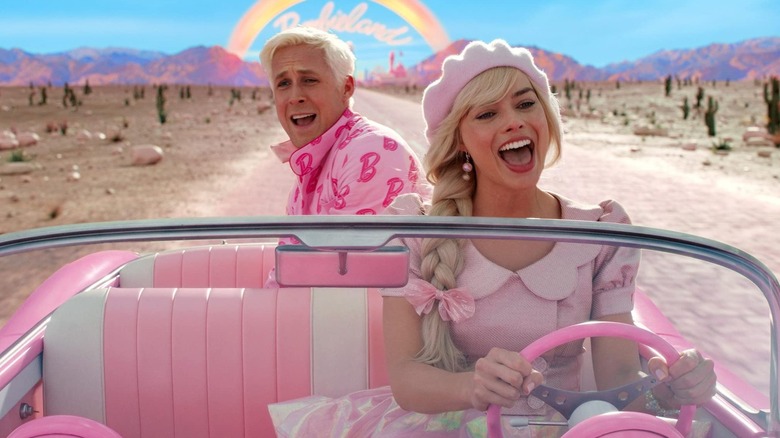
Sony/Columbia Pictures first secured the film rights to "Barbie" in April 2014. When new leadership was installed following the December 2014 Sony hack, the studio prioritized getting a slew of franchises off the ground. New takes on old Sony IP like "Jumanji," "Bad Boys," and "Spider-Man" were of utmost importance, though Sony also saw "Barbie" as a new property that could help get its film ambitions up and running.
By late 2016, things were picking up steam when Amy Schumer signed on to play the lead role. However, she later departed the project and Anne Hathway was eyeballed to take over. From there, various screenwriters were attached, while Alethea Jones was hired to direct. Sony brass were clearly enthusiastic about "Barbie," but could never find out the proper direction to bring it to life.
By October 2018, Sony's license for the "Barbie" film rights had run out, ultimately deciding to let it go rather than keep throwing screenwriters and filmmakers at the project. Plus, by then, hit titles like "Venom" and "Jumanji: Welcome to the Jungle" had made Sony less desperate for moneymakers. Thus, Sony let "Barbie" go to Warner Bros., where, under Greta Gerwig's direction, it eventually became a 2023 cultural phenomenon that dominated the box office.