

Robert De Niro's Three Favorite Movies Of All Time Are All '50s Classics
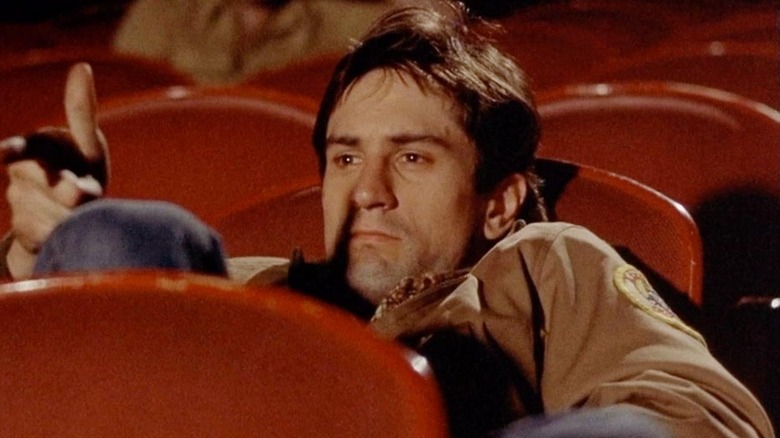
For decades, Robert De Niro has been one of the best actors in Hollywood. He can terrify in something like "Killers of the Flower Moon" just as easily as he can get laughs as the titular "Dirty Grandpa," which might be De Niro's worst movie but still kills it on streaming. Sure, in recent years he's done a lot of less-than-respectable work, but De Niro is as compelling as ever, and always worth watching even if the movie around him is a mess.
It makes sense, then, that fans would be interested in what De Niro himself watches in his free time. According to the Golden Globes, De Niro's three favorite movies are all classic dramas from the 1950s: "On the Waterfront," "East of Eden," and "Rebel Without a Cause."
1954's "On the Waterfront" is a classic about a corrupt fighter (Marlon Brando) who might have missed his chance at greatness. It's a crime drama about people who work on the docks, and its moody black-and-white cinematography works perfectly with Brando's nuanced performance to deliver maximum emotional impact. The other two films both came out in 1955: "East of Eden" adapts the second half of the John Steinbeck classic about two brothers vying for their father's affection, while "Rebel Without a Cause" is about a teenager trying to find his place in the world. Taken together, the three movies reveal some fascinating things about what De Niro prioritizes in entertainment.
Robert De Niro is positioning himself as the heir to James Dean and Marlon Brando's legacy
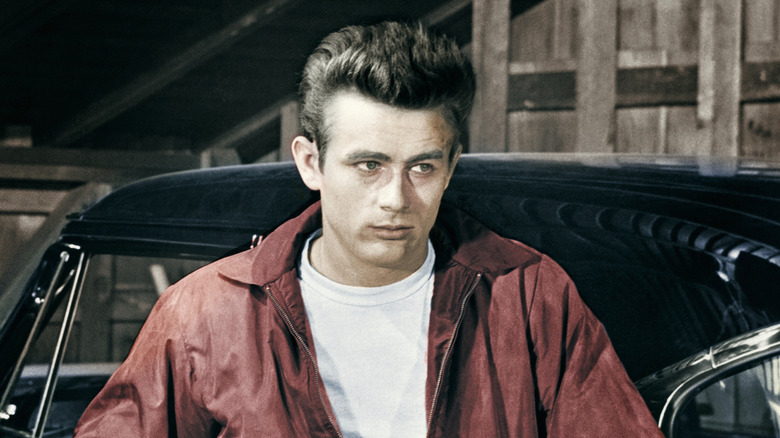
Taken together, Robert De Niro's three favorite movies represent one of the most performance-forward times in Hollywood history, making them fitting selections for one of our greatest living thespians. In the postwar years, a new form of acting emerged called the Method, and its stars gave America a fresh vision of masculinity that was comfortable with sensitivity (later Method actors took things too far, missing the point of the original exercise). Marlon Brando starred in "On the Waterfront," while both "Rebel Without a Cause" and "East of Eden" starred James Dean; by selecting these as his favorite films, it's almost as if De Niro is positioning himself as the heir to their legacy.
Martin Scorsese, who has directed De Niro many times, told The Los Angeles Times that Elia Kazan (who directed both "On the Waterfront" and "East of Eden") was one of his biggest influences as he and De Niro struck up their creative partnership. Scorsese said that they tried to specifically recapture the energy of Brando's iconic "I coulda been a contender!" moment from "On the Waterfront." "It became a touchstone of our sense of what is truthful in art," he explained.
De Niro has shouted out Dean as a particular influence, telling director Kenneth Branagh in an interview (via Far Out magazine) what he realized while watching Dean's performance in "East of Eden": "He was great, but you can't do what he could do."
Robert De Niro got to work with Marlon Brando several times
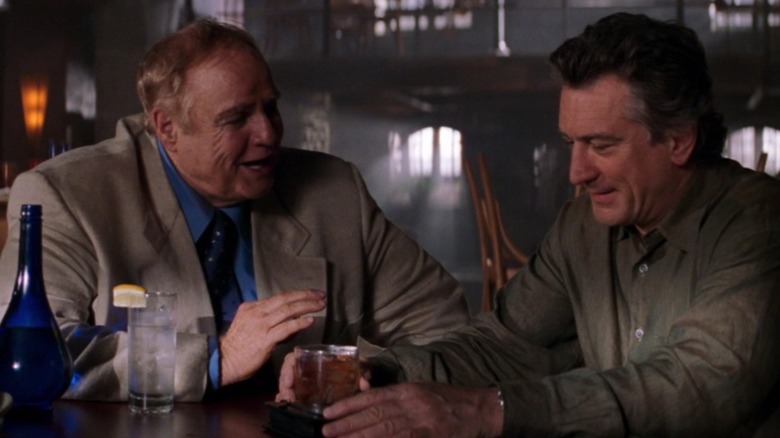
James Dean died the same year "East of Eden" and "Rebel Without a Cause" hit theaters; Robert De Niro was only 12, so they never got a chance to meet. He would, however, later work with Marlon Brando, his career becoming inextricably tied to the star he once so admired in "On the Waterfront."
Anyone who loves the Academy Awards knows that Brando and De Niro share a certain distinction: they won Oscars for playing the same character. Brando starred as Vito Corleone in "The Godfather," while De Niro played a younger version of the character in "The Godfather: Part II," which is a prequel and sequel simultaneously. That meant De Niro had to closely match the way Brando had characterized Corleone in the original film, telling CNN that when he rewatched the movie, "[I] had an old video camera and videotaped all of Brando's scenes. I took those and I studied those."
De Niro and Brando later shared the screen in "The Score," Brando's final starring role. De Niro later explained (via Variety) that the set had occasionally been contentious, thanks to Brando arguing with director Frank Oz. Brando actually had De Niro step in to direct a scene in which both actors appeared. "I was terribly anxious before we started shooting it," De Niro recalled, but thankfully it all worked out, and he got to work with his acting hero just in time.