

10 Best Cult Classics Of The 1970s, Ranked
The 1970s are an interesting decade for cinema, bridging the gap between the counterculture indies of the late 1960s and the massive blockbusters of the 1980s, so it makes sense that they would have more than their fair share of cult classics. This includes films that were ignored, misunderstood, or even criticized when they were first released but have since gone on to be appreciated by new generations of audiences.
Often quirky, iconoclastic, or just plain weird, these films represent some of the most unique creative output of the decade. There's something wonderful about the fact that even these ultimate underdogs can go on to have second or even third lives among cinemagoers, with their eccentric qualities appreciated well beyond their initial release. Whether they've lived on through home video or midnight screenings, over the years they've developed a committed and incredibly loyal fan base. These movies may not be for everyone, but for the select audiences that connect with them, they're everything.
10. El Topo
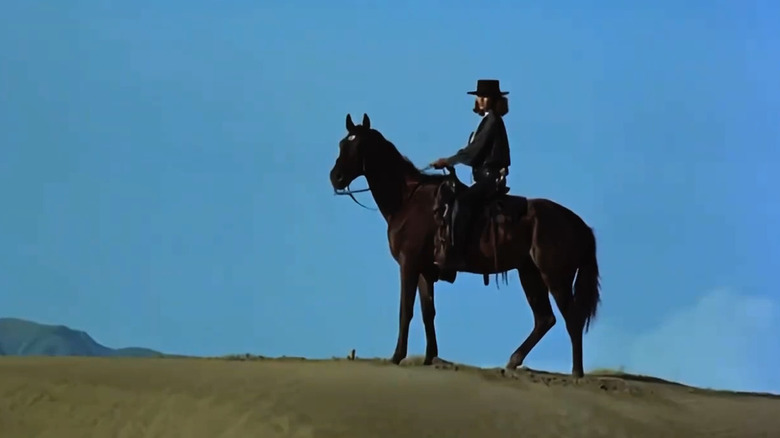
"El Topo," released in 1970, rang in the decade and announced its presence as an early contender for one of the most bizarre and controversial films of the decade — no easy feat, we need hardly remind you. Starring writer and director Alejandro Jodorowsky, "El Topo" revolves around a mysterious figure cloaked in black, riding through the desert in search of enlightenment.
Jodorowsky made a few, shall we say, questionable choices right off the bat, including the decision to have El Topo's son (played by Jodorowsky's own son) accompany him throughout the film, riding on the back of his horse completely naked. The director also invited criticism when he claimed that a scene in the film involving rape was not simulated — a declaration he has since walked back. But despite these concerning elements, the iconoclastic "El Topo" won over alternative audiences, its sense of mythology only fueled by the fact that it was only shown after midnight at arthouse theaters, beginning in New York City and then slowly spreading across the country as its notoriety grew.
9. Sorcerer
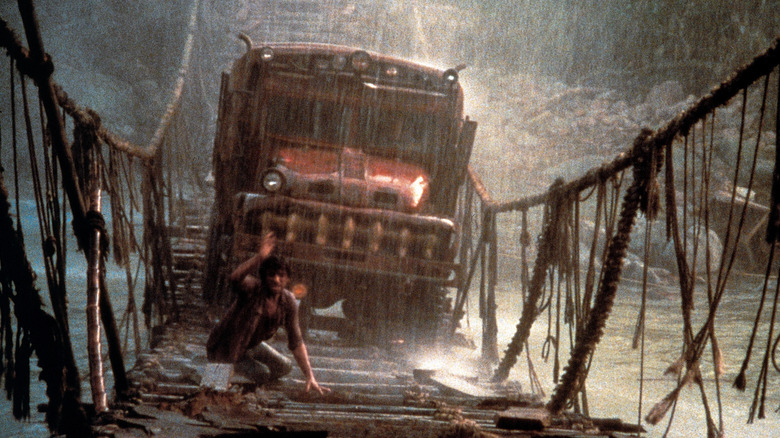
A lot of cult classic films have an underground vibe where, in hindsight, it feels like they were always going to be the kind of movie that takes a little while for audiences to discover. "Sorcerer," on the other hand, is an action movie that seems like it was meant to earn a decent reception at the box office. Director William Friedkin had several popular films under his belt, including "The French Connection" and "The Exorcist." It starred Roy Scheider just two years after his massive role in "Jaws." And the storyline, which is about a truck filled with explosives being driven through rocky Latin American roads, is perfect fodder for an action hit.
So, what went wrong? Well, this came out in 1977, a mere month after the unexpected phenomenon of "Star Wars" was released and still sucking up all the oxygen at the cineplex. To make matters worse, "Sorcerer" had a bloated budget, making it even harder to recoup expenses. The end result was a film that came and went fairly quickly from theaters, only to be rediscovered as a genuinely good thriller years later.
8. The Warriors
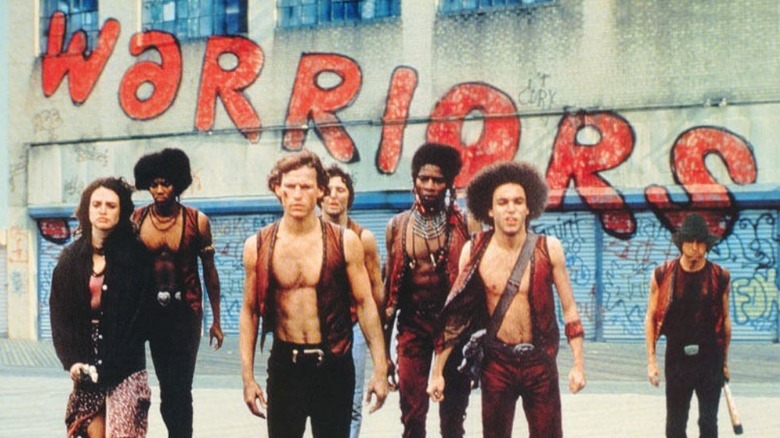
By now, likely everyone's familiar with the siren call of "The Warriors" — "Warriors ... come out to play!" With a line delivery that lingers in audiences' minds, it's just one example of how the crime thriller captivated viewers, even if it didn't make a huge impact when it was first released. Set in a hellscape of 1970s New York City, "The Warriors" revolves around a Coney Island-based gang (called the Warriors, as you might expect) who have to fight their way back home after being accused of killing another gang's leader.
And aside from the Warriors, there are tons of other gangs that give the film so much of its flavor, from the Boppers and the Moonrunners to the Satan's Mothers and the Baseball Furies. It struggled in theaters upon its initial release, largely due to reports of violence that accompanied its screenings, leading Paramount to release movie theaters from their contractual obligation to show the film. But once tensions had cooled, it was appreciated for the gritty campfest it was.
7. Ganja and Hess
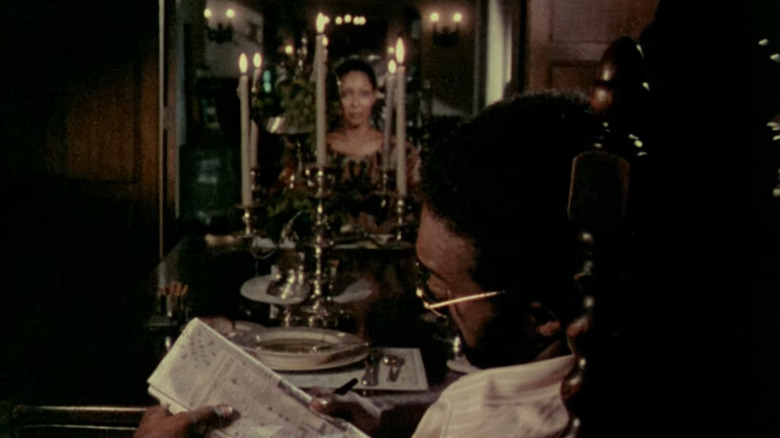
"Ganja and Hess" has the rare honor of being an underrated cult classic in two genres: Blaxploitation and horror. It stars Duane Jones, best known for his starring role in the seminal George A. Romero zombie film "Night of the Living Dead," as Hess Green, an academic who discovers to his considerable alarm that he's become one of the undead. He can't be killed, but he needs to drink human blood for nourishment. Along with his assistant's beautiful widow, Ganja (Marlene Clark), he attempts to embrace his new existence but quickly becomes disillusioned with life as a vampire.
Unlike a lot of cult classics, "Ganja and Hess" was well-received by critics at the time. The problem came from the producers, who were disheartened by the lack of impact it was having at the box office. Hoping to cut their losses, they sold the film to another company, which haphazardly recut "Ganja and Hess," renaming it "Blood Couple." For a long time, the original version was only available through periodic screenings at the Museum of Modern Art in New York City, until it was eventually restored by Kino Lorber, allowing new viewers to experience one of the most interesting vampire movies ever made.
6. Harold and Maude
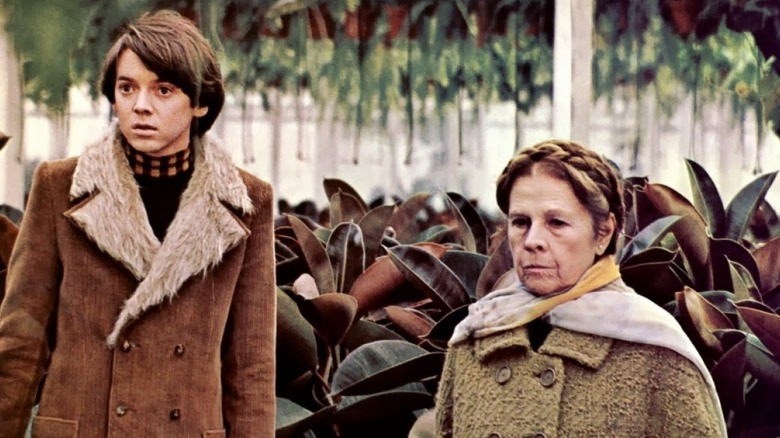
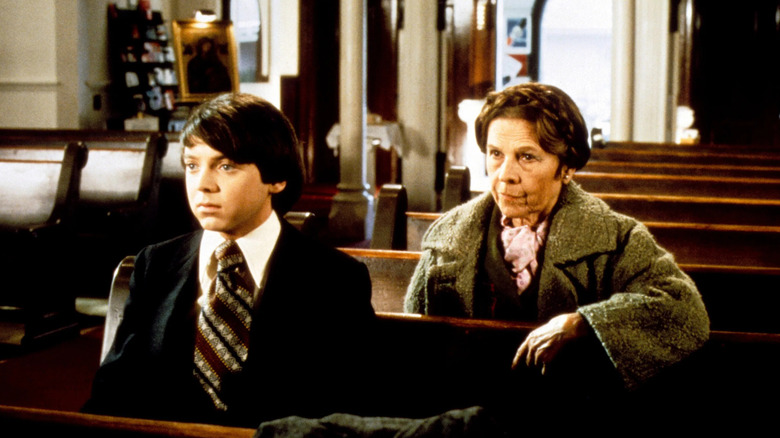
Readers horrified by age gaps in cinema, now might be a good time to look away. Directed by Hal Ashby, "Harold and Maude" explores the unconventional relationship between Harold (Bud Cort), a morbid young man obsessed with death, and the 79-year-old Maude (Ruth Gordon), who, in contrast to her younger companion, has embraced a philosophy that finds endless joy in life. The two could not be more different, but they find comfort and even love in one another's presence.
Despite the film's inherent charms, keen sense of humor, and deeply intelligent script, the central relationship at the heart of "Harold and Maude" proved to be a bridge too far for some audiences. It received decidedly mixed reviews from critics at the time, including a scathing 1.5 stars from Roger Ebert. But with each year that passes since the film's initial release, it seems to find more viewers that connect with its quirky, life-affirming storyline, receiving a critical reevaluation that has earned "Harold and Maude" its rightful place as a top-notch romantic comedy and one of the best movies of the decade.
5. The Texas Chain Saw Massacre
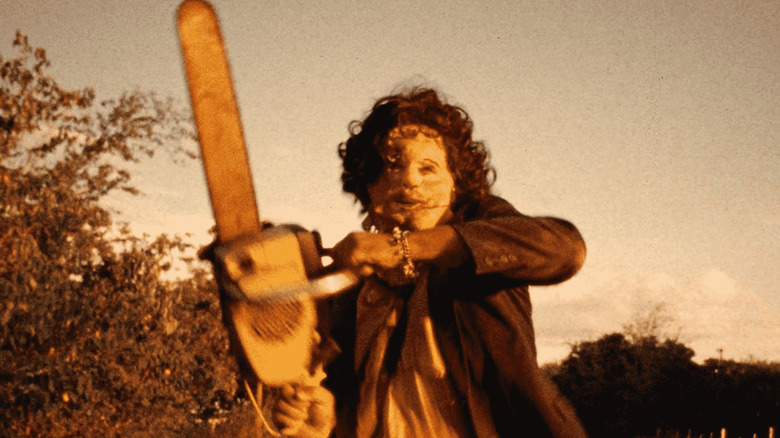
Although "The Texas Chain Saw Massacre" is now firmly established as one of the best and most innovative horror films of the 1970s, when it first came out, it was very much an underdog. Made on a shoestring budget by horror master Tobe Hooper, it revolves around a group of young adults traveling through rural Texas when they inadvertently cross paths with a strange, backwoods family.
It's a family who, it turns out, has a penchant for cannibalism, which causes no end of problems for these intrepid hippies, as you can imagine. Unnerving in the moments before violence happens and perverse in its actual gruesomeness, "The Texas Chain Saw Massacre" created an iconic villain in Leatherface, a chainsaw-wielding member of the family clad in a grotesque mask. Despite its humble origins, it quickly caught on amongst horror-loving audiences, kicking off a franchise that has survived well into the 21st century.
4. Eraserhead
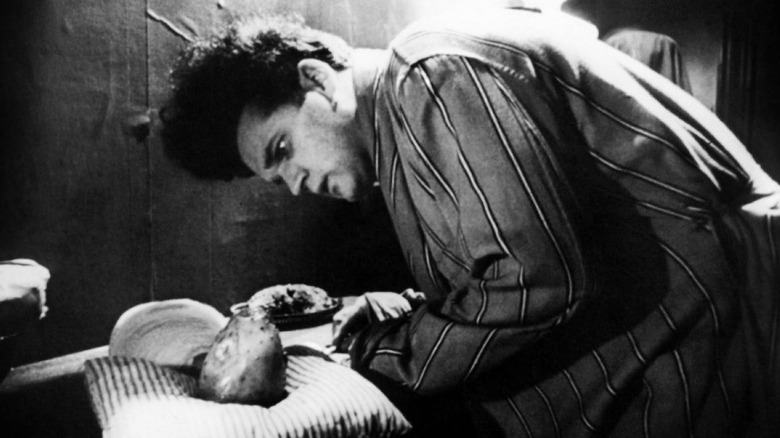
It should come as no surprise that David Lynch's early, most experimental films didn't necessarily have universal appeal among mainstream audiences. "Eraserhead," Lynch's feature film debut, is proof of that. The fact that it even got finished at all is a miracle — it took years to complete its production schedule, reliant as it was on infusions of cash to keep it afloat. It stars Jack Nance as Henry, a young man who is taken by surprise when he's informed that the girl he's been seeing has given birth to a baby. Well, sort of. It's sort of a baby. Part infant, part strange, faceless alien creature, it's nonetheless in Henry's care, and he does his best to help it thrive.
"Eraserhead" is a master class in surrealism that would give Kafka a run for his money, and counterculture audiences looking for something a little different from the typical Hollywood fare being released in 1977 responded to it. The film became a fixture on the midnight film circuit, and despite Variety calling it "a sickening bad-taste exercise," it catapulted Lynch to indie stardom.
3. Phantom of the Paradise
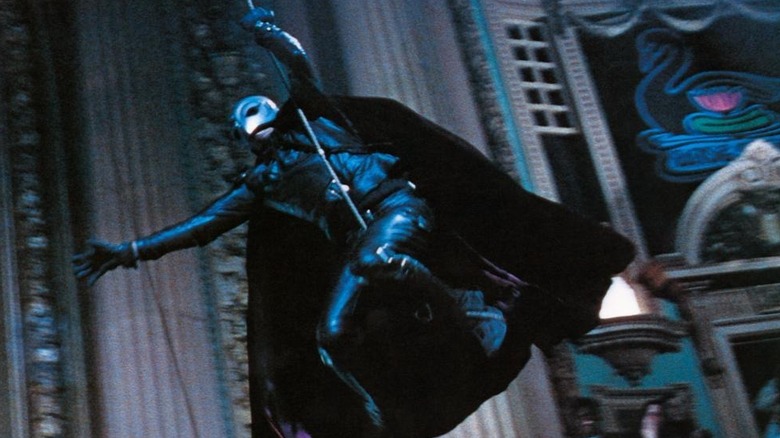
A play on "Phantom of the Opera" that also skewers the modern music scene, "Phantom of the Paradise" is a sprawling musical epic with elements of "Faust" and even "The Picture of Dorian Gray." (The one thing you can absolutely say about it is that it isn't short on ideas.) Oh yeah, and it's directed by Brian De Palma. It stars William Finley as Winslow Leach, a mild-mannered composer whose life is ruined when he crosses paths with the villainous Swan (Paul Williams), with whom he clashes over professional and romantic interests.
Disfigured and stripped of his vocal cords, Leach — now The Phantom of the Paradise — desperately makes a deal with Swan that will allow him to finish his life's work and have the woman he loves, Phoenix (Jessica Harper), perform it at The Paradise's grand opening. But when he is inevitably betrayed, he shifts gears, plotting the downfall of Swan. It's an ambitious film, arguably one that has too much going on for it to reach its full potential. But the memorable design of the Phantom, as well as the film's surprisingly underrated original soundtrack (still cementing it as one of the greatest rock films), makes "Phantom of the Paradise" an unexpected gem.
2. Pink Flamingos
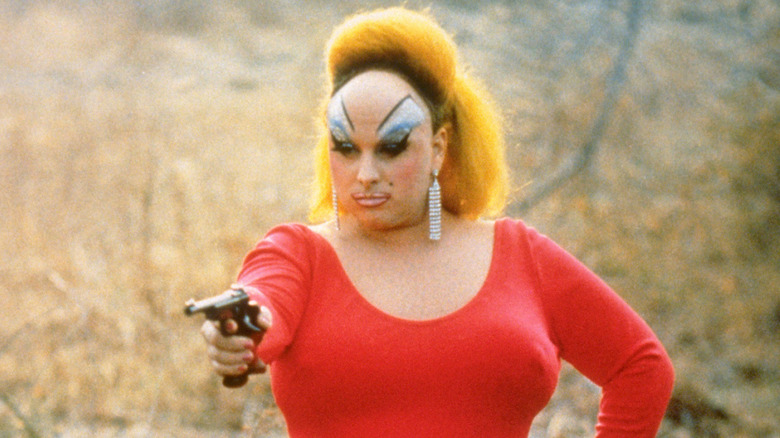
Shocker of the century: One of John Waters' films is a cult classic. (Do any of Waters' films not have a cult following?) The man has a penchant for the strange, perverse, and taboo, and nowhere is that more evident than in his 1972 crime-themed comedy "Pink Flamingos." Part of what Waters refers to as the "Trash Trilogy," which also includes "Female Trouble" and "Desperate Living," "Pink Flamingos" stars Divine as a criminal living under the assumed name Babs Johnson, who is also dubbed "the filthiest person alive." Jealous of her notoriety, fellow denizens of the criminal underbelly plot to steal her crown, engaging in some truly nefarious and grotesque acts, which remain some of the grossest things actors have had to do on set.
Nothing's off limits in "Pink Flamingos," from eating dog feces to cannibalism. The film was never going to make it in mainstream America, but it found an immediate market within the LGBTQ community in New York City, who flocked to midnight screenings to experience Waters' subversive humor firsthand. In the years since, it's grown into a legend in and of itself, with Divine even serving as the inspiration for the Disney villain Ursula in "The Little Mermaid."
1. The Rocky Horror Picture Show
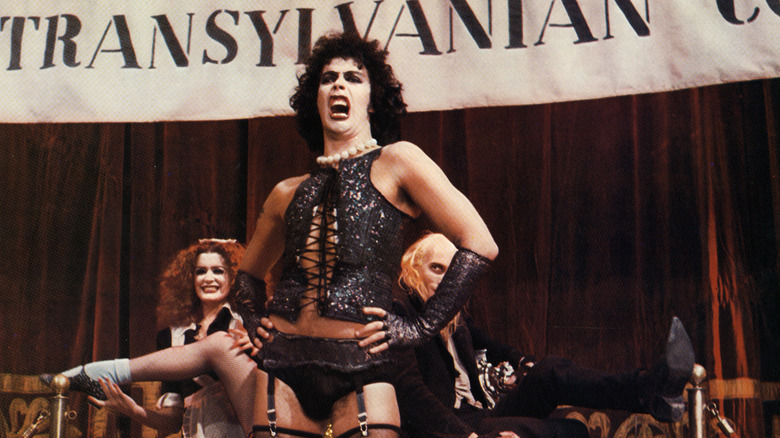
The granddaddy of them all, no list of cult classics would be complete without "The Rocky Horror Picture Show," whose status as an underground hit has taken on mythic proportions. It stars Tim Curry as Dr. Frank-N-Furter, an alien scientist in a corset and fishnets whose grand plans to create a sexy new boy toy are interrupted when sweet, innocent Brad (Barry Bostwick) and Janet (Susan Sarandon) arrive in the middle of a thunderstorm. What follows is nothing less than a fever dream, with frenetic musical numbers and a violent explosion of theatrics that give new meaning to the word camp.
And although its initial box office numbers weren't out of this world, it's difficult to imagine a more devoted fan base than the one "Rocky Horror" has amassed over the years. Its midnight screenings have become legendary, with audience participation, costumes, and even prop work a staple part of each viewing. Nowadays, it is one of the most definitive cult films in cinema history.