

'70s Sci-Fi Shows Everyone Needs To Watch At Least Once
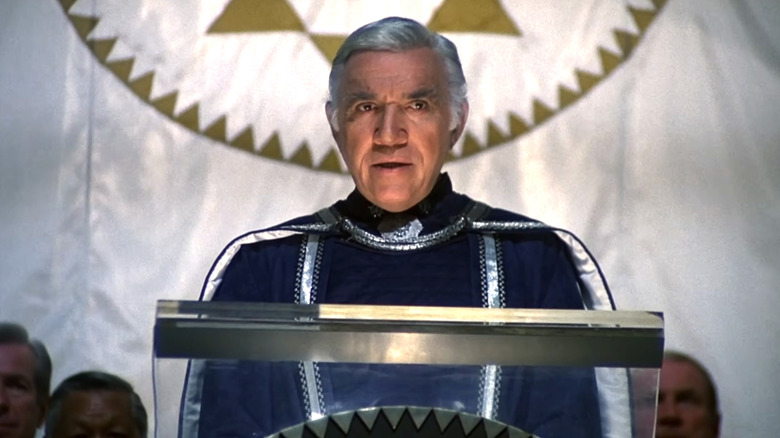
While the 1960s proved to be a significant decade for sci-fi TV due to the debuts of classic shows, such as "Star Trek: The Original Series," "Lost in Space," "The Outer Limits," and "Doctor Who," the '70s turned out to be equally as important for the genre. The momentum continued on the upswing, as audiences lost themselves in brave new worlds, what-if scenarios, and sneak peeks of potential futures.
The good news is that many of these '70s sci-fi shows still hold up to this day. Sure, some aspects of the designs, costumes, and sets might look dated, because networks weren't dishing out hundreds of millions of dollars for productions in that era, but the overall experience remains top-notch and enjoyable. As a matter of fact, it's a tough task narrowing down this piece to focus on just a few series, since we're spoiled for choice here. The likes of "The Tomorrow People," "Blake's 7," and "UFO" all deserve special mention because even though they didn't make the final cut, they're still great programs that contributed to the rise and popularity of the genre.
So, let's journey back to the '70s to explore the sci-fi shows that everyone needs to watch at least once. And don't be shy to fill up that watchlist with these sensational series from yesteryear!
The Six Million Dollar Man
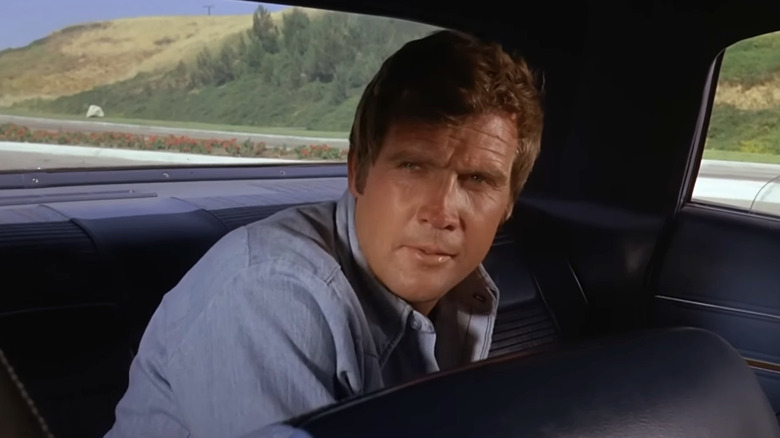
Before the sci-fi genre became overrun with cyborgs at every corner, the original bionic man was Steve Austin. No, not the WWE superstar who chugged beer and flipped the bird at his boss, but the astronaut played by Lee Majors. In "The Six Million Dollar Man," Austin experiences a devastating accident that leaves him severely injured. His body receives a number of cybernetic upgrades that enhance his abilities, making him bigger, stronger, and faster than ever. Austin uses his newfound powers to become an agent for the Office of Scientific Intelligence (OSI) and do good in the world.
"The Six Million Dollar Man" ran for five seasons between 1974 and 1978, and it also received several TV movies. Additionally, it resulted in a spin-off series titled "The Bionic Woman." It proved impossible to escape the influence of the show, as it turned into a global pop culture sensation that ran wild in the '70s and long thereafter.
What makes "The Six Million Dollar Man" appealing is how it combines a sci-fi premise, spy games, and action-packed adventure into a highly addictive package. In many ways, it feels like a superhero series via the way of James Bond, since Austin demonstrates a mix of intelligence and superhuman feats. There were plans for an "A Six Billion Dollar Man" reboot movie with Travis Knight directing and Mark Wahlberg starring, but would it have captured the lightning-in-a-bottle effect of the original show? Unlikely. There's only one Steve Austin.
Star Trek: The Animated Series
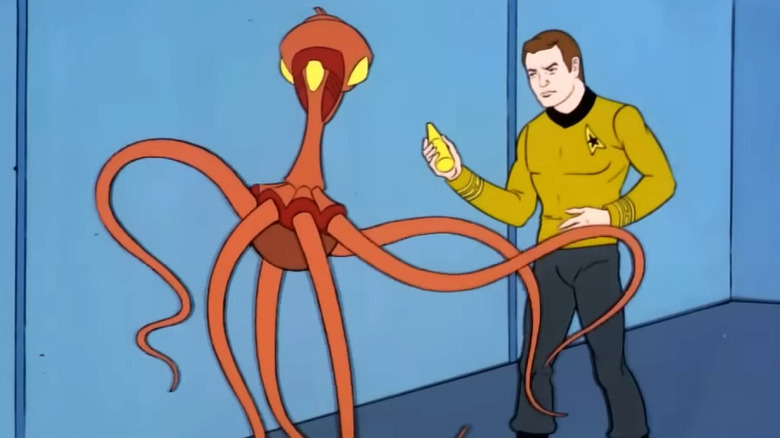
Despite how iconic "Star Trek: The Original Series" is to the sci-fi community, many people forget it only ran for three seasons between 1966 and 1969. Fortunately, fans didn't need to wait too long to experience a continuation of the adventures of the Starfleet crew aboard the USS Enterprise. In 1973, "Star Trek: The Animated Series" debuted, bringing back many of the cast members from the original show, such as William Shatner and Leonard Nimoy, to provide the voices for their animated counterparts.
This show follows the crew from the live-action series as they continue to explore space and encounter all types of threats and strange new worlds. For example, in the episode "The Ambergris Element," both Captain James T. Kirk (Shatner) and Spock (Nimoy) are attacked by a sea beast on a water planet. Subsequently, they turn into water breathers and need to find a way to return to their previous way of life. Classic Trekkie story!
Animation isn't the final frontier here, as "Star Trek: The Animated Series" looks to be on the cheaper side of production, but the bite-sized stories, as well as the presence of the cast members and writers from the original show, still grip fans who want to live long and prosper with the Starfleet crew. While this isn't the greatest "Star Trek" series ever made, it's an absolute must-watch for any fan of the franchise and one of the better '70s sci-fi shows.
Logan's Run
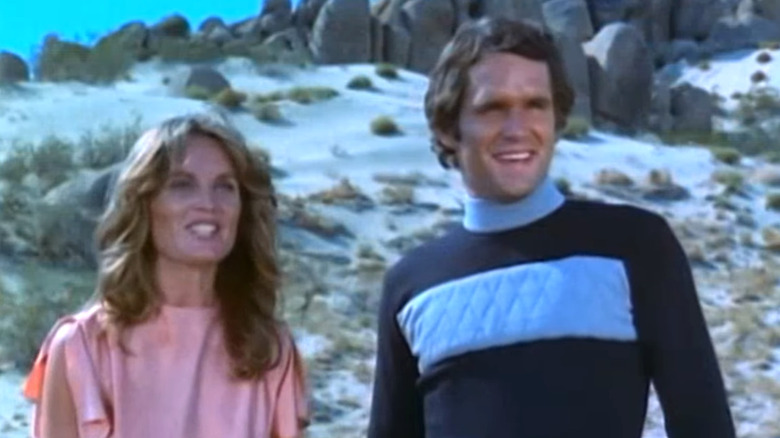
Before watching 1977's "Logan's Run," it's important to watch the film of the same name that was released a year earlier. While the series retells the crux of the story, it's better to have the full context of the film to truly appreciate the changes and enhancements of the show. Set in the future, humans live their best lives until the age of 30. Then, they're culled to free up resources (hopefully, no world leaders reading this get any ideas). Those who run away from their fate are chased by a group called Sandmen, with Logan 5 being among these hunters. However, Logan holds apprehension about what he does and switches allegiances after he's doomed for execution.
The series follows Logan and Jessica 6, one of the main characters from the film, as they attempt to find the fabled Sanctuary and avoid extinction. Gregory Harrison replaces Michael York, while Heather Menzies takes over from Jenny Agutter in the show.
"Logan's Run" only aired for a single season, but don't let that deter you from watching it or cause you to think it's irrelevant. For those who enjoyed the film, which also happens to be one of the post-apocalyptic movies that predicted the future, this is a terrific adaptation of the classic story that allows the viewer to grow even more connected to these characters and world.
Battlestar Galactica
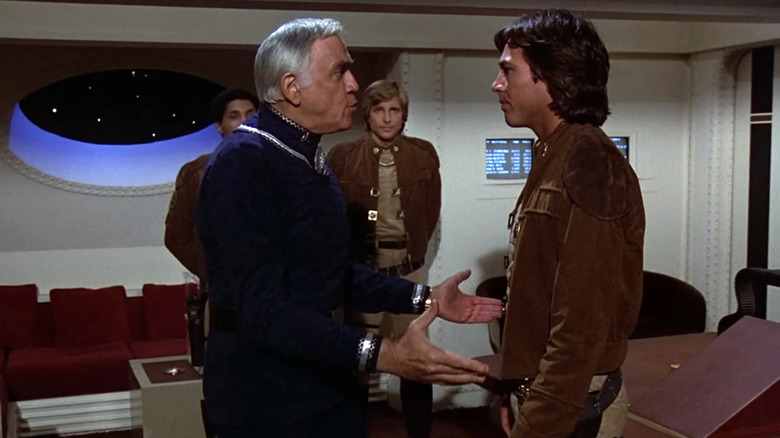
When discussing the best sci-fi franchises of all time, "Battlestar Galactica" earns its place on any list. It might not have seemed like it when the 1978 show was canceled after a single season, but this universe and its characters stuck with audiences for decades afterward. It's a classic case of being ahead of its time — and also being a tad bit expensive for TV in those days — but the original show planted the seeds that grew into something bigger and vaster than anyone could have imagined back then, expanding into everything from comics to video games and board games.
The premise centers around humanity losing its war against the robotic race known as Cylons. The survivors hop onto spaceships to escape the slaughter; however, only the Galactica survives the attack. Now, the remaining humans on this ship need to find a new place to call home, all while avoiding the wrath of the Cylons. The series features a few familiar faces, such as Dirk Benedict from "The A-Team" and Lorne Greene from "Bonanza."
Created by esteemed TV producer Glen A. Larson, "Battlestar Galactica" should delight "Star Wars" fans, especially since there are more than a few similarities in the story and design of the show. Aside from that, this is just one of those sci-fi series that any genre aficionado needs to watch at least once in their lifetime.
Planet of the Apes
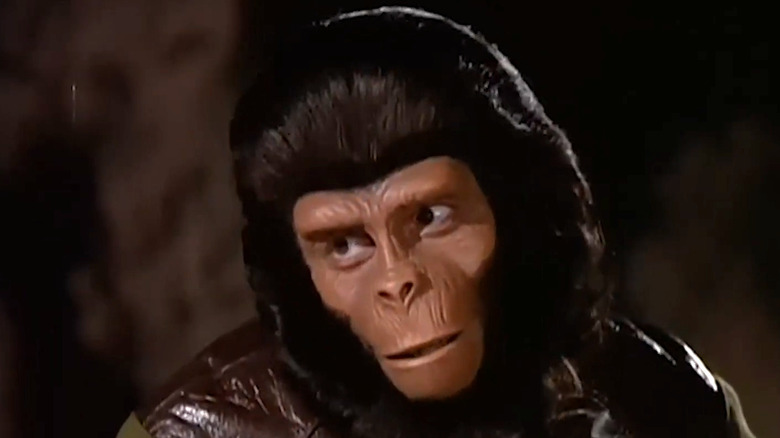
Based on the popular film series of the same name, 1974's "Planet of the Apes" follows a similar premise. Astronauts leave Earth, hit a time warp, crash, then return to Earth, but it's a thousand years in the future. What's changed? Quite a lot, as the planet is now ruled by the apes — see, it's in the name, right? Colonel Alan Virdon (Ron Harper) and Major Peter J. Burke (James Naughton) need to survive this new reality, but they make an unexpected ally in the process, the chimp known as Galen (Roddy McDowall).
As a stalwart of the franchise, McDowall returned to play a brand-new character here, but the show still follows the same themes as the "Planet of the Apes" movies. It ponders if man and ape can coexist in this new status quo or if apes actually do a better job at ruling the Earth than humans ever did. Honestly, who wouldn't welcome ape overlords at this point?
"Planet of the Apes" only lasted a single season because of poor ratings and the cost of production. Let's say the execs weren't monkeying around here! Yet, this is still a show that's essential and fulfilling for anyone who adores the film series because it understands exactly what the franchise is about and the message it wants to convey about humanity.